Years 1962-1984 were perhaps the most intensive when it comes to the number of variants of the 8x30 model and other instruments as well. The numbering system still remained the same with one small exception. The most popular 7x42 device maxed out all its allotted numbers so in later production stages they had to add 1 before 7 and thus created a 7-digit serial number.
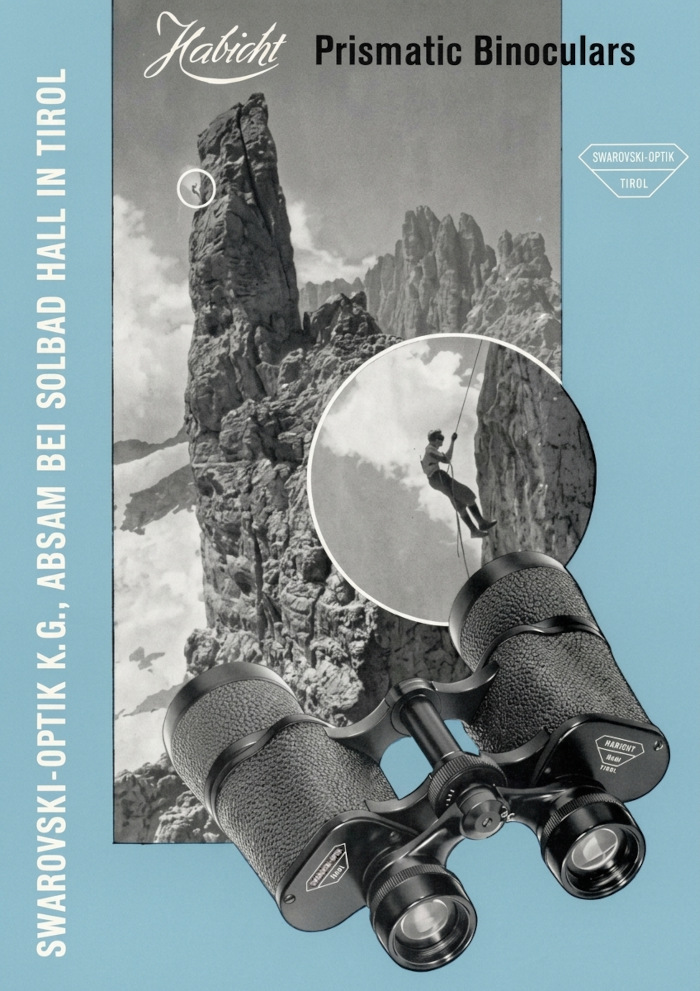
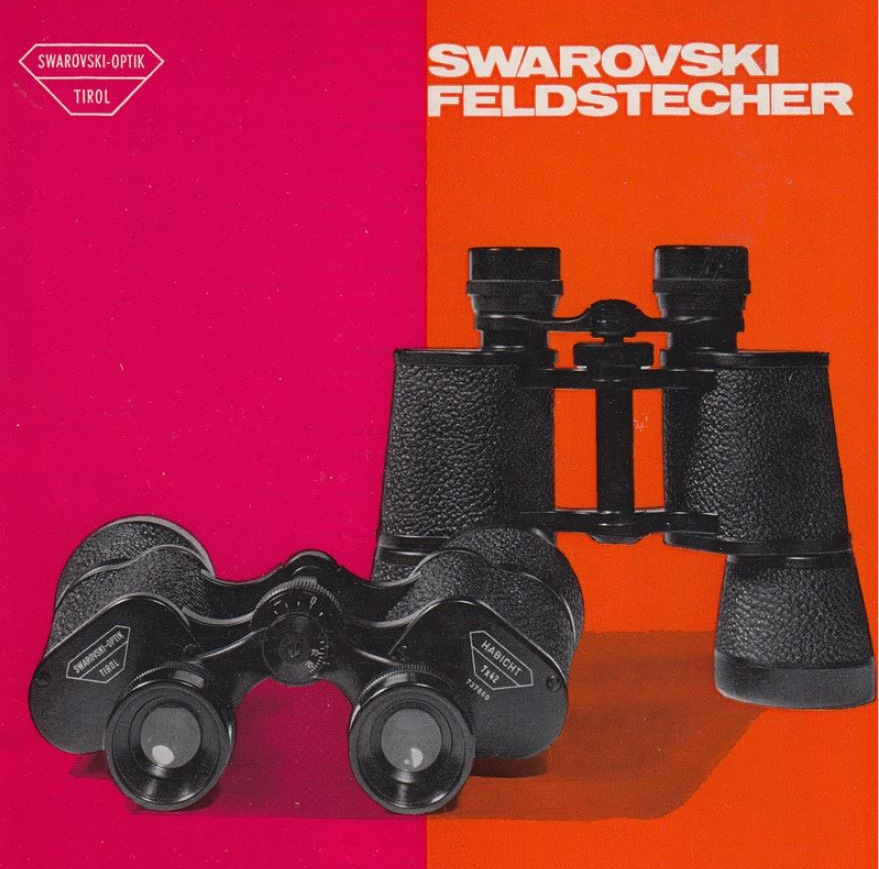
Swarovski Optik brochure from 1963. Source: Swarovski Optik.
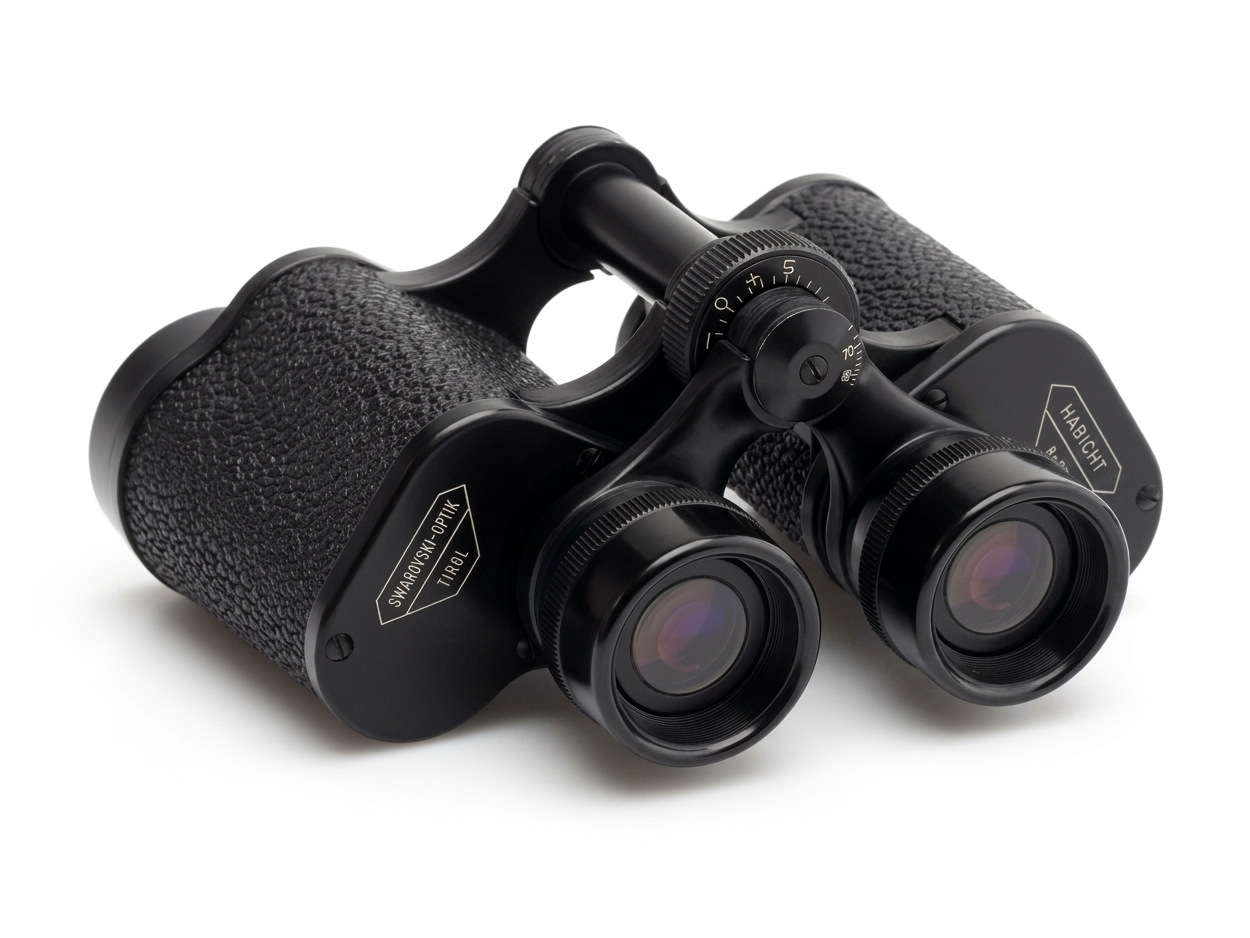
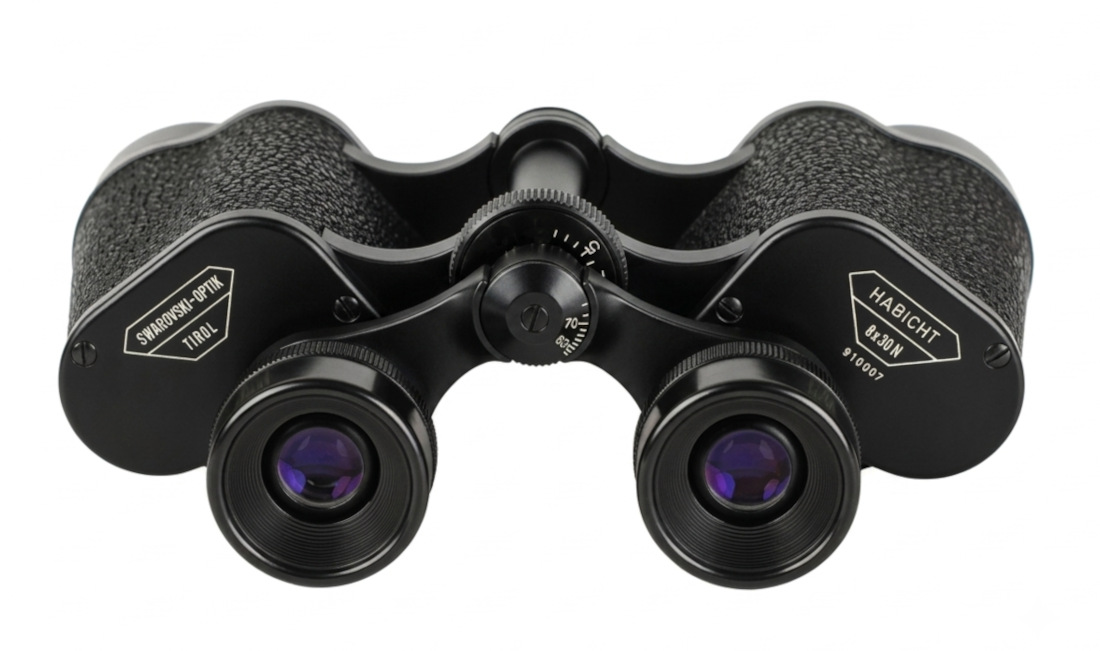
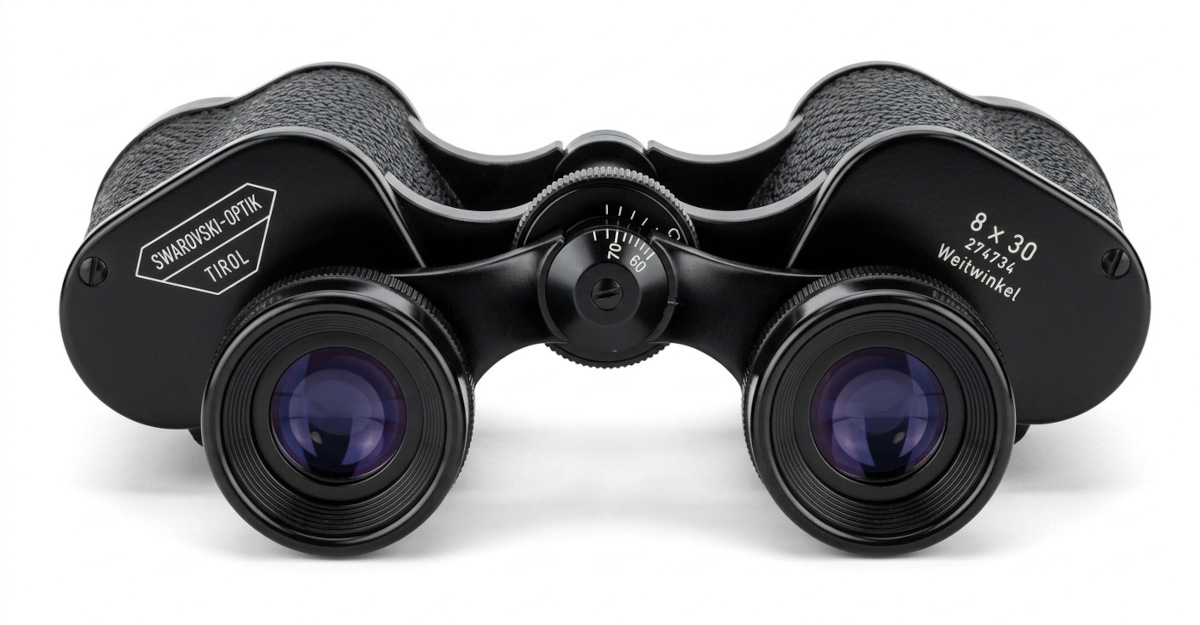
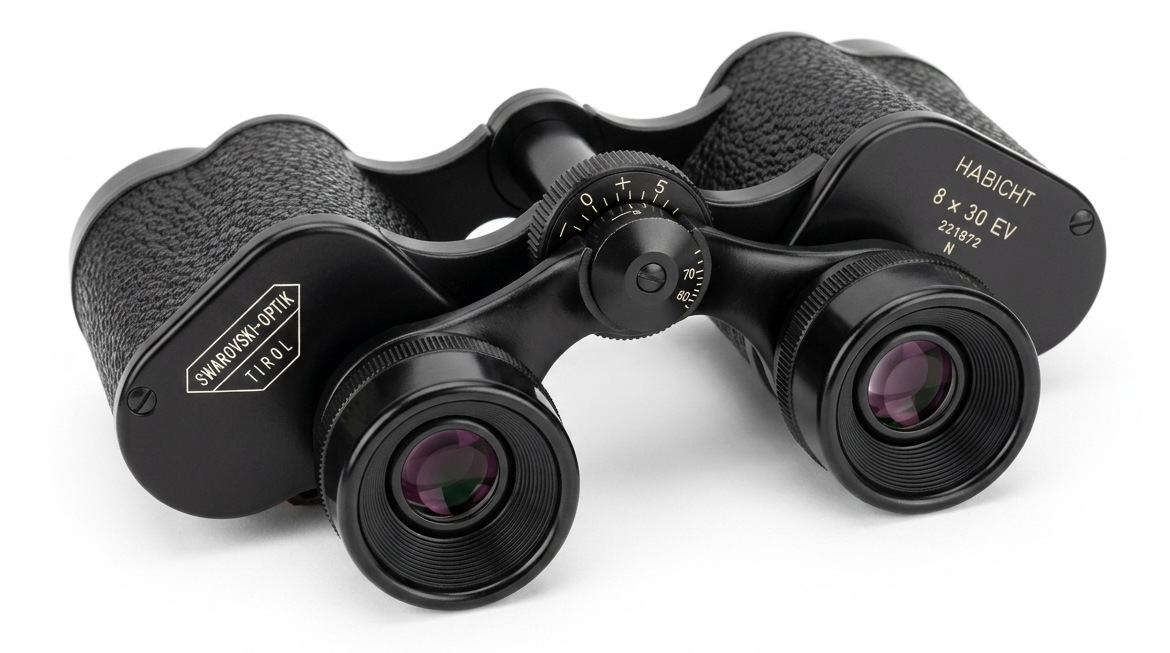
Refreshed appearance and a different layout of inscriptions on the barrel of the prisms were two major changes at this stage. Swarovski introduced a new logo design, known popularly as crystal logo. On the left side you got a simplified diagram of a crystal with an inscription SWAROVSKI-OPTIK above it and TIROL below. On the right side in the upper part you saw an inscription HABICHT and in the lower part the 8x30 parameters. Once again the wide angle version didn't feature W and the version with a normal angle of view had an N letter added. Still, Swarovski was hardly consistent when it comes to these symbols – personally I've seen binoculars with serial numbers starting with 86, so produced around 1983, with W added.
Swarovski Habicht-Merkur 8x30 W M DV binoculars with crystal logo.
On the barrel of the right prism, under the crystal and inscriptions there was also a serial number.
Please Support Us
If you enjoy our reviews and articles, and you want us to continue our work please, support our website by donating through PayPal. The funds are going to be used for paying our editorial team, renting servers, and equipping our testing studio; only that way we will be able to continue providing you interesting content for free.
- - - - - - - - - - - - - - - - - - R E K L A M A - - - - - - - - - - - - - - - - - -
During first years of this period, and more precisely from 1962 to 1966, Swarovski still used names connected to Roman mythology. They can be found in the 1966 catalogue for example. In case of the Habicht-Merkur 8x30 W the parameters didn't change much – you still dealt with a field of view of 8.5 degree. The weight slightly increased – to 460 grams in case of the M model, and to 450 grams in case of the O model.
Swarovski Habicht-Merkur 8x30 N M DV binoculars with crystal logo.
When it comes to the Habicht-Mercur 8x30 N variant there was a small revolution as its field of view increased to 7 degrees. The O variant with individual focusing weighed this time 400 grams exactly and the M variant, with a classic central eyepiece bridge, 430 grams. These changes made the offer more attractive because the 8x30 N version had a field of view of eyepieces reaching 56 degrees so without a pinhole effect.
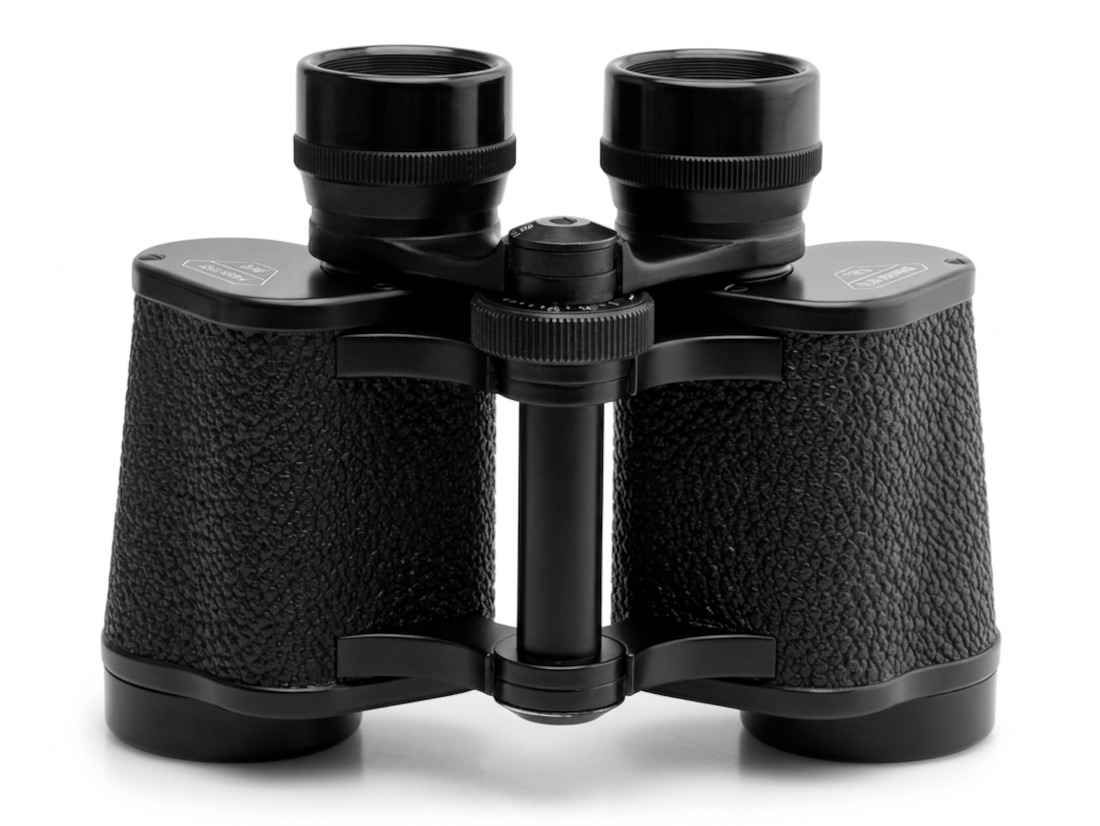
Swarovski Habicht-Merkur 8x30 W M DV binoculars with crystal logo.
During the initial stage of the period in question, between 1962 and 1968, Swarovski not only continued but also expanded the production of budget variants. You still got the Falke series with a lighter body and single layer coatings (thus EV symbol on the casing), but this time it was offered as a wide angle variant (8x30W) and a normal variant (8x30N). It's also worth adding that the name Falke not always could be found on the barrels; these models can be recognized by the serial numbers that range from 269XXX to 289XXX.
Swarovski Falke 8x30 W M EV binoculars with crystal logo.
As if it wasn't enough, some simplifications were applied to the short Habicht variant series with single coating (EV) and the Habicht inscription not featured inside the crystal logo. In years 1966-1968 several thousands specimens of the 8x30N variant were produced (serial numbers ranging from 222XXX to 227XXX) and also more several thousands of the 8x30 W variant (223XXX – 226XXX).
Swarovski Habicht 8x30 N M EV binoculars with crystal logo
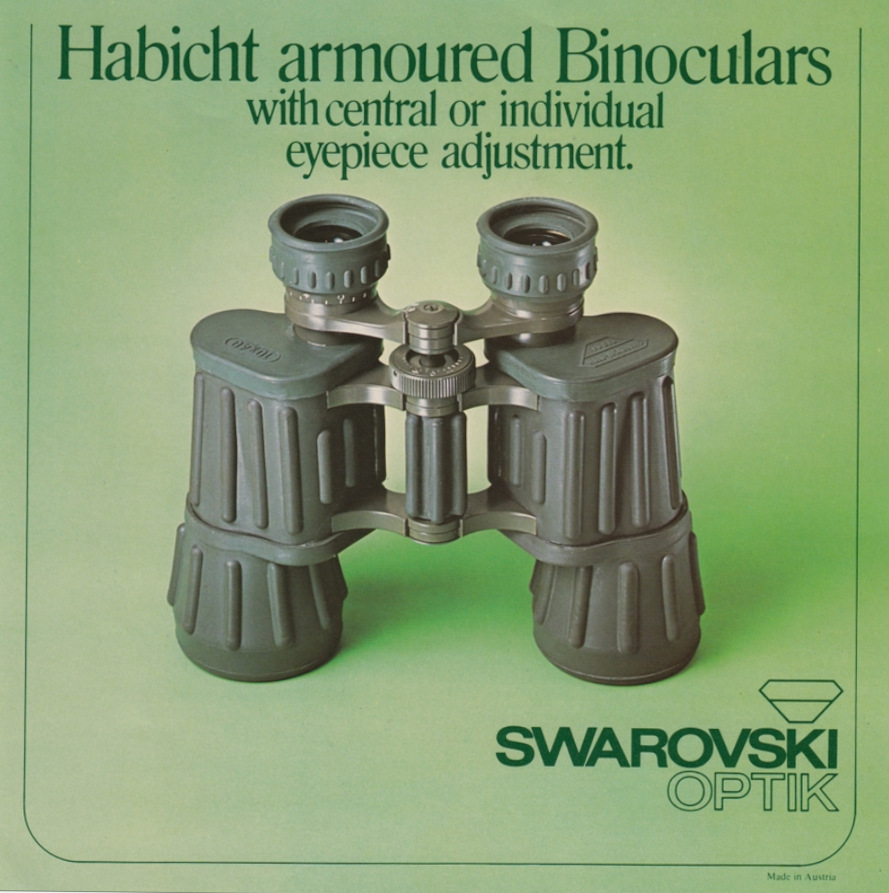
The beginning of the 70s of 20th century brought other important novelties. Around 1971 first Habicht line binoculars completely rubber armoured appeared on the market. They were completely waterproof. When it comes to their parameters the 7x42 and 10x40 W models were launched as the first but only as individual focusing variants. In 1976 Swarovski added versions with central focusing. When it comes to 8x30 parameters you had to wait till the beginning of 80s, when both 8x30 N and 8x30 W were released, offered as instruments with central and individual focusing. As they appeared near the very end of this period of time their production volume was low, reaching just several hundred of pieces.
Excerpt from a Swarovski Optik catalog from late 1960s. Source: Swarovski Optik.
It's worth adding that in this time they also modified the construction of the 8x30 W eyepiece. The 1981 catalogue I have access to states that the rubberized version of this particular model of binoculars features a field of view of 8.1 deg so by 0.4 deg narrower than in previous models.
Excerpt from a Swarovski Optik catalog from the turn of the 1970s and 1980s advertising rubber-armored binoculars. Source: Swarovski Optik.
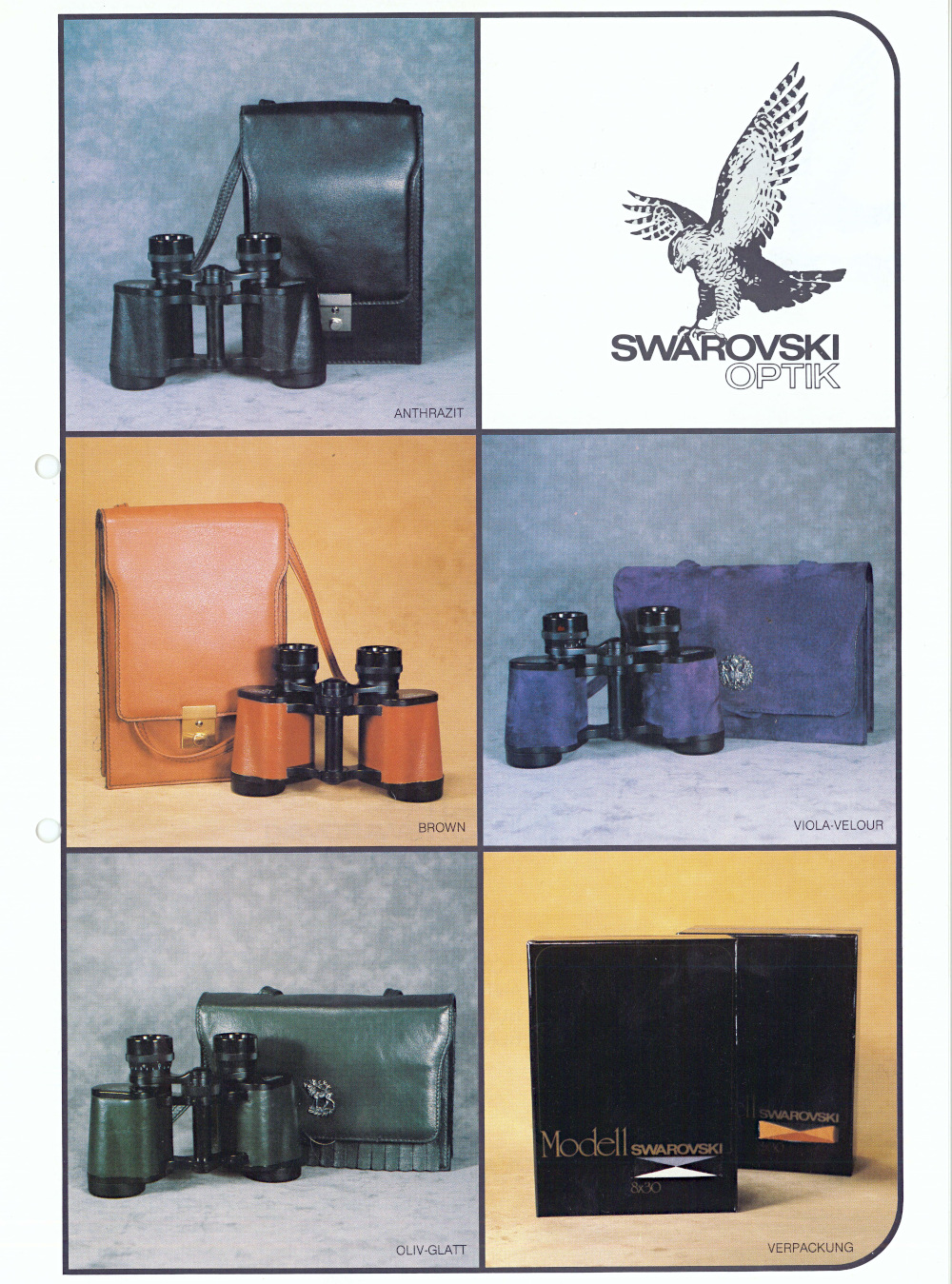
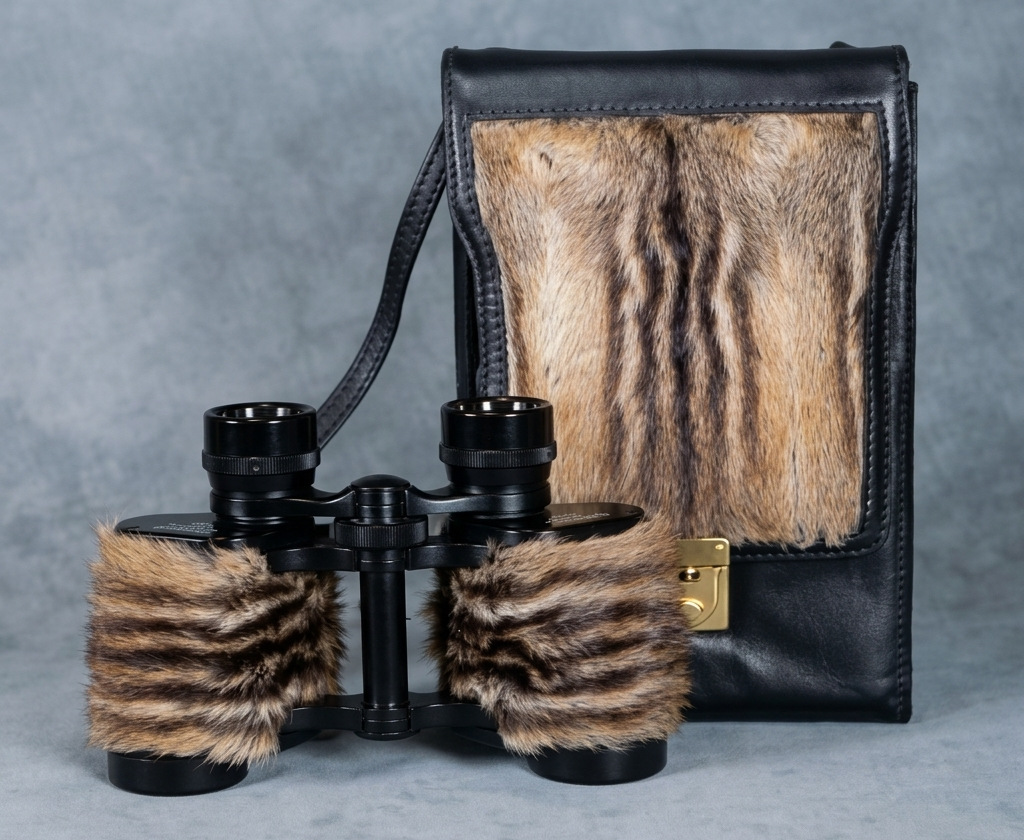
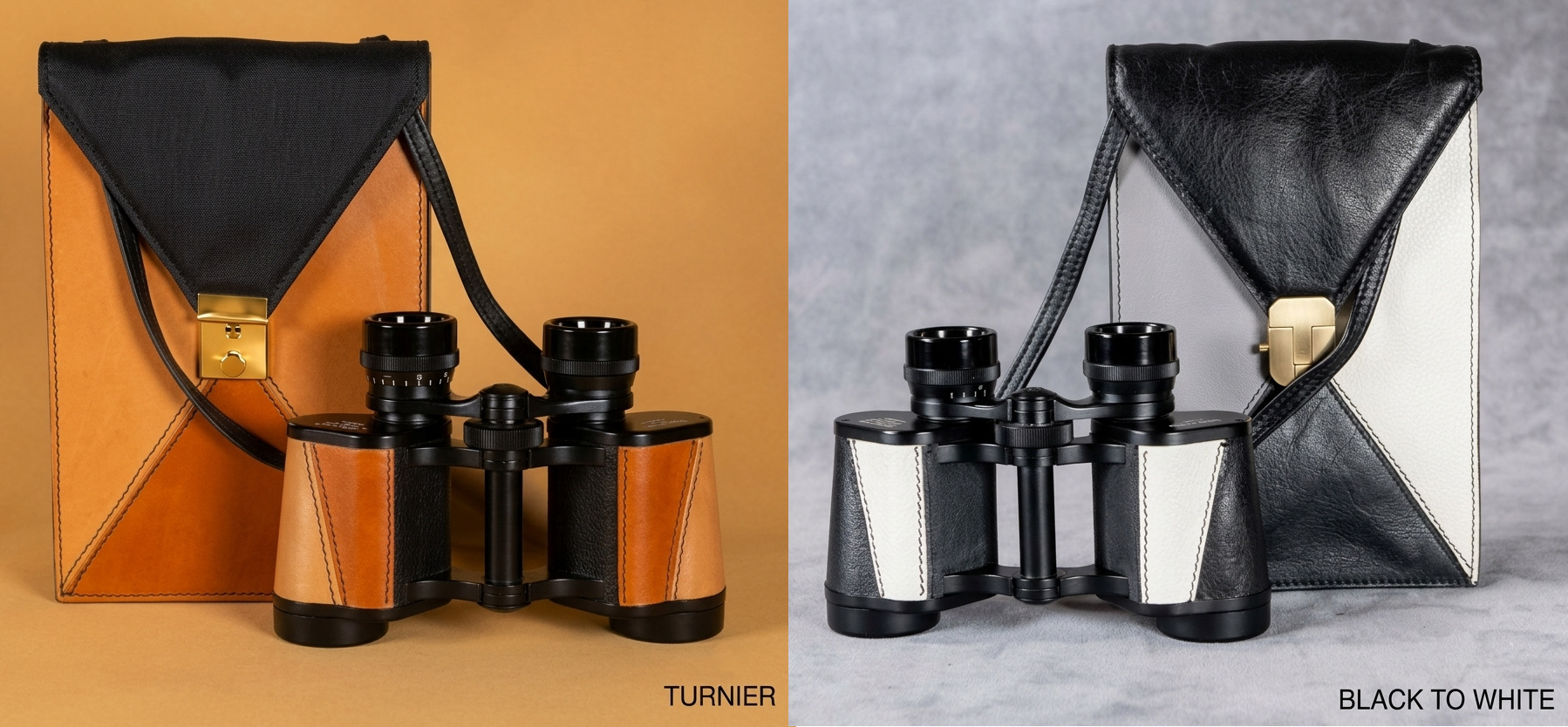
The 1980s had their own rules when it comes to fashion and design; small wonder the Swarovski company also bowed to these trends. In years 1980-1983 they released 8x30 binoculars that were called not Habicht but Modell. These were designer instruments with colourful armour and original sets of cases and accessories.
Swarovski Optik 8x30 binoculars from the "Modell" designer line. Source: Swarovski Optik.
There were other changes as well. The turn of the 70s and 80s brought introduction of anti-reflection multi coatings. Swarovski had been a leader in this area for many years, offering their brand name DV coatings. Now rivals forced them to go further and in 1982 they showed the first generation of multi-coatings called Transmax. Still they didn't bother with any changes or additional markings on the casings.
Swarovski Modell 8x30 binoculars in Burunduki version. Source: Swarovski Optik.
As you can see 1962-1983 period was very intensive for Swarovski Optik. They renown was increasing and their products were becoming more and more popular. As a result they also had to increase their production volumes. Looking at the serial numbers it seems that they produced about 50,000 pieces of the Habicht 8x30 W and about 30,000 of the 8x30 N variant.
Swarovski Modell 8x30 binoculars in Turnier and Black to White variants. Source: Swarovski Optik.