

.

AllBinos.com

Articles

Legendary binoculars - Swarovski Habicht 8x30
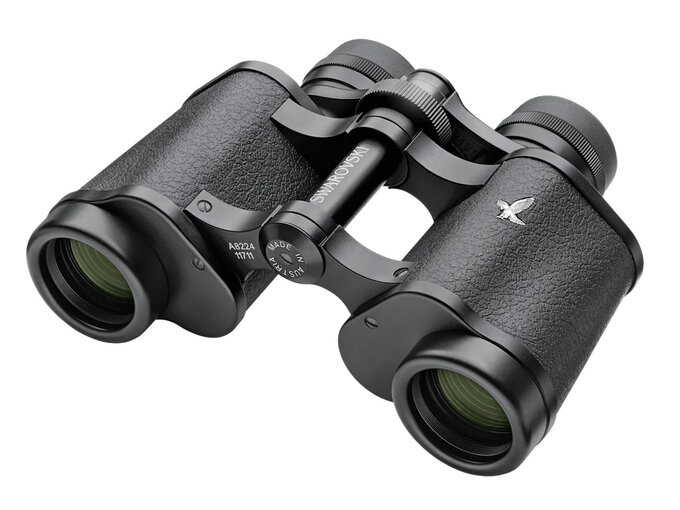
Legendary binoculars - Swarovski Habicht 8x30
24 August 2026
Arkadiusz Olech

1. Introduction

On 24th of October 1862 a little boy was born. His name was Daniel Swarovski and he lived in a small village called Jiøetín pod Bukovou, currently in the Czech Republic, just 20 km away from the Polish border. The father of the little Daniel, Franz Anton, was a glass grinder; small wonder Daniel learned how to cut glass already in his childhood, helping in the small factory belonging to his father.

In 1892 Daniel Swarovski patented an electric machine that made it easier to grind crystal glass and produce good quality jewellery – up to that time it had been manual labour only. Three years later Daniel and his family moved to Wattens in Austrian Tirol where, along with Armand Kosman and Franz Weis they established "A.Kosmann, D.Swarovski & Co.".

Profiting from a local hydropower plant and machines, patented by Swarovski himself, the new company started a mass production of jewelry crystals and offered them at a much more reasonable prices than competitors.


Please Support Us

If you enjoy our reviews and articles, and you want us to continue our work please, support our website by donating through PayPal. The funds are going to be used for paying our editorial team, renting servers, and equipping our testing studio; only that way we will be able to continue providing you interesting content for free.

- - - - - - - - - - - - - - - - - - R E K L A M A - - - - - - - - - - - - - - - - - -

- - - - - - - - - - - - - - - - - - - - - - - - - - - - - - - - - - - - - - - - - - - - - - - -
Legendary binoculars - Swarovski Habicht 8x30 - Introduction
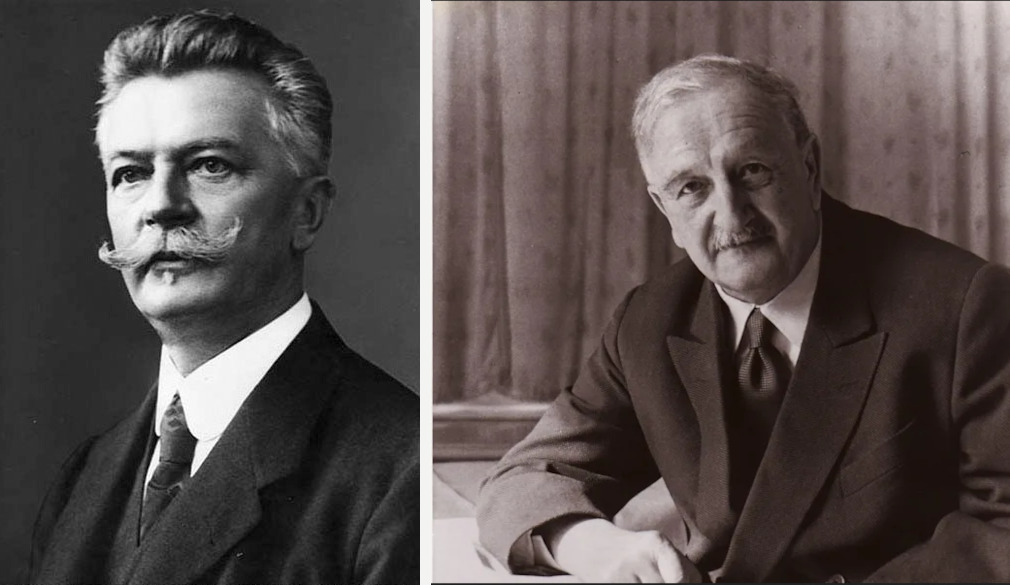
Daniel Swarovski (left) and Wilhelm Swarovski (right).

In 1908 Daniel Swarovski and his sons, the eldest, Wilhelm, born in 1888 and playing a key role, started production of their own glass. Two years later they established Glasfabrik D.Swarovski, five years later they managed to manufacture the firs batch of glass.

Currently one part of the Swarovski company, still responsible for production of jewellery crystals, is a real tycoon, with global coverage, over 3000 brand shops in about 170 countries, employing over 29,000 of workers and an income of about 2 billion Euro a year.

Still the world doesn't end with jewellery and crystals, even if they are important. The eldest son of Daniel Swarovski, Wilhelm, definitely shared this opinion. He not only inherited technical talents and passion for engineering from his father, but also developed them in new directions. Among them was astronomy. He got so interested in observations of the sky that he decided to construct his own instruments to follow his interest.

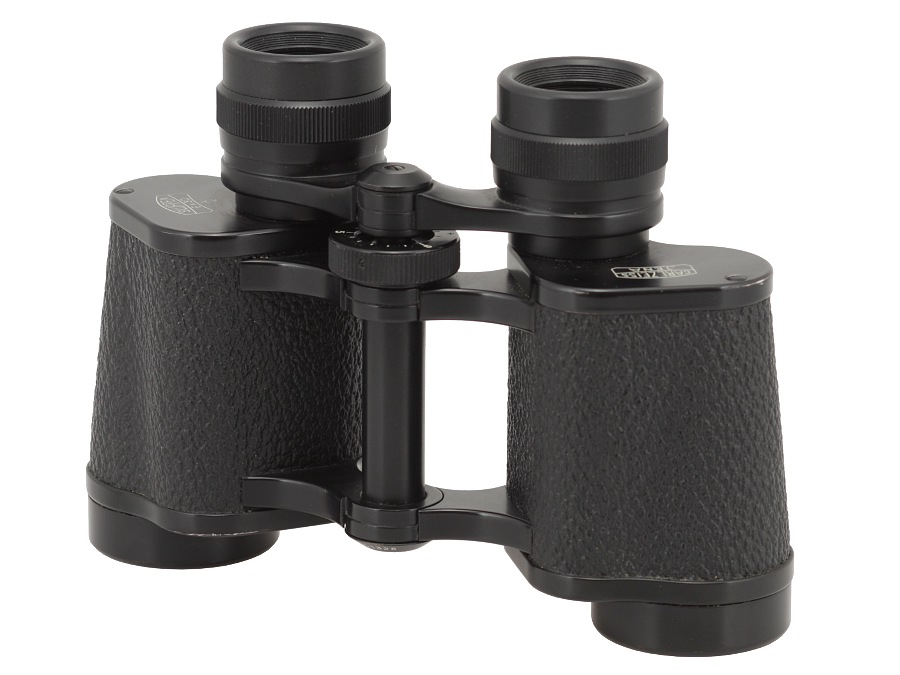
In those times a classic 6x30 pair of binoculars with an achromatic doublet in the objective lens, Porro prisms of type I and a 2-3 element eyepiece was a golden canon. Zeiss was a forerunner in this area; already in 1907 they presented the military D.F 6x30. In 1910 they entered the civilian market with products called Silvamar (featuring individual focusing) and Silvar (featuring a central wheel). Meantime Zeiss licenced the Russians so Obuchovski Works in Petersburg started a serial production of practically the same model.
Legendary binoculars - Swarovski Habicht 8x30 - Introduction
Carl Zeiss Silvarem 6x30 binoculars manufactured between 1910-1975.

Of course the rivals were vigilant and soon similar constructions appeared everywhere like a rash. Even before 1915 the French producers (Huet and E.Krauss) showed their Porro prism models and the English (Ross London) were close behind. A moment later the American Bausch & Lomb entered the market and even before 1920 Zeiss got a local rival in a form of Goerz Berlin, a company that also launched their own 6x30 pair of binoculars.

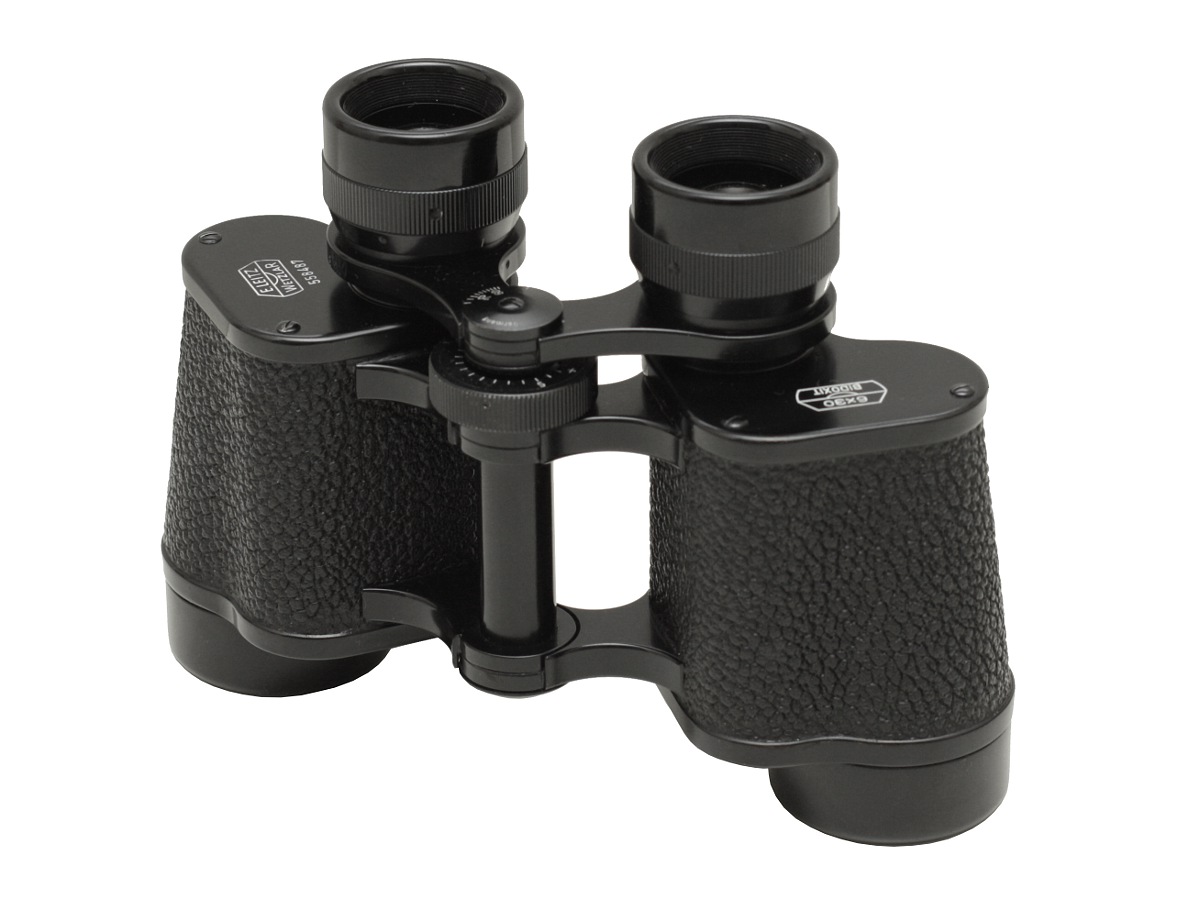
A little bit later, already in 1923, a Polish Henryk Kolberg company started to produce their own model; they were followed by German Leitz Wetzlar, with Bidox and Bidoxit models, presented in 1927 and the Swiss Kern Aarau. In 1935 the Czech Meopta joined that group.
Legendary binoculars - Swarovski Habicht 8x30 - Introduction
Leitz Bidoxit 6x30 binoculars manufactured between 1927-1962.

Wilhelm Swarovski was fully aware of the development of 6x30 class optics but he didn't want to just profit from ready solutions. Having access to specialistic technologies of glass production and finishing used in the factory of his father for production of jewellery crystals he managed to design an innovative process of production and polishing of prisms. Then, in 1935, he constructed his first private 6x30 pair of binoculars.

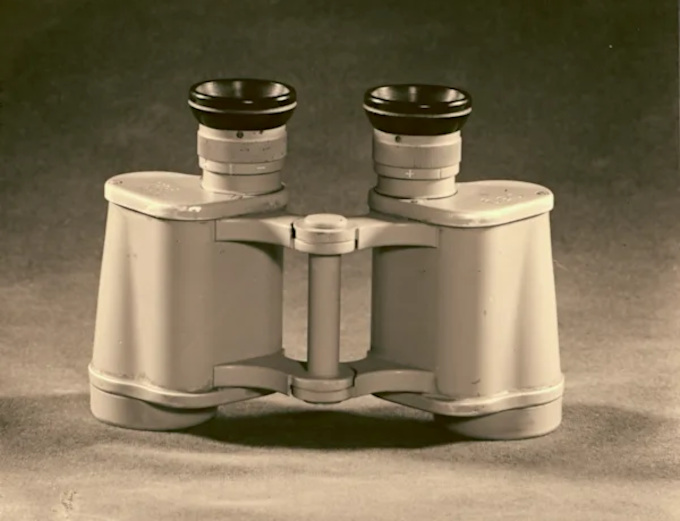
The plans of Wilhelm and future development of his company were thwarted by geopolitical issues – the anschluss of Austria in 1938 and the following World War II. During the war jewellery stopped to be a priority, military equipment mattered far more. The Wattens factory became engaged to produce a 6x30 military pair of binoculars. Up to 1945 they managed to produce about 180,000 of them
Legendary binoculars - Swarovski Habicht 8x30 - Introduction
Swarovski Optik (Dienstglas Doppelfernrohr) DF 6x30 binoculars made in Wattens during WWII. Source: Swarovski Optik.

The end of war meant a division of Austria into four occupation zones, controlled by Great Britain, France, the United States and the Soviet Union. Wattens belonged to the French zone. The division lasted up to 1955 but even before it was ended Wilhelm Swarovski decided to establish his own company, in Absam, a place situated literally several kilometers from Wattens. That's how in 1948 a new company called Swarovski KG was created. One year later they changed the name into Swarovski Optik KG.

Legendary binoculars - Swarovski Habicht 8x30 - Introduction
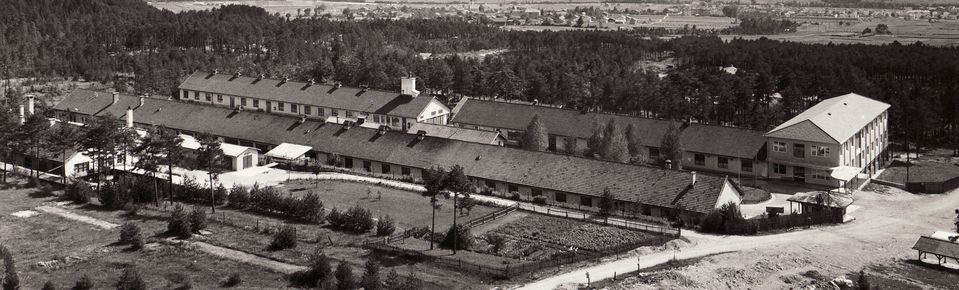
Absam factory around 1950. Source: Swarovski Optik.

Already in 1948 they released their first 6x30 binoculars, a civilian version of the military model, known from the times of war. It was based on achromatic doublet in the objective lens, Porro prisms of first type and a 3-element Kellner eyepiece. The same year a 7x42 model joined the first instrument. Its production was symbolic in the first year, only about one thousand of specimens compared to about 3000 specimens of 6x30 instrument. Still the company was developing in leaps and bounds and soon in the new Absam Swarovski Optic factory worked about 170 employees.

Legendary binoculars - Swarovski Habicht 8x30 - Introduction
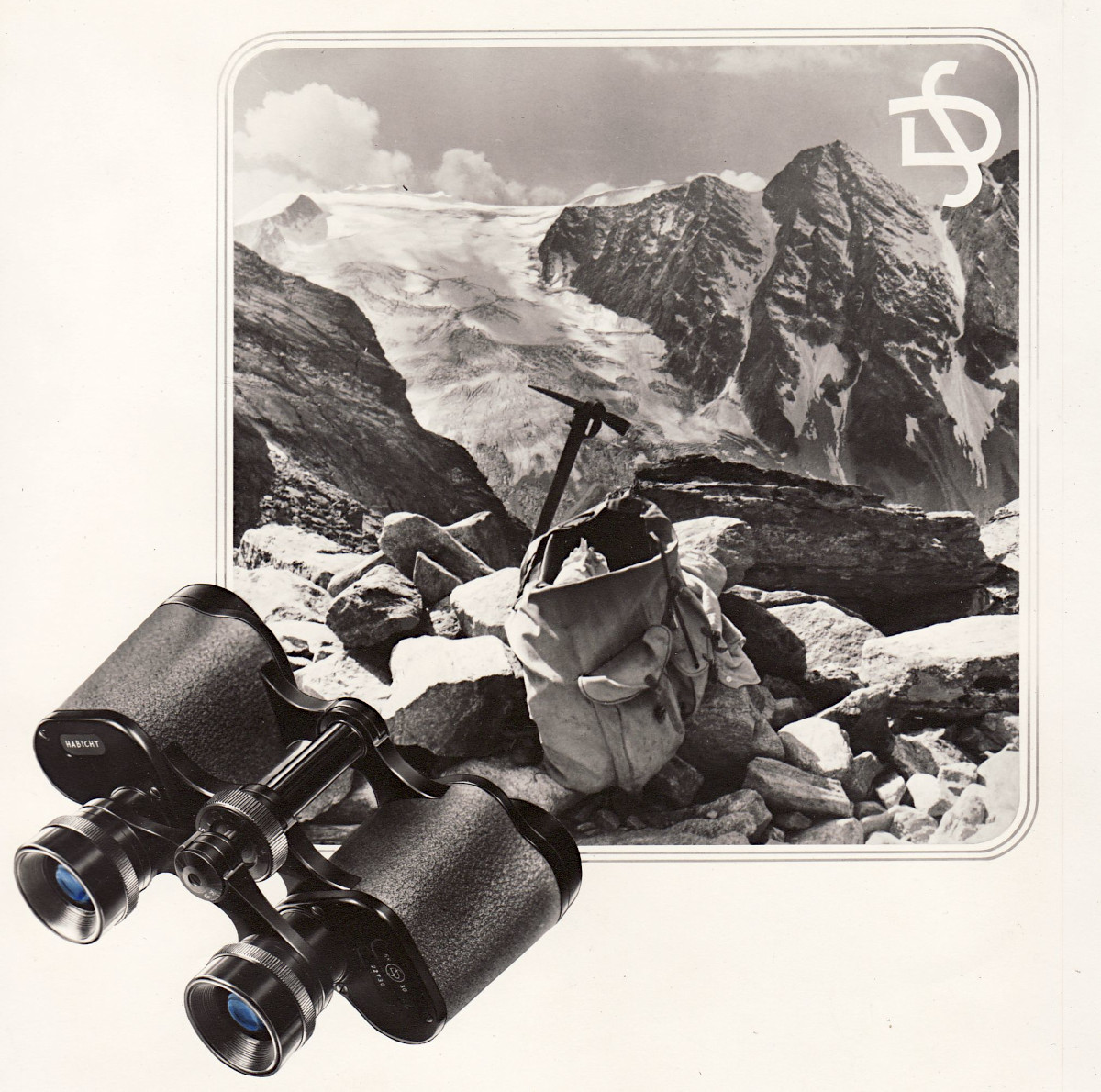
Swarovski Optik brochure from 1950. Source: Swarovski Optik.

Early models featured an inscription SWAROVSKI and Absam-Tirol on the cover of the left prism and parameters along with a serial number on the right side. In 1949 it was changed - at that time the name Habicht, meaning goshawk in German appeared for the first time. It was connected to the new logo of the company. In 1949-1952 this name was put on the barrel of the left prism and it was written in capital letters. In these times the production volume was rather symbolic – about 3500 of 6x30 models and also 3500 of 7x42 models left the assembly lines. However 1952 was to bring big changes...

Legendary binoculars - Swarovski Habicht 8x30 - Introduction
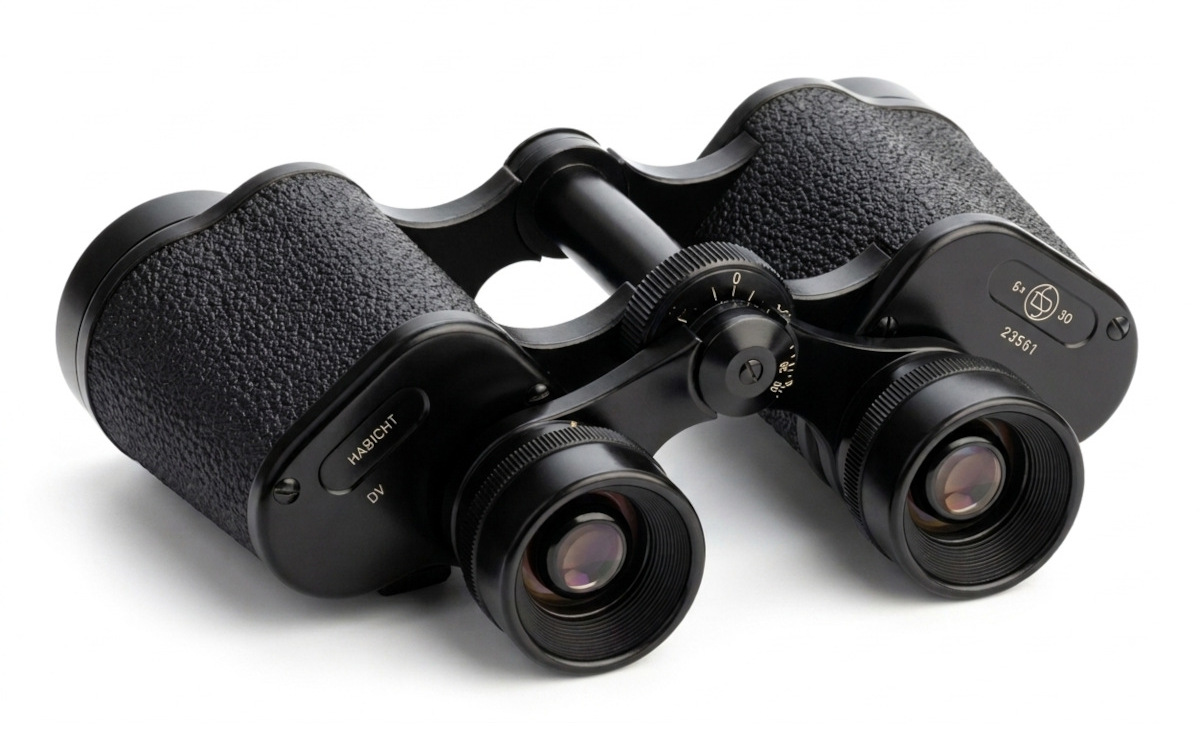
Swarovski Habicht 6x30 M binoculars manufactured between 1949-1952.


Previous chapter