


Review of four 15x56 binoculars
1. Introduction
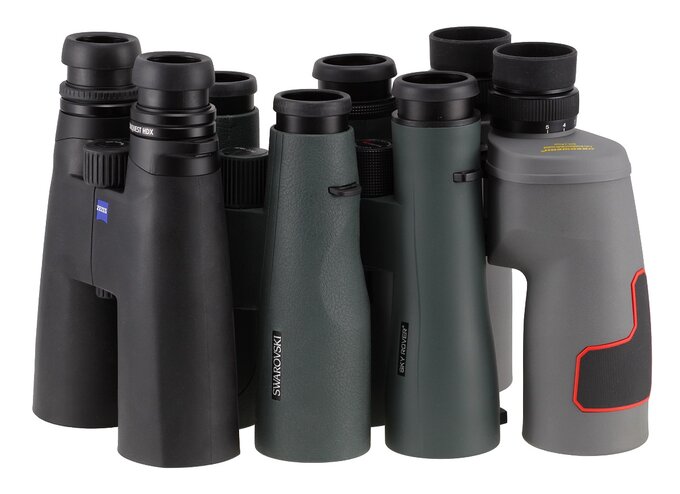
Although this is a relatively small sample, the market continues to evolve rapidly with new players entering the field. For this reason, I decided to focus our next group test on the 15x56 class. This will significantly expand our coverage of thoroughly reviewed models, offering our Readers better insight and context when choosing their ideal instrument.
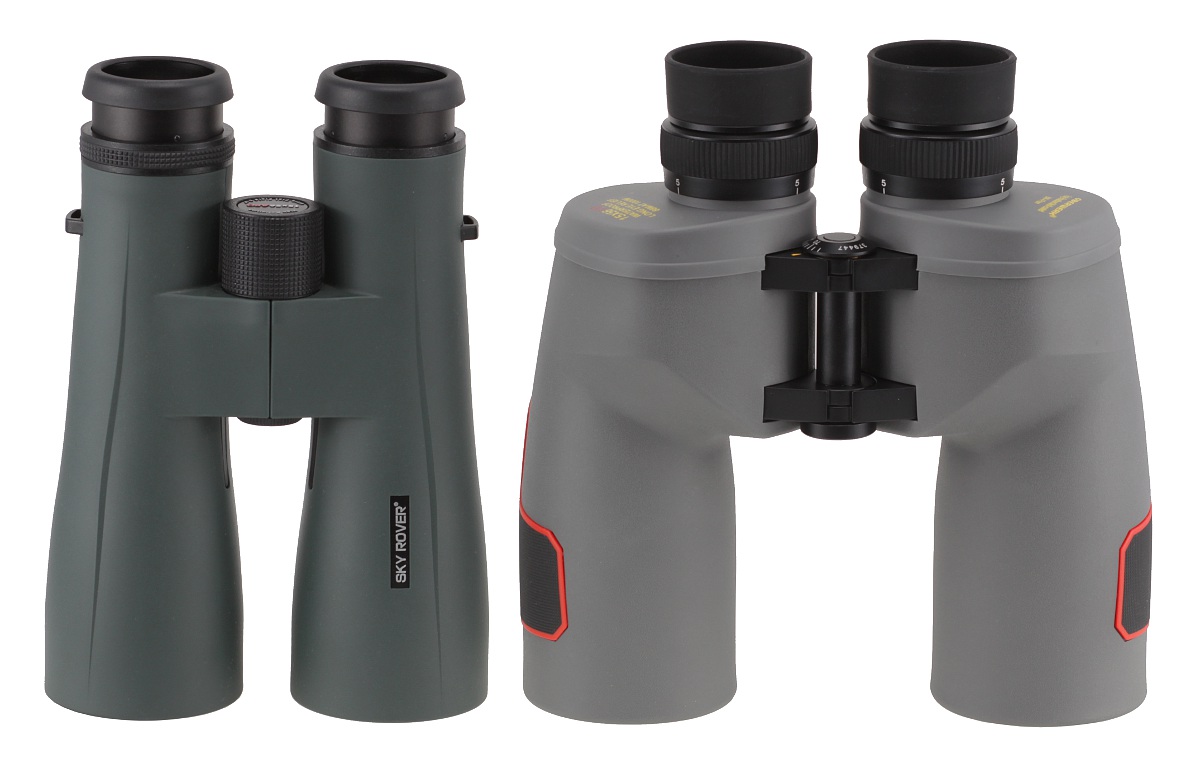 |
- Oberwerk Ultra ED 15x56, supplied by Oberwerk through its European distributor, Artesky;
- Sky Rover Banner Cloud 15x56 APO, sent directly by the manufacturer from China;
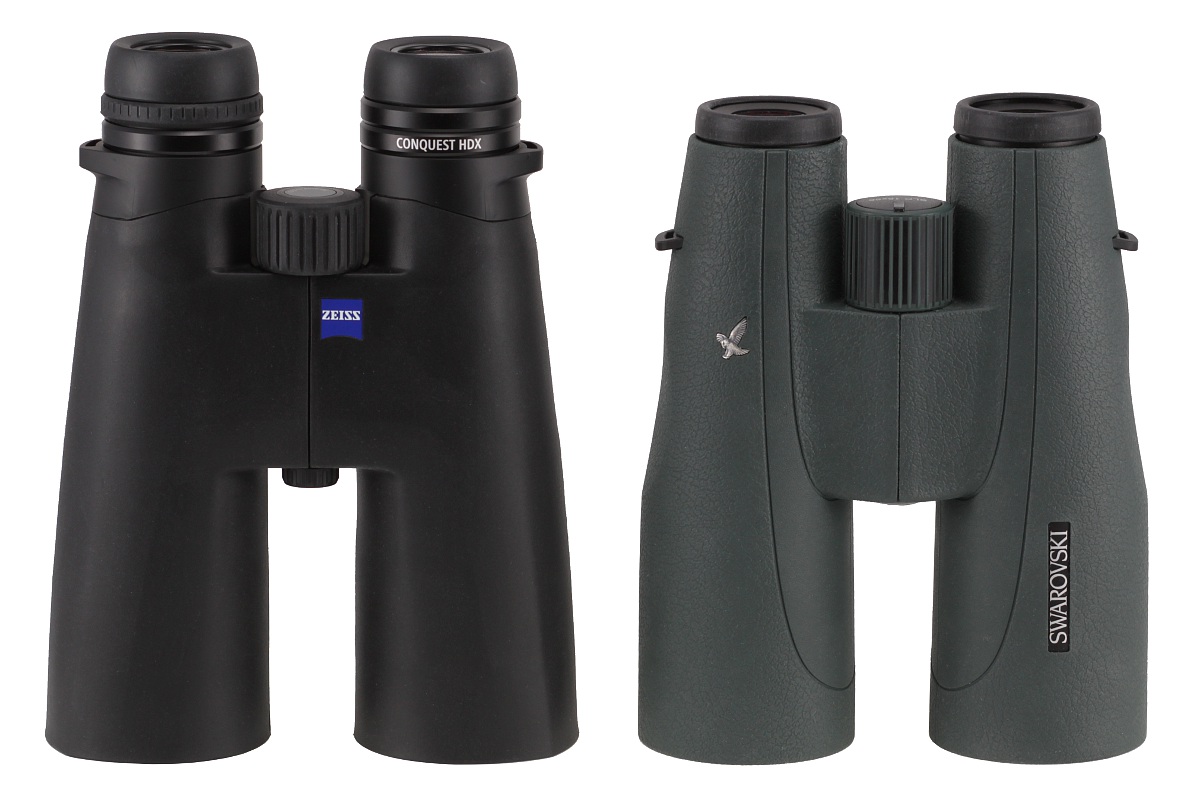
- Swarovski SLC 15x56 W B, shipped straight from company headquarters in Absam, arranged via Swarovski’s Polish division;
- Zeiss Conquest HDX 15x56, provided by the official Polish distributor of Zeiss sports optics, MK Szuster.
Please Support UsIf you enjoy our reviews and articles, and you want us to continue our work please, support our website by donating through PayPal. The funds are going to be used for paying our editorial team, renting servers, and equipping our testing studio; only that way we will be able to continue providing you interesting content for free. |
- - - - - - - - - - - - - - - - - - - - - - - - - - - - - - - - - - - - - - - - - - - - - - - -
 |
 |
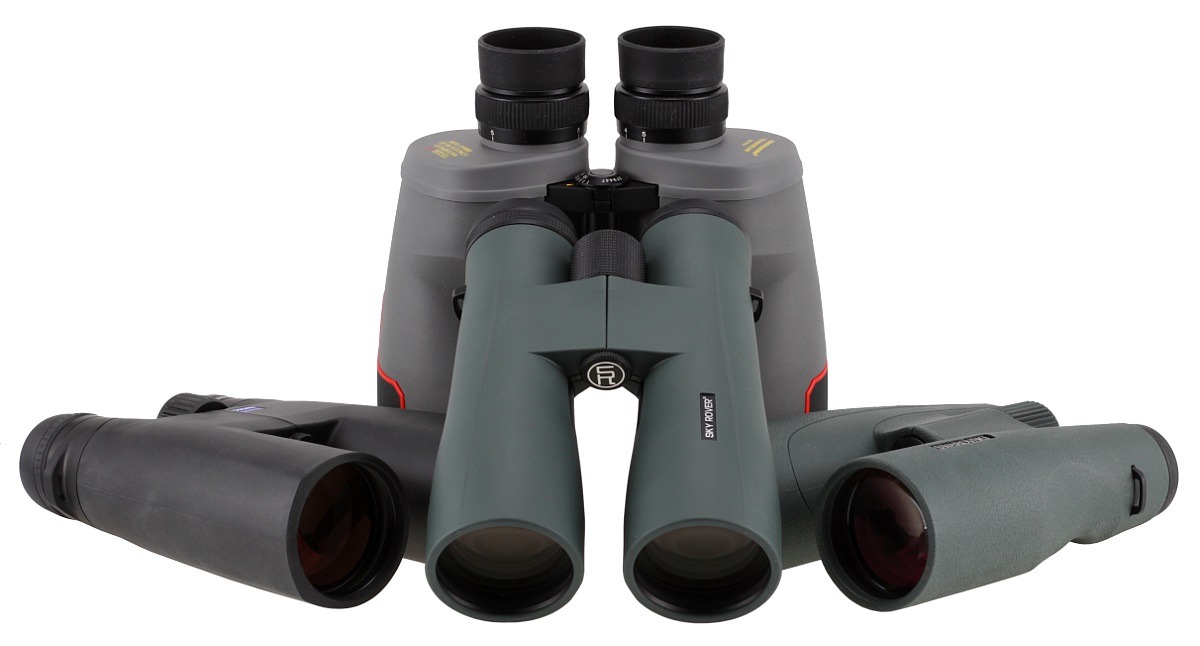
A comparison of all key specifications for the reviewed binoculars can be found in the following table, a condensed version of which is presented below.
| Parameter | Oberwerk Ultra ED 15x56 | Sky Rover Banner Cloud 15x56 APO | Swarovski SLC 15x56 W B | Zeiss Conquest HDX 15x56 |
|---|---|---|---|---|
| Field of view (°) | 4.7 | 5.3 | 4.5 | 4.6 |
| Eye relief (mm) | 18 | 18 | 16 | 18 |
| Min. focusing distance (m) | 15 | 5 | 3.9 | 3.5 |
| Weight (g) | 1475 | 1180 | 1200 | 1265 |
| Dimensions (mm) | 203 x 203 | 198 x 134 | 192 x 141 | 210 x 145 |
| Price [EUR] | 529 | 779 | 2570 | 1580 |
When it comes to the scoring system, I decided to borrow and slightly adapt the approach introduced by my colleague Holger Merlitz. Each test category will feature a ranking where the winner receives 4 points and the lowest-performing model gets 1 point. I realize this is a simplified system, but it will certainly suffice for a baseline assessment.
 |
- Specifications - since we aim to select binoculars with identical basic specs for these comparative tests, the key focus here will be comparing other essential features such as weight, dimensions, eye relief, and minimum focusing distance.
- Build quality and finish - the objective here is straightforward. We assess the overall build quality, the materials used for finishing, internal blackening and cleanliness, as well as the mechanical operation of individual components.
- Field of view - it's one of the most important parameters so I feel it deserves to be assessed separately.
- Image resolution - in this case we assess sharpness in the centre and on the edge of the field of view and also diaphragm cutoff.
- White balance and contrast - here we check whether the binoculars is able to produce natural colours and what its global image contrast is.
- Chromatic aberration - in this category we assess chromatic aberration correction in the centre and on edges of the field of view.
- Distortion - we assess geometric deformation of images, checking where it appears and how pronounced it is.
- Night tests - we use stars for these tests, checking astigmatism, coma, and brightness loss on the edge of the field. We decided to gather all these features in just one category.
- Ghosting and flares - we check the appearance of area close to the exit pupil, the performance against bright source of light (both during the day against the sun and at night, looking at bright lampposts).
Additionally, besides the four primary models included in the test, we also had a first-generation Swarovski SLC 15x56 and the latest Swarovski NL Pure 14x52 on hand for direct comparisons during testing.
With that, let us move on to the breakdown of individual test categories.