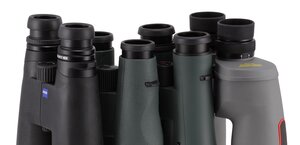



While 15x56 binoculars may not be among the most mainstream configurations, the class has firmly established its niche on the market. Our database features over 30 such models, with the oldest - such as the Steiner Rallye or the original Swarovski SLC - dating back to the 1990s.
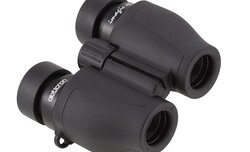
In the Polish optical community, my aversion to the smallest binoculars is quite widely known. In my articles, statements, and forum posts, I often express the opinion that, for me, binoculars only really start at a 30 mm objective lens diameter.
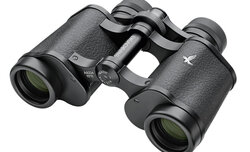
On 24th of October 1862 a little boy was born. His name was Daniel Swarovski and he lived in a small village called Jiřetín pod Bukovou, currently in the Czech Republic, just 20 km away from the Polish border.
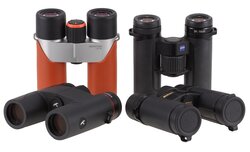
Introduction Our previous comparative test featuring four 8x30 binoculars met with a warm reception from you, which prompted me to continue this type of coverage. An opportunity for a new piece presented itself naturally, as many of you had been suggesting a review of the Zeiss SFL 10x30 - a model I happen to have on hand, as it is used by my wife.
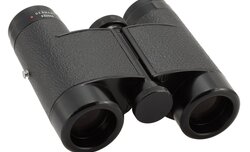
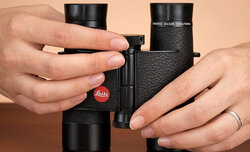
When you peruse old Leitz catalogues, published up to 1955, you find almost exclusively Porro system models. It is a very efficient image erecting system that is based on the total internal reflection so doesn\'t need any additional reflective surfaces or phase-correction coatings.
Lately I\'ve experienced some health issues and, because of that, my ability to test new lenses and to work personally in our editorial office has been very limited. I\'m afraid this situation isn\'t going to change soon.
The article series \"Legendary Binoculars\" was conceived to introduce the readers of Optyczne.pl and Allbinos.com to world-renowned, iconic binocular models manufactured in the more or less distant past.
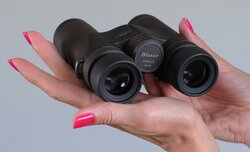
In February 2017 the German Blaser company, known better for production of firearms, decided to enter the market of sports optics and presented four new roof prism binoculars: the 8x30, the 8x42, the10x42, and the 8x56.
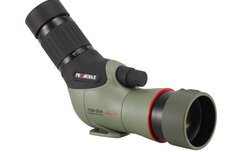
Even several years ago the TSN-550 Prominar was the flagship series of Kowa\'s small spotting scopes. In the angled version it weighed 810 grams and was 271 mm long, offering you an eyepiece with the magnification range from 15 do 45 times and an eye relief distance of 16-16.
The history of stabilized observation instruments goes back to 1980 when Fujinon launched the first Stabiscope pair of binoculars. Ten years later Zeiss showed their instrument, the 20x60 S. It\'s still an excellent pair of binoculars even for contemporary standards, with a completely mechanical stabilization system so it doesn\'t need any presence of electronic parts and power supply.

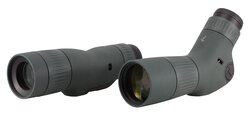
Almost every self-respecting optics manufacturer strives to include spotting scopes in their lineup. Most opt for two classes with objective lens diameters of 60-65 mm and 80-85 mm respectively, designed in both straight and angled versions.
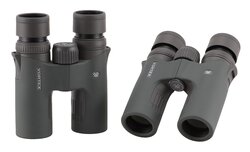
It\'s not a big secret that I\'ve always liked Vortex Optics very much and for several reasons. First of all, their sport optics line-up is very rich; second, their products come with a wide range of prices.
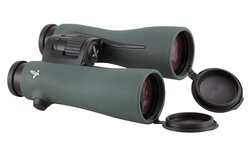
Last years we have seen a real offensive of the Swarovski Optik company when it comes to top-of-the-range binoculars of the highest price and performance series. First, on 1st July 2020 we saw the launch of the new series called NL Pure (NL from Nature Lover).
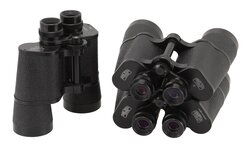
The title of this article might be a bit misleading: we want to write about binoculars from Jena but we don\'t mention the name of the company connected to that city, Zeiss. It is done deliberately. Why? We are going to explain it in a while.
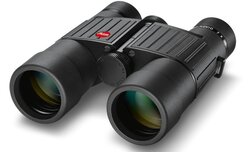
The current offer of binoculars, available on the market is dominated by 8×42 and 10×42 models; then come instruments with 8×32, 10×32 and 10×50 parameters. You don\'t have any problems with finding low light conditions 8×56 devices but they are rather available on the European market.