| Real front lens diameter |
Left: 42.01+/-
0.05 mm
Right: 42.05+/-
0.05 mm
|
8 / 8.0 pkt |
| Real magnification |
7.9+/-
0.05x
|
3/3.0 |
| Transmission |
86.5+/-
1%
|
14/25.0 |
| Chromatic aberration |
Low in the centre, a bit higher than medium on the edge. |
6/10.0 |
| Astigmatism |
Low. The situation is really good taking into account the price-point. |
7.3/10.0 |
| Distortion |
Distance between the first curved line tfrom the field of view centre and the field of view radius: 45% ± 5% |
5/10.0 |
| Coma |
Starts from a distance of about 70% field of view radius and is a bit higher than medium on the very edge. |
6.5/10.0 |
| Blurring at the edge of the FOV |
Blurr occurs in a distance of 70% ± 3% from the field of view. |
3/10.0 |
| Darkening at the edge the FOV |
Medium. |
2.5/5.0 |
| Whiteness of the image |
Colouring of images is slight purple. An interesting effect stemming from the surplus of blue and orange-red light; still these effects aren't high.
|
3.9/5.0 |
| Collimation |
Perfect. |
5/5.0 |
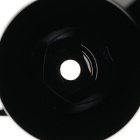
| Internal reflections |
| Left: |
Right:
|
 |
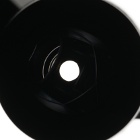 |
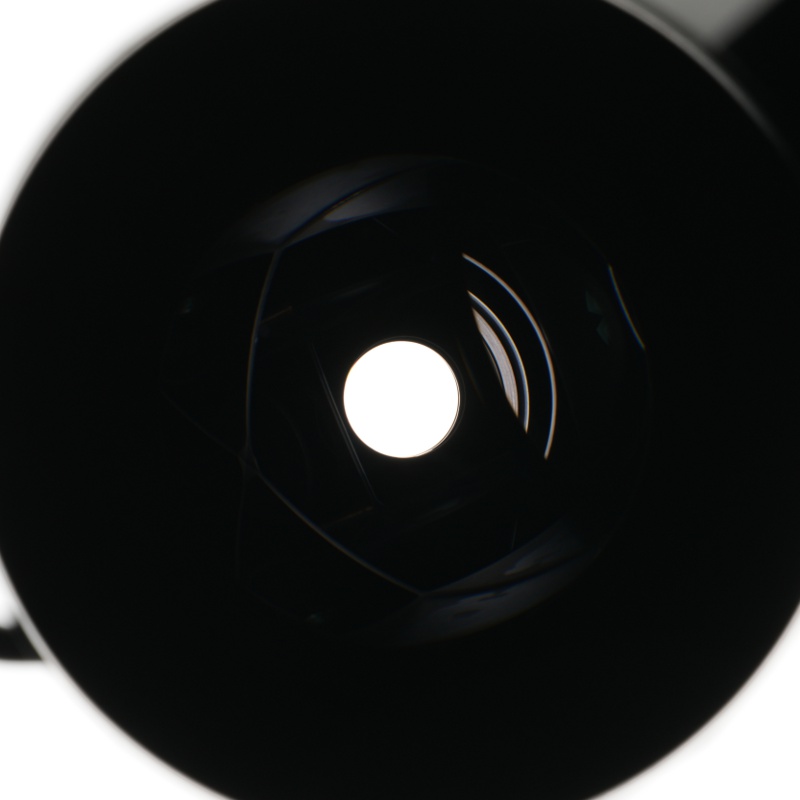
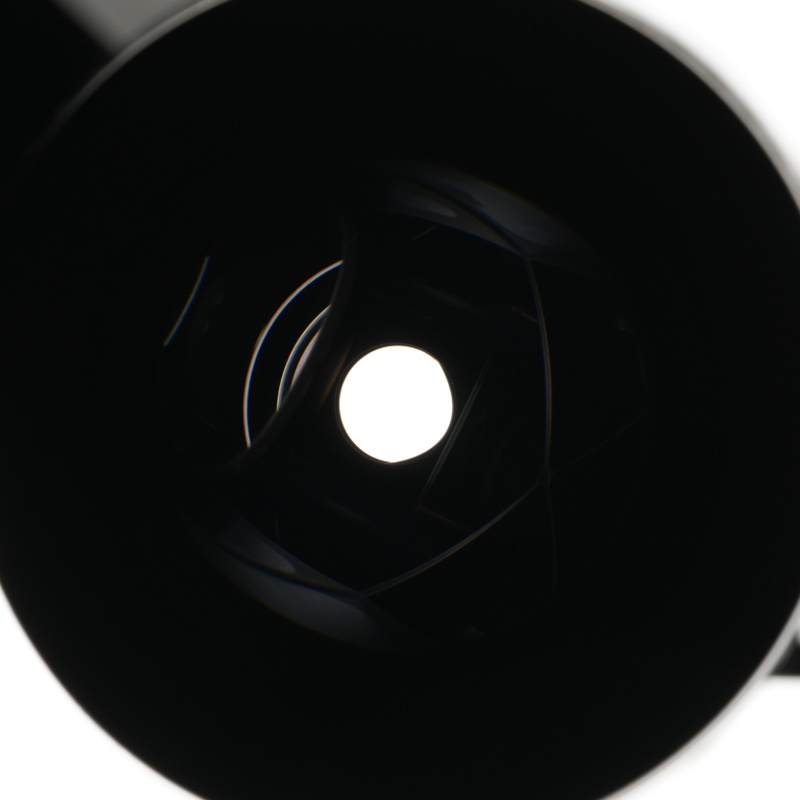
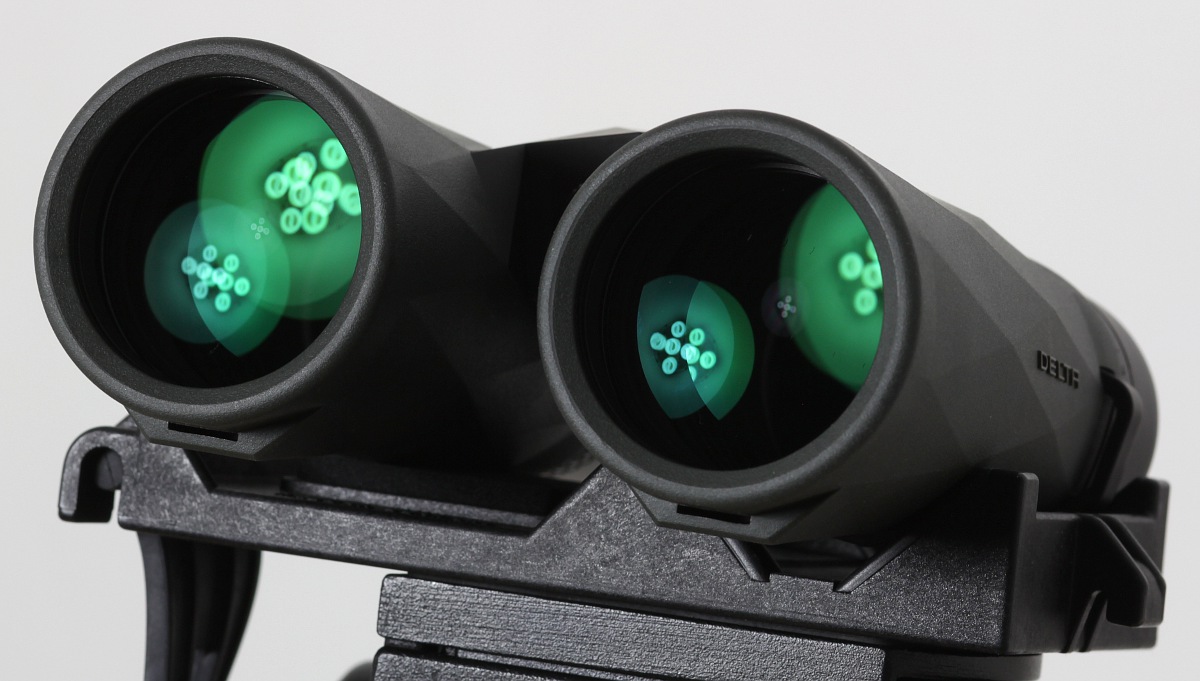
Brighter arcs next to the pupil. During work against bright light you see interesting effects. Within the field of view contrast is good, without any serious problems and the Forests performs better than many more expensive rivals. Problems appear behind the diaphragm. Like in the second generation there are light flashes that become especially bothersome when you change the position of the field. |
2.2/5.0 |
| Housing |
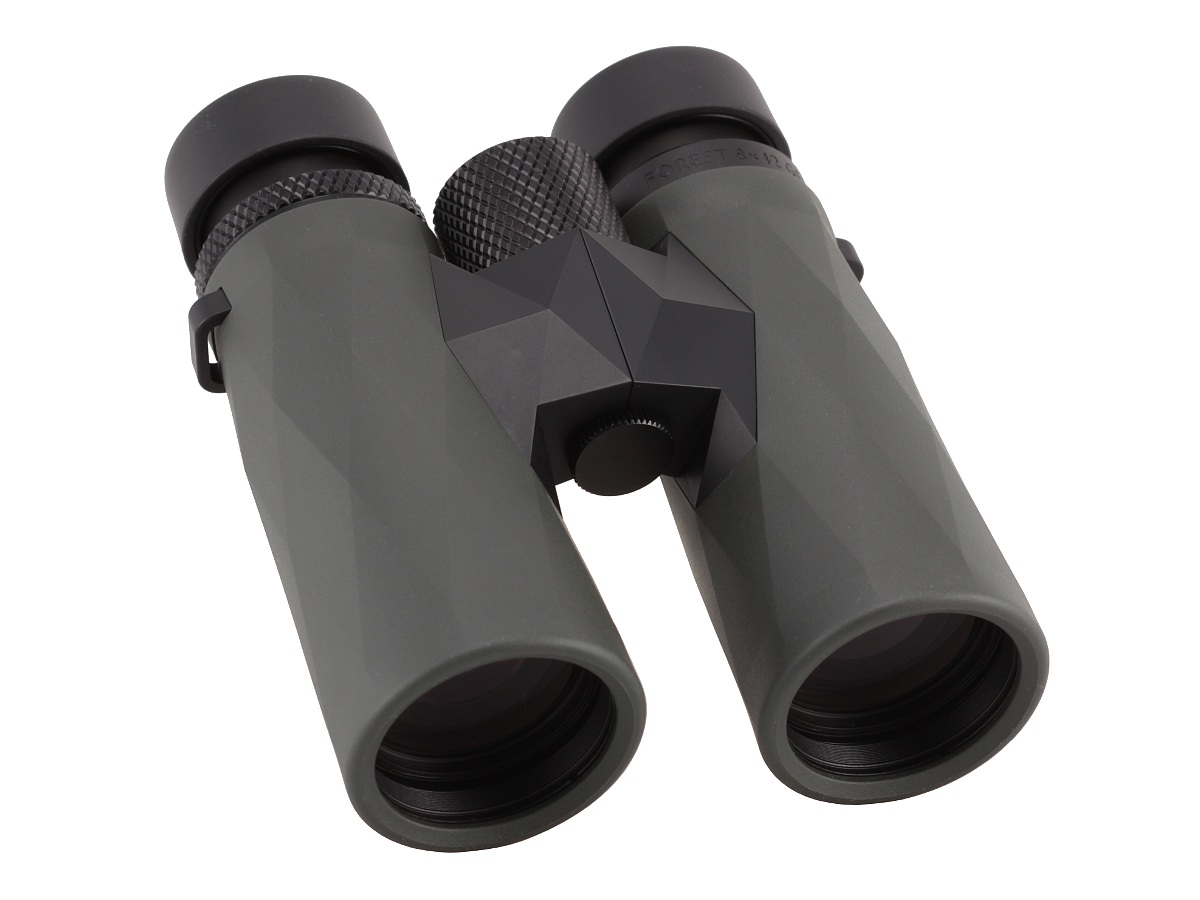
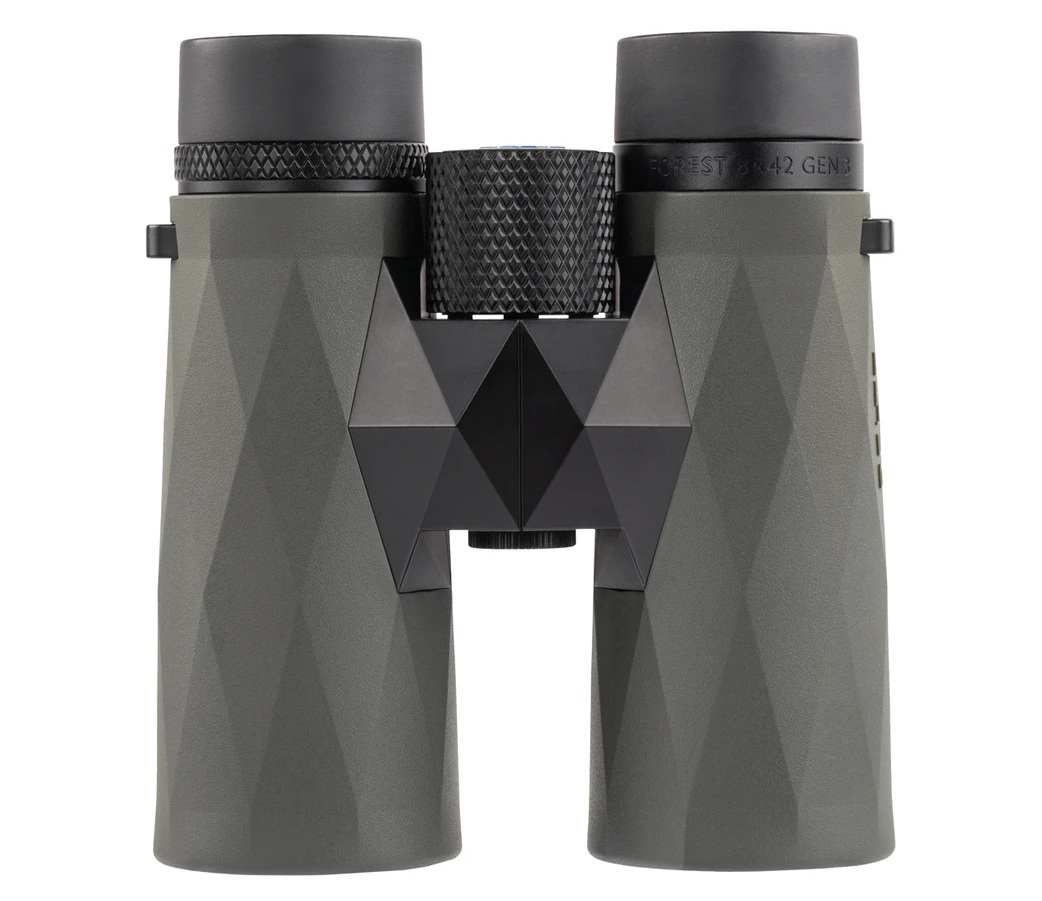
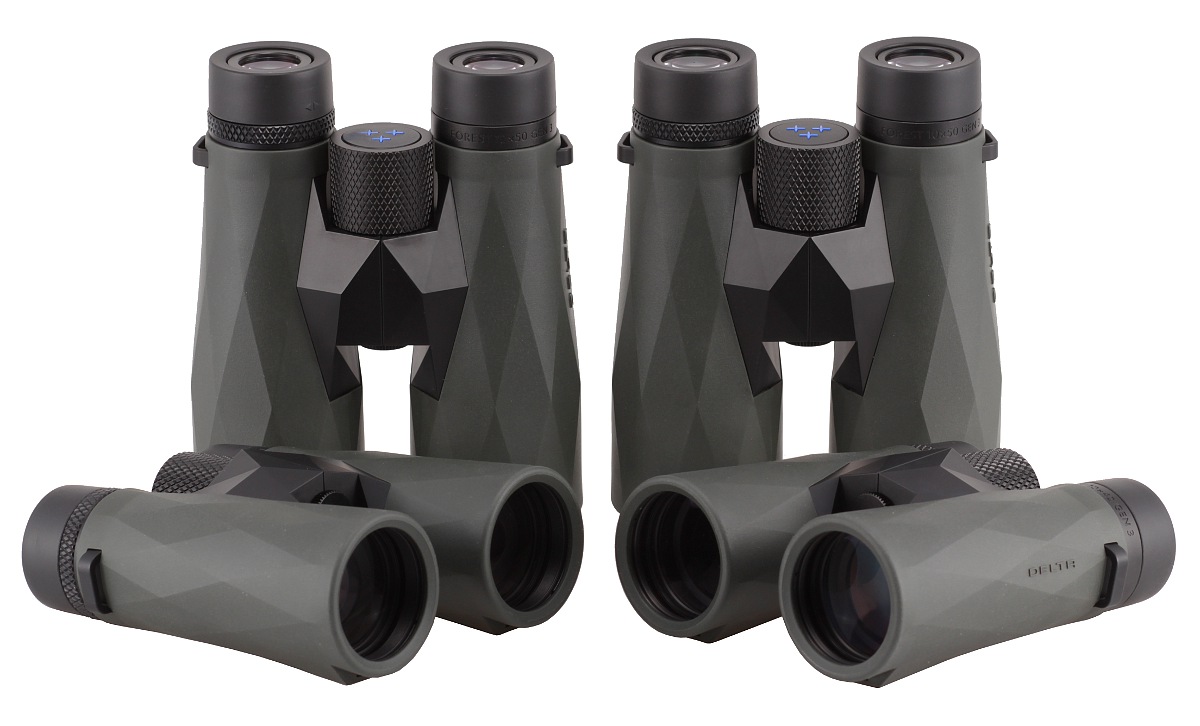
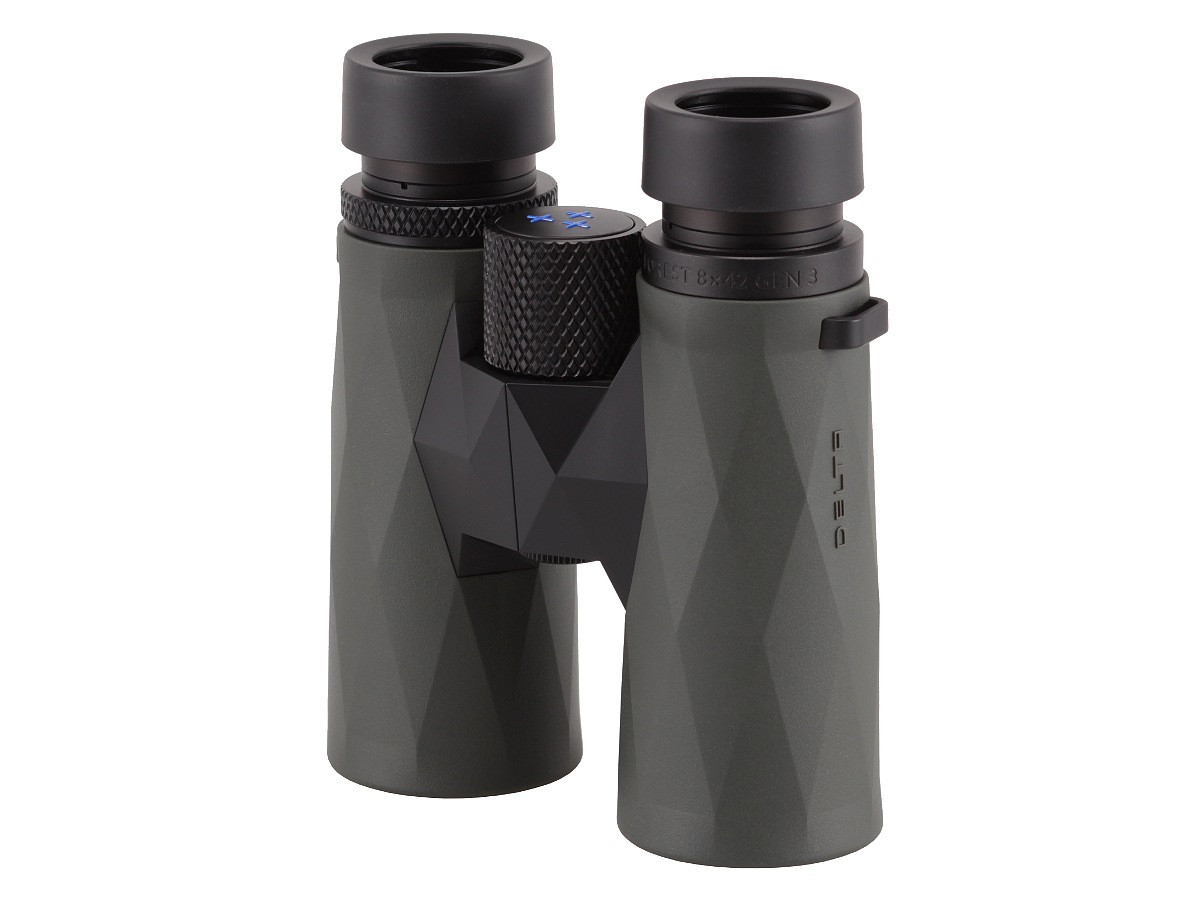
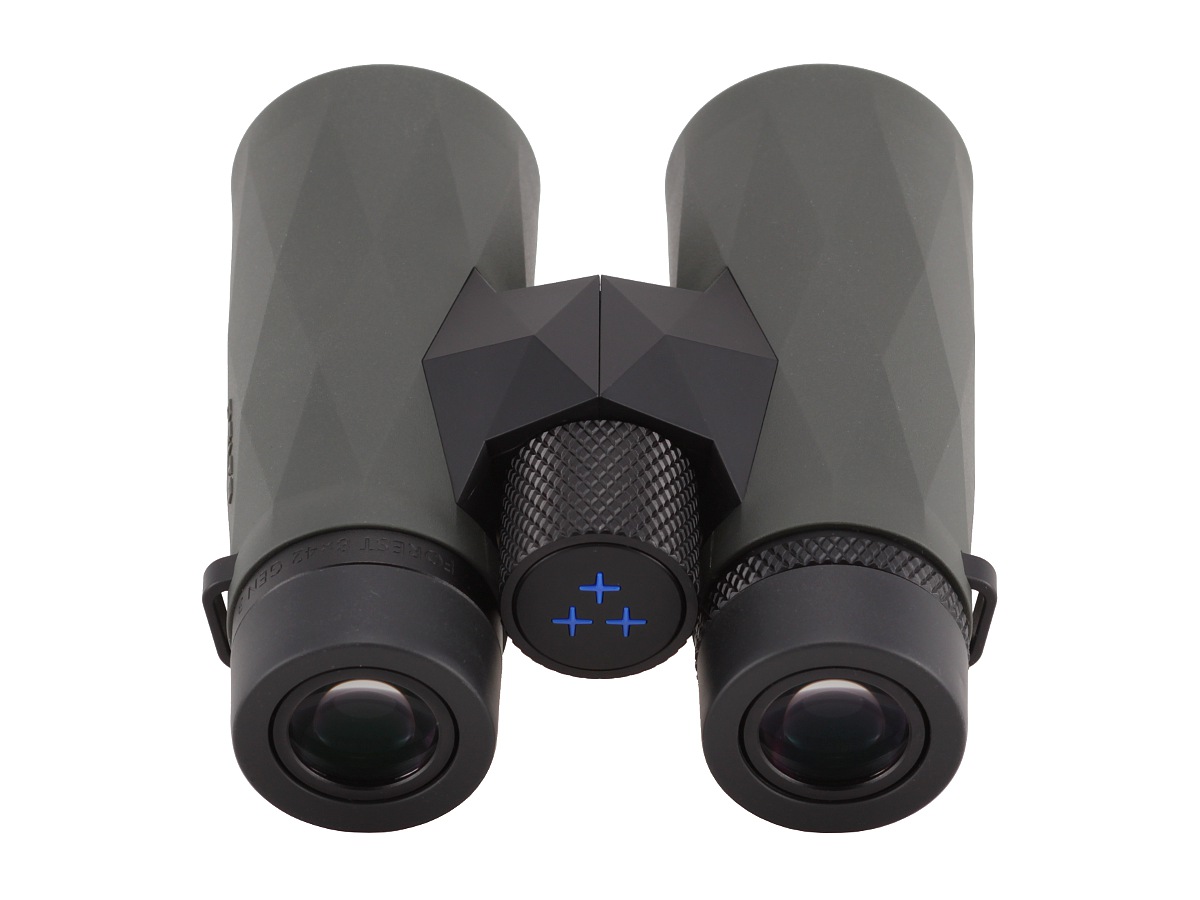
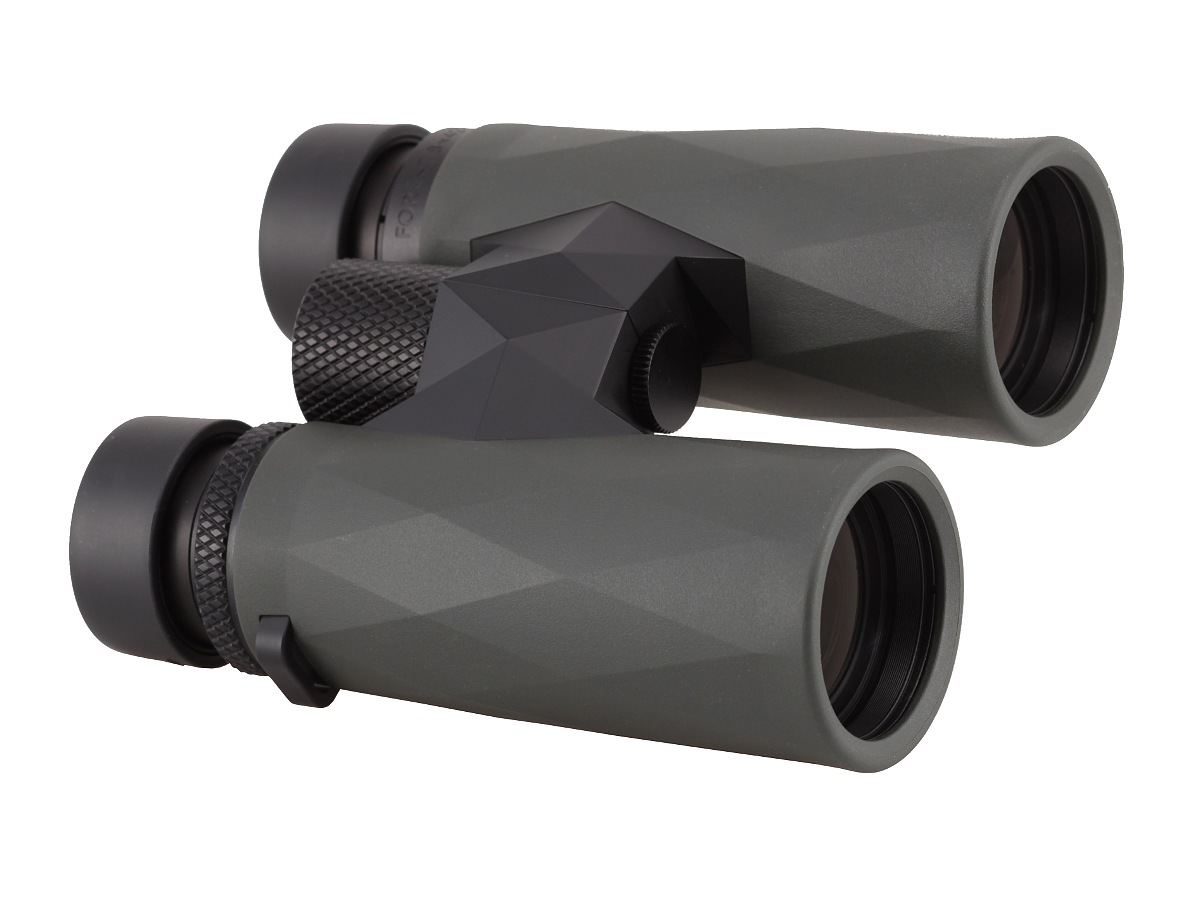
Dimensions and weight are quite typical for the 42 mm class. The real weight amounts to 705 grams so even 5 grams less than in the specification. Rubber armour is very original, sticking well to the body of the binoculars but a tad too loose near the objectives. Its smell is rather unpleasant. Rubberized eyecups with four detention stops and 41-42 mm in diameter are very comfortable. Binoculars produced in China.
|
7/8.0 |
| Focusing |
Significant central wheel with fine metal ribbing; it moves smoothly and is properly damped. Running through the whole distance range needs a turn through as much as 820 degrees – a lot. Dioptre correction on the right eyepiece; it moves the outer element. |
4.5/5.0 |
| Tripod |
Quite comfortable access. |
3/3.0 |
| Interpupilary distance |
from 56 to 73.8mm
|
4/6.0 |
| Closest focusing distance |
1.65 meters. |
2/2.0 |
| Eyepieces FOV |
Apparent field of view of 63.4 deg (simplified formula) and 58.0 degrees (tangent formula). |
13/20.0 |
| Field of view |
Measured by us amounted to 8.03 +\- 0.04 deg and it was a tad narrower than stated in official specifications. A good field for this class of equipment. |
7/8.0 |
| Quality of the interior of the barrels |
Inner tubes are dark gray and just slightly matted. There are no ribbing but you can notice several apertures. Bottom next to prisms is light gray. Quite clean, we saw just a few minuscule specks of dust on the prisms. |
3.6/5.0 |
| Vignetting |
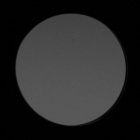
| Left: |
Right:
|
 |
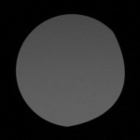 |
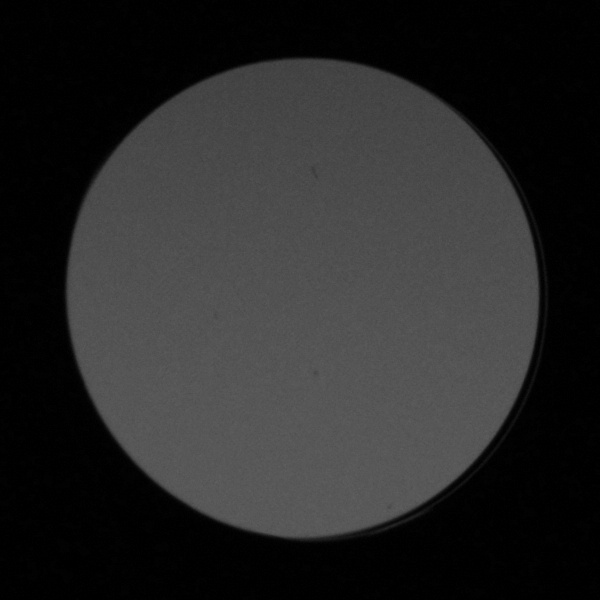
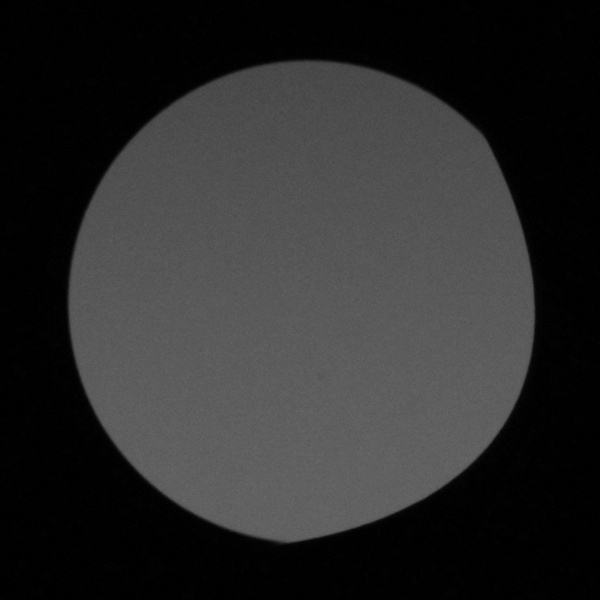
OL: 1.80%, OR: 3.55% |
5/8.0 |
| Prisms quality |
Good quality BaK-4. |
8/8.0 |
| Antireflection coatings |
Green with a slight yellow hue on the objective lenses, greenish on the prisms, green-yellow on the eyepieces. Medium intensity. |
4.5/5.0 |
| Warranty [years] |
5 |
3.5/6.0 |
| Final result |
69.2%
|
131.5 / 190 pkt
|
| Econo result |
|
0pkt. |
Summary
Pros:
- solid casing and an original design,
- very good transmission at this price-point,
- proper colour rendition,
- slight chromatic aberration in the centre of the field,
- lack of any coma problems,
- sharp images in a distance of 1.65 meters,
- proper blackening and cleanliness inside the tubes,
- excellent quality of coatings,
- high quality of prisms made of BaK-4 glass,
- very good price/performance ratio.
Cons:
- noticeable chromatic aberration on the edge of the field of view,
- sharpness of images on the edge of the field of view leaves a bit to be desired,
- truncated exit pupils.
First let's take a look at
the following chart, in order to check how the parameters of the Forests 8x42 changed across the generations. The first model was also the lightest but it didn't need to use an optically complex eyepiece because it provided a rather unimpressive field of view of 7 degrees. A huge progress we noticed in the second generation as the declared field increased to 8.52 deg. The problem was that in reality it was significantly narrower, reaching just 8.11 deg. The third generation declares a value of 8.12 deg and our measurements showed a tad lower level, that of 8.03 deg. The real regress compared to the second generation is very slight, reaching just 0.08 of a degree.
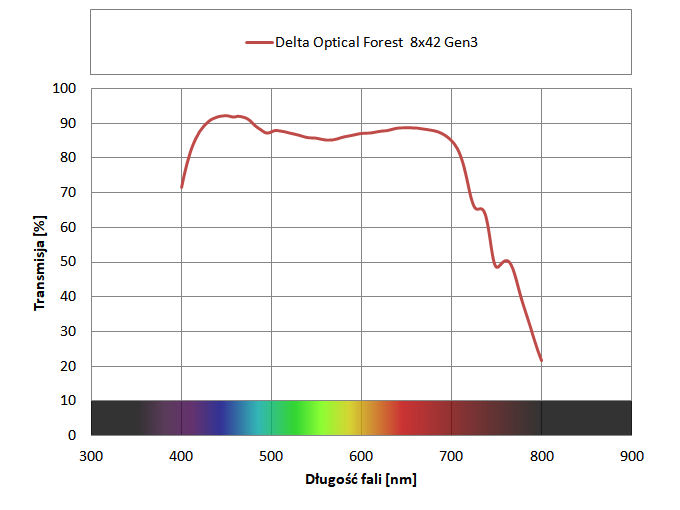
Coatings of the Forest 8x42 Gen3 seem to be cheap, greenish MC layers only at first glance. If you take a closer look you see that their intensity is low and they feature also yellowish and purple hues. The transmission graph reflects it well, along with the effect of using dielectric coatings on the Schmidt-Pechan prisms.
The transmission performance is a big and positive surprise – its graph looks like it belonged to an instrument 2-3 times more expensive, Now it's clear why the coatings reflected green-yellow light because this light exactly is missing a bit, with a dip at these wavelengths. The average transmission in the centre of the visible spectrum reaches 86.5%. It is a decent result, much better than in the case of the predecessor that was by 14 percentage points weaker.
The performance in the blue light spectrum is a huge surprise. At this place it is difficult to get high results but the cheap Forest reaches its maximum at this point with a value of 92%, no mean feat.
Looking at the pros and cons list, the final score in our test, and the design of the lens along with its workmanship we have no doubts it should be praised by its excellent price/quality index. In many categories you get as much, or even more, as in instruments 2-3 times more expensive and you pay just about 200 Euro for it. I think any beginner observer will be pleased with such a piece of equipment.