

.

AllBinos.com

Binoculars review

Carl Zeiss SFL 8x50

Carl Zeiss SFL 8x50
16 August 2026
Optyczne.pl 
For many years the 50 mm class of binoculars had been a key part of the Zeiss line-up. In some moment it changed, though, that the top-of-the-range models with this objective diameter stopped to be produced. As a result the Zeiss customers had to make do by buying either more budget models from the first Conquest series or an aged Porro Marine 7x50 B/GA T* instrument. As if it wasn't enough in 2017 this model was also withdrawn from production. The effect was such that in 2018-2024 Zeiss didn't produce any 50 mm models.


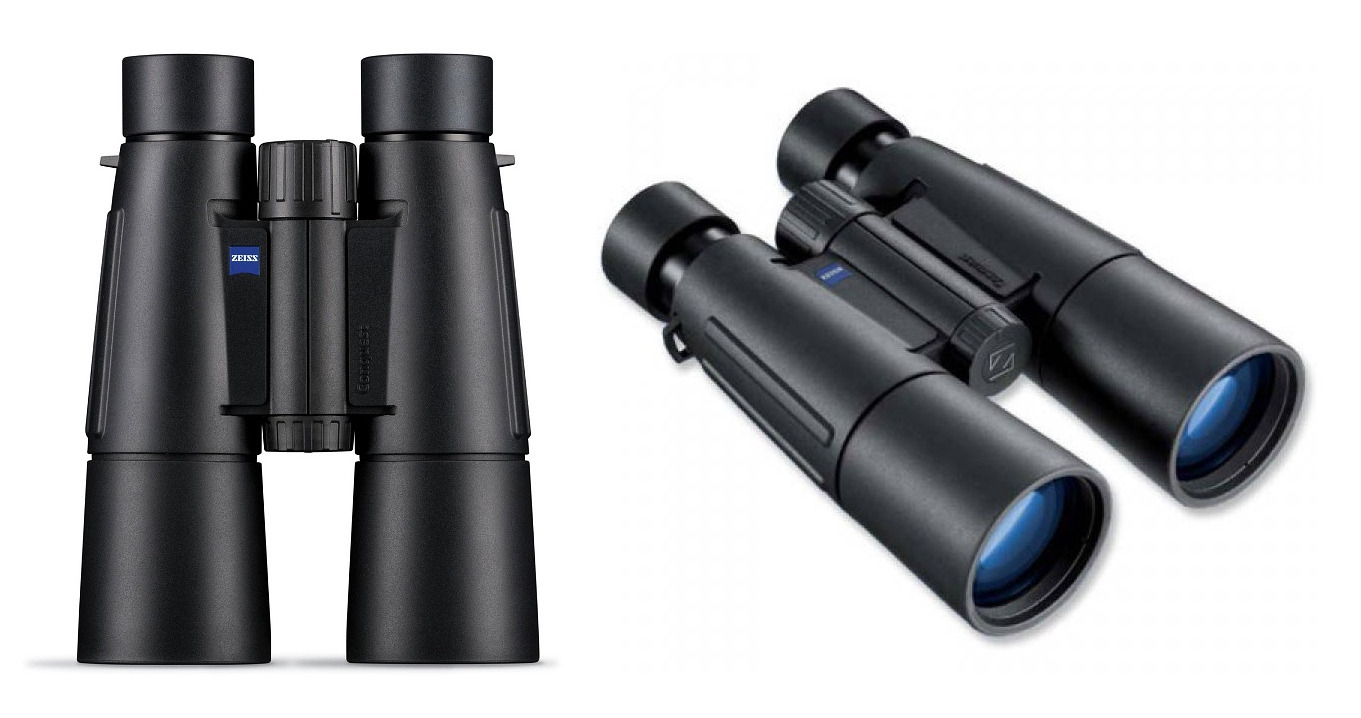
Zeiss Conquest 8x50 T* and 10x50 T* binoculars manufactured between 2006 and 2013.

At the beginning of the second decade of 21st century the offer of Zeiss presented itself like this: at the very top was the Victory line, divided into night Victory HT with objectives of 54 mm (at the same time the last specimens of Victory HT 42 mm were disappearing from the shelves) and smaller Victory SF models, offered with 32 and 42 mm objectives. All these binoculars were optically and mechanically excellent but also expensive, big, and heavy.

One level lower was positioned the Conquest HD series. Here you dealt with far more affordable prices of 1000 USD. What's important, for such an amount of money you got very good optical properties and excellent build quality. The weight and physical dimensions were a compromise you had to tolerate, here Zeiss didn't restrain themselves.

The problem was such that anybody interested in good Zeiss optics could choose between two top series that didn't feature any handy, lightweight pair of binoculars. Zeiss decided to deal with such a problem and they came up with the SFL series concept, meaning 'Smart Focus' and 'Lightweight'. When it came to price and quality the new series was supposed to be right in between the Conquests HD/HDX and the Victories SF and HT.
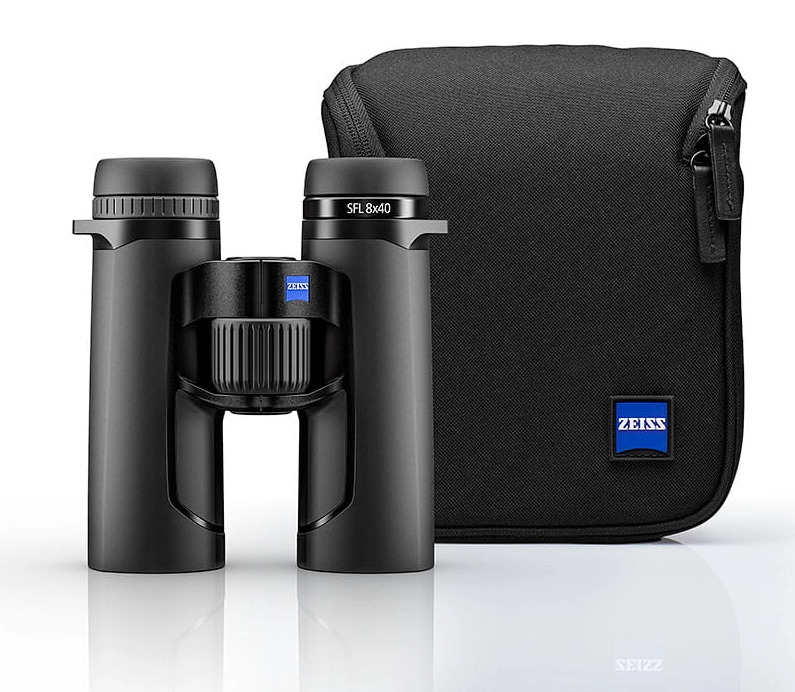

Zeiss SFL 8x40 binoculars announced in March 2022.

In March 2022 they presented the SFL 8x40 and 10x40 with Schmidt-Pechan prisms and excellent parameters. They were small and handy, with weight never exceeding 650 grams so really lightweight for the 40-42 cm class. Add to that a comfortable eye relief distance, amounting to 18 mm and a possibility of focusing from 1.5 meters. There was no compromise when it comes to fields of view because the 8x instrument provided 8 degrees and the 10x – 6.6 degrees.


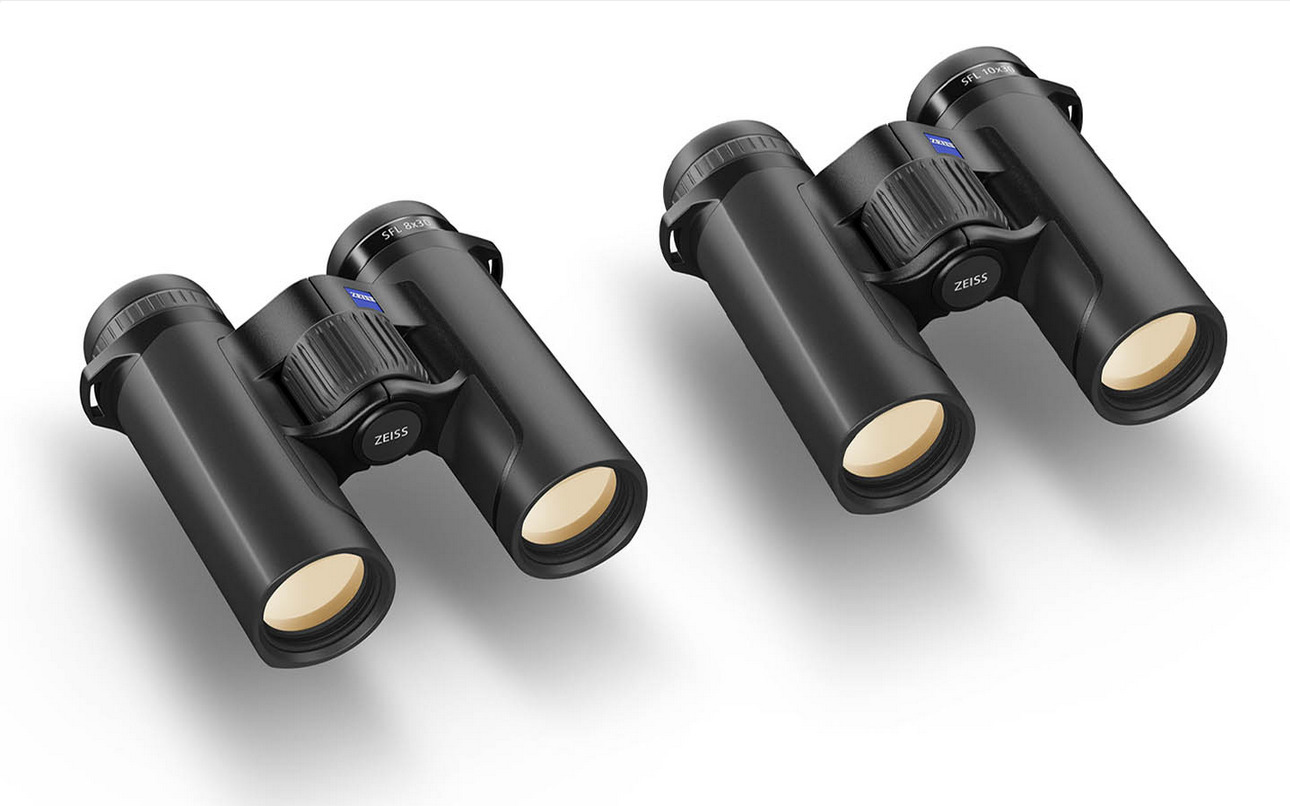
Zeiss SFL 8x30 and 10x30 binoculars introduced in January 2023.

Another step forward was taken in January 2023 – Zeiss presented even more interesting models, the SFL 8x30 and 10x30. Their fields were even wider, 8.1 deg in the first case and 6.9 in the second, at a slight expense of the eye relief distance which remained on a level of 18 mm. Also the minimum focusing distance remained the same and everything was closed in very stylish, really compact and light casings – both models weigh just 460 grams.


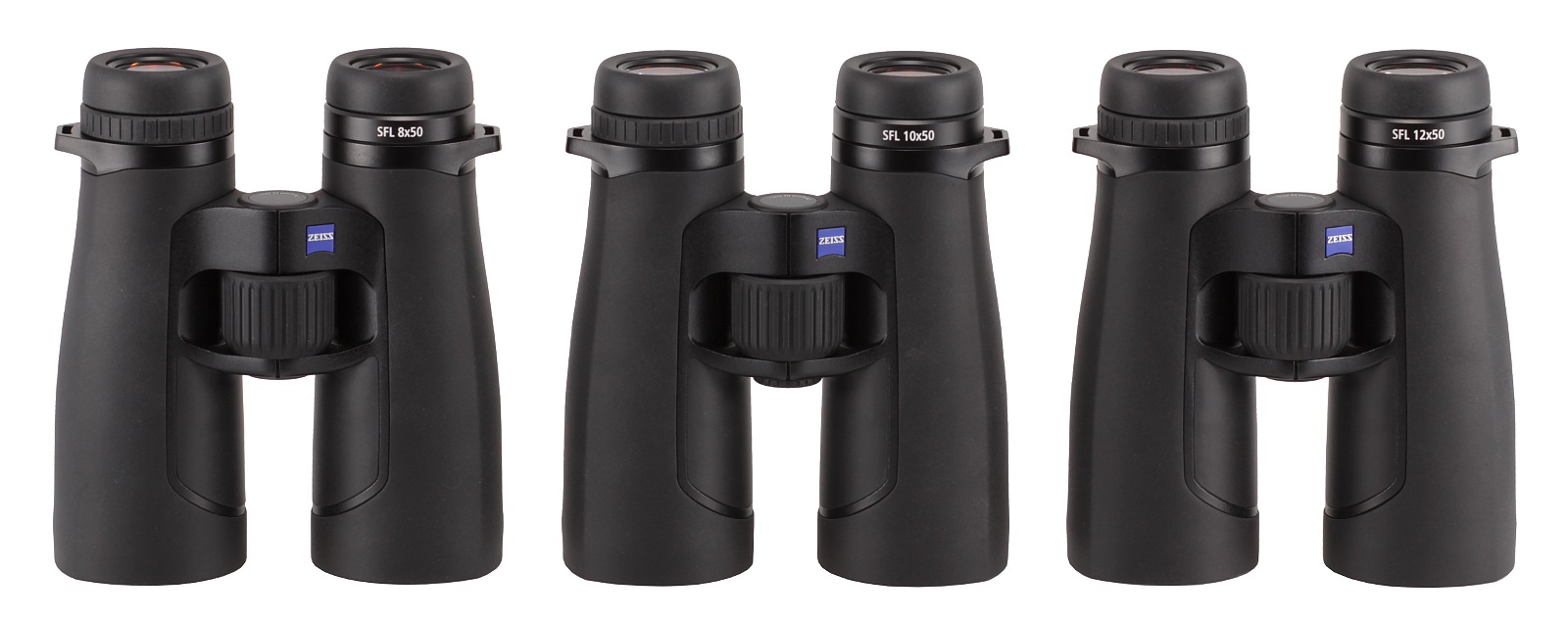
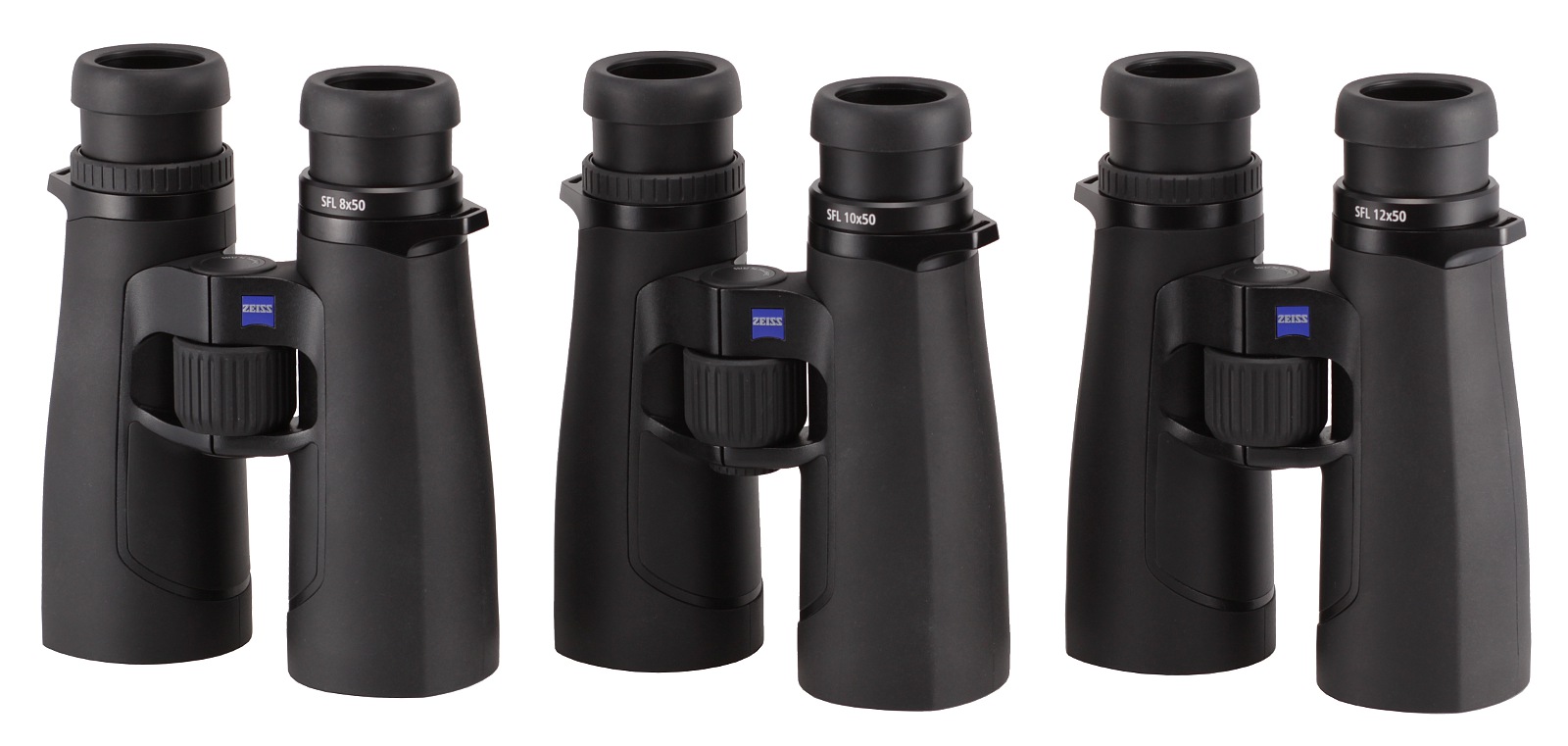
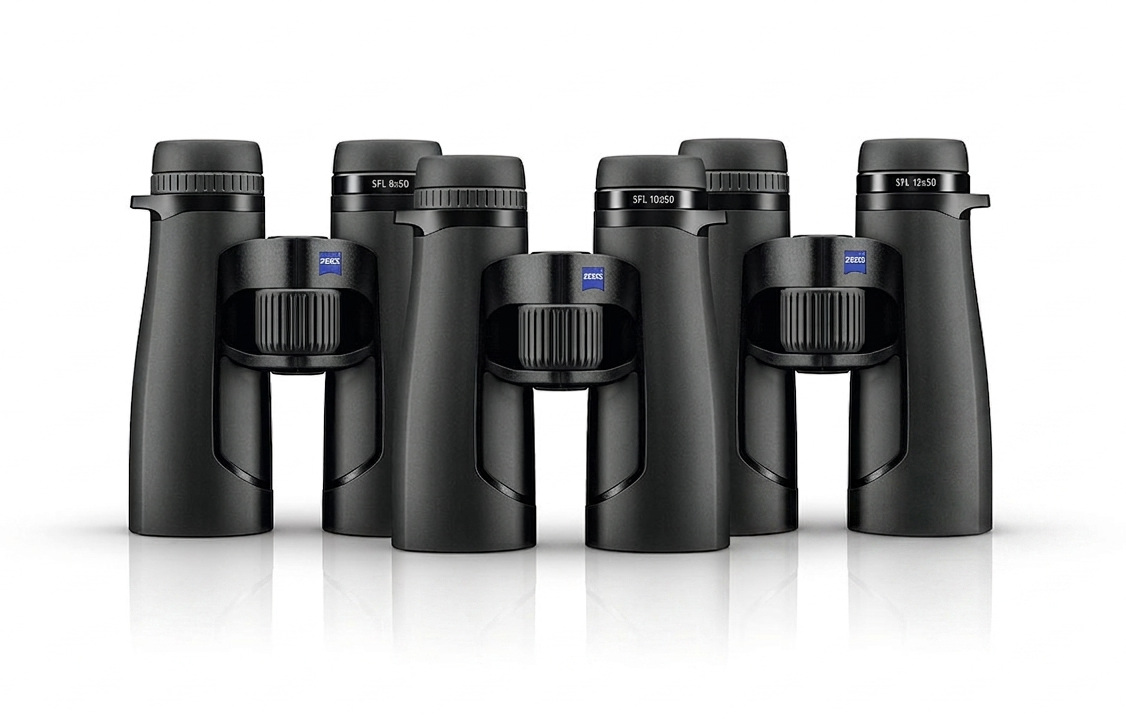
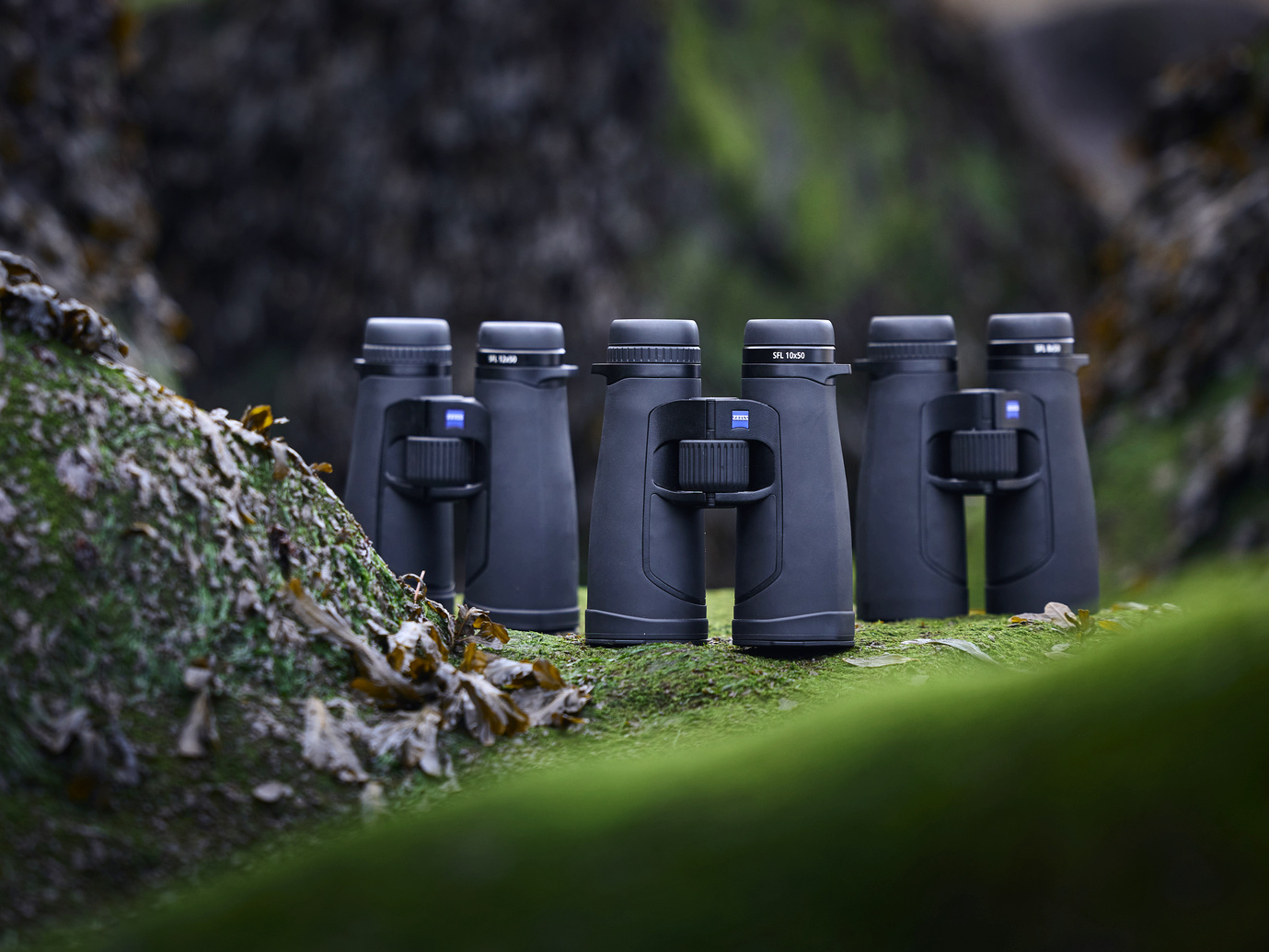
Zeiss SFL 8x50, 10x50 and 12x50 binoculars announced in April 2025.

Still Zeiss waited till April 2025 with their most interesting move. To be honest I thought that the SFL series will end with 30 and 40 mm launches. Zeiss surprised me very nicely by launching 8x50, 10x50 and 12x50 instruments.


Zeiss SFL 8x50, 10x50 and 12x50 binoculars announced in April 2025.

Like in case of smaller models you deal here with the UHD system (UHD standing for Ultra-High-Definition) that means that in the objective lenses are elements made of low dispersion glass, most likely fluorite. It is supposed to ensure proper correction of chromatic aberration. The objective lens design is based on the 2+1 system triplet that is joined to an additional focusing element. Then we get prisms and wide angle eyepieces which construction differs depending on the model but typically features from 5 to 7 elements.

What's more, all air-to-glass surfaces are covered by high quality T* anti-reflective coatings. The outer elements are additionally protected by hydrophobic LotuTec layers. Prisms set in the Schmidt-Pechan system are phase correction coated (P-coating) and the reflective surfaces feature dielectric coatings. The producer declares that the SFL models can get transmission on a level of 90%. The binoculars seem to have exactly the features you expect from a premium optical instrument.


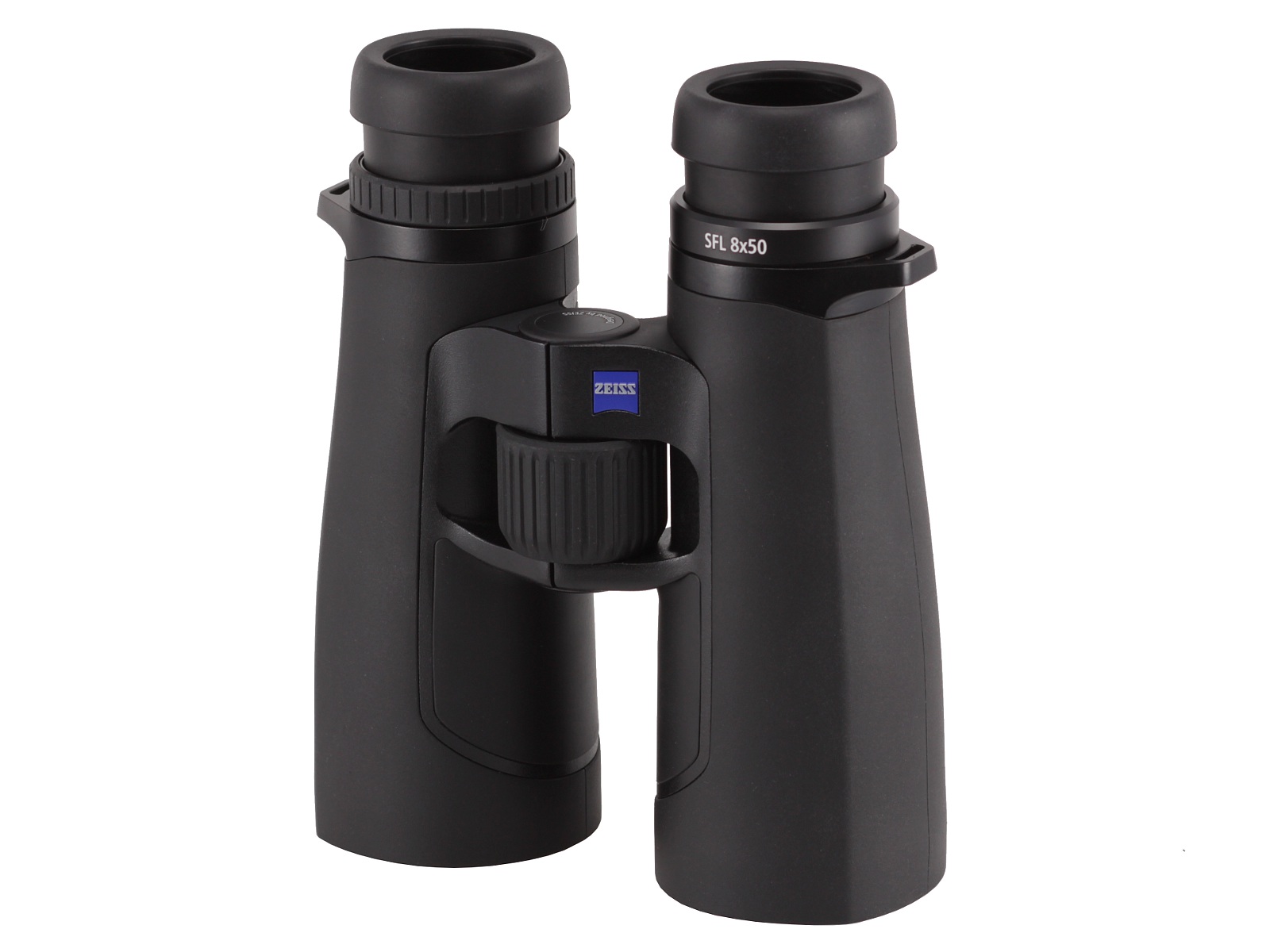
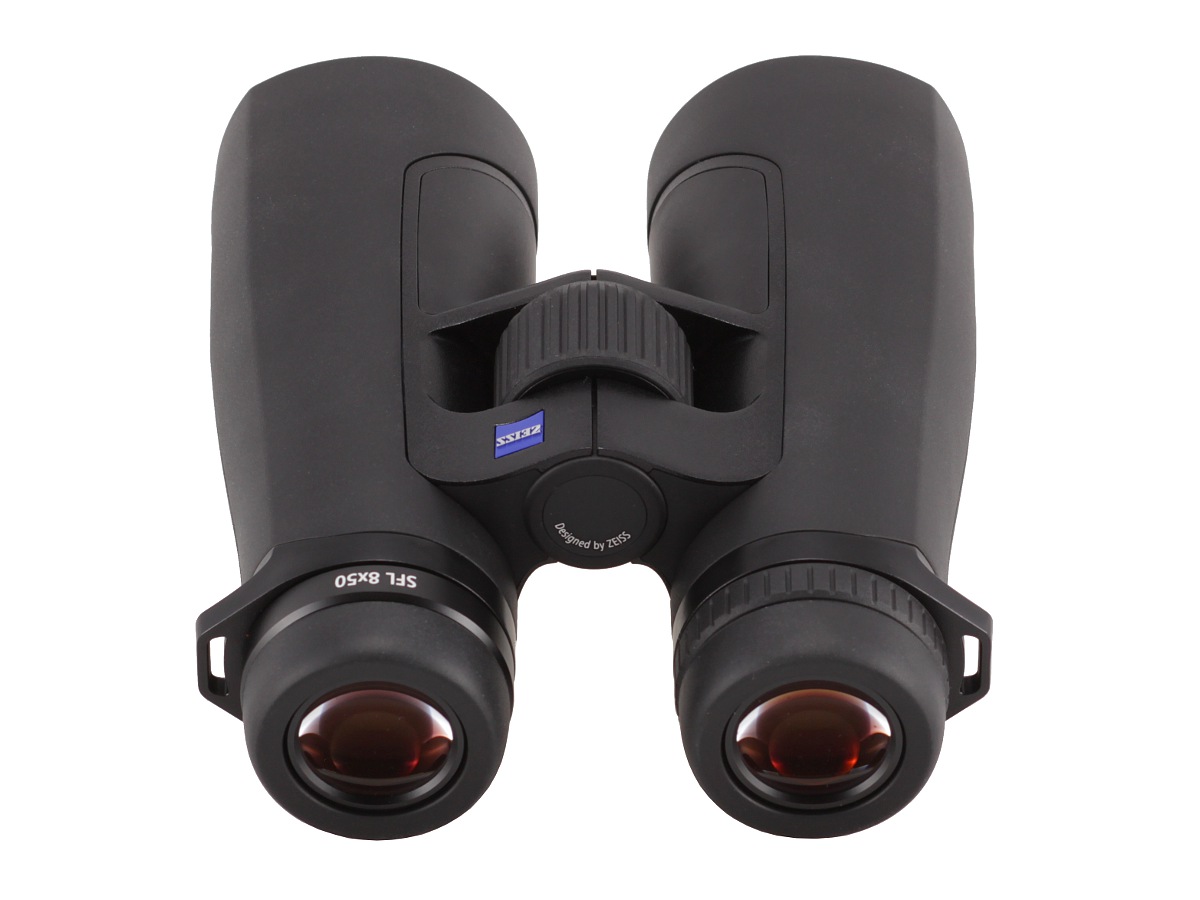
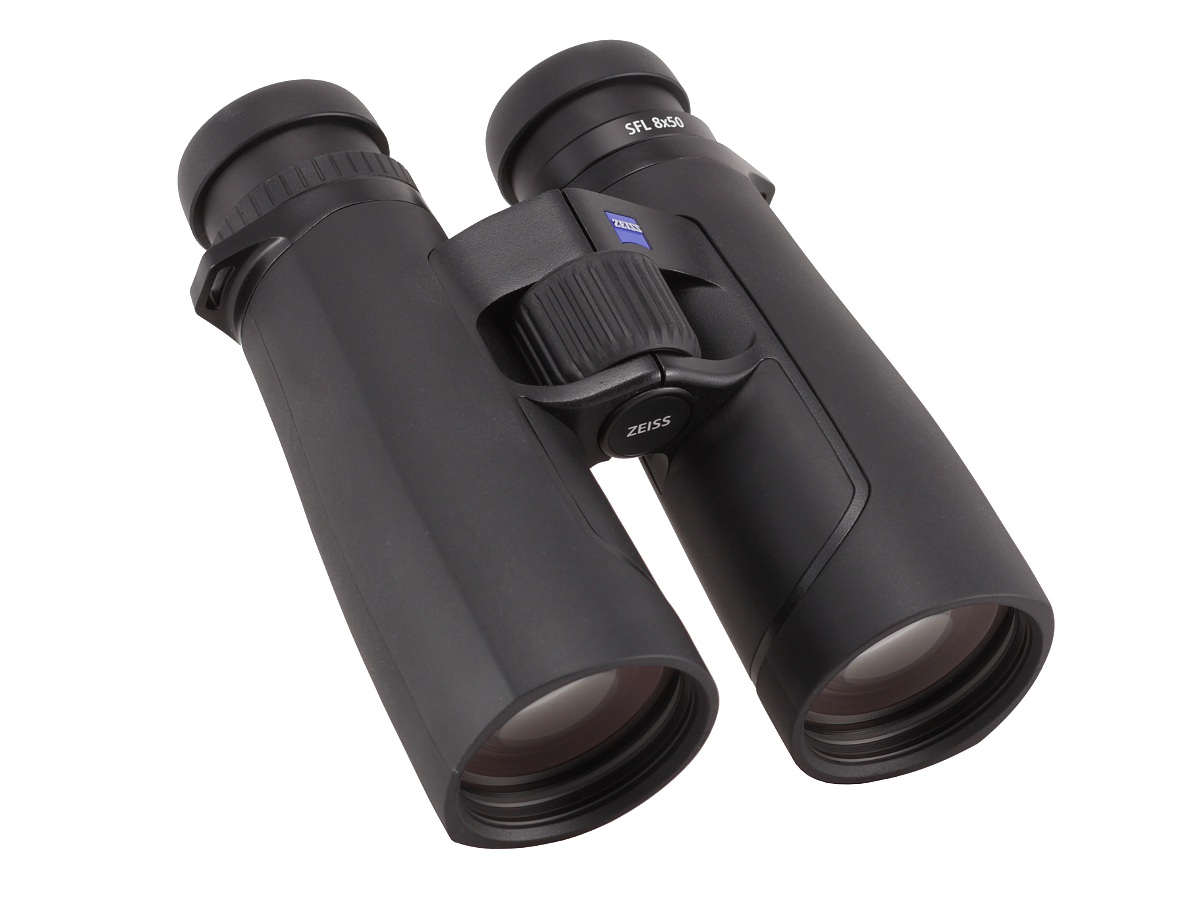
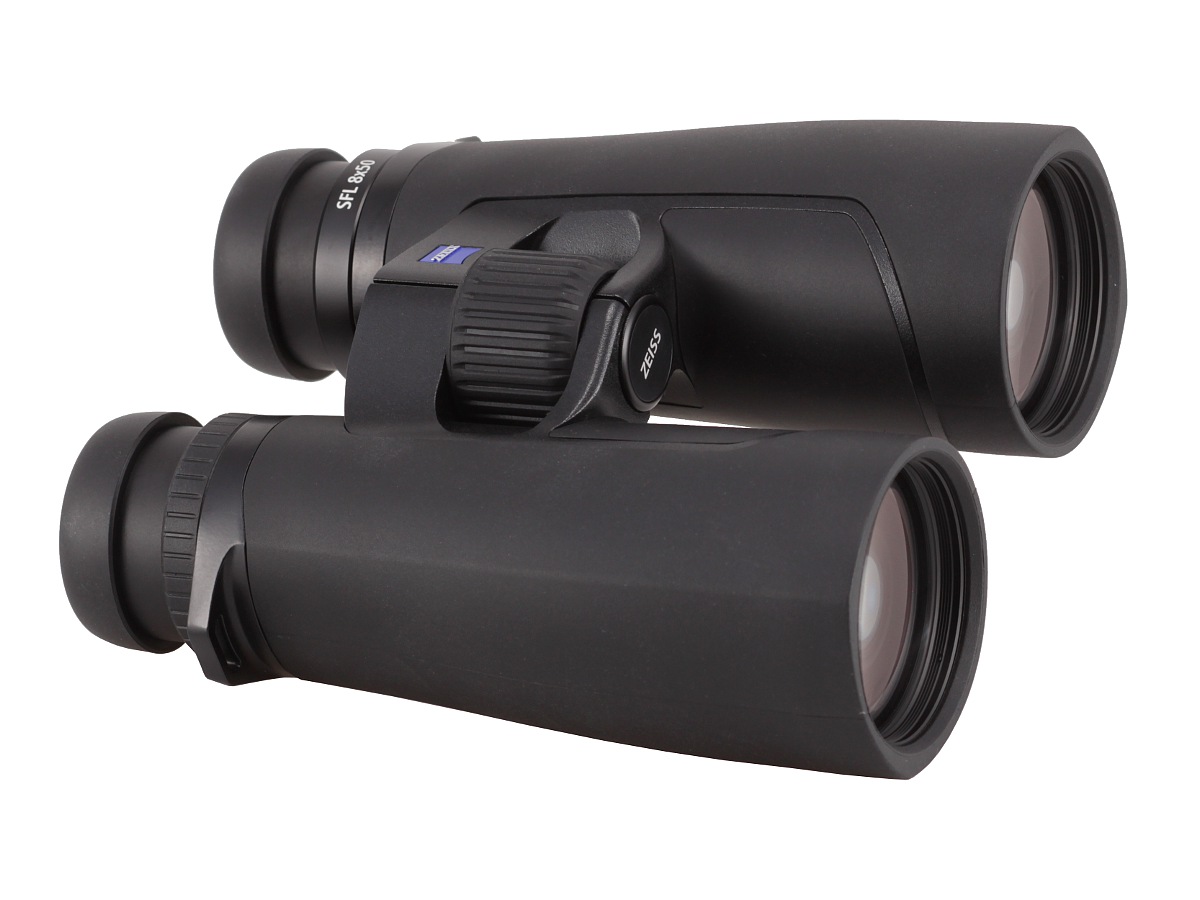
Zeiss SFL 8x50 binoculars.

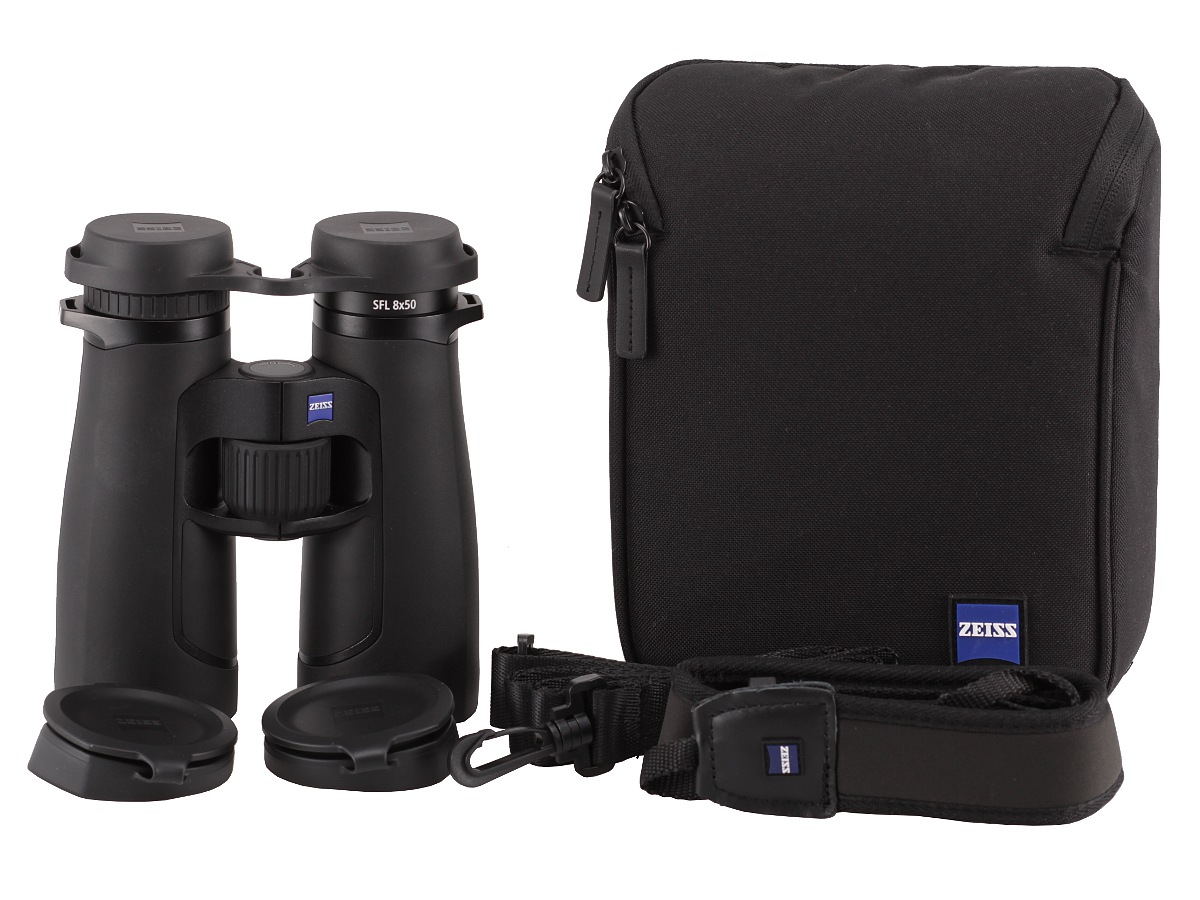
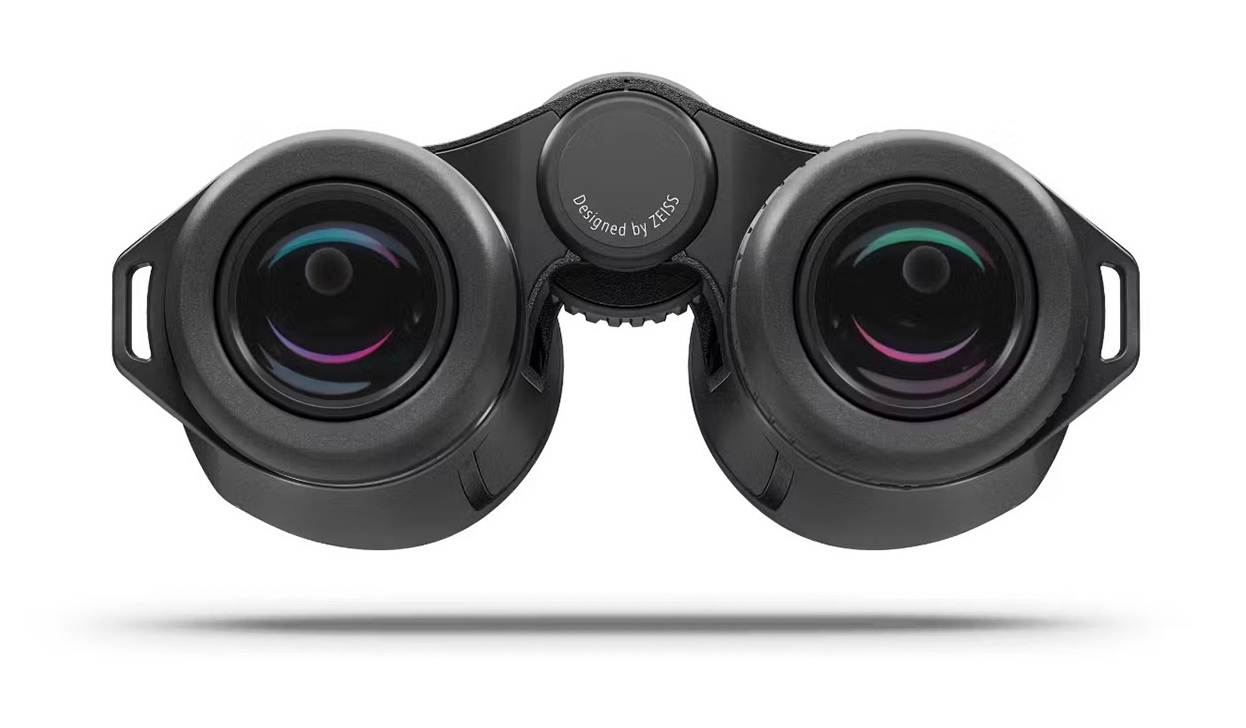
In case of the SFL series the body is made of magnesium composites and padded with a high quality rubber armour that sticks well to your hands. The construction is waterproof (400 mbar), nitrogen purged, and it can work in a temperature range from -20 to +55°C. The binoculars are produced in Japan and come with a 10-year warranty period of the producer. Buyers get in the box with the instrument: a stylish case, a neck strap, objective caps with hooks, a rainguard, and a cleaning cloth.
Pictures
  • Lornetka Carl Zeiss SFL 8x50
  • Lornetka Carl Zeiss SFL 8x50
  • Lornetka Carl Zeiss SFL 8x50
  • Lornetka Carl Zeiss SFL 8x50
Manufacturer data

Manufacturer:

Carl Zeiss
web site

Distribution / Sales:

M.K. Szuster
web site

Magnification Lens diameter Angular field of view Prisms Eye relief Weight Price
8 50 131/1000(7.5o) BaK-4/roof 20 mm 855 g 8600 PLN
Results of the review
Real front lens diameter Left:   50.04+/- 0.05 mm
Right:  50.02+/- 0.05 mm
8 / 8.0 pkt
Real magnification 7.98+/- 0.05x 3/3.0
Transmission 90.3+/- 1% 18/25.0
Chromatic aberration Low in the centre, a bit higher than medium on the edge. 6.1/10.0
Astigmatism Negligible. Beautiful, point-like images of stars. 9/10.0
Distortion Distance of the first curved line from the field centre compared to the field of view radius: 88% ± 4% 10/10.0
Coma Starts in a distance of about 70% field of view radius and is medium on the very edge. 7/10.0
Blurring at the edge of the FOV Blur occurs in a distance of 78% ± 3% from the field of view centre. 5/10.0
Darkening at the edge the FOV Very low. 4.5/5.0
Whiteness of the image Very good. Slight green hue. Flat transmission graph. 4.6/5.0
Collimation Perfect. 5/5.0
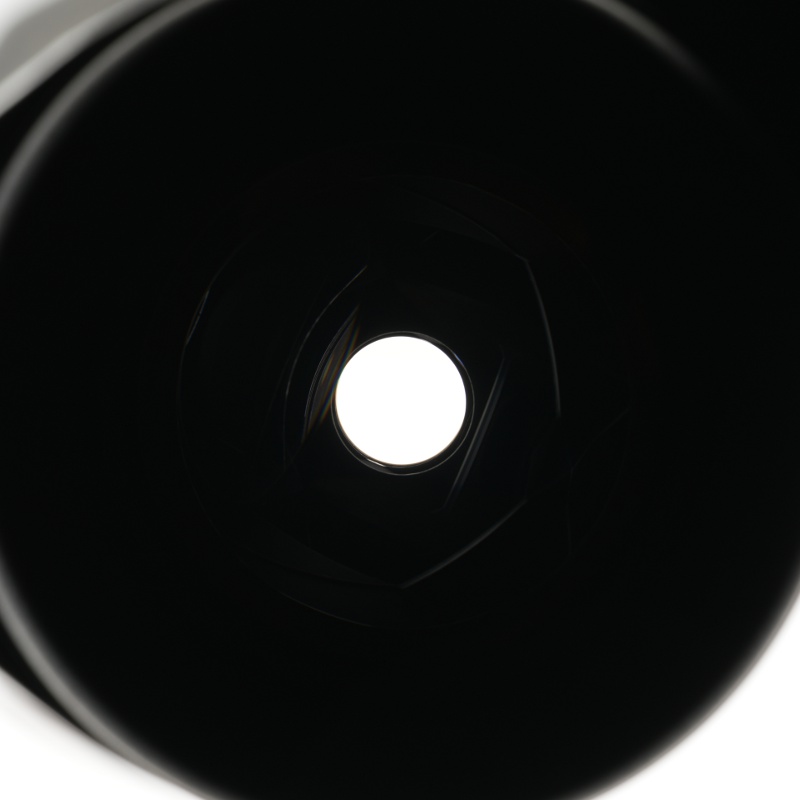
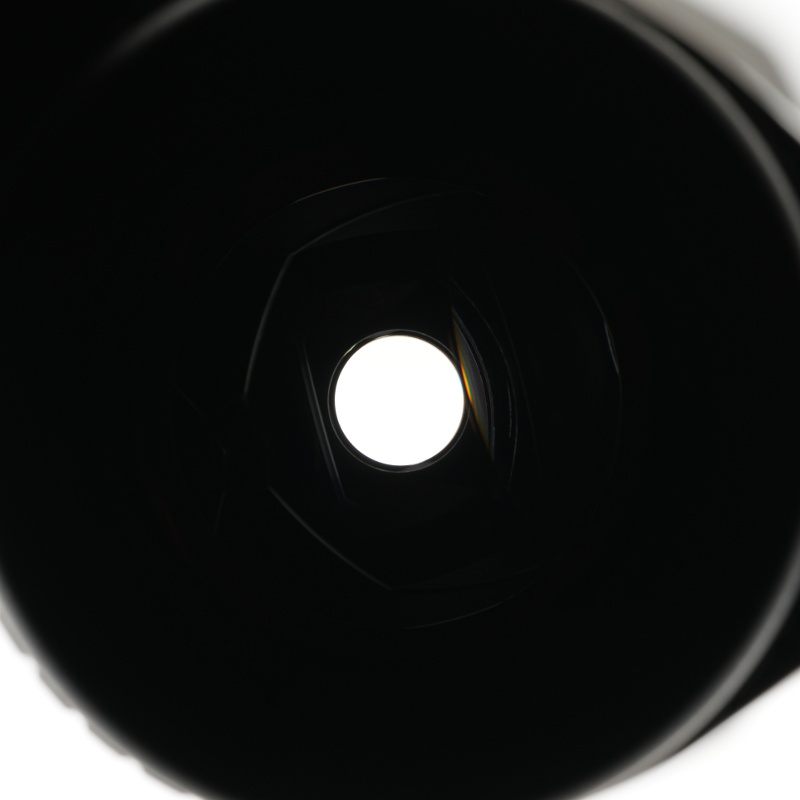
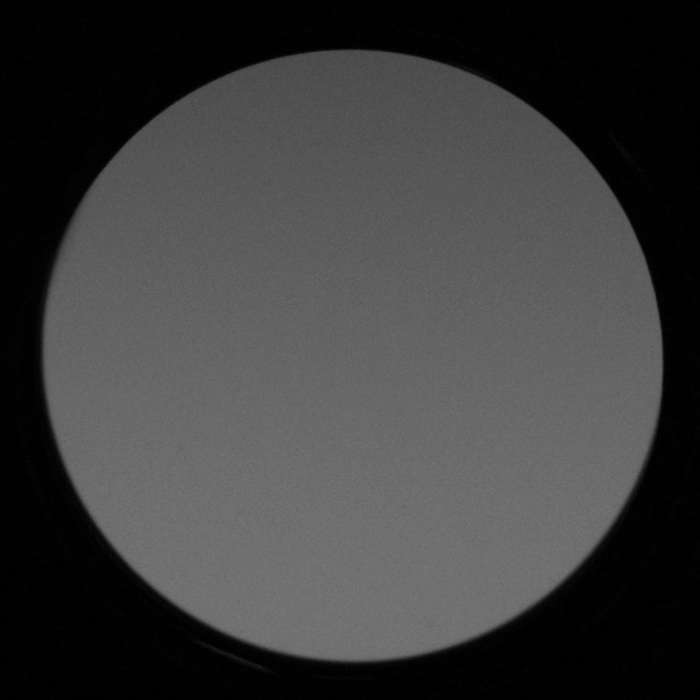
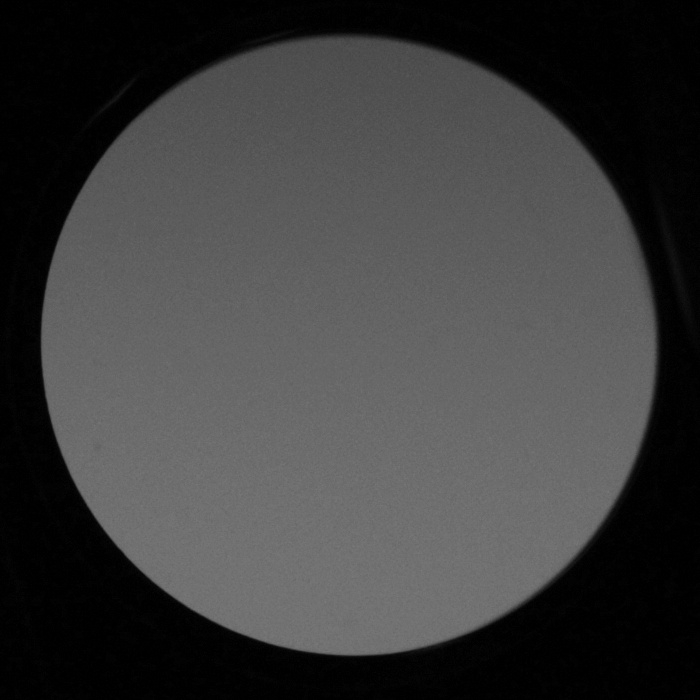
Internal reflections
Left: Right:
Carl Zeiss SFL 8x50 - Internal reflections - Left Carl Zeiss SFL 8x50 - Internal reflections - Right
Round pupils against black background – almost perfect. At the same time very good performance against bright light, both at night and during the day
4.7/5.0
Housing Relatively short, with a moderate weight for a 50 mm class instrument. The real weight amounts to 856 grams and is in perfect accordance with official declarations of the producer. The casing made of magnesium composites and padded with good quality, matt, black rubber armour that ensures you a firm grip. The rubber clings to the body of the binoculars very well but sticks out near the objectives a bit. Rubberized eyecups with five detention stops and 41-42 mm in diameter are a joy to use. Binoculars produced in Japan. 7.5/8.0
Focusing Big, rubberized central wheel with ribs moves smoothly and is properly damped. Running through the whole distance range needs a turn through an angle of about 510 deg. Dioptre correction on the right eyepiece, it moves the outer element. I suppose in this class of equipment it shouldn't move at all. 4.5/5.0
Tripod Quite comfortable access. 3/3.0
Interpupilary distance from 55.2 to 76.8mm 5/6.0
Closest focusing distance 1.65 meters 2/2.0
Eyepieces FOV An aparent field of view amounts to 59.9 deg (simplified formula) and 55.3 degrees (tangent formula). 11/20.0
Field of view Measured by us amounted to 7.51 +\- 0.03 deg and is in perfect accordance with the official specifications. A properly sized field for this class of equipment. 7/8.0
Quality of the interior of the barrels Inner tubes are dark and densely ribbed across their whole length. They could have been darker and more matt but still everything looks quite well. The bottom of the prisms is dark gray. Very clean. 4.5/5.0
Vignetting
Left: Right:
Carl Zeiss SFL 8x50 - Vignetting - Left Carl Zeiss SFL 8x50 - Vignetting - Right
OL: 1.62%. OR: 0.87%
6.5/8.0
Prisms quality High quality BaK-4. 8/8.0
Antireflection coatings Green-yellow-pink on objective lenses, pink-green on the prisms, pink-yellow-green on the eyepieces. Low intensity. 5/5.0
Warranty [years] 10 4.5/6.0
Final result
80.7%
153.4 / 190 pkt
Econo result 0pkt.

Summary


Pros:
  • solid, weather-sealed, compact casing,
  • very good transmission in accordance with official declarations,
  • excellent colour rendition,
  • perfect correction of astigmatism,
  • slight chromatic aberration in the field centre,
  • negligible distortion,
  • moderate coma,
  • low brightness loss on the edge of the field of view,
  • sharp images already from 1.65 metres,
  • good blackening and cleanliness inside the tubes,
  • excellent quality of coatings,
  • high quality of prisms made of BaK-4 glass,
  • round pupils against a relatively dark background.

Cons:
  • noticeable chromatic aberration on the edge of the field of view.
The summary of our Zeiss SFL 8x50 test we would like to start with description of its parameters. The binoculars is not as big and heavy as it seems looking at its class. Its length amounts to 160 mm and it weighs 855 grams. At first glance the field of view is not impressive, just 7.5 degrees, and it means using eyepieces with an apparent field of view of 60 degrees (according to the simplified formula). It is a very good level but of course many 8x binoculars are able to provide a field on a level of 8-9 degrees. Still, if you take a closer look such features you get in, by and large, 30-42 mm class instruments. If you limit yourself to 8x binoculars with objective lenses as big as 50-56 mm you find out that exceeding 7 degrees is no mean feat. Also Zeiss had some difficulties – look at the the following chart, presenting a comparison between basic parameters of different historical 8x50 and 8x56 Zeiss models. First Porro prism binoculars feature a field of 7.4 degrees, in case of the Dialyt you notice a significant step backwards, with a field of just 6.3 degrees. Wide fields of 7.5 degrees returned only with 8x56 Design Selection instruments and first Victory specimens. In case of the following Victory series the field decreased once again to 7.4 degrees.

The next chart shows the situation when it comes to the newer constructions. The launches of the first Conquest series devices moved us backwards to a level of 6.3 degrees, that of the Dialyt. The new Conquests HD and HDX managed to get to a sensible level of 7.1 degrees and the top-of-the-range Victory HT 8X54 provides you 7.4 degrees. If you compare to that the 7.5 degrees of the SFL 8x50 it looks really well.

It's worth adding that the SFL 8x50 also provides a very comfortable eye relief distance, amounting to as much as 20 mm, and a possibility of setting the focus already from a distance of 1.65 meters (in the specifications you see a slightly longer distance, that of 1.8 meters). For the 50 mm class it is a result really worth recognition.

As we are still talking about parameters and information from specifications you also should notice that the producers state a transmission value of 90%. Of course we didn't hesitate to check and verify this declaration – let's glance at a graph below.
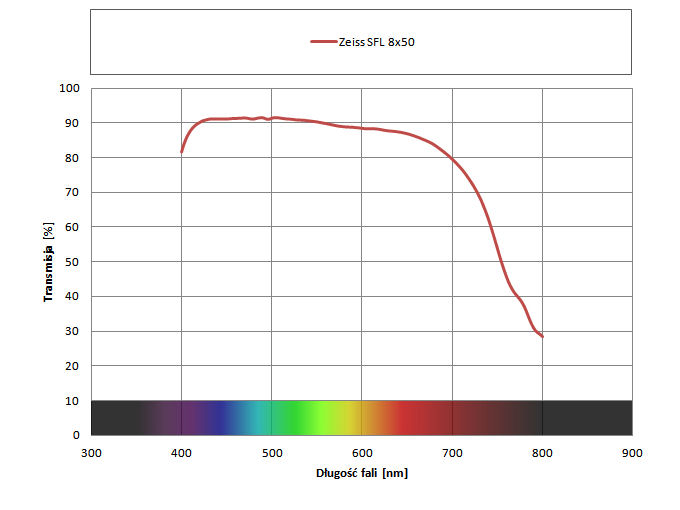
The average transmission amounts to 90.3% in the centre of visible range and it fits the official values stated by the producer. Impressive? In fact the situation is even better. The 8x50 class model is an instrument designed to use in poor lighting conditions and at night. In such conditions our organ of sight bases mainly on rods that are more sensitive at shorter wavelengths than cones which work mainly during the day. Zeiss optimized the transmission graph is such a way so the binoculars work the best in conditions they are created for. As a result in area near 500 nm, where the rods have the peak of their sensitivity, you get a transmission of 91.5% and, at the same time, it is the maximum result of the tested model across the whole visible spectrum.

As if it wasn't enough we also get fantastic results for purple light where the transmission distinctly exceeds 80% and a relatively flat performance across the whole range. That's why the binoculars render very natural colours.
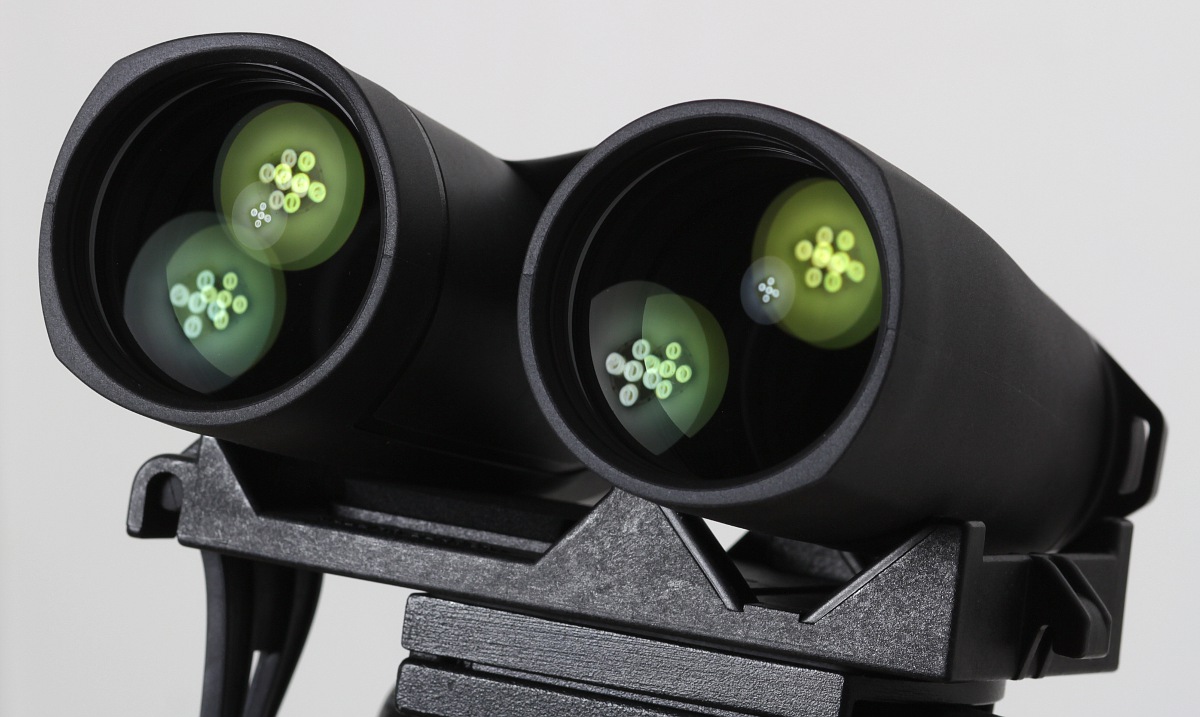
Of course all the results, described here, are an effect of using the excellent Schott glass with high transmission and anti-reflection T* multi-coatings. They shimmer with sage green and yellow hues, differing from the cheaper MC coatings that are more intensive and feature more saturated greens.

The Zeiss SFL 8x50 impresses not only with its coatings, transmission, and colour rendering, but also with excellent astigmatism correction and distortion correction. It features low brightness loss on the edges of the field and has no problems connected to coma. If you want to pick holes in its performance you can mention two things: chromatic aberration on the edge of the field and its sharpness on the edge. They could have been a tad better.

Still you have to remember that the casing of these binoculars was optimized when it comes to dimensions and weight. A better aberration correction and the correction of sharpness on the edge of the field of view could have meant an increase of the dimensions of the binoculars and the eyepiece, a bigger weight and also most probably an increase of the price. Then this model would hardly fit the SFL series because all its parameters and the price would qualify it as the highest Victory FL series.

In my opinion compromises were needed here and the producers chose them very sensibly. As a result we got a top-of-the-range piece of equipment packed inside a casing of sensible dimensions and weight. They also managed to keep the price around 2000 USD. As a result the SFL Zeiss series I consider to be one of the most interesting offers, available on the market of sports optics.