In the middle of the 50's of 20th century Swarovski company found out that naming all their binoculars just Habicht is perhaps not the most sensible solution. They decided to use also names of different gods from the Roman mythology. The 6x30 model, used very often by the army, got Mars, the god of war, as a patron. The 40-42 mm binoculars, used mostly by nature watchers and hunters, got Diane, the goddess of hunting, wildlife, and nature as a patroness. And finally the main character of our article, the 8x30 pair of binoculars, was called after Mercury, a god of commerce, profit, merchants, thieves, and also, from time to time, a divine messenger.
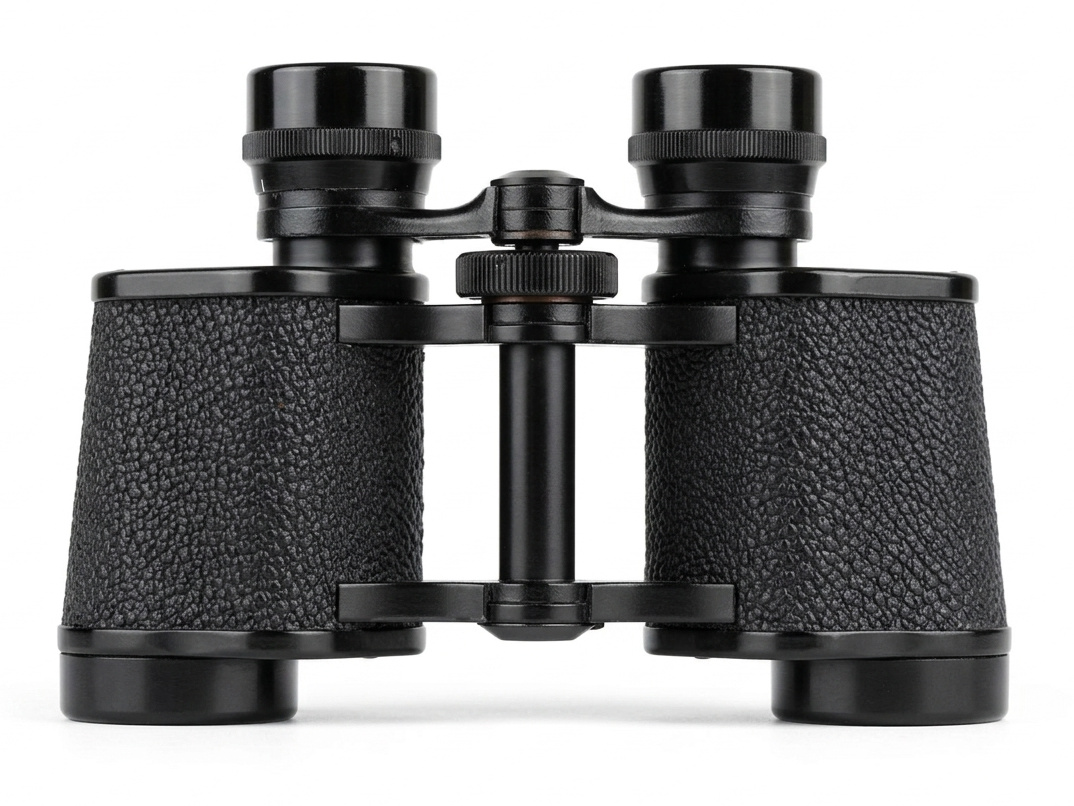
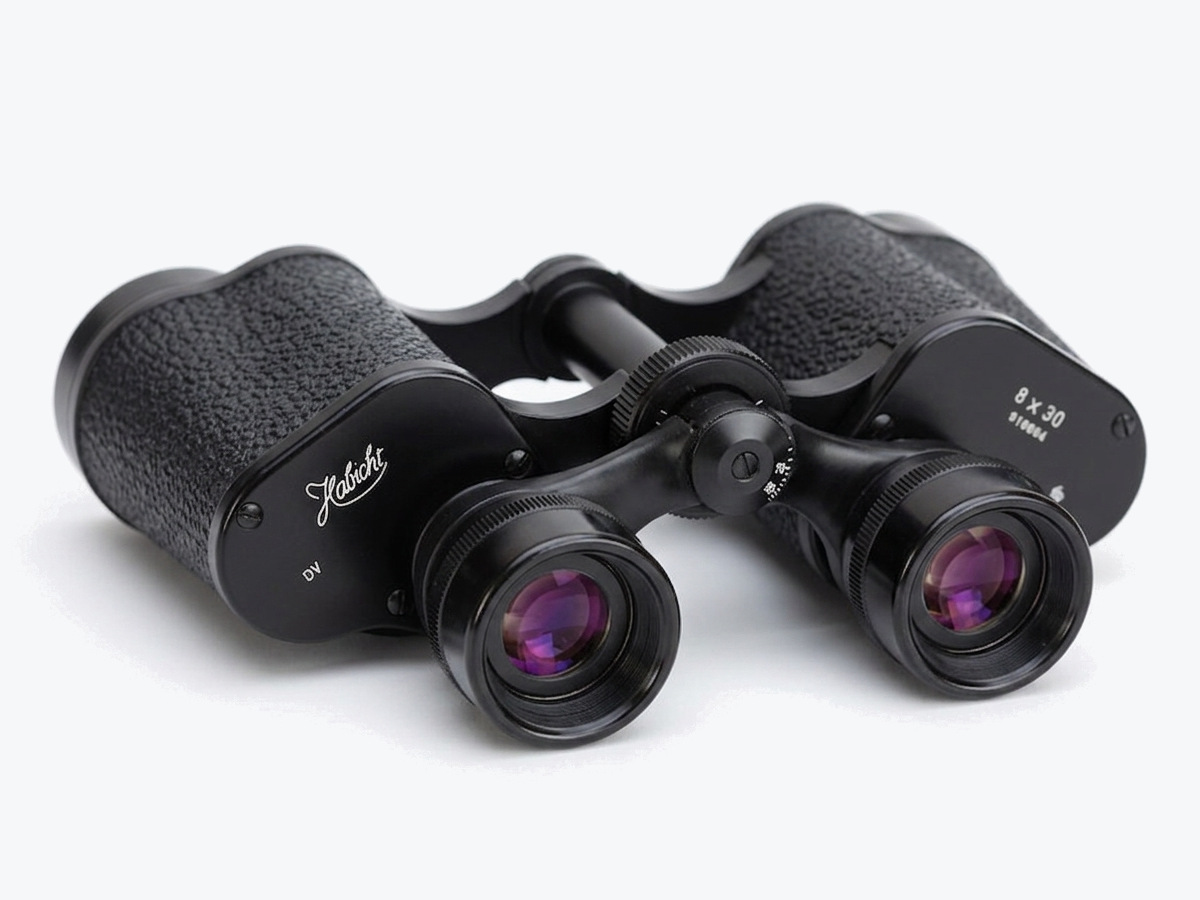
Swarovski Habicht-Merkur 8x30 W M DV binoculars manufactured between 1955-1962.
Increasing numbers of production volume forced an automation of some processes. The inscriptions on the barrels of the binoculars started to look more neatly even though their layout didn't change and also the fonts remained the same. What's interesting, the changes, described here, weren't reflected in the casings of the binoculars, which still featured 'Habicht' in cursive. Only catalogues, published at those times, featured new names connected to Roman gods.
Swarovski Habicht-Merkur 8x30 W M DV binoculars manufactured between 1955-1962.
The increase of production also meant that 5-digit serial numbers soon weren't enough and had to be doubled. A decision was taken to change them into 6-digit numbers. They also came up with a scheme where first digits of a new number would reflect the magnification ratio of a given pair of binoculars – numbers starting with 6XXXXX were allotted to the 6x30 model, numbers 7XXXXX were given to the 7x42 model, numbers 8XXXXX could be found on the 8x30W instrument and finally 1XXXXX went to all 10x40 specimens.
Please Support Us
If you enjoy our reviews and articles, and you want us to continue our work please, support our website by donating through PayPal. The funds are going to be used for paying our editorial team, renting servers, and equipping our testing studio; only that way we will be able to continue providing you interesting content for free.
- - - - - - - - - - - - - - - - - - R E K L A M A - - - - - - - - - - - - - - - - - -
Excerpt from a Swarovski Optik catalog from the second half of the 1950s. Source: Swarovski Optik.
In reality another numbers variation appeared, starting with 9. It might sound strange – after all there was no magnification 9x instrument in the Swarovski line-up. This puzzle is easy to solve – even in the previous production period Swarovski Optik thought the 8x30W model might be too expensive for many people, after all it cost roughly a monthly salary. In its case a wide angle 6-element eyepiece was an important expense. The company decided to introduce another variant, the 8x30N, with a much simpler eyepiece with an apparent field of view amounting to 52 deg. As a result the new pair of binoculars provided a field of 6.5 deg, was lighter and noticeably cheaper. This model exactly got serial numbers starting with 9.
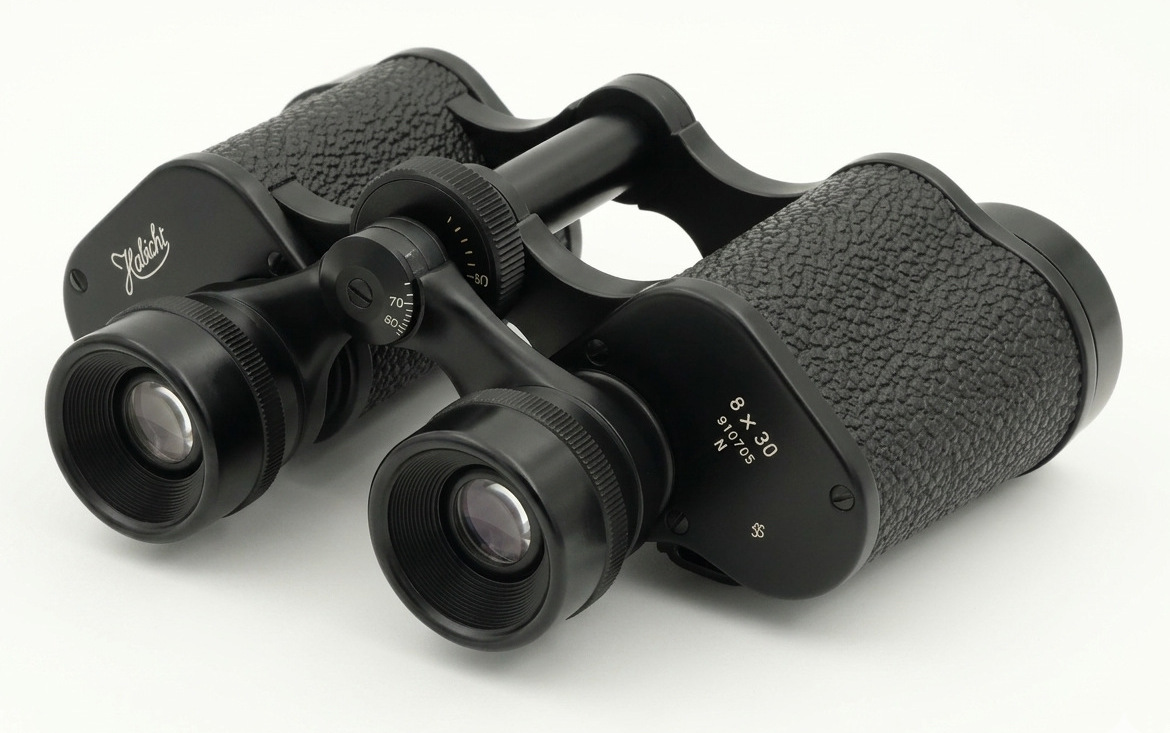
It's also worth adding that the wide angle version was a default instrument so to speak and, as such, it didn't feature any additional letters on the casing. You won't find any W letter next to its parameters (W standing for Wetwinkel so wide angle). The version with the normal field of view has an N letter under the serial number. The difference between the 8x30W and 8x30N is easy to spot. First, its' the serial number. Secondly the size of the eye element in the eyepiece, noticeably bigger in case of the 8x30W model.
Swarovski Habicht-Merkur 8x30 N M DV binoculars manufactured in late 1950s.
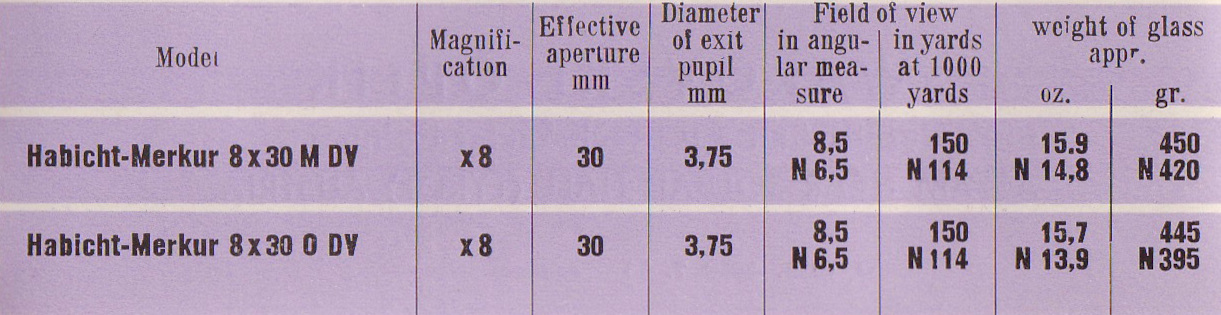
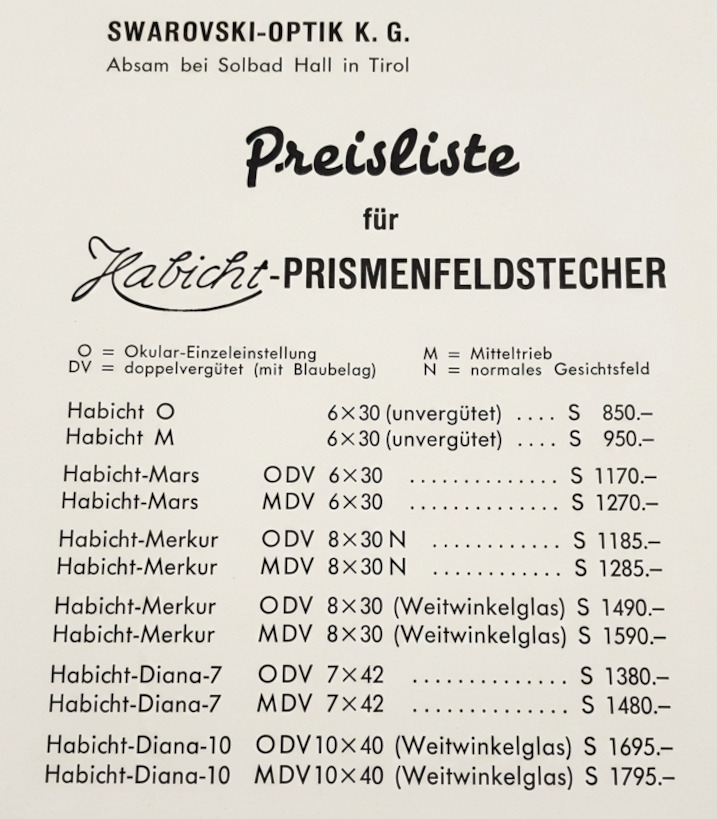
In this period of time the offer of 8x30 Swarovski Optik binoculars looked as follows: the Swarovski Habicht-Merkur 8x30 N O DV, equipped with eyepieces with an individual focusing system, was the cheapest. It also provided a field of view of 6.5 deg and weighed just 395 grams. In 1961 it cost 1185 shillings. The Swarovski Habicht-Merkur 8x30 N M DV was by 100 shillings more expensive but it featured a central wheel. Its field amounted to 6.5 deg and the weight increased to 420 grams.
Price list of Swarovski Optik binoculars from 1961.
If you wanted something truly wide angle you had to spend even more. The Swarovski Habicht-Merkur 8x30 W O DV with individual focusing provided a field of 8.5 deg and it weighed 445 grams with a price tag of 1490 shillings. Its variant with central focus was by 100 shillings more expensive and just 5 grams heavier.
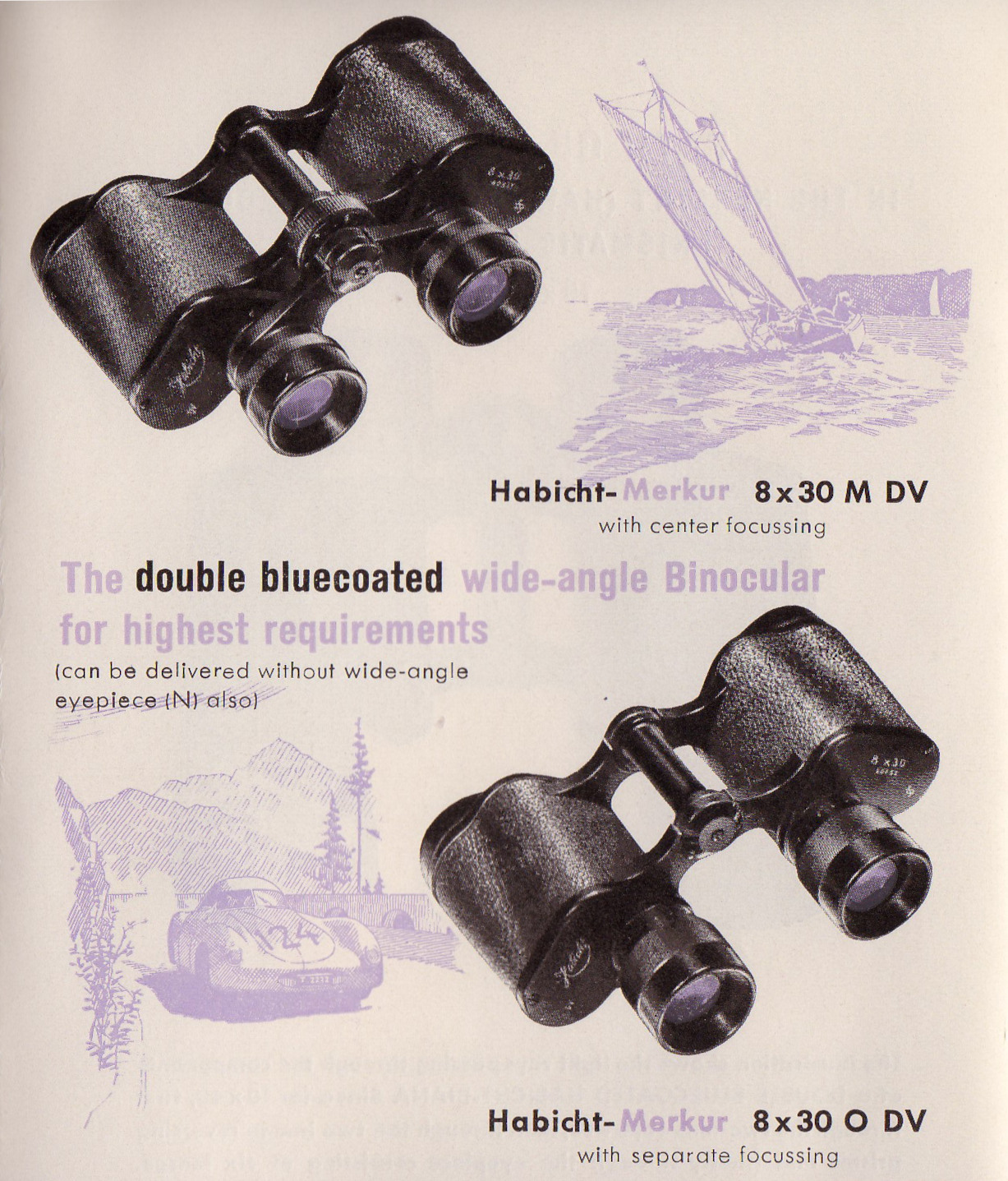
Excerpt from a Swarovski Optik catalog from around 1955.. Source: Swarovski Optik.
It's not the end of novelties, introduced in this period of time. In 1956 Swarovski decided to present a model even more low-end than the Habicht 8x30 N. We mean here the Falke 8x30 EV (Falke meaning falcon in German), an instrument that shared with the cheaper Habicht an eyepiece with an apparent field of 52 degrees but its body was less solid and lighter, and it had just single coatings (that's why it lacked DV in its name). In this case the 6-digit serial number started with 26.
Overall in this period of time the Swarovski Optik company produced about 95 thousand of binoculars. Among them the 7x42 model was produced in the highest number of specimens (as many as 29 thousands), then came the Habicht 8x30W (18 thousands) and finally the 10x40W (16,000).
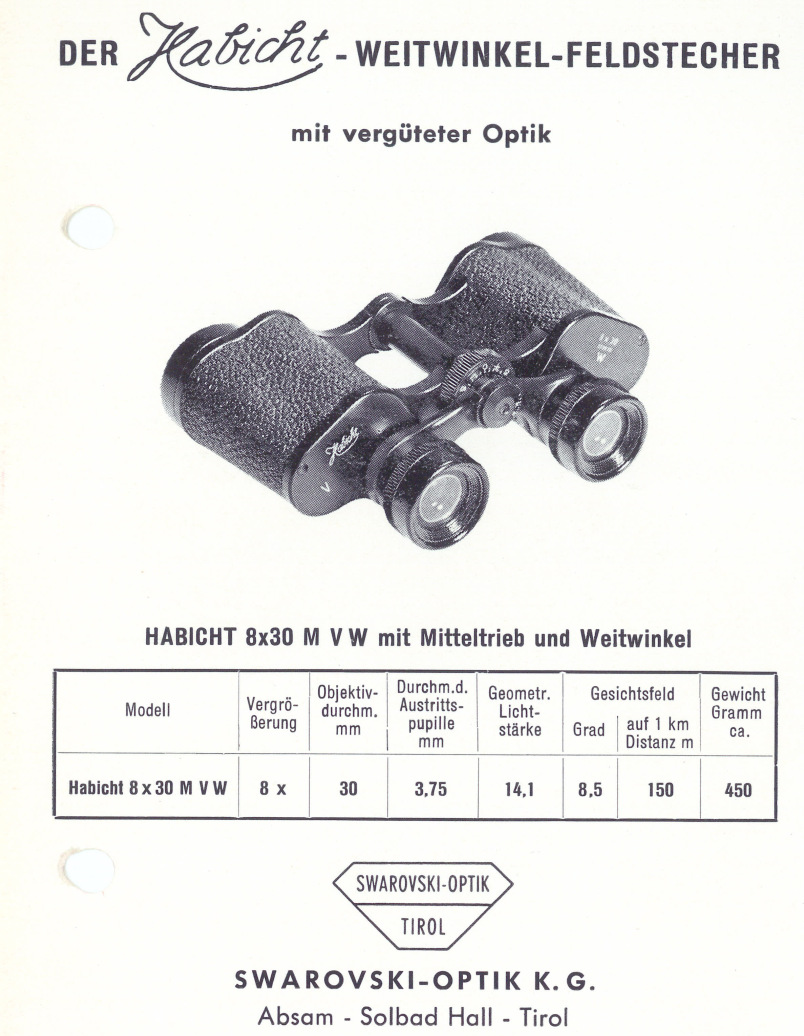
Excerpt from a Swarovski Optik catalog from 1961-1962. Source: Swarovski Optik.