


Legendary binoculars - Swarovski Habicht 8x30
2. 1952-1955
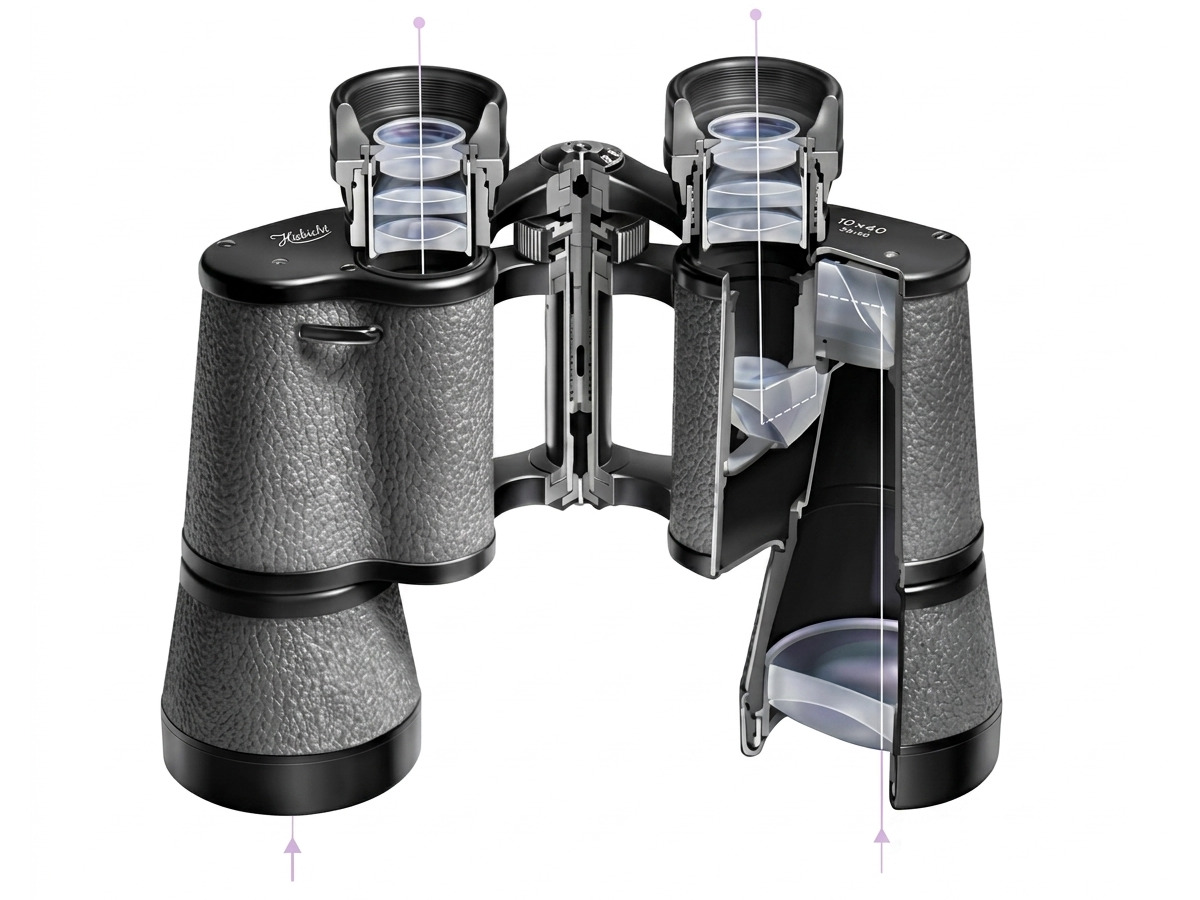 Optical design of the Swarovski Habicht 10x40 W binoculars, showing the new 6-element wide-angle eyepiece, which was also used in the 8x30 W model. |
Both variants of the 8x30 model provided a field of view of 8.5 degrees. The catalogues from those times didn't provide an eye relief distance but we know that it was short, reaching just 10-12 mm. The binoculars were relatively lightweight; the M variant weighed 505 grams and the one with the O letter – 485 grams.
Please Support UsIf you enjoy our reviews and articles, and you want us to continue our work please, support our website by donating through PayPal. The funds are going to be used for paying our editorial team, renting servers, and equipping our testing studio; only that way we will be able to continue providing you interesting content for free. |
- - - - - - - - - - - - - - - - - - - - - - - - - - - - - - - - - - - - - - - - - - - - - - - -
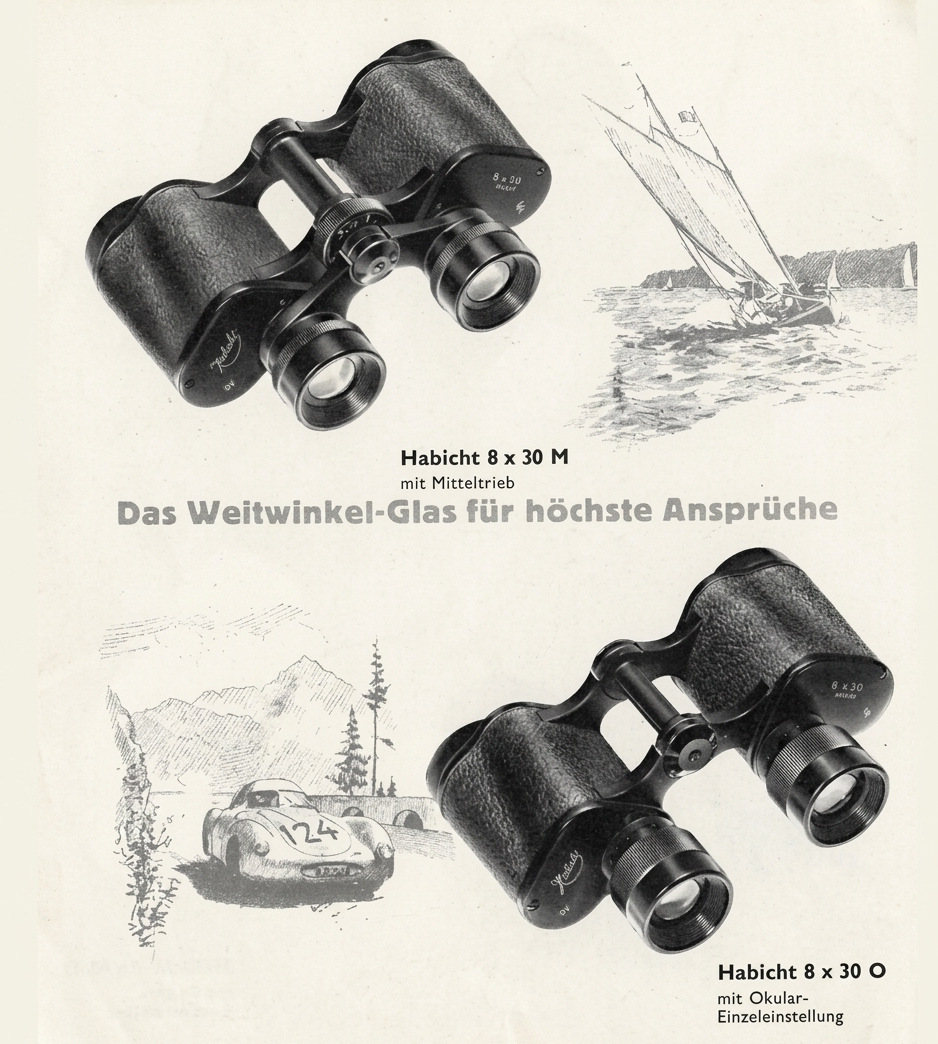 Excerpt from a 1952 Swarovski Optik catalog featuring the Habicht 8x30 model in central focusing (M) and individual focusing (O) versions. Source: Presentation by Gijs van Ginkel. |
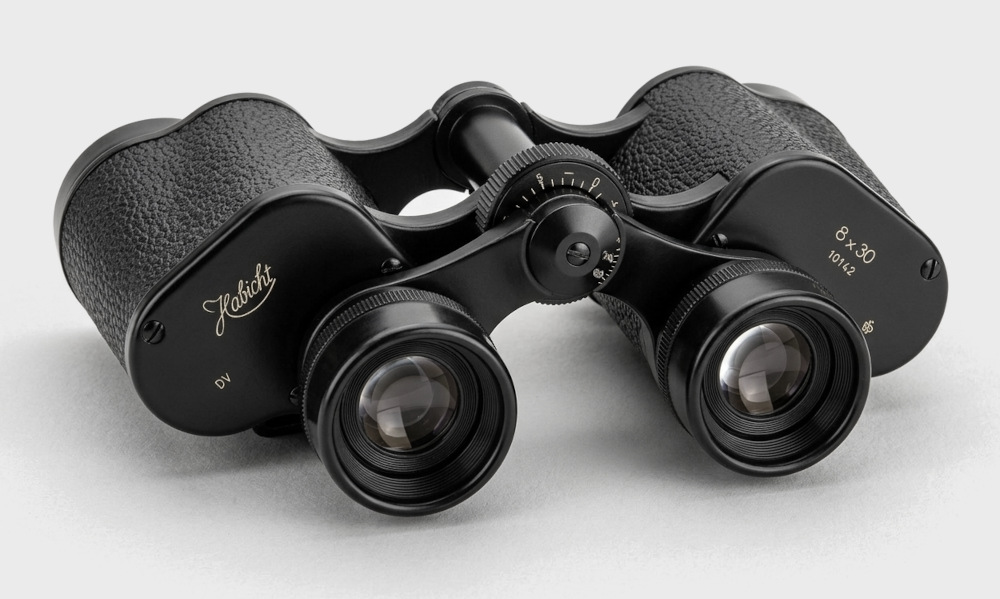 Swarovski Habicht 8x30 M DV binoculars. |
DV letters on the barrel informed a future user that this pair of binoculars, compared to their standard rivals, was able to offer you a much better transmission of light, a better contrast, and reduced inner reflections. Images provided by those models also featured a very characteristic, slightly amber hue.
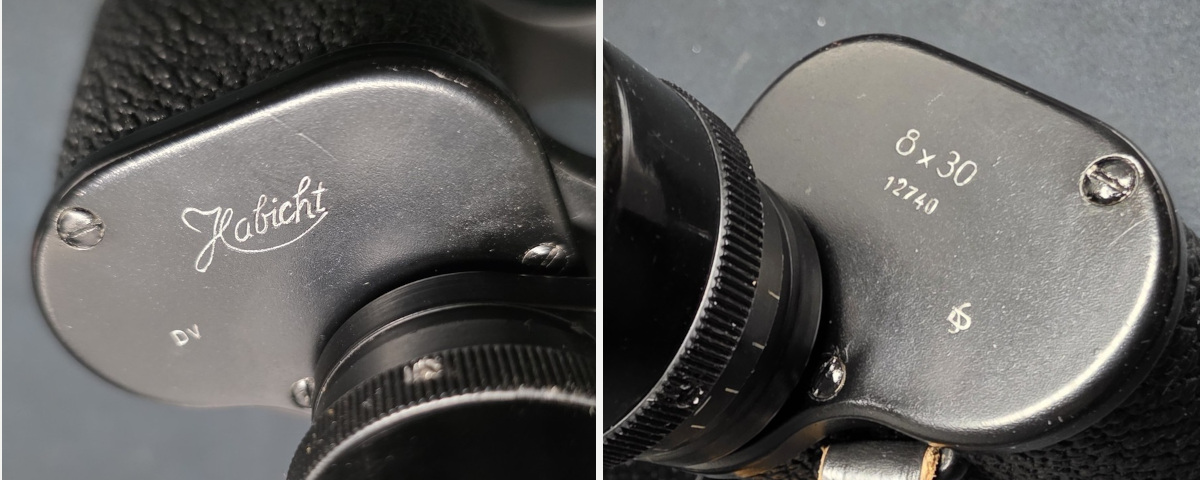 Markings on the prism housings of the Swarovski Habicht 8x30 M DV binoculars manufactured around 1953. Source: Online auction. |
Serial numbers were put on the right side, under the parameters of the binoculars. They consisted of 5 digits and for the 8x30W model they ranged from 101XX and 209XX. Even lower you found a simplified version of the Swarovski logo.
Despite an increase of production many things in the Absam factory were done by hand. It's enough to take a closer look at the inscriptions on the barrel of the prisms. They are slightly uneven, differing from one specimen to the other.
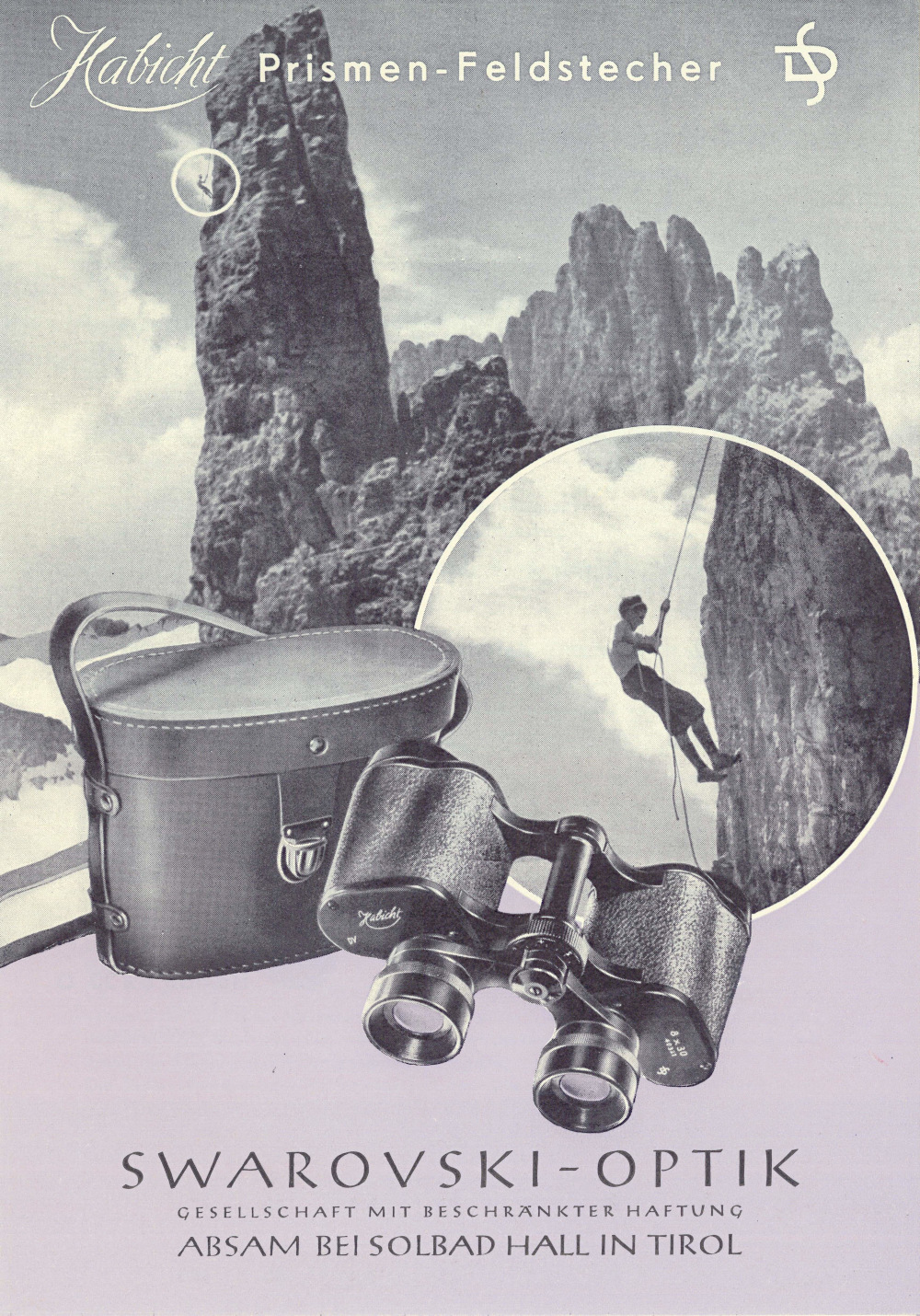 Swarovski Optik brochure from 1952/1953. Source: Swarovski Optik. |