


Review of the Opticron Imagic HD X-WIDE 8x25 binoculars
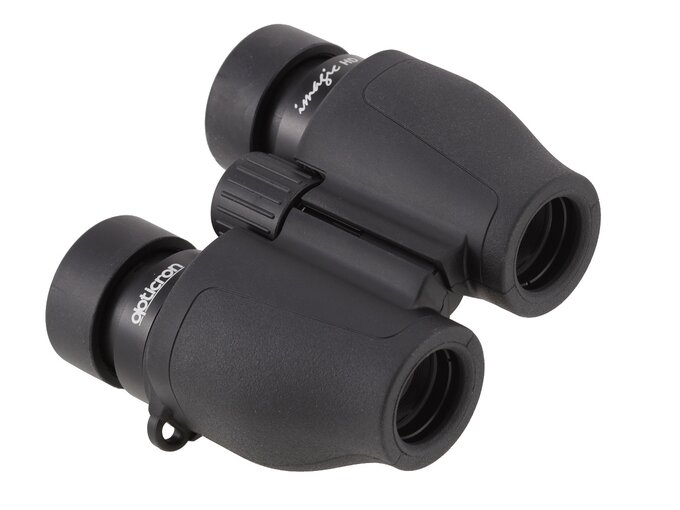
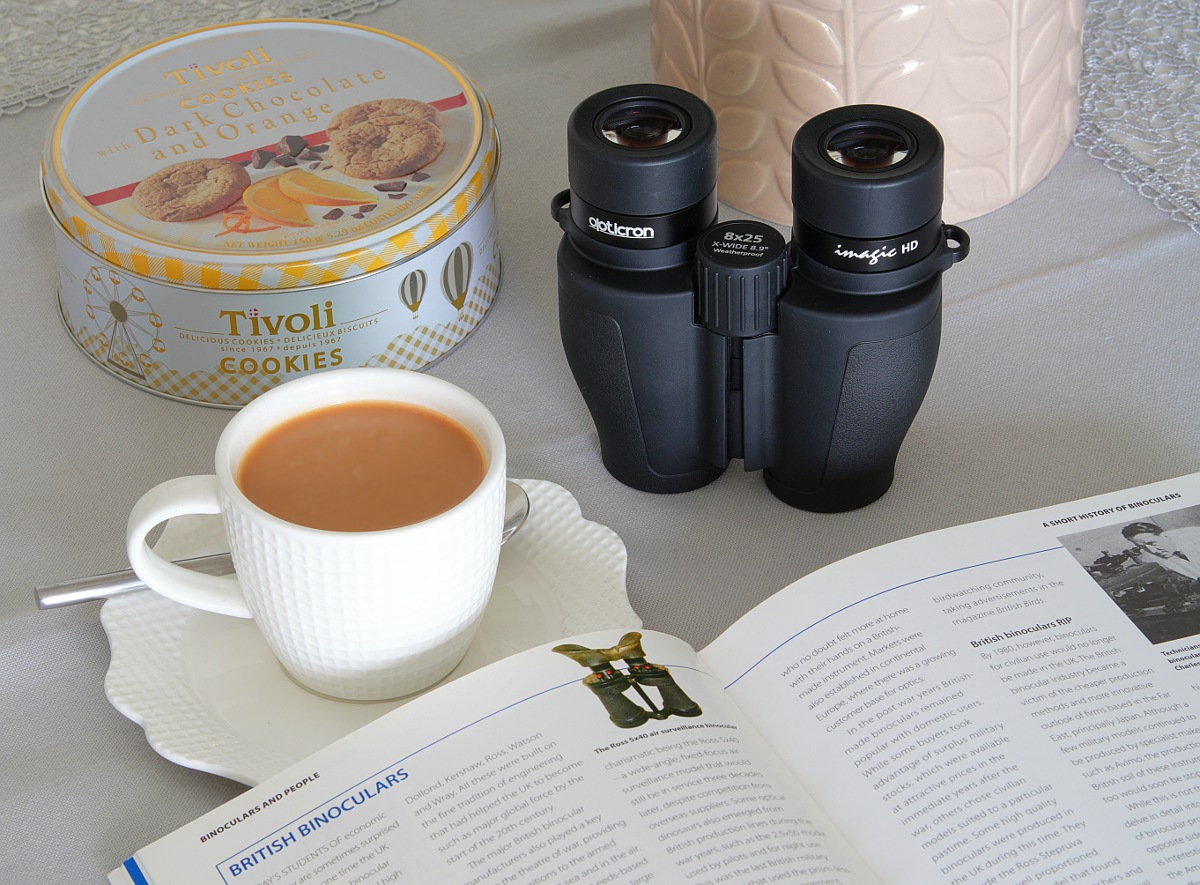
1. Opticron Imagic HD X-WIDE 8x25 - the perfect compact?
 |
At the same time, it is worth noting that my objections mainly concern the current range of binoculars on the market. In the past, there were many successful compact models that I still consider worthy of recommendation. To look no further, one could mention the Amplivid and Trinovid 6x24, or the KOMZ BPSz 6x24.
Please Support UsIf you enjoy our reviews and articles, and you want us to continue our work please, support our website by donating through PayPal. The funds are going to be used for paying our editorial team, renting servers, and equipping our testing studio; only that way we will be able to continue providing you interesting content for free. |
- - - - - - - - - - - - - - - - - - - - - - - - - - - - - - - - - - - - - - - - - - - - - - - -
 |
- Poorly chosen parameters. A large share of manufacturers focuses on offering pairs of 8x20 and 10x25 models - that is, binoculars with an exit pupil of only 2.5 mm. As a result, we get gear with low surface brightness that performs well on a sunny day, but not necessarily in a dense forest, an even darker concert hall, a theater, or a live show. Fortunately, some companies attempt to offer an 8x25 and 10x25 pairing, though to me this is still a poorly paired setup. I would much prefer one of those models to offer 6-7x magnification, and the second 8-9x. Unfortunately, whenever a manufacturer decides to bring magnification down to 6-7x, they simultaneously hit on the strange idea of reducing the objective lens diameter (e.g., the Pentax Papilio 6.5x21 or Swarovski CL Curio 7x21).
- Small field of view. The tiny dimensions of pocket binoculars make it difficult to design wide-angle eyepieces that simultaneously provide comfortable eye relief. Consequently, most models on the market offer an apparent field of view around 50–55 degrees; when a rare gem with a larger field does emerge, the price is short eye relief (e.g., the Nikon Sportstar EX II 8x25, which boasts an impressive 8.2-degree field of view, but only 10 mm of eye relief).
- Dreadful ergonomics. Using 20-25 mm class objective lenses results in roof-prism barrels with a diameter of no more than 25-30 mm. Holding two such narrow tubes in larger hands is genuinely problematic. My hands are quite big, and there is simply no way I can position them comfortably on a binocular like that. Consequently, I have to hold each barrel using only my index finger and thumb, which makes for a very unstable grip. Furthermore, such models often feature small-diameter eyecups, which many users may also find too tiny for a comfortable fit against the eye socket.
- An obsession with Schmidt-Pechan prisms. I understand the desire to use Schmidt-Pechan prisms in compact binoculars, as they allow for the most effective miniaturization of this type of instrument. However, there are two major issues here. First, this miniaturization does not improve ergonomics at all (see the previous point). Second, this prism design is the most prone to light loss and reduced image contrast - and in small binoculars, every single photon is precious. Avoiding these losses requires high-end dielectric and phase-correction coatings, which significantly inflates the price.
- Competition from the 30–32 mm class. In recent years, a good number of small, sleek 8x30 class binoculars weighing under 500 grams have hit the market. Joining earlier entries like the Delta Optical One 8x32 (weighing just 380 grams!) or the Opticron Traveller BGA ED 8x32 are several interesting new arrivals - such as the entire line of Nikon Prostaff and Monarch models, the Kite Lynx HD+ and Falco, the Opticron Europa BGA VHD 8x32, and the Zeiss SFL. Every single one of them weighs under 500 grams while delivering a field of view well in excess of 8 degrees, paired with comfortable eye relief. Using a binocular like this requires zero compromises. I am convinced that many users would gladly accept an extra 100–200 grams to enjoy a real binocular rather than an imitation (I am exaggerating a bit, but not by much).
 |
At the other extreme of the price spectrum sits the Zeiss Victory Pocket 8x25. Here, you get superb optics, a respectable field of view, and comfortable eye relief. The catch is the high price tag and a field of view that, for an instrument in this class, is still a tad on the small side.
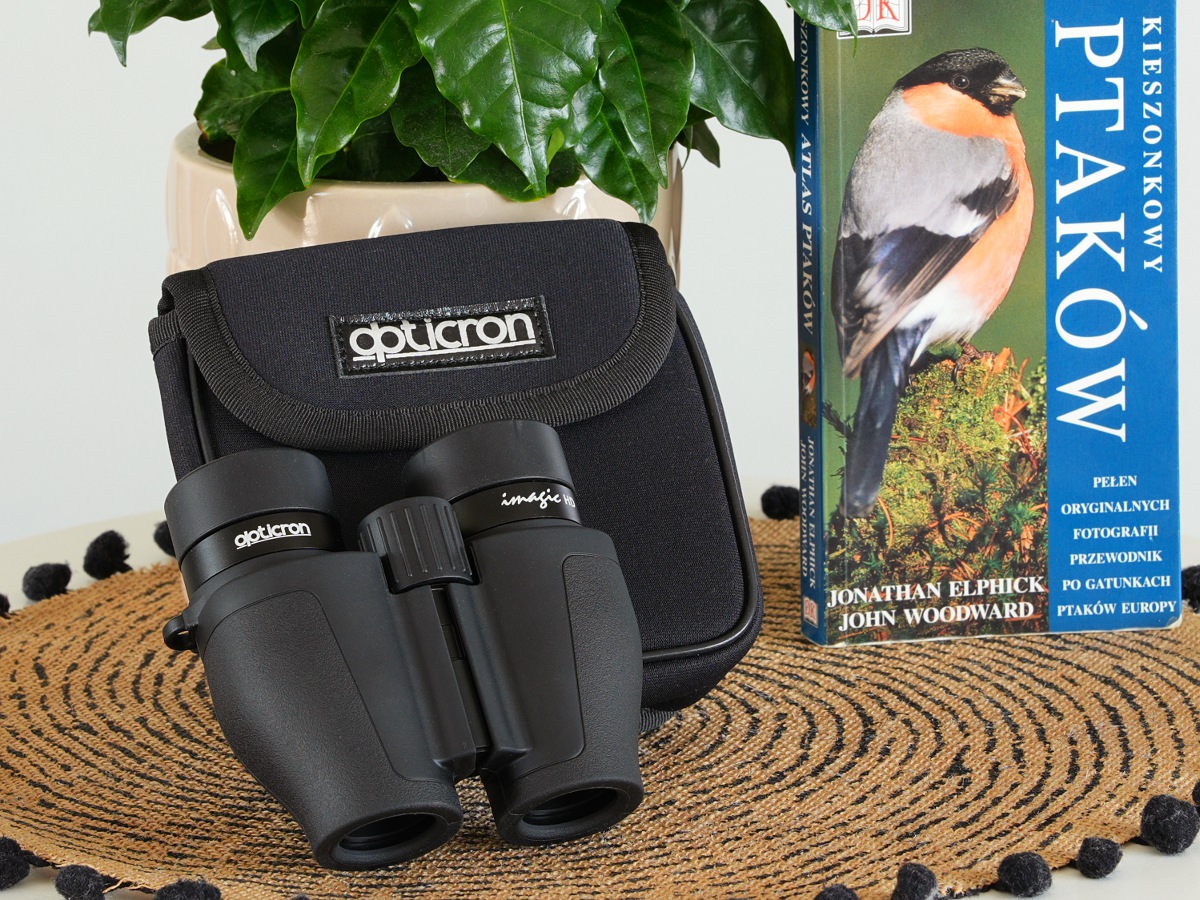 |
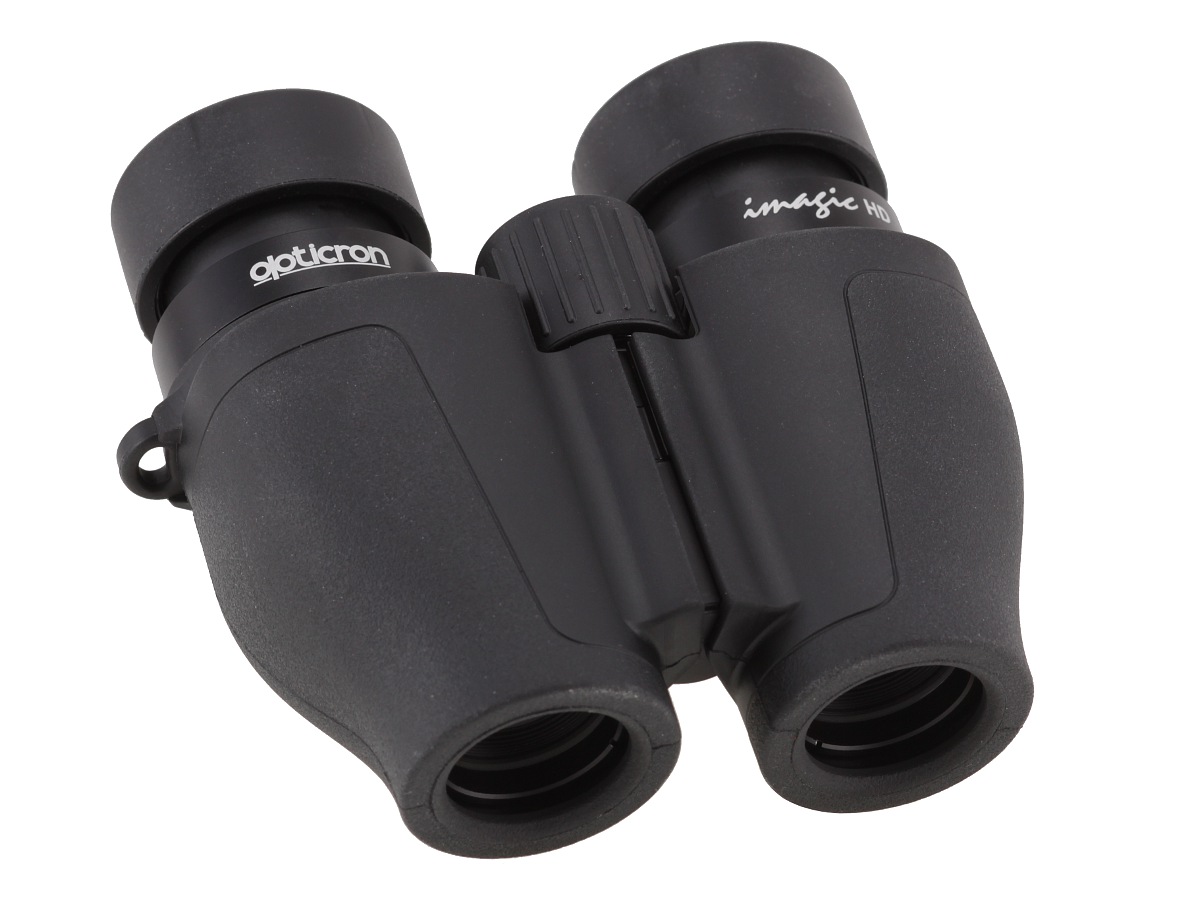
The instruments just mentioned are 2025-2026 releases that have noticeably improved the state of the compact binocular market. As it turns out, however, the wave of interesting additions in this segment does not stop there. In February 2026, the British brand Opticron stepped onto the stage to introduce the Imagic HD X-WIDE 8x25, a model that has every chance of becoming the most successful sub-30 mm binocular on the entire market.
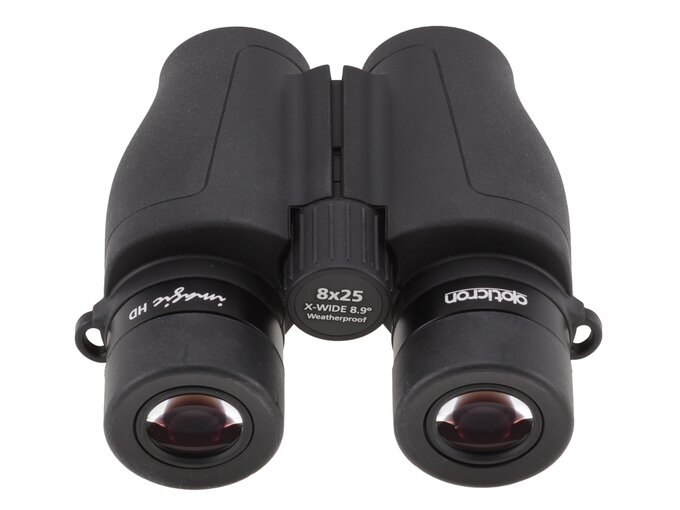
To start off, let us take a look at the graphic below, which outlines the core parameters for this model as claimed in the manufacturer's specifications.
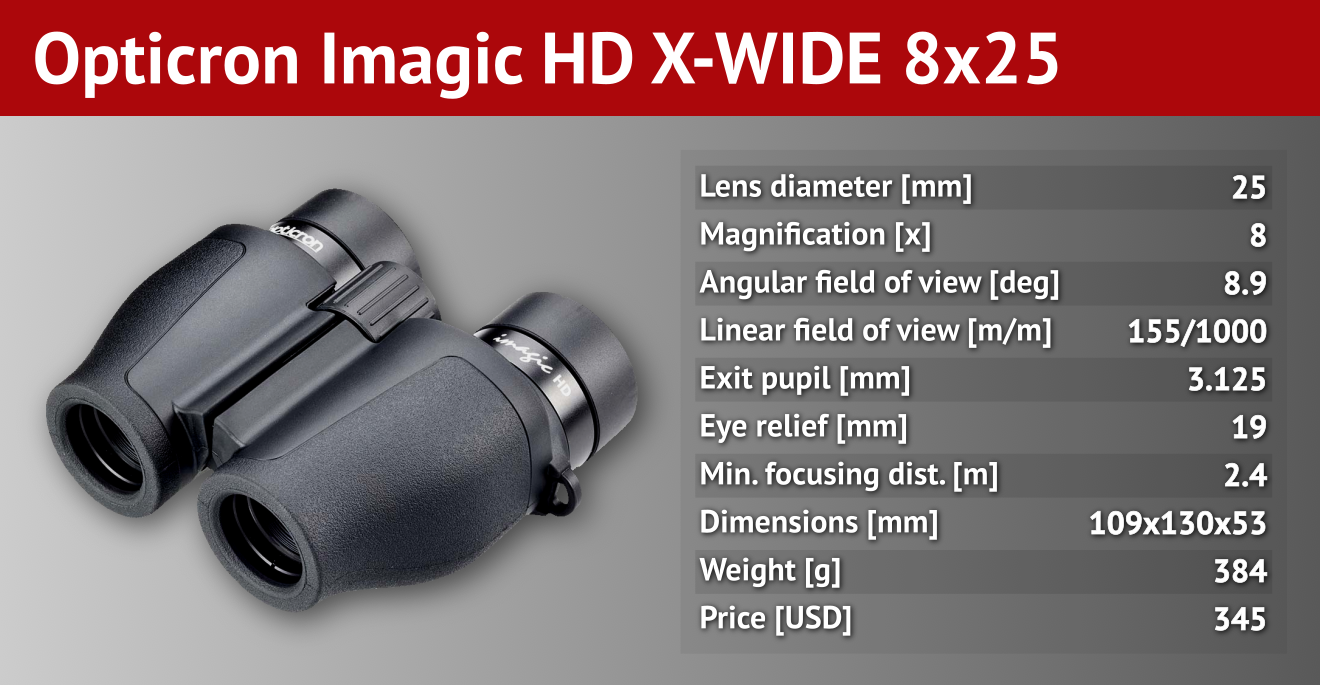 |
The weight of the binocular in question is listed at 384 grams. That is not insubstantial, as many sleek 8x25 roof-prism models manage to stay under 300 grams. However, those models almost always come at the cost of a very narrow field of view. The aforementioned Voigtlander 8x25, which offers a respectable field, tips the scales at 340 grams.
Due to the use of Porro prisms, this model will not match the ultra-compact dimensions of the smallest roof-prism binoculars - so it is completely understandable that the new Opticron will be larger. This will be a downside for users planning to take the binocular on extreme activities (such as climbing or competitive cycling) where every gram and millimeter counts, but a distinct advantage for those with larger hands, who will find using this binocular entirely comfortable.
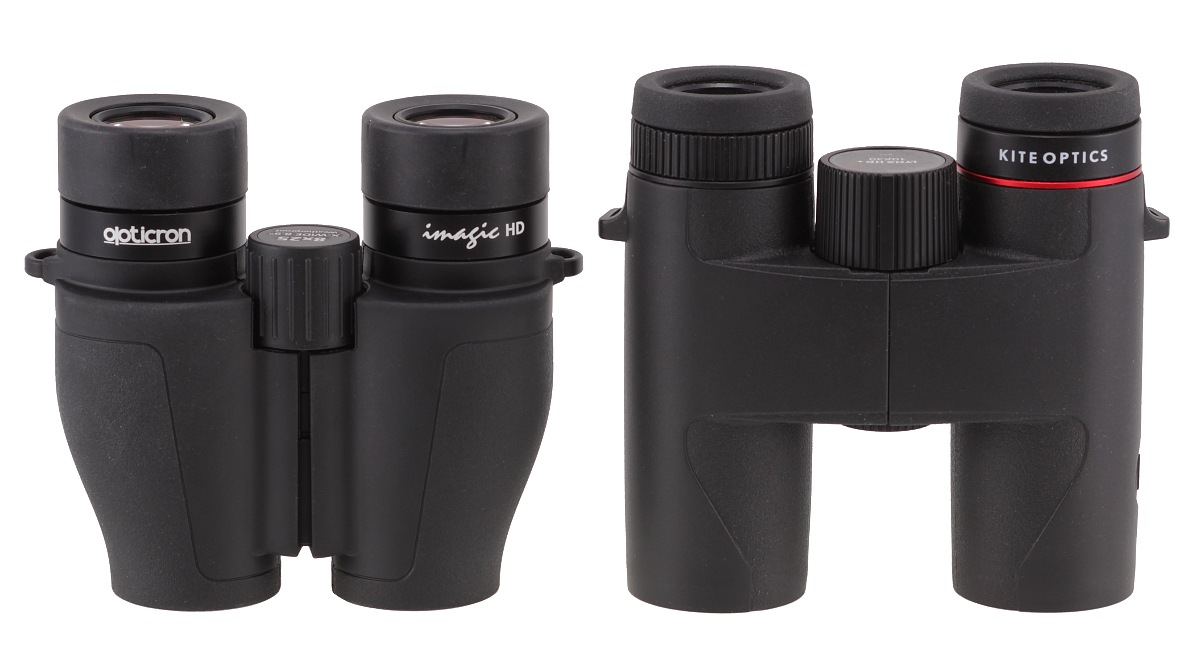
At the same time, Opticron is taking a step in the right direction here, even when compared to the smallest and lightest 8x30 class models. In the image below, it stands side by side with the Kite Lynx HD+. The difference in dimensions may not be dramatic, but when it comes to weight, it starts to become significant.
 |
The standout feature of the new Opticron is its impressive field of view, claimed to reach a staggering 8.9 degrees. I decided to measure it precisely, obtaining a result of 8.81 degrees with a margin of error of 0.04 degrees. While the real-world figure falls slightly short of the spec sheet, it remains well within the 2-sigma error boundary. More importantly, it is still breathtaking. After all, an 8.8-degree field is what you get in the iconic Nikon 8x30 EII - a model that currently costs 700 Euro and is revered precisely for its vast field of view. Yet Opticron managed to deliver that same field in an instrument that is noticeably smaller, lighter, and nearly three times cheaper.
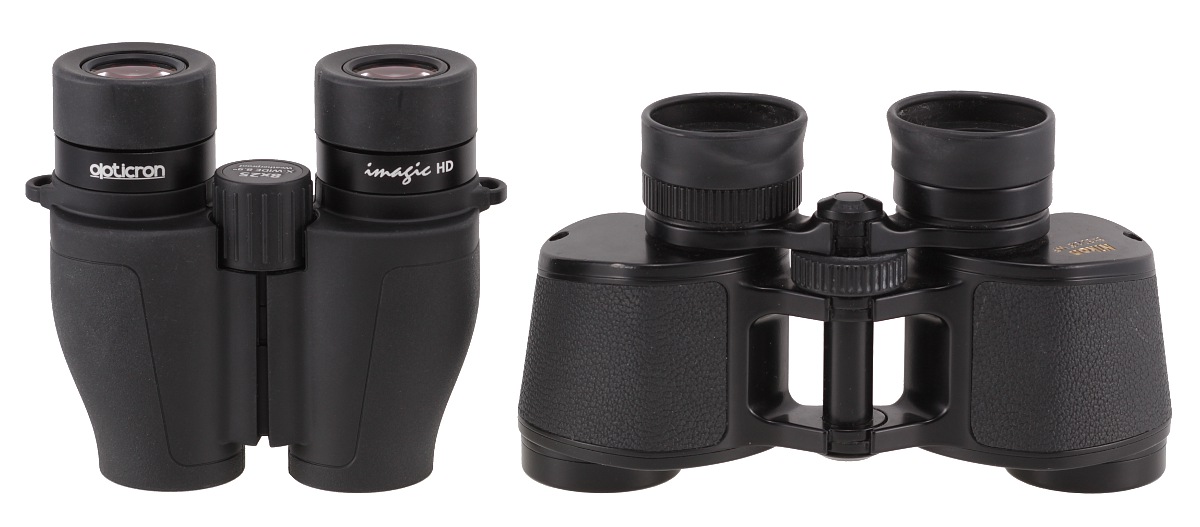 |
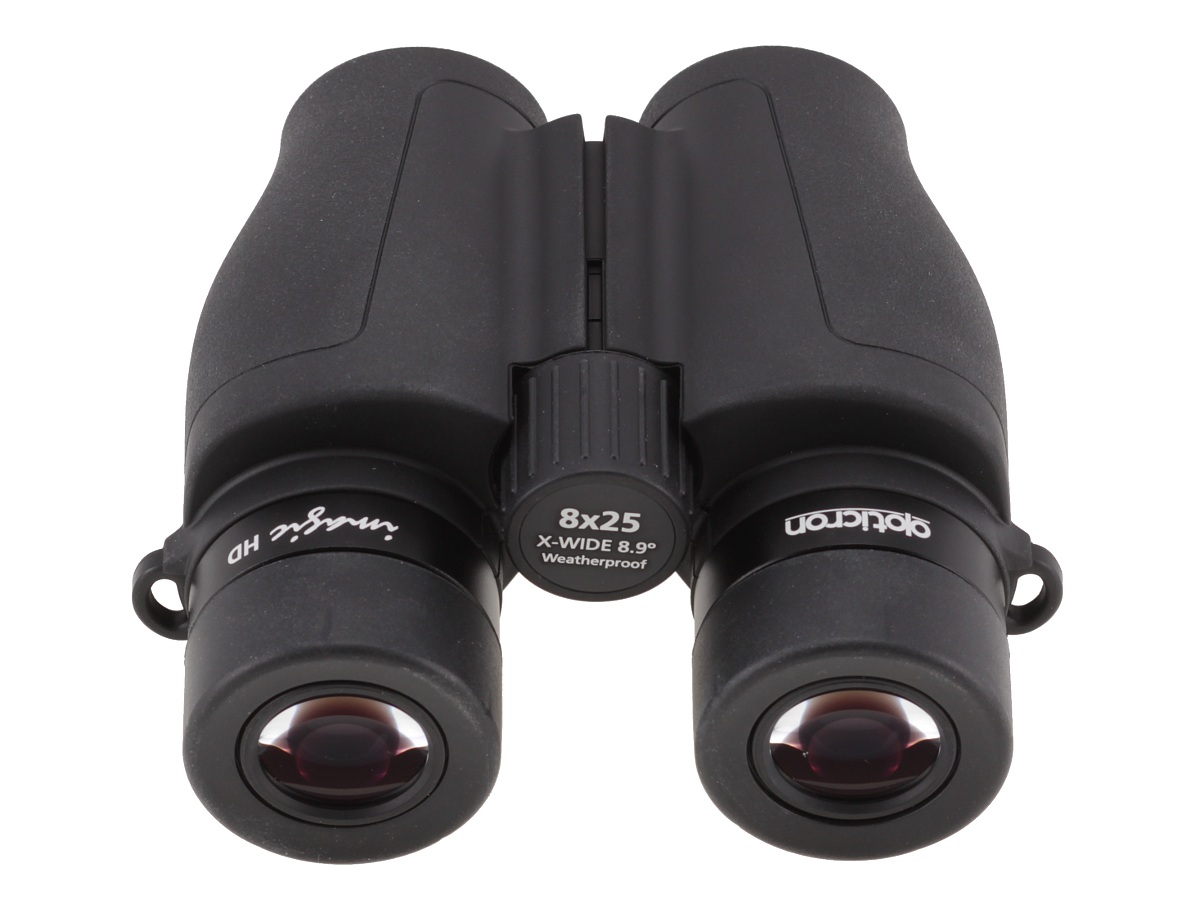
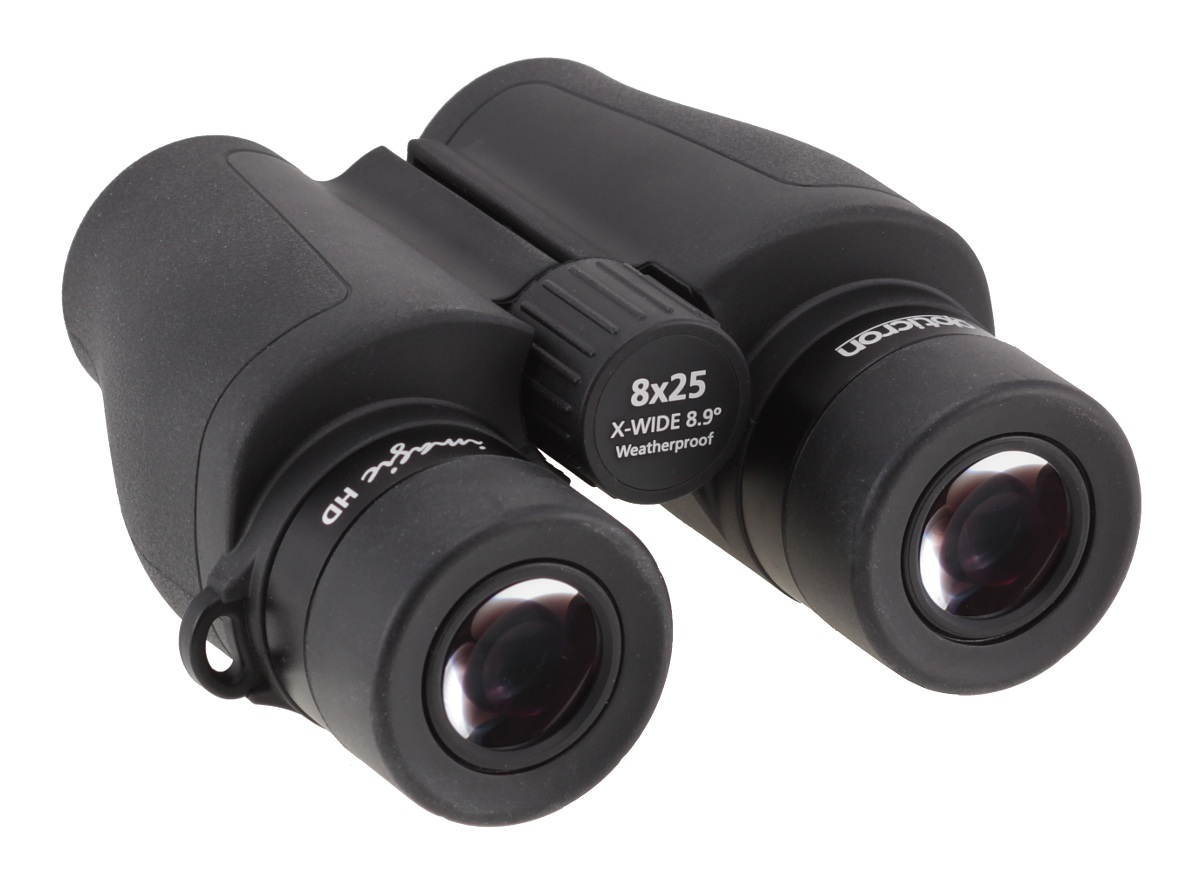
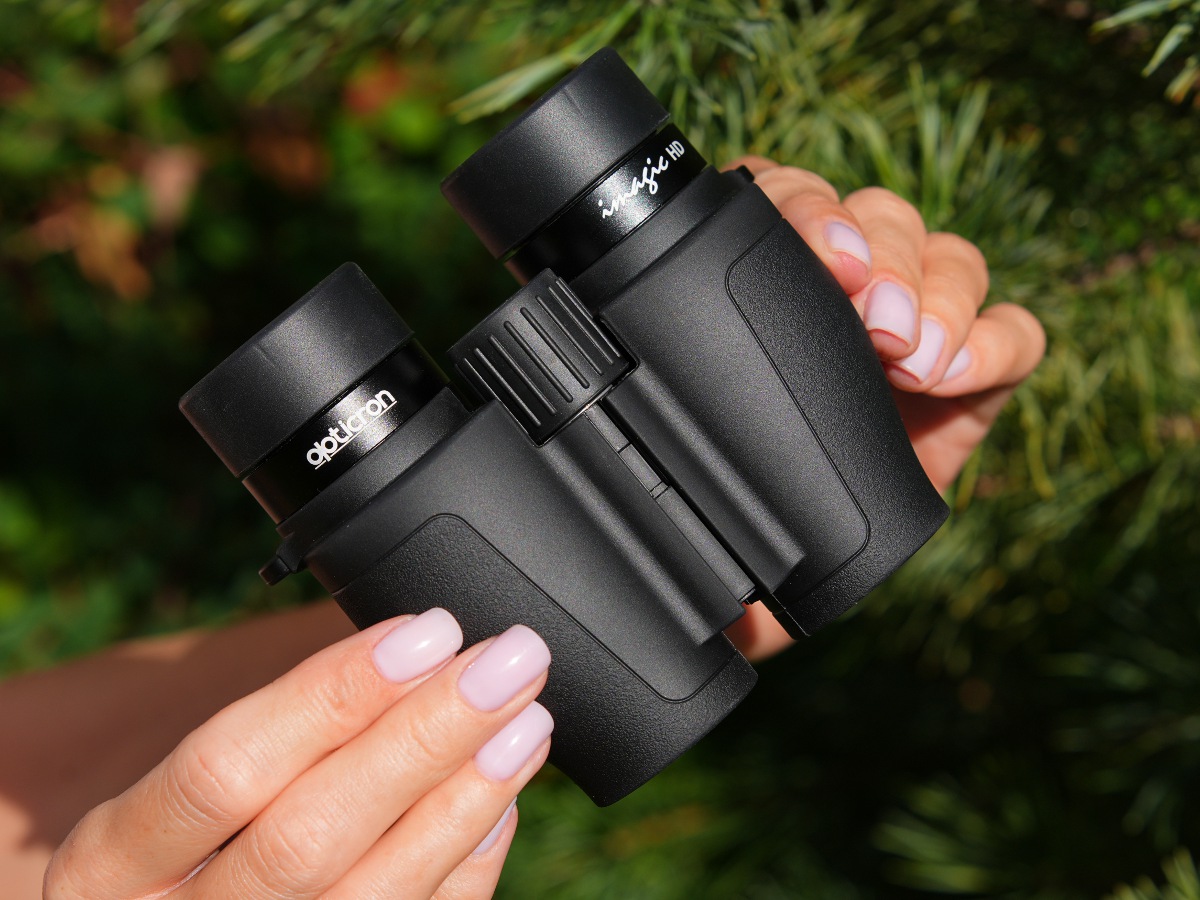
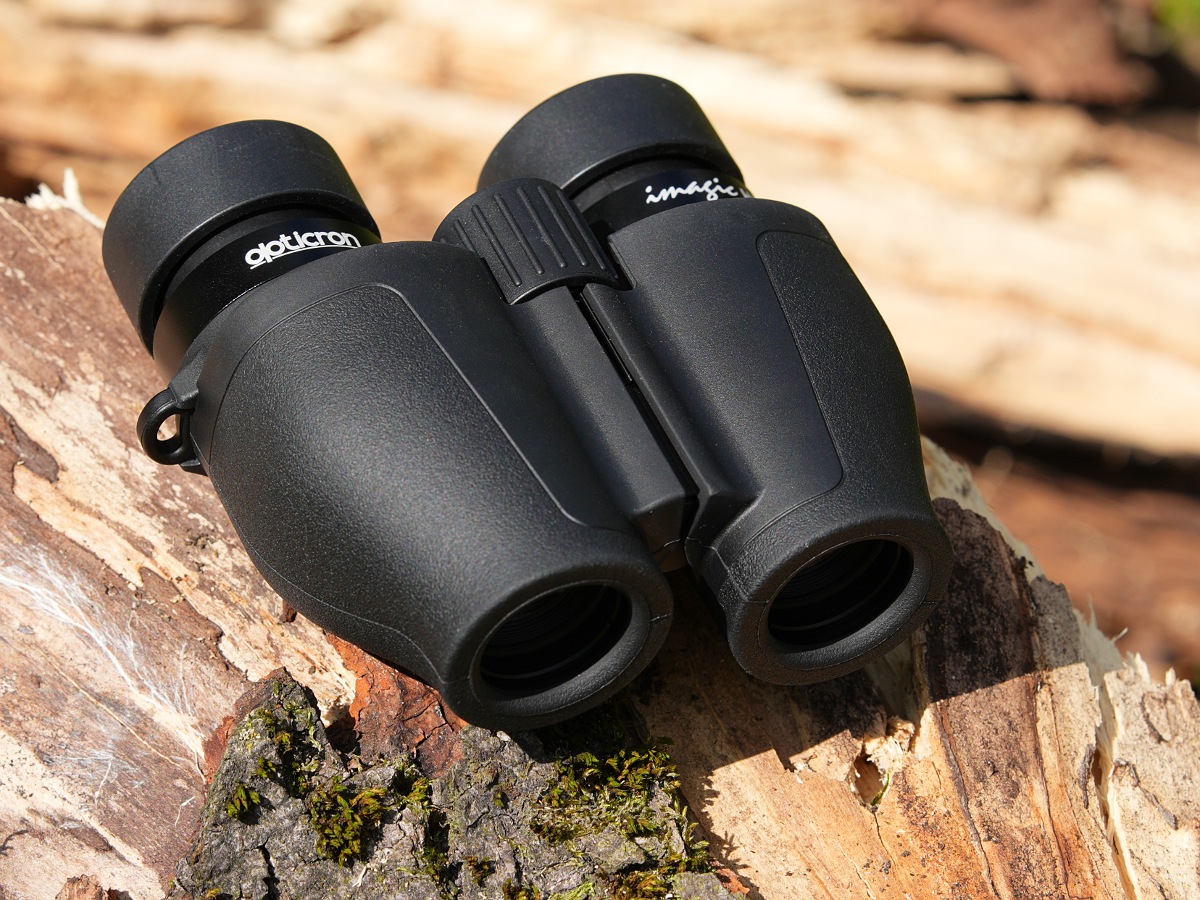
As seen in the photos, the Opticron Imagic HD X-WIDE 8x25 is armor-plated with a rubber coating featuring a slightly textured surface along the edges to enhance grip. This rubber fits extremely snug against the body, staying firmly in place even around the objective lenses - no manufacturing oversights here.
The central focus wheel is standard for this class of instrument and comes wrapped in a knurled rubber grip. Its movement is smooth, operating with just the right amount of resistance. Covering the entire focus range requires a rotation of 440 degrees. Diopter adjustment is handled via a smooth metal ring on the right eyepiece, equipped with a distinct tab to make operation effortless.
 |
Measuring the interpupillary distance (IPD) brought a major surprise. The minimum setting is superb at just 43.4 mm, meaning this binocular becomes an ideal choice for children in virtually every respect. It is small, light, easy to handle, and offers a vast field of view with comfortable eye relief, all while allowing the optical axes to be positioned extremely close together. Unfortunately, every rose has its thorn. Moving to the opposite end of the range reveals a maximum IPD of only 71 mm. This could prove problematic for many adults whose interpupillary distance measures 72 mm or more.
The close proximity of the objective lenses - a natural consequence of the reverse Porro layout - presents an opportunity for ultra-close focusing, allowing a binocular to double as a makeshift macro instrument. Opticron did not capitalize on this potential, however, as the Imagic HD X-WIDE 8x25 focuses down to a minimum distance of 2.45 meters. While this value aligns with the specification, it is still a bit too high for optics of this type.
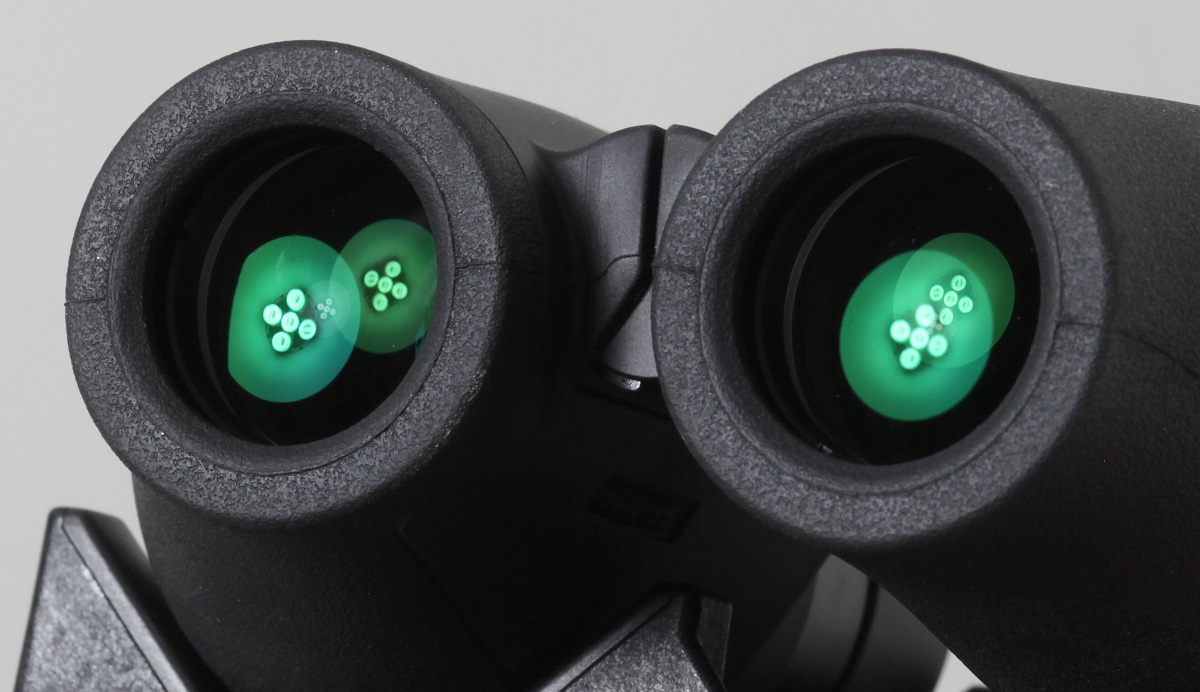
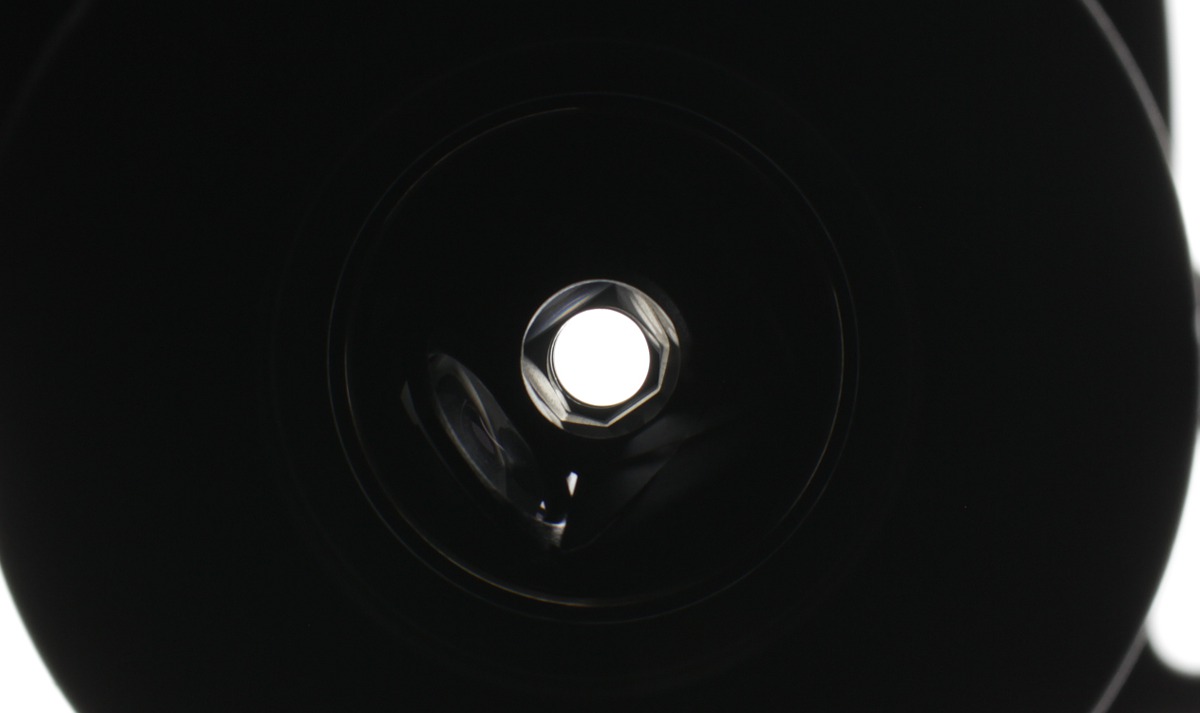
A peek inside the optical barrels reveals dark gray, matte, and densely ribbed interior walls. The housing surrounding the prisms also looks well executed. One potential drawback is the unblackened - though still matte - edge on one of the Porro prisms, from which stray light can bounce quite freely. On the upside, we spotted no internal dust or debris whatsoever.
 |
 |
Nighttime observations of bright city lights or the near-full Moon revealed faint ghosting within the field of view. These reflections intensified as the strong light source approached and crossed the field stop, eventually morphing into distinct cross-shaped spikes.
Daytime performance when shooting toward the sun was similarly poor. Even with the sun positioned 20–30 degrees above the upper edge of the field of view, flares could be so intense as to dazzle the eyes. Something was clearly overlooked here.
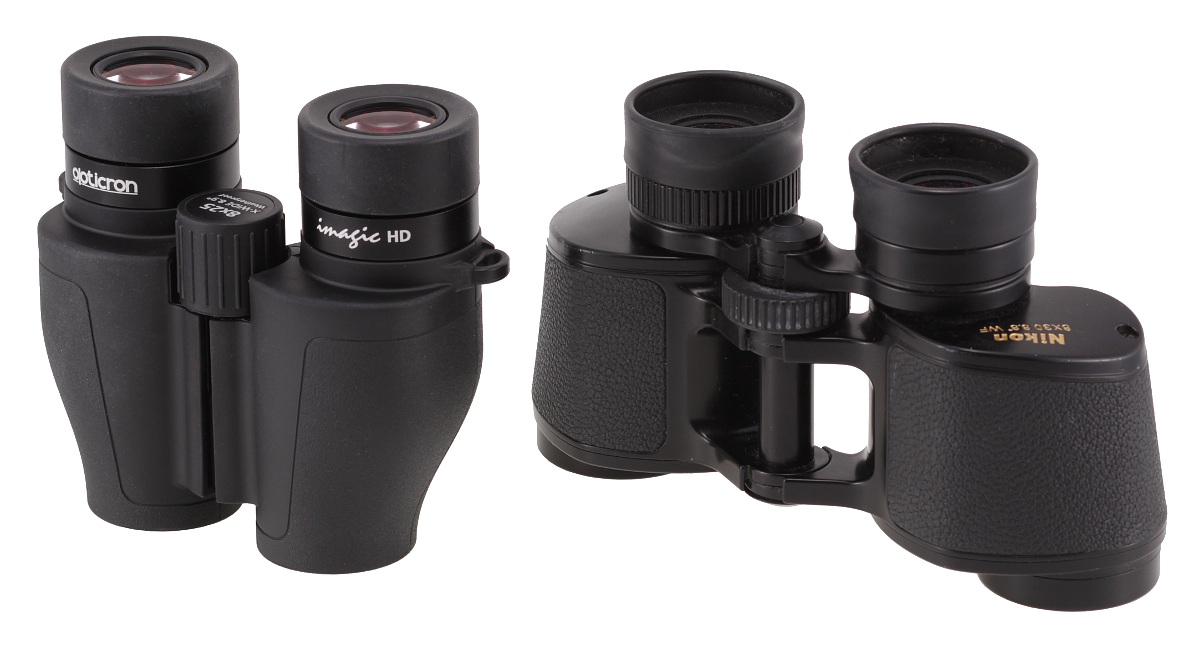 |
First off, central sharpness in both binoculars was outstanding. The image was top quality and rich in contrast. What is more, the Opticron rendered colors very accurately without introducing any distinct color cast. A subtle warming of the image could be detected, but it was truly negligible. As if that were not enough, both the Opticron and the Nikon start to lose sharpness at a similar distance - roughly 70% out from the center of the field of view - yet at the very edge, the blur in the Opticron is actually less pronounced than in the Nikon!
When it comes to central chromatic aberration, both binoculars control it well, though the Nikon holds a slight edge. At the edge of the field, this aberration becomes noticeable in both cases. A direct comparison is somewhat tricky because it manifests quite differently. With the Nikon, when viewing two contrasting edges positioned at the bottom of the field of view, the upper edge shows a distinct blue-violet fringe, while the lower displays an equally intense yellow-green hue. On the Opticron, the upper edge exhibits a clear red-magenta fringe, whereas the lower takes on a faint greenish tint. Overall, at the periphery of the field, the Opticron likely emerges slightly ahead.
 |
In nighttime tests, the matchup was equally even. Both models correct astigmatism remarkably well, displaying nearly pinpoint star images with minimal flaring. Edge falloff was slightly more pronounced in the Opticron, but it countered this by handling coma better.
Overall, the optical showdown goes to the Nikon, though its victory is nowhere near as wide as the price gap would suggest. The deciding factor was stray light performance, where the Opticron stumbled significantly; across all other optical categories, the battle was fiercely contested, with each model taking turns holding a slight lead.
Returning to the question posed in the subtitle: does the Opticron Imagic HD X-WIDE 8x25 deserve to be called the perfect compact? It falls a bit short, but if the manufacturer were to upgrade the anti-reflective coatings and refine the internal blackening, it would come remarkably close to earning that title. Even as it stands, it remains one of the most compelling options on the compact binocular market, offering an outstanding ratio of specs and performance to price. As consumers, we can only celebrate the fact that competition is rising, giving us an ever-expanding selection of excellent optical instruments.
 |
- Solid and comfortable housing to grip,
- Large field of view,
- Comfortable eye relief,
- Bright, sharp, and high-contrast image,
- Excellent color rendition,
- Low astigmatism,
- Low distortion,
- Well-corrected chromatic aberration in the center of the field of view,
- Moderate edge darkening,
- High-quality, non-vignetting reverse Porro prisms,
- Minimum interpupillary distance starting at just 43.5 mm,
- Great value for money across specifications, quality, and performance.
- Poor stray light performance,
- Maximum interpupillary distance of only 71 mm,
- Edge chromatic aberration could be lower.