


Review of four 15x56 binoculars
3. Build quality and finish
The two most expensive binoculars perform best in this regard: the Swarovski, with a submersible rating of up to 4 meters, and the Zeiss, with a specified rating of 400 mbar (equivalent to a 4-meter water column). The Banner Cloud fares slightly worse with an IPX7 rating, which guarantees leak-free performance when submerged at a depth of 1 meter for up to 30 minutes. Last place must go to the Oberwerk by default. The manufacturer claims full weather resistance, but without providing a specific IPX rating or immersion depth. Thanks to its individual focusing system, sealing is likely quite high; however, the lack of an official depth rating places it below models with explicit certification.
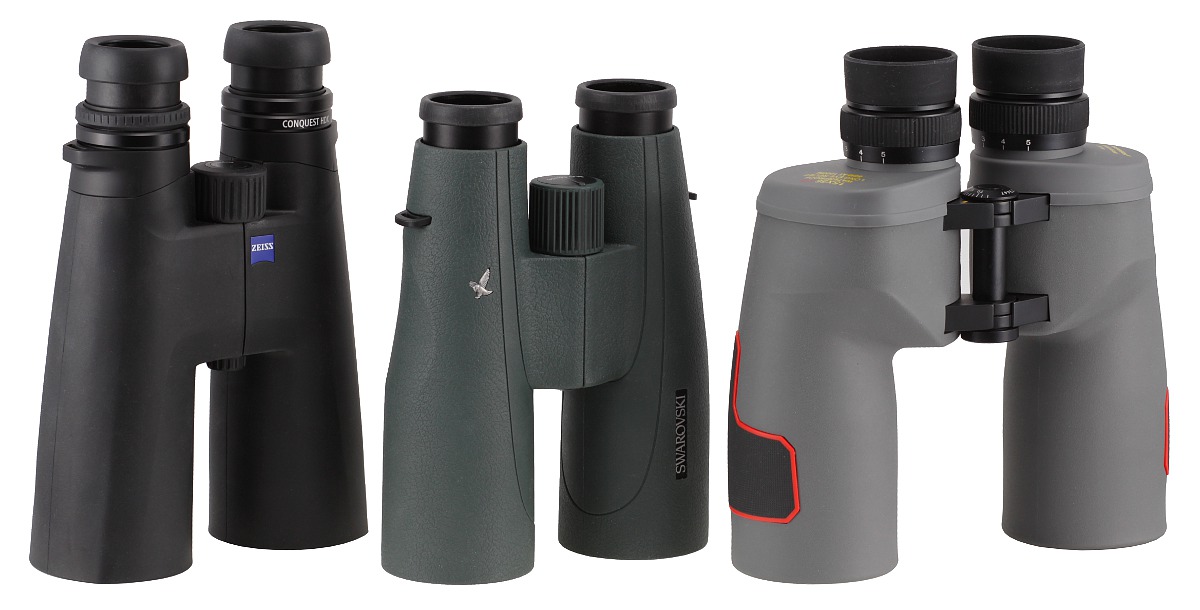
The rubber armoring on the Oberwerk's housing is gray with black and red accents of varying texture. This allows for a secure grip and comfortable handling. While the rubber adheres very well to the barrels and prism housings, it can be peeled back fairly easily right near the objective lenses. Focusing on both eyepieces runs smoothly and with appropriate resistance. The eyepieces feature rubberized eyecups with a diameter of a whopping 47 mm at the very rim. The issue with these eyecups is that for most testers, they were too long when fully extended - preventing them from seeing the entire field of view - and too short when fully folded down. Unfortunately, there are no intermediate positions. It is a pity that the manufacturer does not include an additional, shorter set of eyecups in the box.
Please Support UsIf you enjoy our reviews and articles, and you want us to continue our work please, support our website by donating through PayPal. The funds are going to be used for paying our editorial team, renting servers, and equipping our testing studio; only that way we will be able to continue providing you interesting content for free. |
- - - - - - - - - - - - - - - - - - - - - - - - - - - - - - - - - - - - - - - - - - - - - - - -
 |
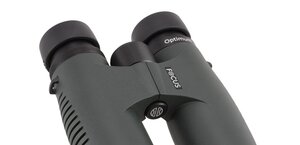
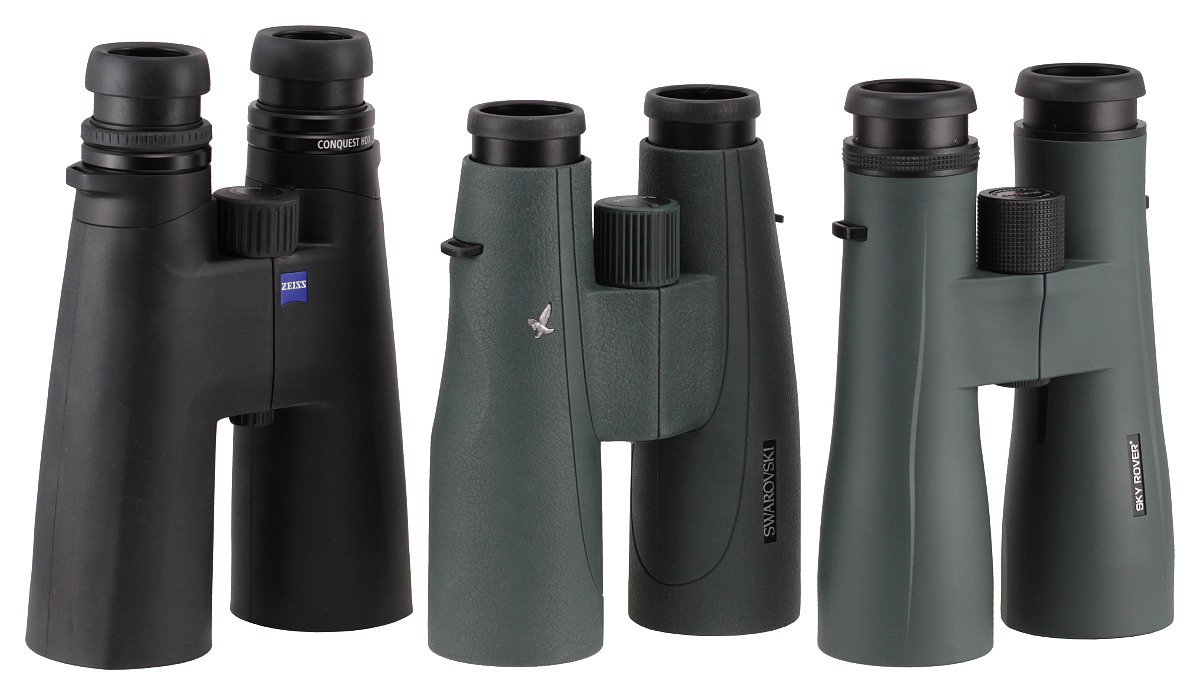
Focus is adjusted via a large, ribbed central focusing wheel that operates smoothly and pleasantly. Alongside the Swarovski, its focus mechanism offered the most comfortable operation and enabled the most precise adjustments. Traversing the entire focal range requires turning the wheel roughly 500 degrees. Diopter correction is performed via a comfortable, ribbed ring on the right eyepiece, which also functions properly. The rubberized eyecups measure 44 mm in diameter at the rim and offer six click-stop position settings.
The combination of large eyepieces and the expansive fields of view typical of the Banner Cloud series - which dictated using large-diameter eyecups - meant that several models in this line occasionally struggled with overall usability. The manufacturer was clearly aware of this, having revised the shape and contouring of these eyecups multiple times. These adjustments seem to have paid off: unlike with several of the brand's smaller binoculars, on the 15x56 APO I was able to fine-tune the IPD, eyecup extension, and eye placement against my eye sockets to view nearly the entire - and genuinely vast - field of view with relative comfort.
 |
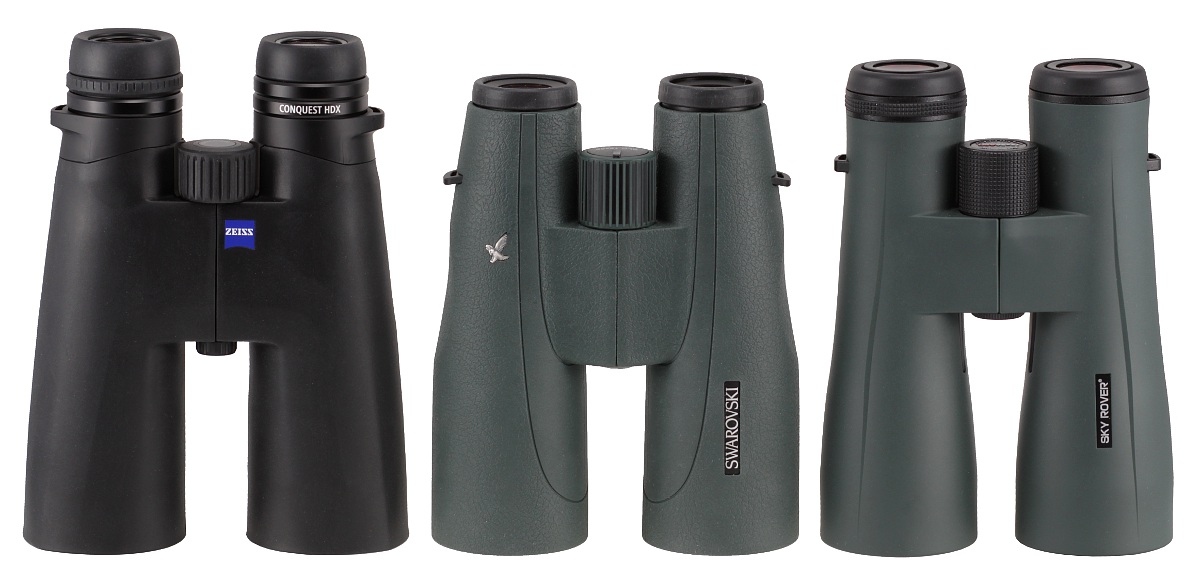
Here, too, we find a comfortable, ribbed central focus wheel with excellent mechanical feel. However, sweeping through the entire focal range requires a fair bit of cranking, as the wheel turns through an angle of 820 degrees. On the other hand, the SLC was the only model where diopter adjustment is engaged by pulling out the central focus wheel. This is the most weather-tight design available, as all moving elements operate strictly inside the binocular housing.
The rubberized eyecups have a diameter of 41 mm and can be set to four positions. Swarovski clearly excels at balancing field of view, eyepiece size, eyecup profile, and eye relief so that the viewing experience feels comfortable right from the start. It is just a pity that the most expensive model in our test, sent to us directly from the headquarters of such a renowned brand, arrived slightly miscollimated. While this slight optical misalignment was still usable for testers whose brains easily correct for such variance, a misstep remains a misstep.
 |
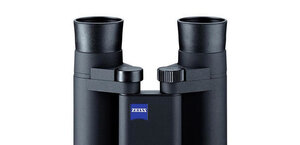
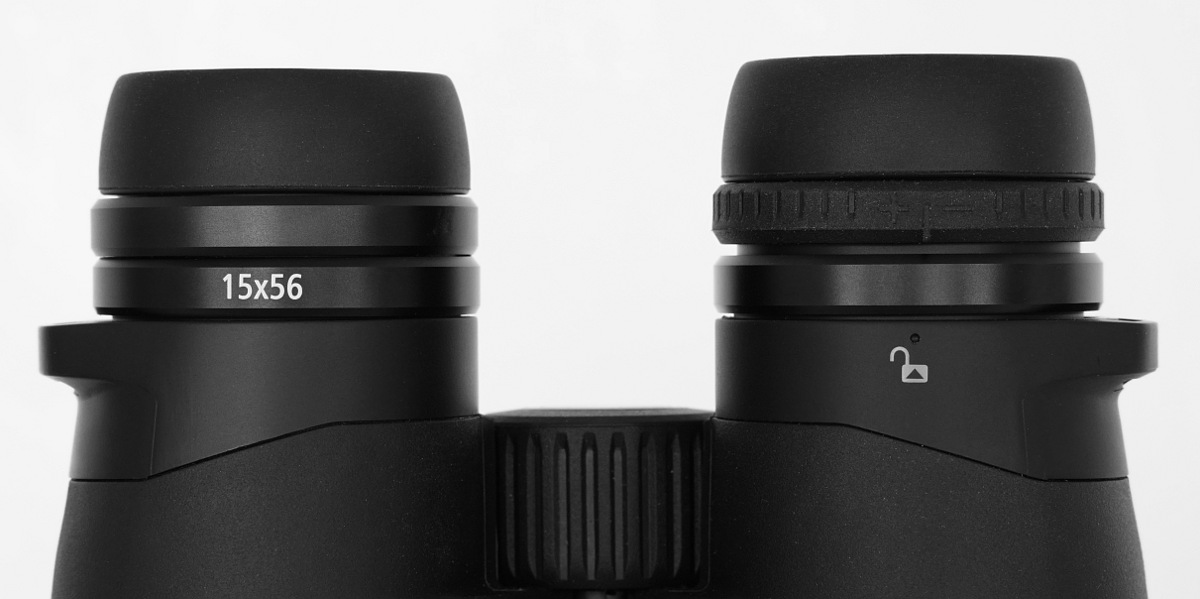
When it comes to focusing, everything looks proper on paper, but falls short in practice. The central focus wheel is sizable, ribbed, and easy to reach, with the entire focal range traversing a 430-degree rotation. However, its operation does not live up to the manufacturer's reputation: it feels notched in places and moves with uneven resistance. Achieving precise focus often requires considerable effort.
Diopter adjustment is handled via a rubberized, ribbed ring on the right eyepiece. To disengage and turn this ring, you have to lift it upward, which creates another usability issue. If a spectacle wearer uses the binocular with the eyecups fully collapsed, lifting the unlocked ring simultaneously pushes up one of the eyecups, leaving them unevenly set. Consequently, during diopter adjustment, the observer cannot rest the binocular flat against their glasses, making it difficult to properly set focus across both optical channels.
 |
The first section of this test category yielded fascinating results: while the two most affordable binoculars avoided major flaws, missteps emerged from renowned legacy brands like Swarovski and Zeiss. Let us now turn to the interior build quality and cleanliness of the barrels to see if any further surprises await.
The interior barrels of the Oberwerk are exceptionally well-blackened, thoroughly matte-finished, and lined with fine ribbing. Even when shining a powerful flashlight inside, it feels like peering down a truly dark well—the manufacturer did an outstanding job here. The cell bases and prism retention clips fair slightly worse, displaying a bit more gray, though there is still nothing to warrant heavy criticism. The slightly exposed sides of the Porro prisms are also meticulously blackened, and we spotted no significant contamination on any internal element. Looking very closely, one can pick out literally just a few microscopic dust specks.
The inner barrels of the Banner Cloud are dark, beautifully matte-finished, and densely ribbed. Additionally, a distinct baffle is positioned ahead of the focusing lens. Further inside, ample ribbing remains visible, though the base near the prisms is not fully black and exhibits a slight sheen. In one spot, the brass tip of a screw can also be seen. We have no major complaints here, even if it falls just shy of perfection. As for cleanliness, it mirrors the Oberwerk - only upon close inspection can a few scattered dust particles be detected.
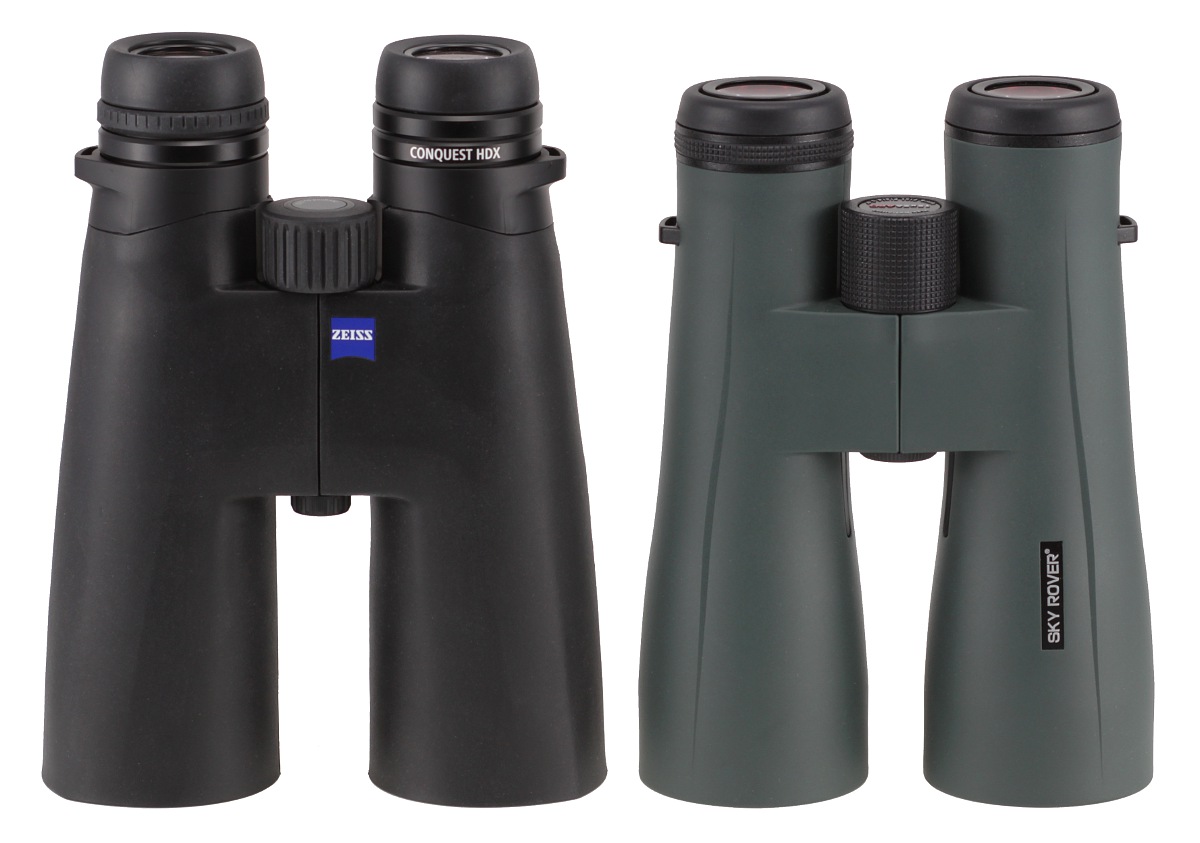 |
The Zeiss Conquest HDX, much like the Oberwerk, features deep blacks and dark grays alongside excellent barrel baffling. A sequence of distinct baffles and dense ribbing extends almost right up to the prisms. The base near the prism assembly looks the best among all evaluated binoculars - there are simply no weak points here. However, interior cleanliness falls slightly short of the Swarovski, performing on par with both Chinese-made binoculars.
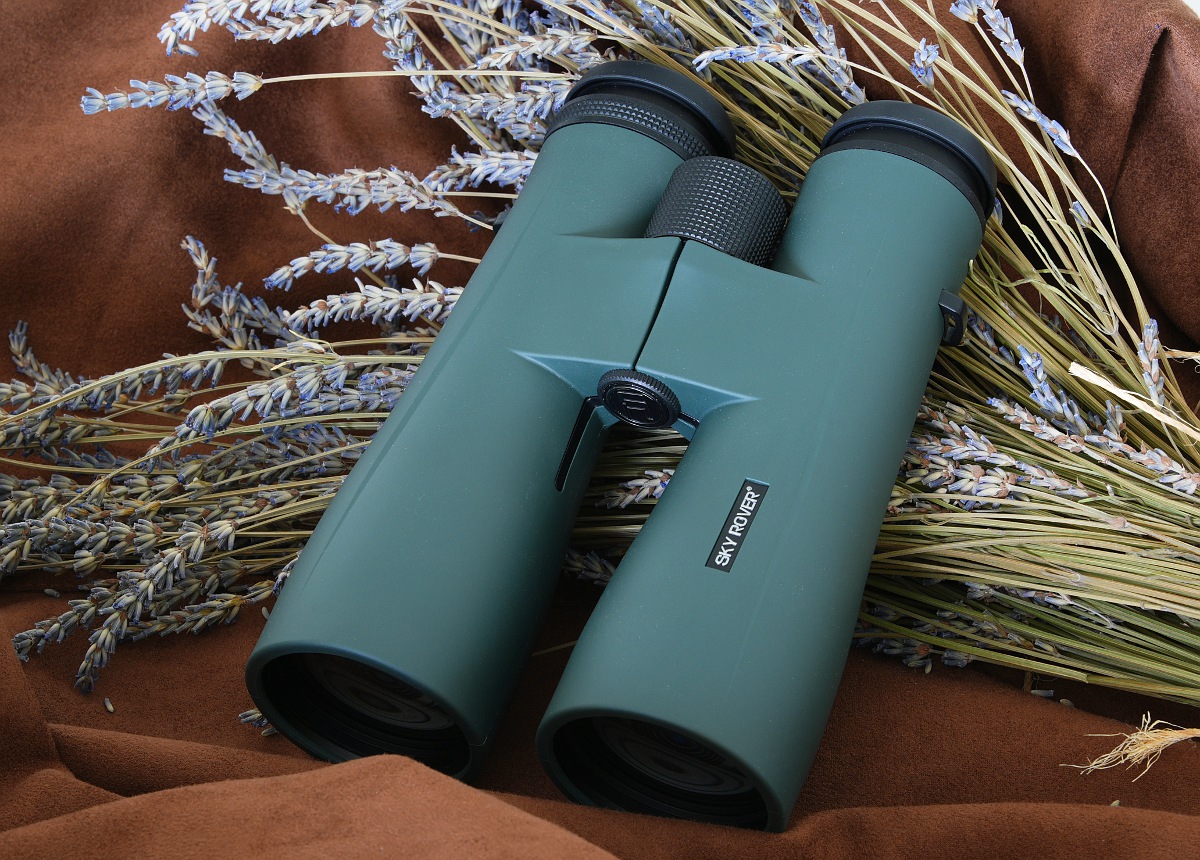
The final score in this comprehensive evaluation category was calculated by combining results across several subcategories, including rubber armoring quality, central focus and diopter operation, eyecup ergonomics and adjustment range, optical collimation, waterproof rating, as well as interior stray-light baffling and cleanliness. First place went to the Swarovski SLC, which stumbled on collimation and interior baffling, but secured first or second place in every other area. Trailing by a hair was the Conquest HDX, which suffered from issues with both focus mechanisms, but otherwise turned in a stellar performance across the board. Third place fell to the Sky Rover, which avoided major missteps altogether while consistently scoring in second and third place. Last place once again went to the Oberwerk, hampered by its lower weatherproofing spec and least functional eyecups.
 |