


Review of the Opticron Discovery SP 7x28 binoculars
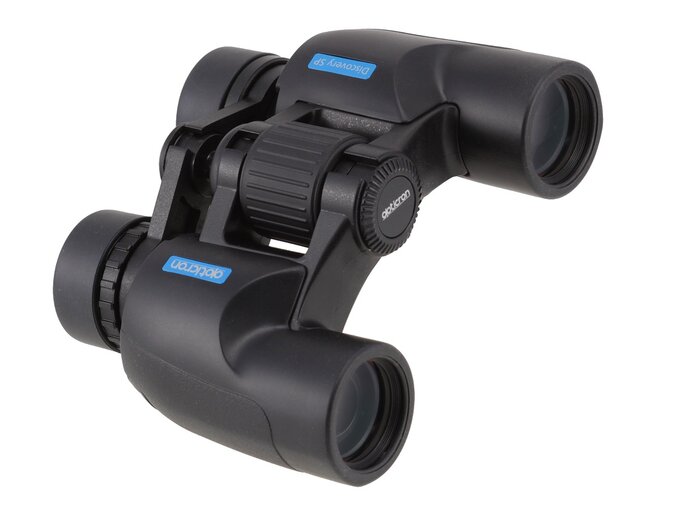
1. Opticron Discovery SP 7x28 - perfect for the Little Ones?
 |
On the flip side, it is not all smooth sailing - there is also bad news. Year by year, the number of genuine optics manufacturers is shrinking, while more and more companies outsource production to Asian factories. As a result, the market is flooded with rebadged clones of identical binoculars sold under different brand names. At the same time, the range of available configurations is narrowing considerably. While we are spoiled for choice in popular classes such as 8x32, 10x32, 8x42, 10x42, and 10x50, models with less conventional specifications are steadily disappearing. This is particularly evident in low-magnification binoculars. Parameters like 6x24 and 6x30 virtually vanished from the European market long ago, and now manufacturers are phasing out once-iconic configurations such as 7x35, 7x42, and 7x50.
Please Support UsIf you enjoy our reviews and articles, and you want us to continue our work please, support our website by donating through PayPal. The funds are going to be used for paying our editorial team, renting servers, and equipping our testing studio; only that way we will be able to continue providing you interesting content for free. |
- - - - - - - - - - - - - - - - - - - - - - - - - - - - - - - - - - - - - - - - - - - - - - - -
This relentless pursuit of high magnifications is, to some extent, a response to customer demand. Regrettably, it is far easier to pitch a 12x, 15x, or even 20x binocular to an inexperienced buyer than it is to explain why a 6x to 8x instrument is vastly superior for most real-world applications - and for certain age groups.
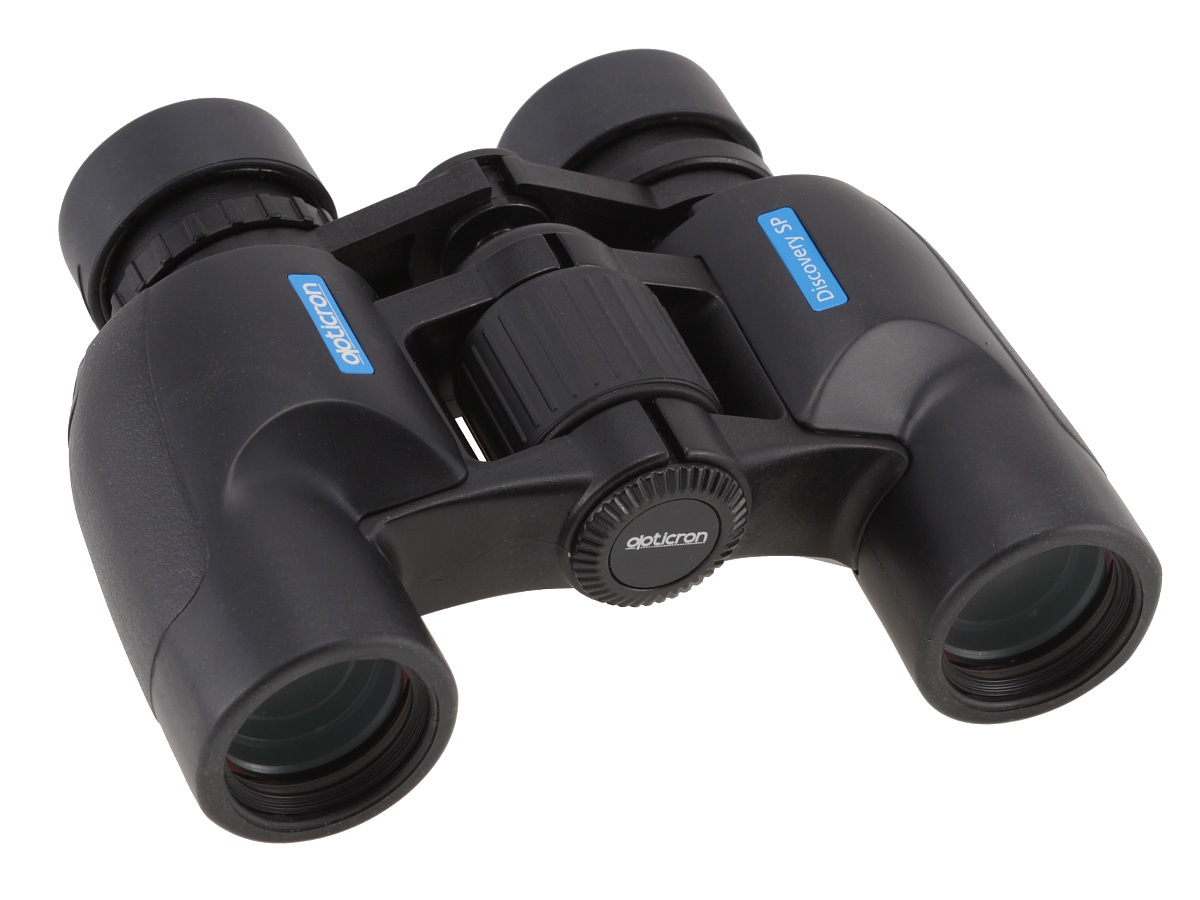 |
In an era where our children spend an ever-increasing amount of time glued to screens, encouraging them to pursue outdoorsy hobbies where binoculars come in handy is crucial. Yet doing so is becoming increasingly difficult, precisely because the selection of child-friendly binoculars is shrinking.
I have addressed this topic on our pages on numerous occasions. Allow me to briefly recap the key attributes that, in my view, define the ideal binocular for a child:
- 6x-7x magnification (8x at most): Ensures a stable, shake-free image.
- A wide field of view: Achieved through wide-angle eyepieces with an apparent field of view (AFOV) around 60 deg or greater, making it easy to point at target objects and track movement smoothly.
- A generous exit pupil (at least 4 mm): Delivers high surface brightness and provides enough leeway to compensate for hand tremor.
- Lightweight construction (up to 500-550 grams): Allows even small children to operate the instrument effortlessly.
- Wide interpupillary distance (IPD) range: A minimum IPD of 50-55 mm (or less) to fit smaller faces properly.
- Excellent price-to-performance ratio: Mechanically robust enough to survive less-than-careful handling, yet affordably priced so parents feel comfortable handing it over to their kids.
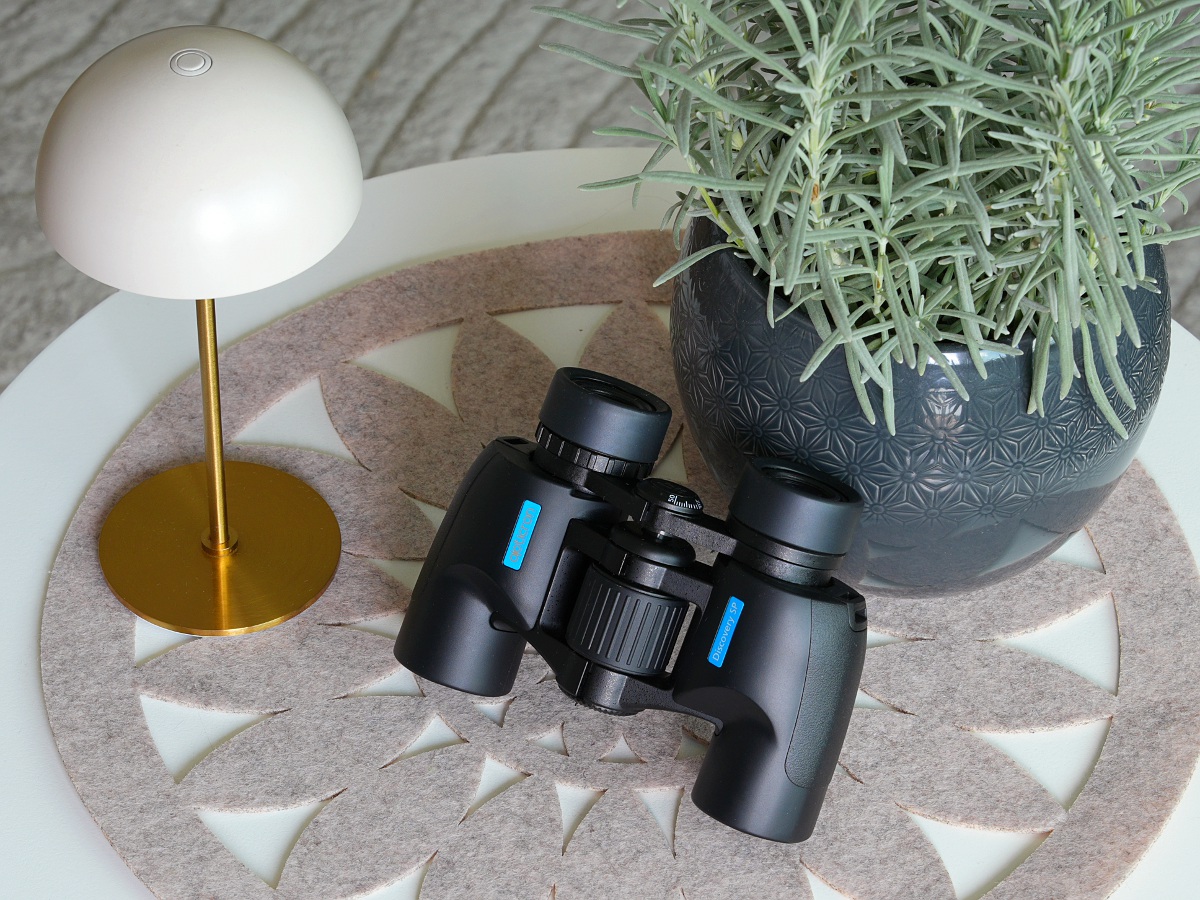 |
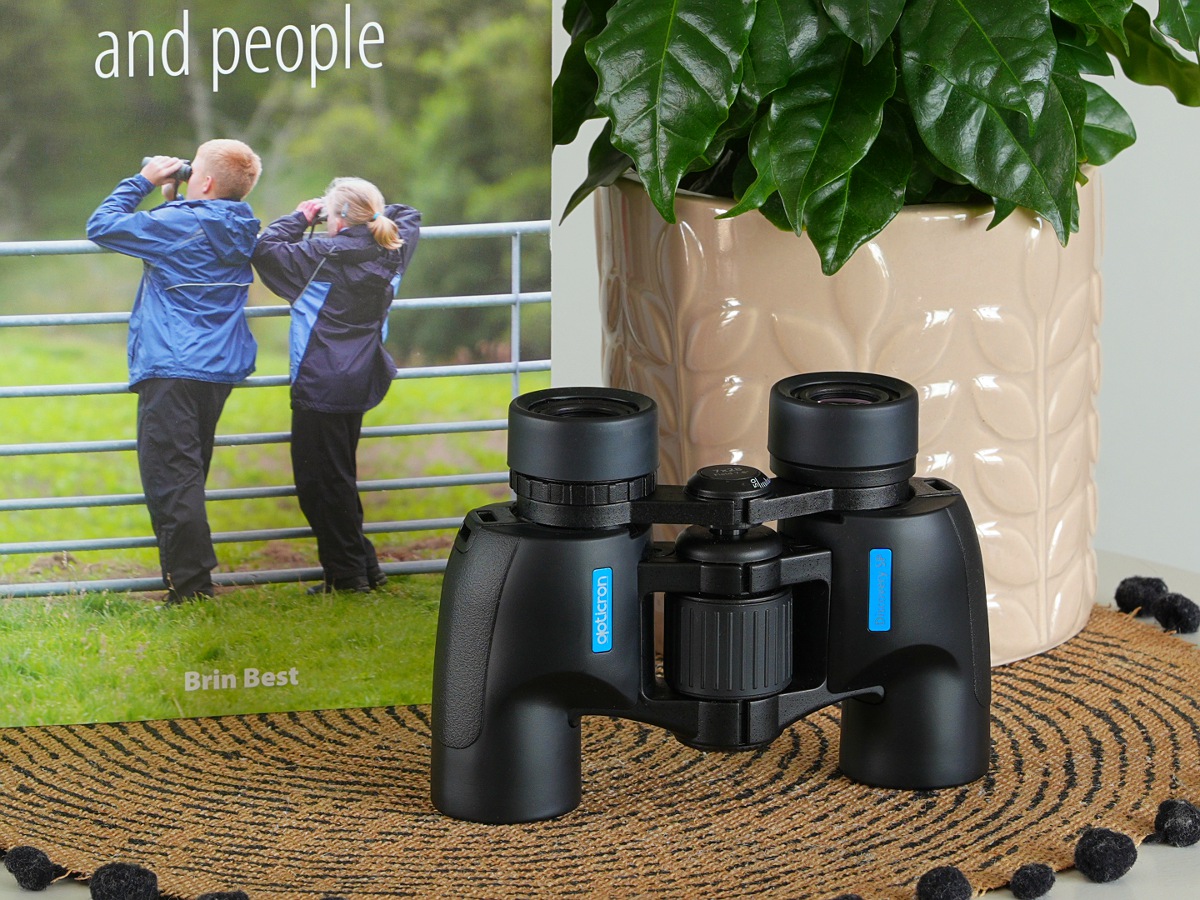
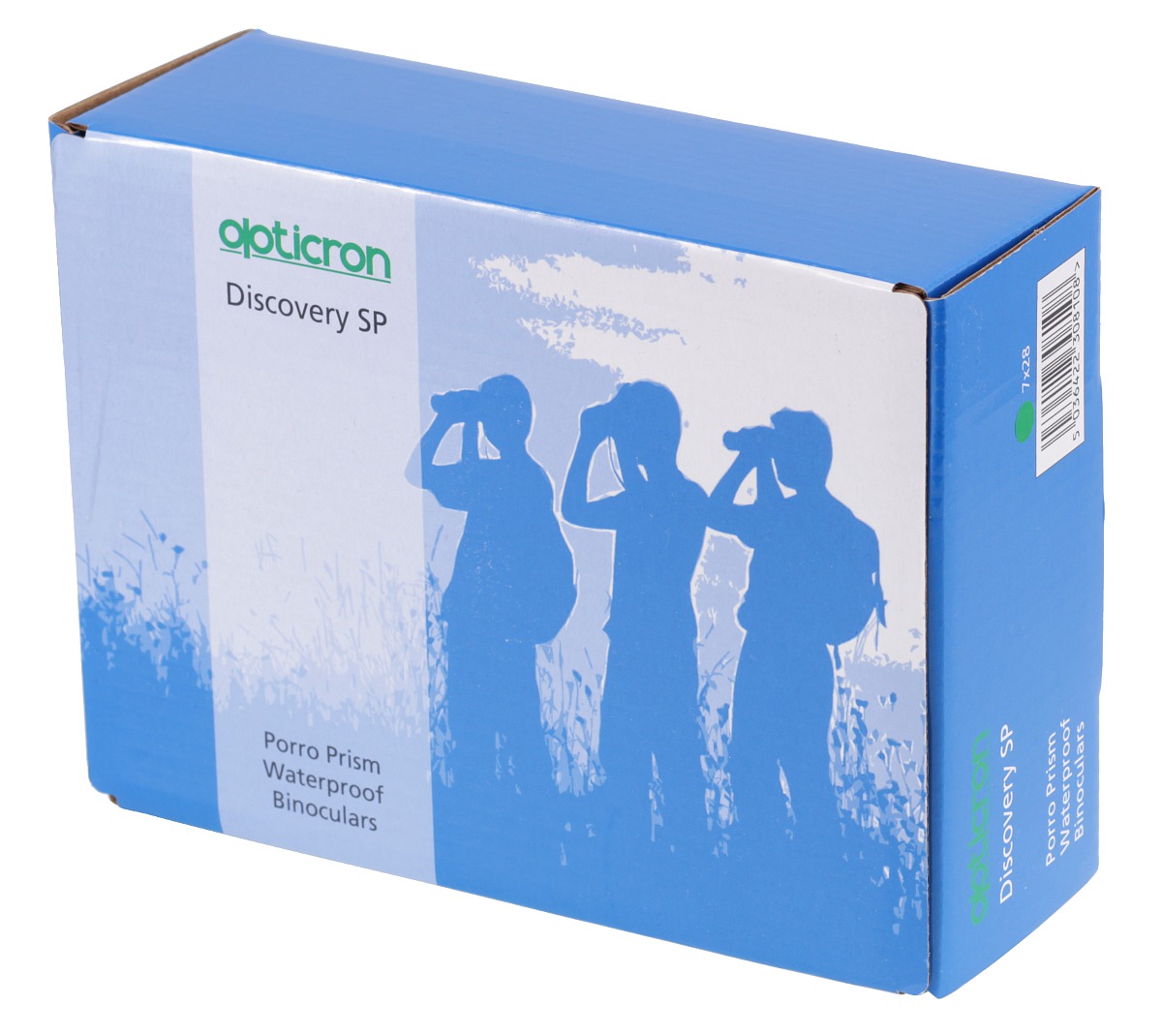
During that market review, one intriguing candidate slipped under my radar - a model that doesn't technically tick every single box above, but comes close enough to warrant a closer look: the Opticron Discovery SP 7x28, launched recently in late 2024.
Let’s take a look at the specification table below.
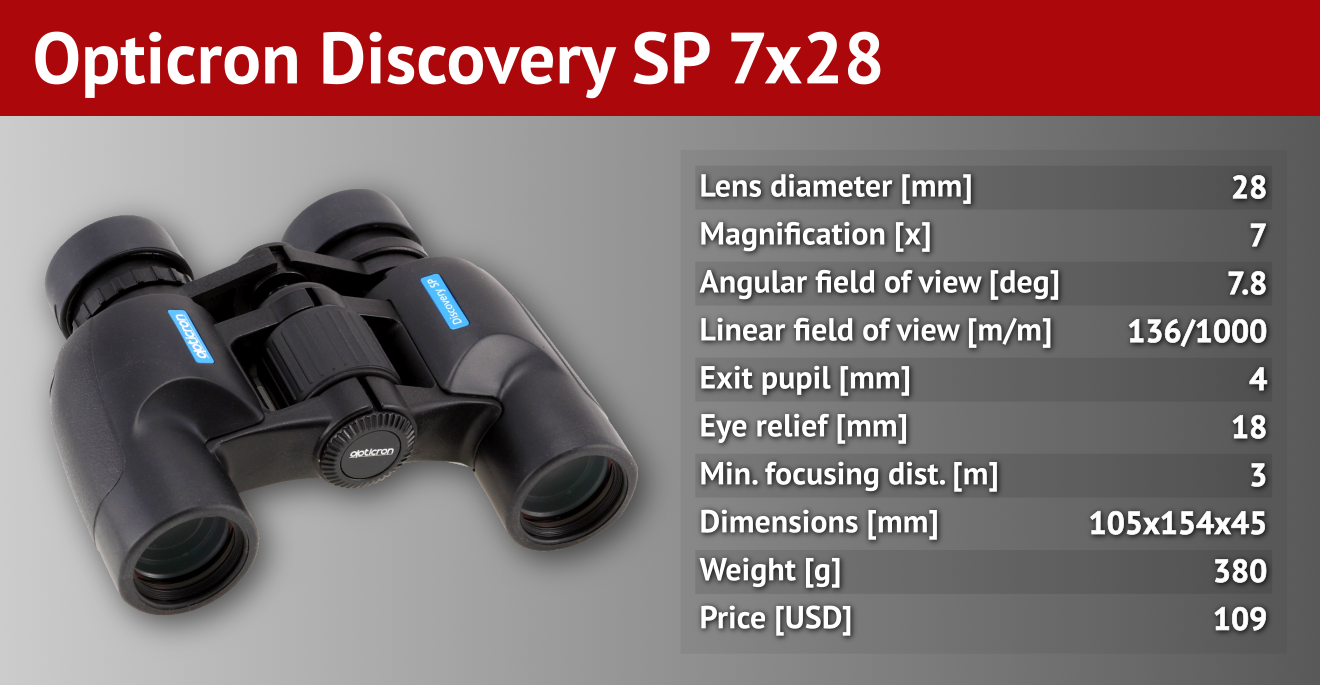 |
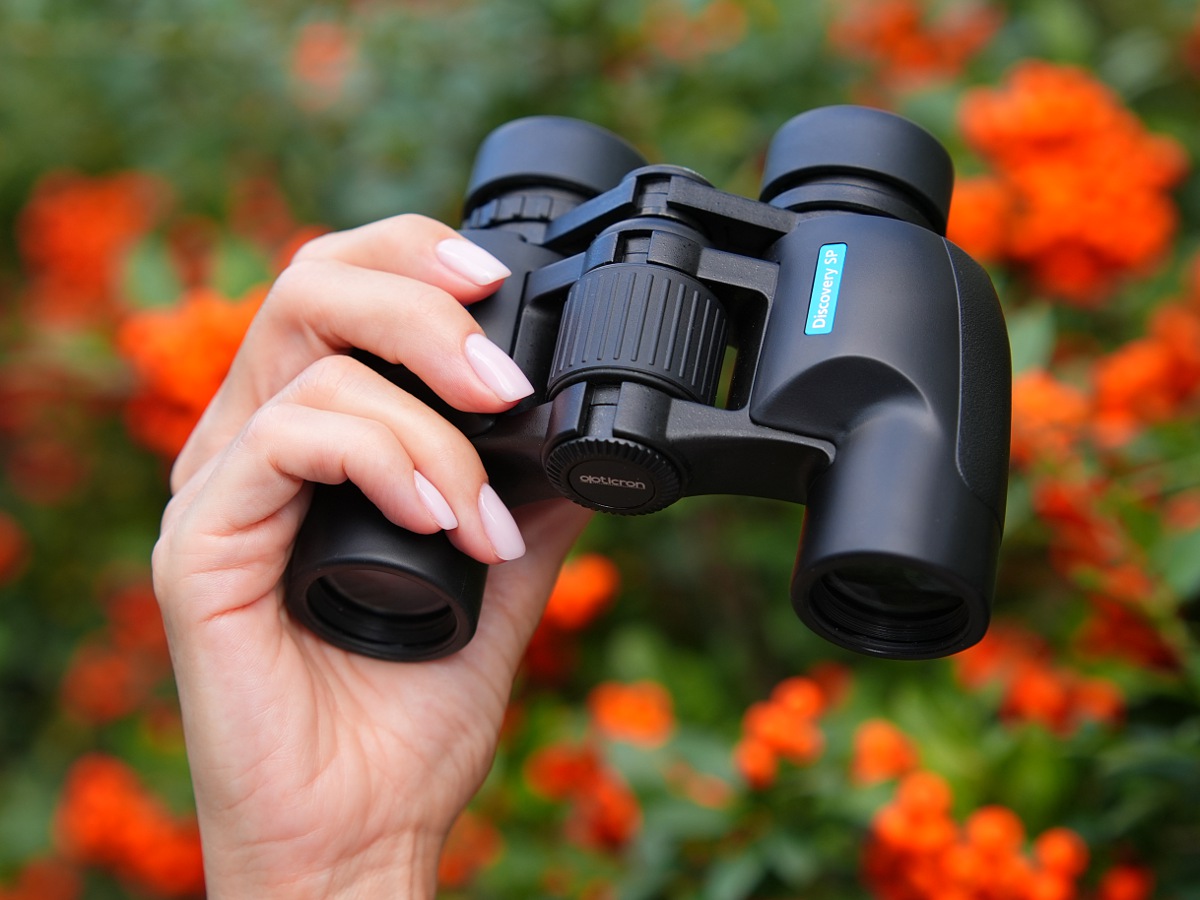
Thanks to the moderate objective diameter, the official specification lists the total weight at a mere 380 grams - making it remarkably lightweight and manageable. In reality, it is lighter still: my own scales registered just 345 grams. A child will have no trouble handling this instrument, and it won't weigh them down even on longer walks or field trips.
The physical dimensions of the Discovery SP 7x28 come in at 107x153 mm, with an interpupillary distance (IPD) ranging from 52.5 to 73.1 mm and a close-focus distance of 2.70 meters. The binocular is splash- and rain-resistant (rated IPX5 waterproof) and features an easily accessible tripod adapter socket. Out of the box, the package includes a carrying case with a strap, a neck strap, tethered objective lens covers, a rainguard for the eyepieces, and a microfiber cleaning cloth. The product is backed by a 5-year manufacturer's warranty.
 |
Speaking of compromises, let's address the eyepieces used in this design. The manufacturer provided a comfortable eye relief of 18 mm, making handheld viewing fully accessible even for eyeglass wearers. Unfortunately, the compact form factor forced a trade-off in the field of view. As a result, this binocular misses one of the key criteria outlined earlier: it falls short of an apparent field of view (AFOV) of at least 60 deg. The official specs claim a 7.8 deg real field of view, which translates to an AFOV just under 55 deg. In practice, the actual field is slightly tighter still - our lab measurements yielded 7.66 deg with an error of 0.05 deg. On the bright side, this is still wide enough to avoid the dreaded "keyhole effect," and it remains wider than many classic 7x35 or 7x50 models whose fields typically ranged between 7.3-7.5 deg.
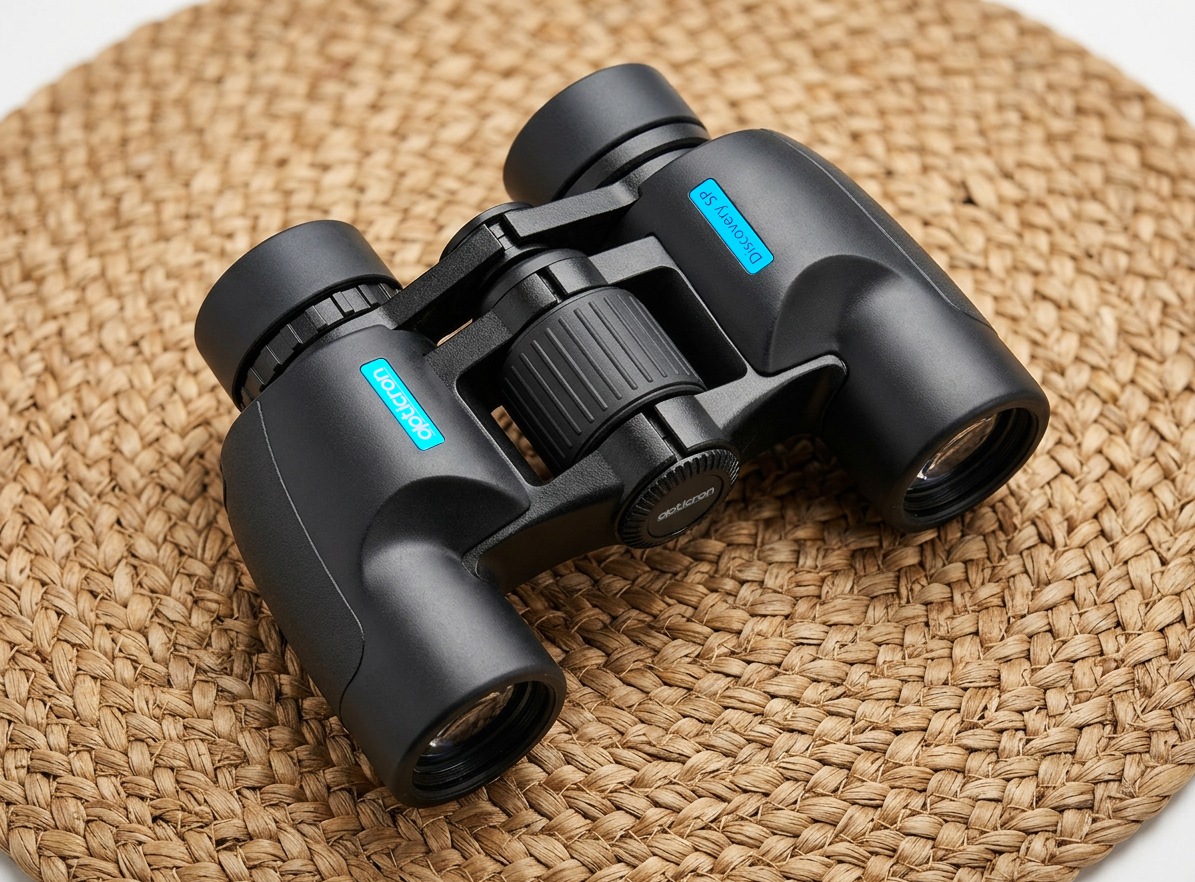 |
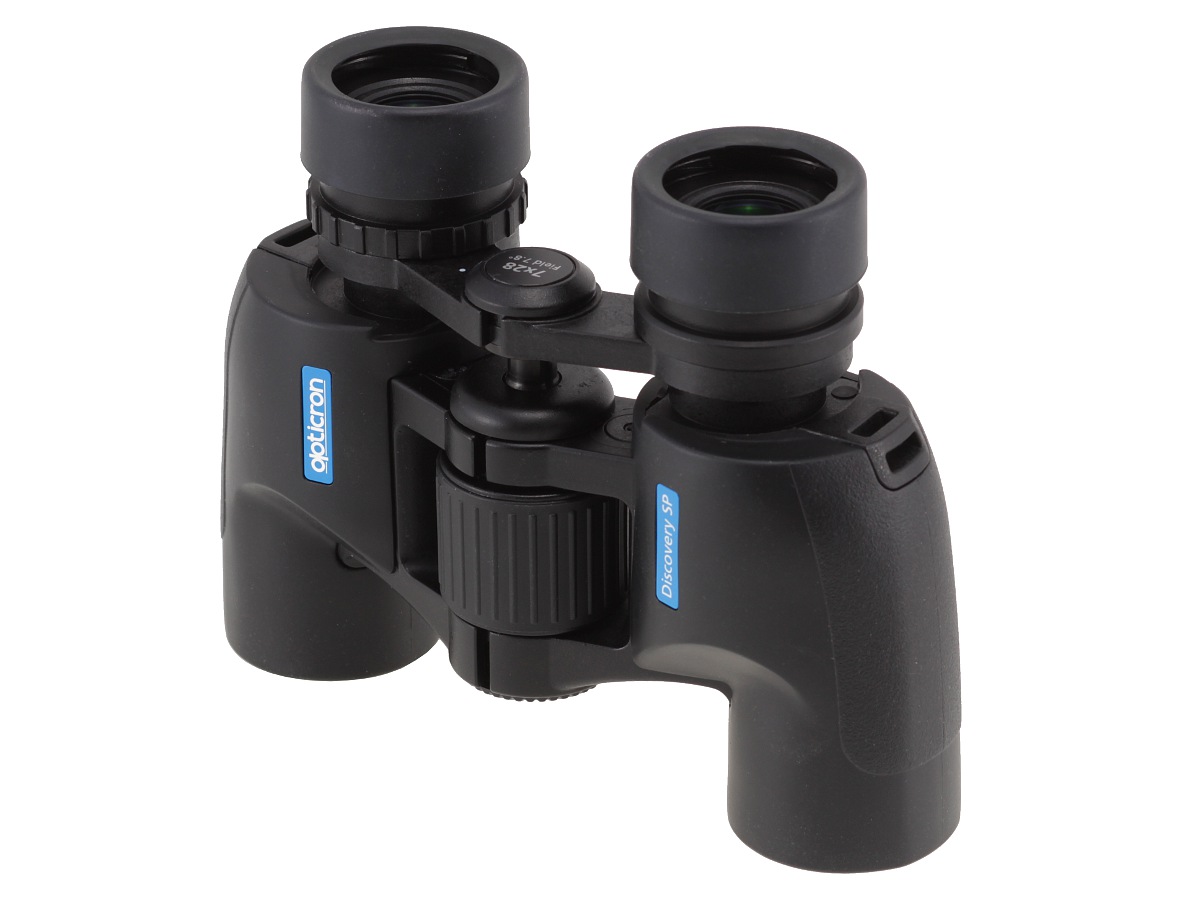
The large, rubberized, and knurled central focusing wheel operates with proper resistance, free from excessive play. However, its movement is somewhat inconsistent, with the resistance varying across the range. A full focus adjustment requires turning the wheel approximately 520 degrees. Rotating the wheel moves the external eyepiece bridge, which does not travel perfectly smoothly - minor discrepancies between the central part and the edges are visible. Nevertheless, it remains sufficiently stable so that firm pressure does not cause noticeable wobbling or defocusing.
 |
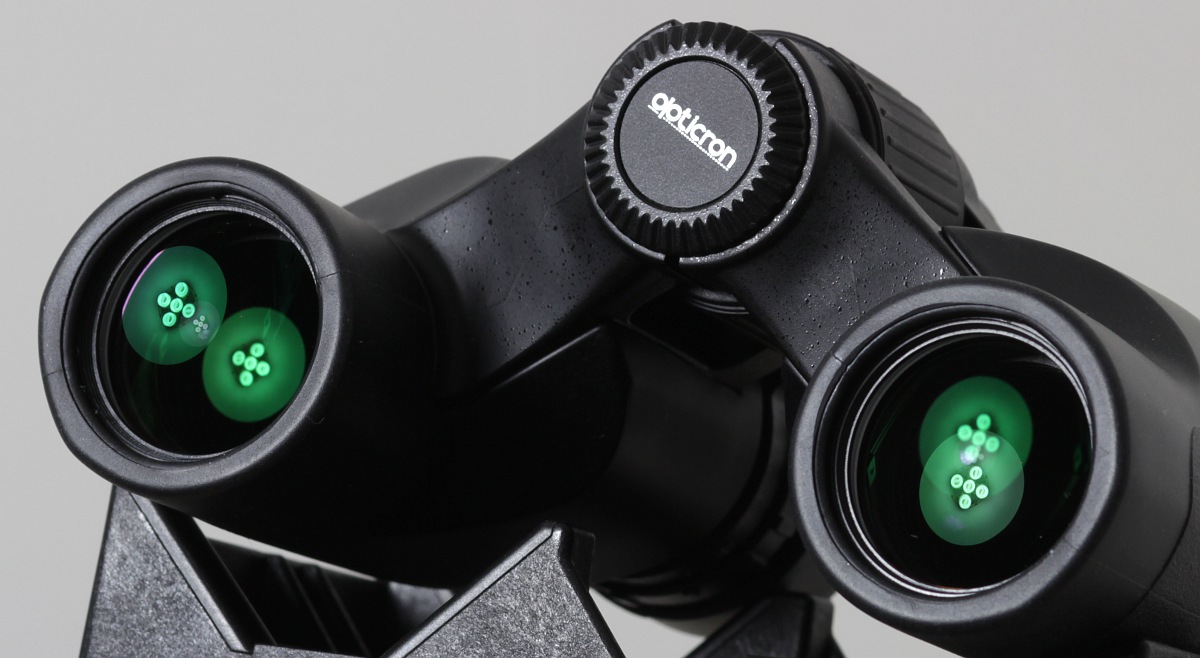
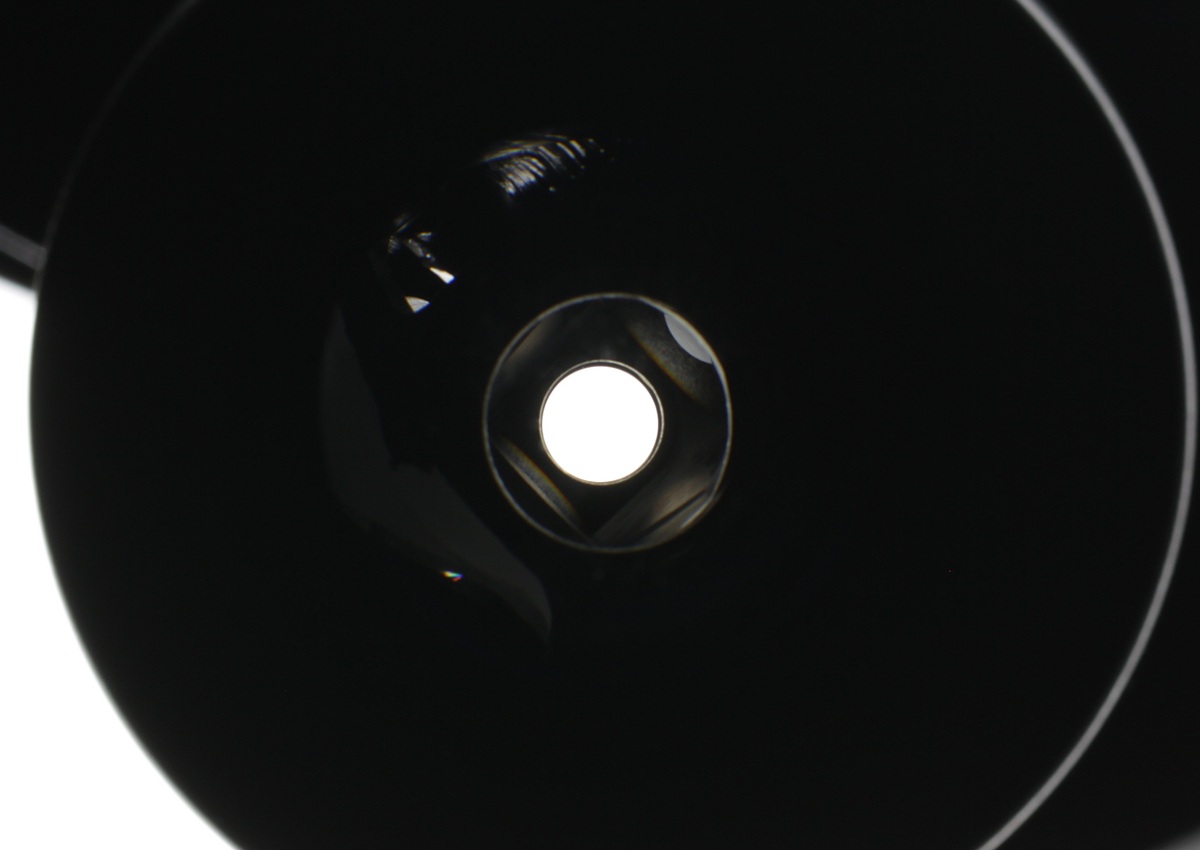
A glance inside the optical tubes reveals dark gray, baffled (ribbed), and fairly matte interiors. The area surrounding the prisms is also gray, with visible gray adhesive. It is a pity that the internal components were not finished in a darker shade. On a positive note, the cleanliness of all lenses and prisms is commendable, with not a single dust speck in sight.
 |
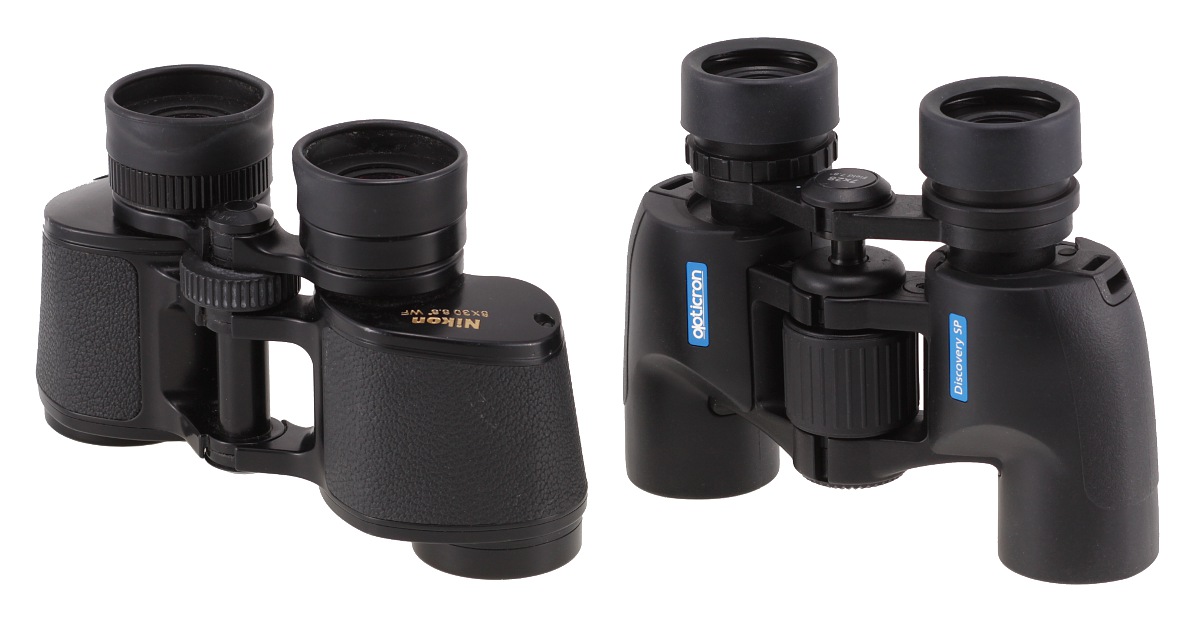
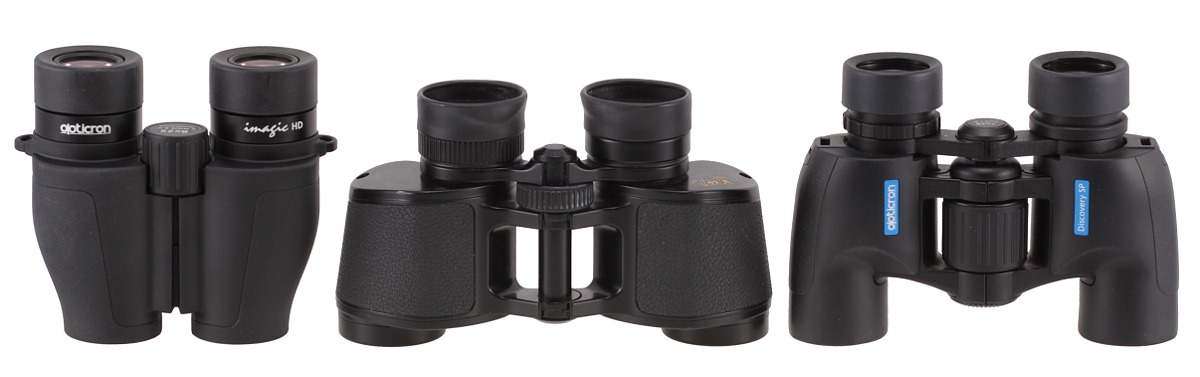
In this price segment, one can hardly expect top-tier technologies, and indeed they were not applied here. The coatings and glass used in the optical system perform decently, but only decently. A side-by-side comparison with the Opticron Imagic HD X-Wide 8x25 and the Nikon 8x30 EII showed that the Discovery delivers the most yellowish-green and slightly dimmed image compared to its more expensive rivals. It must be clearly noted, however, that this was an unfair matchup, as the aforementioned binoculars are three to seven times more expensive than the budget Discovery SP.
 |
As for image sharpness, it is good in the center of the field - granted, for the price point in question. The field edges, however, warrant greater criticism. Blur sets in at around 70–75% from the center and becomes significant near the field stop, noticeably worse than in the Opticron X-Wide 8x25, which features a much wider-angle eyepiece design.
 |
As for distortion, we must expect mild pincushion distortion. However, it was by no means greater than that observed in the more expensive models used in this comparison.
 |
The modest field of view of the Discovery SP 7x28 made it easier to properly control vignetting. The illumination fall-off (vignetting) at the edge of the field is minor - comparable to what is seen in its pricier competitors. However, their task was considerably more challenging due to their significantly larger apparent fields of view.
The simple optical construction of the Opticron 7x28 handled astigmatism reasonably well, although both the X-Wide 8x25 and the Nikon 8x30 EII outperformed it in this category. Still, one can hardly expect distinctly better results here; in this price segment, a score estimated at 6.5 out of 10 points can be considered a solid achievement.
 |
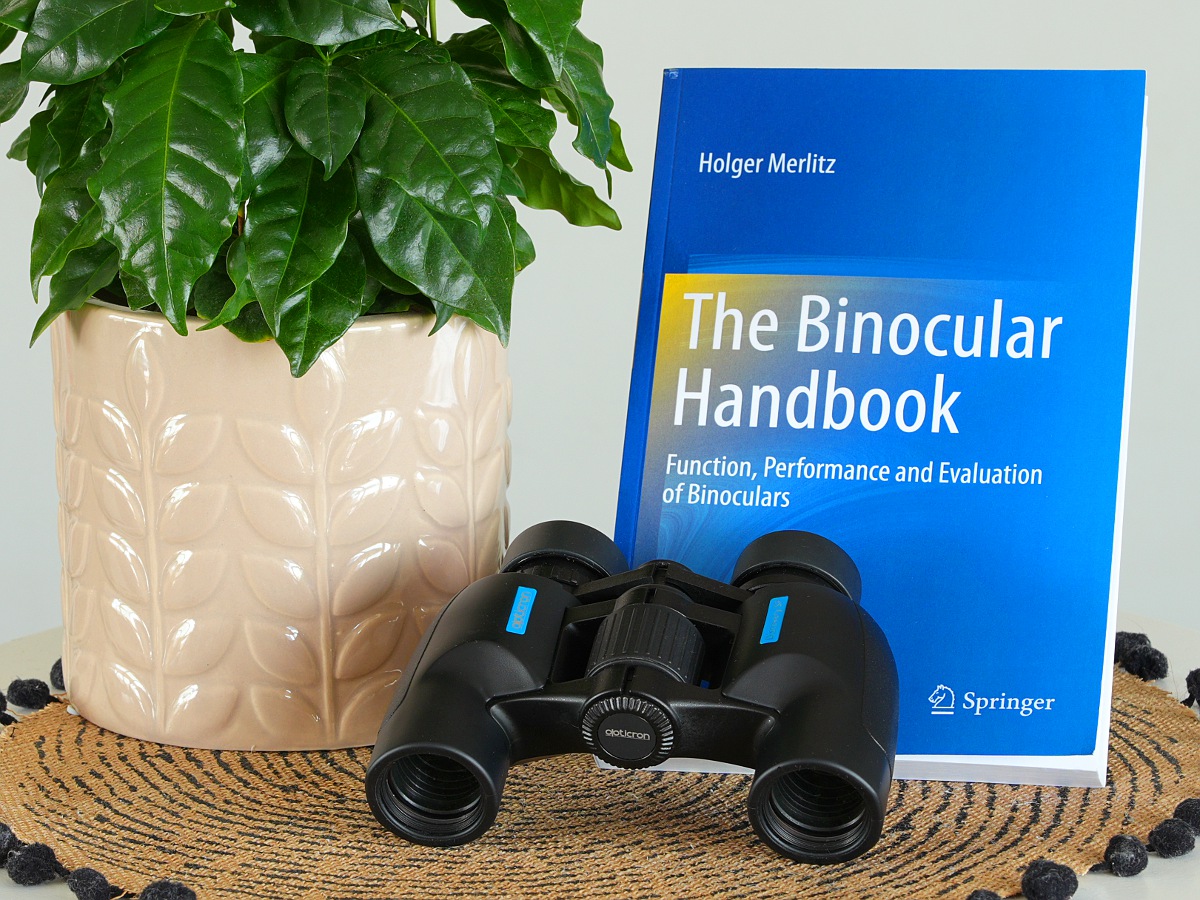 |
- neat, lightweight, and waterproof body
- unique specifications
- comfortable eye relief
- moderate astigmatism
- low distortion
- well-controlled chromatic aberration
- moderate edge-of-field darkening
- high-quality, non-vignetting prisms in an efficient Porro configuration
- gully multi-coated air-to-glass surfaces
- great balance of specs, quality, performance, and price
- poor performance against bright light
- field of view could be a bit wider
- edge-of-field sharpness leaves something to be desired