| Real front lens diameter |
Left: 50.05+/-
0.05 mm
Right: 50.02+/-
0.05 mm
|
8 / 8.0 pkt |
| Real magnification |
9.97+/-
0.05x
|
3/3.0 |
| Transmission |
87.5+/-
1%
|
15/25.0 |
| Chromatic aberration |
Low in the center, significant at the edge. |
5.2/10.0 |
| Astigmatism |
Very low. |
8.5/10.0 |
| Distortion |
Distance of the first curved line from the field centre compared to the field of view radius: 62% ± 4% |
7/10.0 |
| Coma |
Starts from a distance of about 70% of the field of view and is between low and medium on the very edge. |
7.4/10.0 |
| Blurring at the edge of the FOV |
Blurr occurs in a distance of 88% ± 3% from the field of view centre. |
7.5/10.0 |
| Darkening at the edge the FOV |
Negligible |
4.8/5.0 |
| Whiteness of the image |
Absolutely minimal yellow and green tint. Very flat transmission curve. |
4.9/5.0 |
| Collimation |
Perfect. |
5/5.0 |
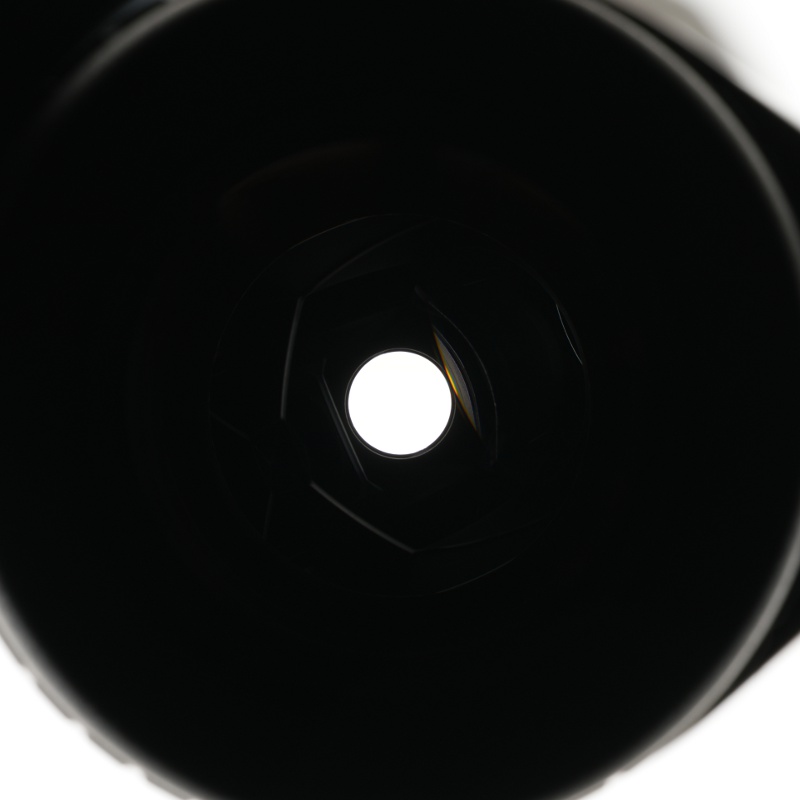
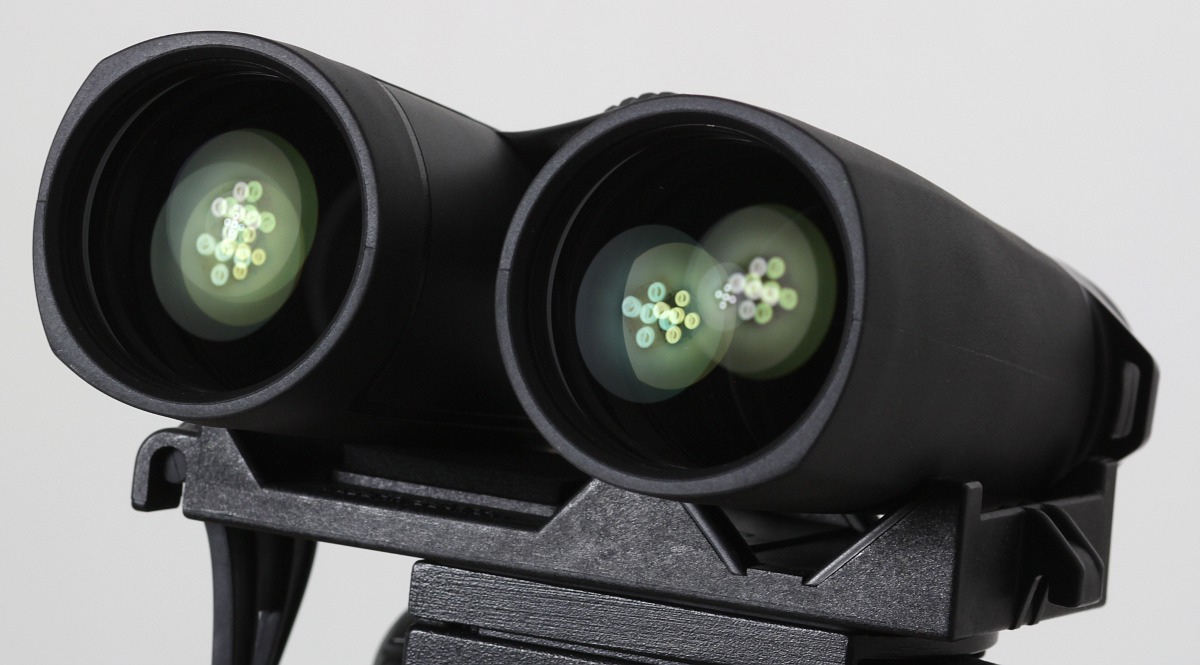
| Internal reflections |
| Left: |
Right:
|
 |
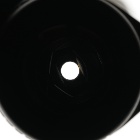 |
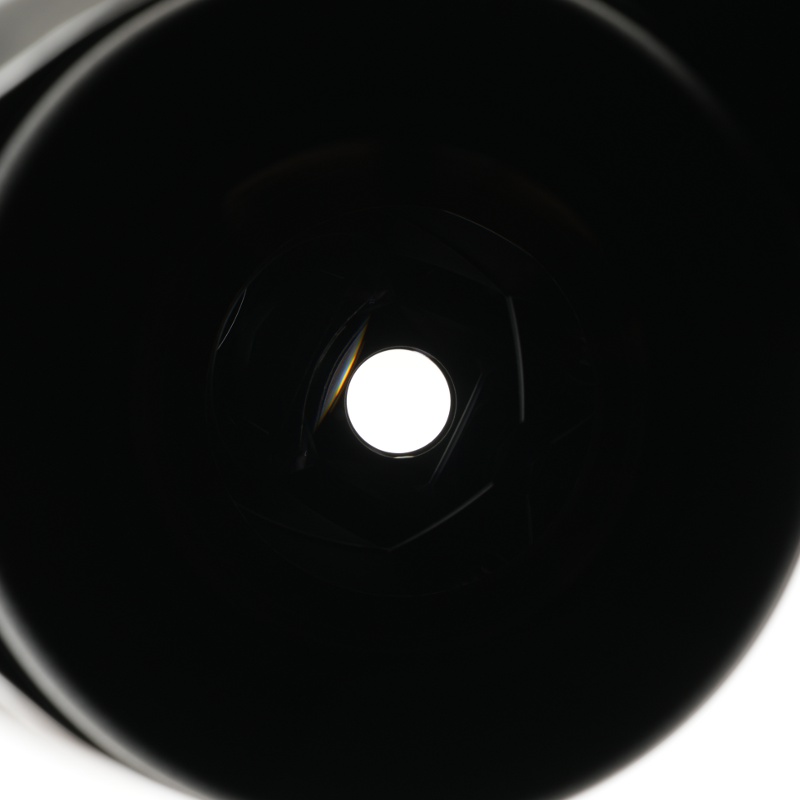
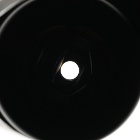
Round pupils against a black background - almost ideal. At the same time, very good performance against strong backlighting, both day and night. |
4.7/5.0 |
| Housing |
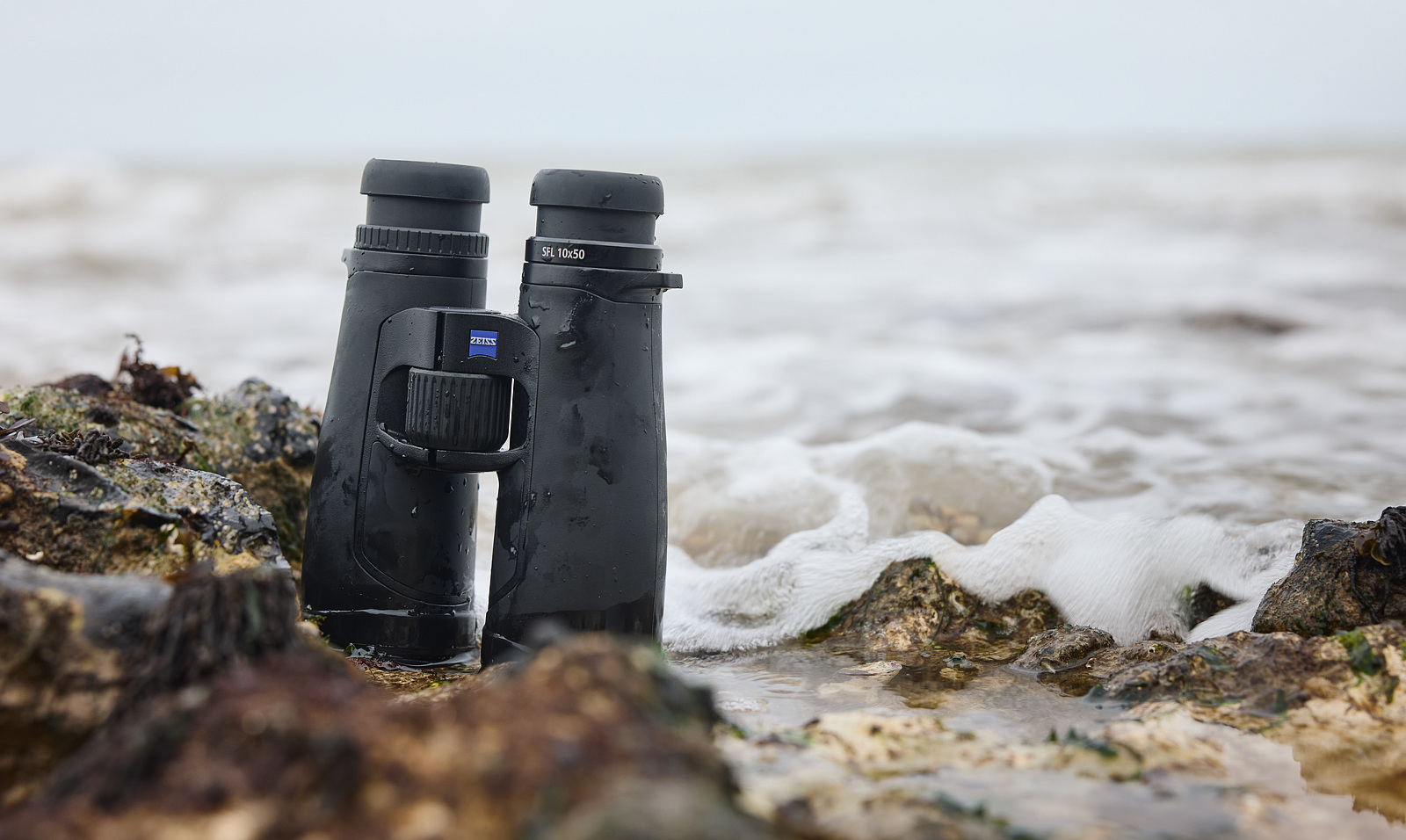
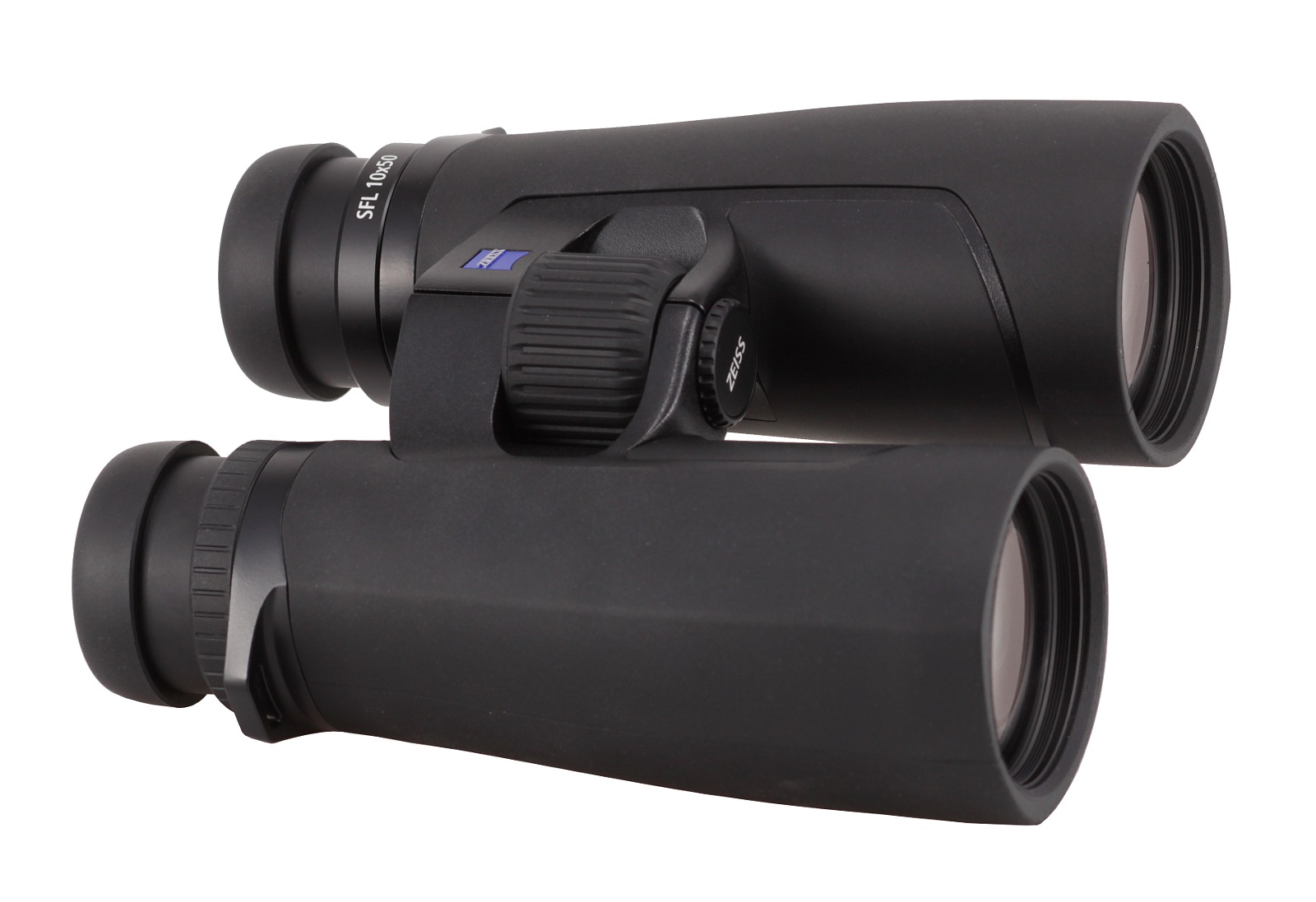
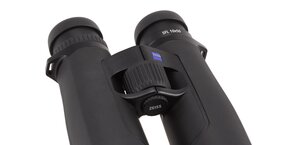
Relatively short and moderately weighted for a 50 mm class. The actual weight is 871 grams, matching the manufacturer's specs perfectly. The body is made of magnesium composite and covered with high-grade, matte black rubber for a secure grip. The rubber adheres properly to the entire binocular body, though it lifts slightly near the objective lenses. The rubberized eyecups feature five click-stops and a diameter of 42 mm. They fit very comfortably around the eye. Made in Japan. |
7.5/8.0 |
| Focusing |
A large, rubberized, and ribbed central focusing wheel that operates smoothly and with just the right amount of resistance. Running through the whole distance range needs a turn through an angle of about 510 degrees. The diopter adjustment on the right eyepiece moves the outer lens element. In this class of equipment, one would expect all optical element movements to be internal. |
4.5/5.0 |
| Tripod |
Quite comfortable access. |
3/3.0 |
| Interpupilary distance |
from 55.4 to 75.1mm
|
5/6.0 |
| Closest focusing distance |
1.80 metra. |
2/2.0 |
| Eyepieces FOV |
Eyepieces of apparent field of view of 70.3 deg (simplified formula) and 63.1 deg (tangent formula). |
16/20.0 |
| Field of view |
Measured by us amounted to 7.05 +/- 0.03 deg and is in perfect accordance with the field stated in official specifications. A very wide field for this class of parameters. |
8/8.0 |
| Quality of the interior of the barrels |
The inner barrels are dark and densely ribbed along their entire length. They could be darker and more matte, but overall everything looks good here. The bottom of the prisms is dark grey. There is a small amount of fine dust on the prisms. |
4/5.0 |
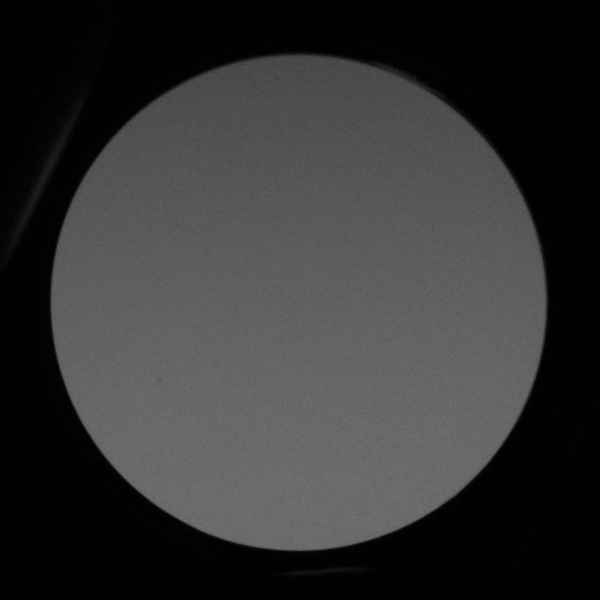
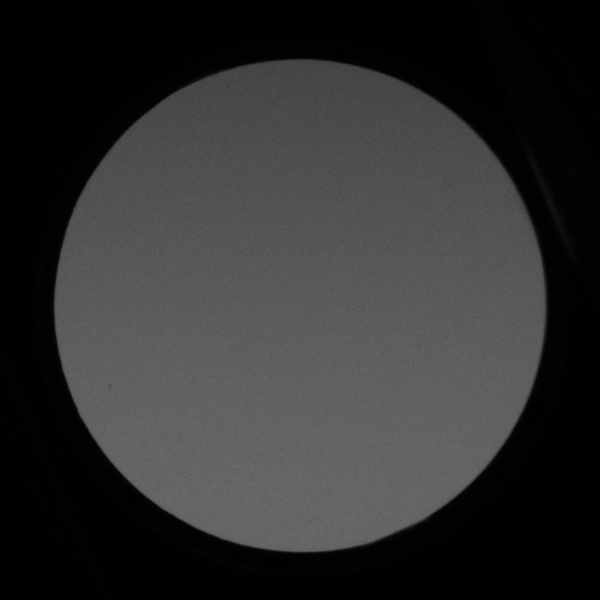
| Vignetting |
| Left: |
Right:
|
 |
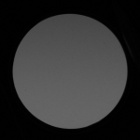 |
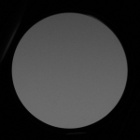
OL: 0.29%, OR: 0.28%. |
8/8.0 |
| Prisms quality |
High quality BaK-4. |
8/8.0 |
| Antireflection coatings |
Green-yellow-pink on objective lenses, pink-green on the prisms, pink-yellow-green on the eyepieces. Low intensity. |
5/5.0 |
| Warranty [years] |
10 |
4.5/6.0 |
| Final result |
82.4%
|
156.5 / 190 pkt
|
| Econo result |
|
0pkt. |
Summary
Pros:
- solid, sealed, yet compact housing,
- very large and mostly sharp field of view,
- good transmission,
- excellent color rendition,
- very well-corrected astigmatism,
- moderate chromatic aberration in the center of the field,
- low distortion,
- minor coma,
- negligible vignetting (light fall-off) at the edge of the field of view,
- sharp image from as close as 1.80 meters,
- good internal baffling and cleanliness inside the barrels,
- superb-quality anti-reflection coatings,
- high-grade BaK-4 glass prisms,
- round exit pupils against a relatively dark background.
Cons:
- noticeable chromatic aberration at the edge of the field of view.
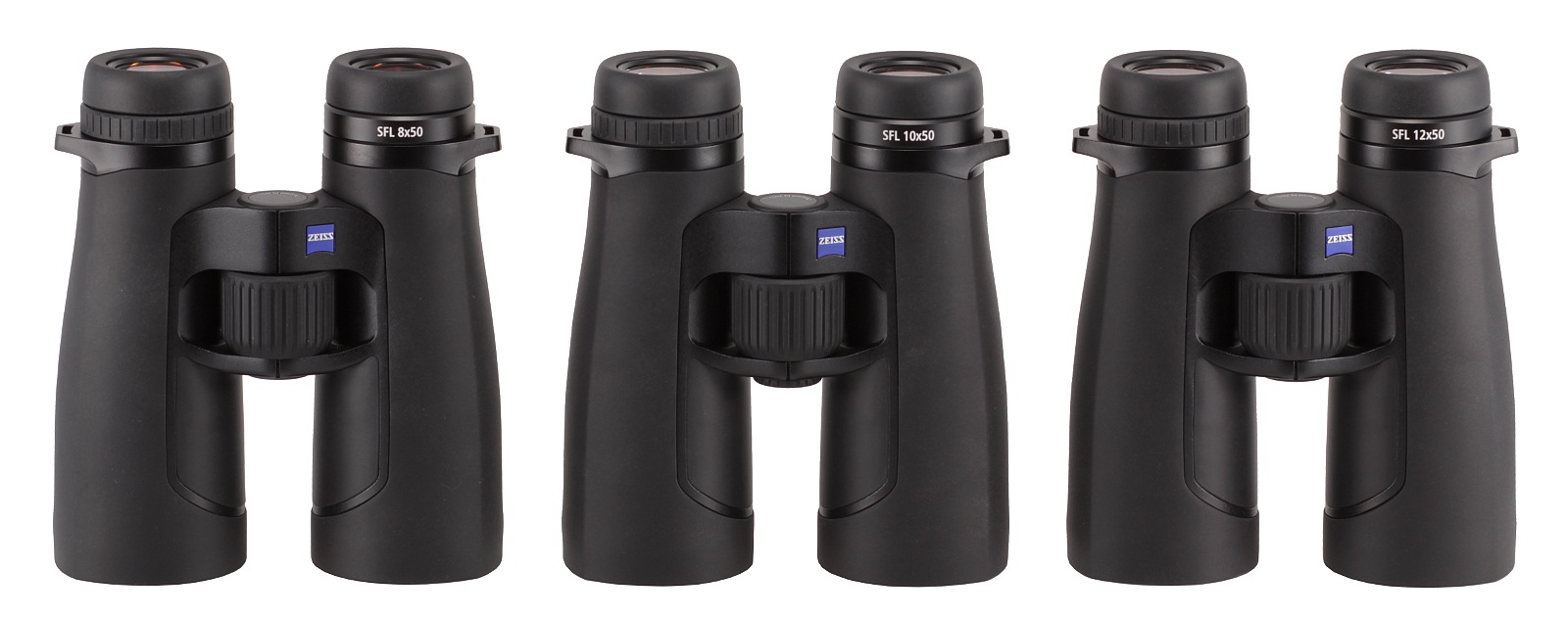
In the previously tested SFL 8x50 model, our attention was drawn to its high transmission, which averaged slightly over 90% in the center of the visible spectrum and reached 91.5% at its peak. Although Zeiss claims a value reaching up to 90% for the entire SFL line, we had doubts about whether the 10x50 model would prove just as good as the 8x50. This was due to the fact that the 10x model features a noticeably larger apparent field of view in the eyepiece, implying a more complex optical design. It is only logical to assume that more lens elements, more air-to-glass surfaces, and higher glass absorption must negatively impact transmission..
To make matters more complicated, even a quick glance at the reflections from the objective and eyepiece lenses shows that although the coating colors are similar, they can hardly be considered identical.
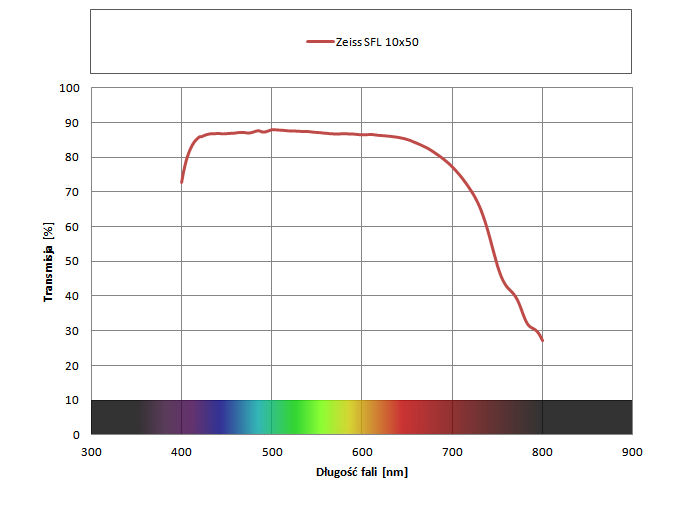
And indeed, both factors resulted in the final transmission graph for the 10x50 model being different from the one observed in the 8x50. We can view it below.
As can be seen, it is slightly less sloped than in the SFL 8x50, giving the SFL 10x50 better and almost perfect color reproduction. Unfortunately, the values observed here are lower than those of the 8x50 model and below what the manufacturer claims. The average in the center of the visible spectrum is 87.5%, which is about 2-3% lower than what we would expect from equipment in this class. The peak result reaches 88.2%, recorded at a wavelength of 502 nm. On a positive note, maintaining high transmission in blue and violet light deserves praise. A result above 85% is observed even around 415 nm, which makes the image perceived by the eye bright, clean, and extremely crisp.
While there has been some criticism here, it stems not from poor performance by Zeiss, but rather from our high expectations. Overall, the transmission is good - for shorter wavelengths even excellent - and the curve is almost perfectly flat, yielding outstanding color reproduction.
A similar tone can be applied to the second drawback of the SFL 10x50, namely excessive chromatic aberration at the edge of the field and the fact that it can occasionally be seen in the center as well. On one hand, given this class of equipment and the manufacturer’s claims regarding high-grade extra-low dispersion (UHD) elements used in the objective lenses, high expectations are justified. At the same time, one must remember that all 50 mm models in the SFL line are relatively short binoculars with a center of gravity shifted close to the eye sockets. This allows for a very comfortable grip and excellent stability in the hands and against the eyes.
Compact dimensions require very fast objective lenses (low focal ratios), which significantly raises the bar for correcting chromatic aberration. Zeiss therefore opted for a slight compromise here, and personally, I like this approach. After all, the core idea behind the SFL series is keeping the weight and size of the binoculars under control. In other words, I prefer the current setup over a slightly longer body with slightly less chromatic aberration, because I know how comfortable it is to use a binocular of such moderate dimensions and how exceptionally well it fits in the hands and against the face.
We have spent a lot of time focusing on minor flaws or shortcomings, so a counterweight is needed, as the Zeiss SFL 10x50 boasts a whole range of significant advantages. You get a very large field of view that fully matches the manufacturer's specs, complemented by a very comfortable eye relief. Furthermore, Zeiss allows focusing from as close as 1.80 meters, which is a great result, as very few 50 mm models drop below the 2-meter mark. The resulting image is bright, high-contrast, color-neutral, and extremely well-corrected for most optical aberrations. Add to that very good internal baffling, which, combined with high-grade coatings, results in impressive performance against strong light. The appearance of the exit pupils and the surrounding area could serve as a benchmark. Despite such compact size and light weight, Zeiss managed to deliver virtually perfectly round, mechanically unvignetted pupils set against an almost completely black background. Bravo!
In conclusion, observing through the Zeiss SFL 10x50 was such a treat that it was hard to peel it away from my eyes. The sheer joy of using such a well-designed and finely crafted instrument was considerable. I consider Zeiss’s decision to extend the SFL line with 50 mm models an excellent move, and I believe the 10x50 model could steal a significant number of customers away from Swarovski’s much more expensive NL Pure 10x52. When buying the Zeiss SFL 10x50, you get top-tier optics while keeping over €1000 in your pocket compared to the NL Pure.