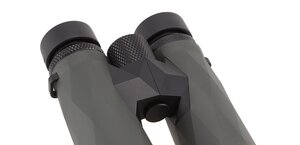



Delta Optical Forest 10x42 Gen3

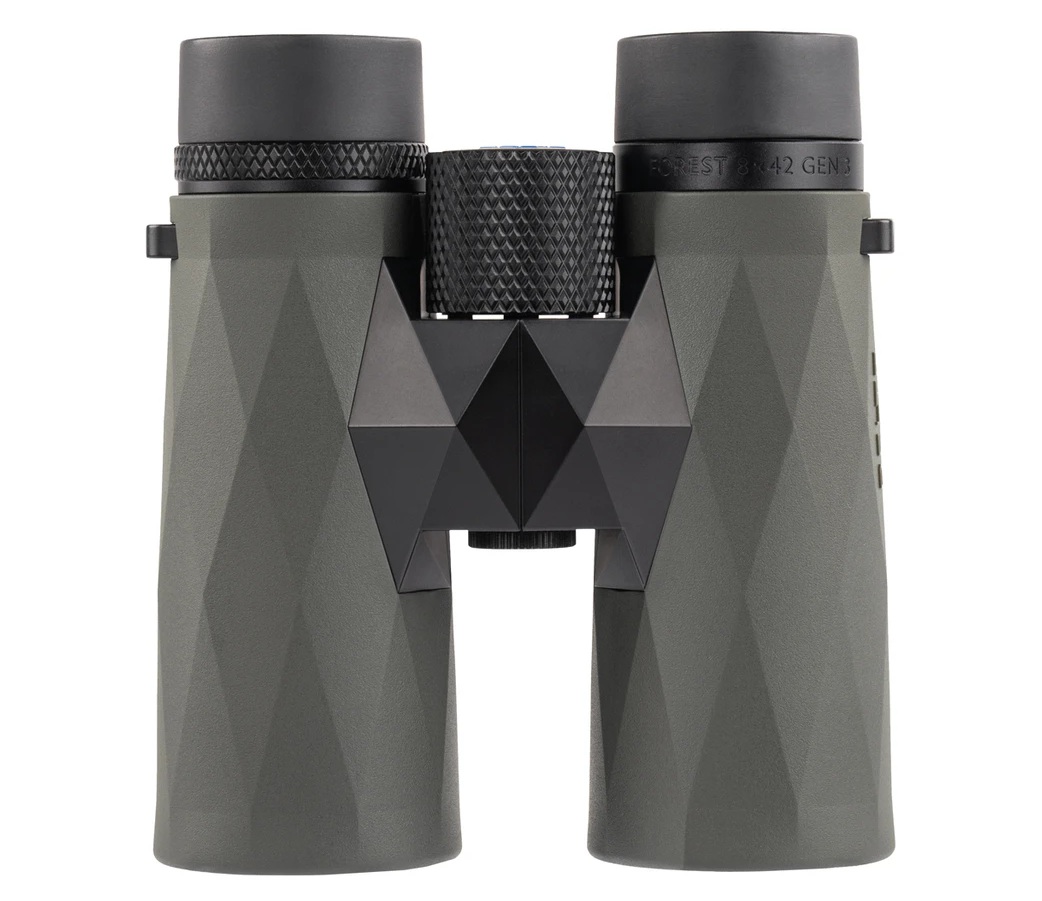
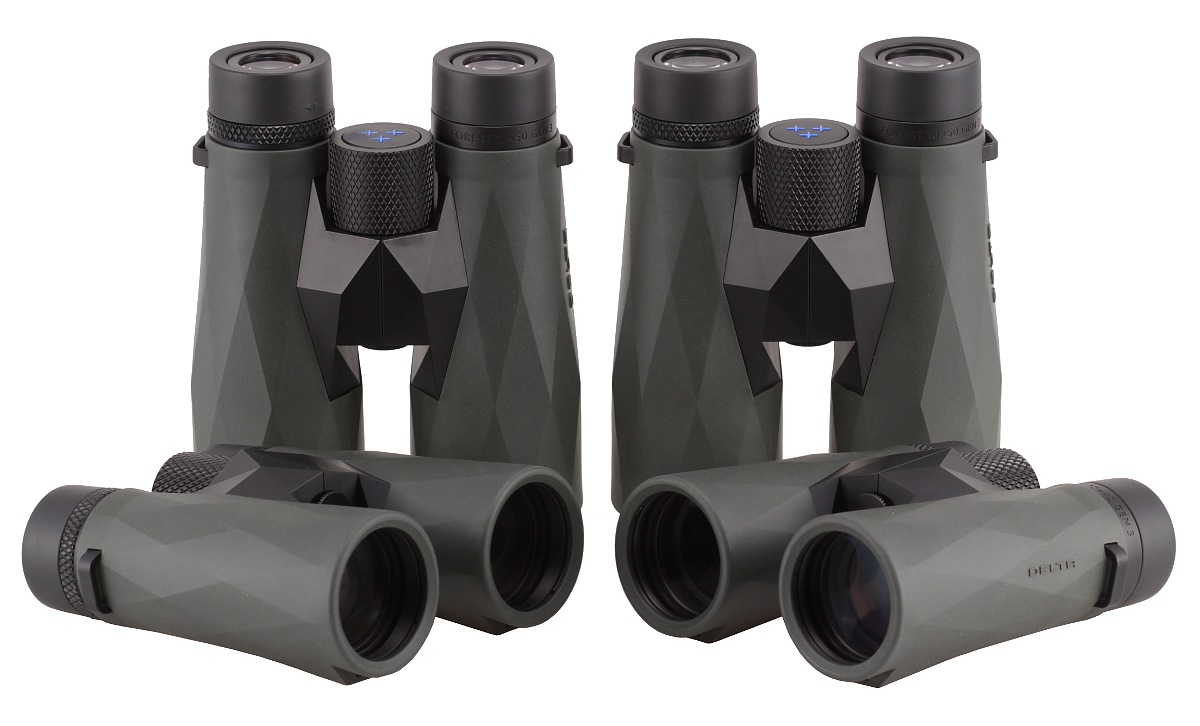
The Forest series from the Polish Delta Optical company was launched in 2006 and consisted of two roof prism models with the following parameters: 8x42 and 10x42.
Pros:
Cons:
In 2011 we saw the second generation of the Forests. This time the offer was enlarged by models with objective lenses as big as 50 mm and with magnification factors of 8.5, 10, and 12.
 |
 |
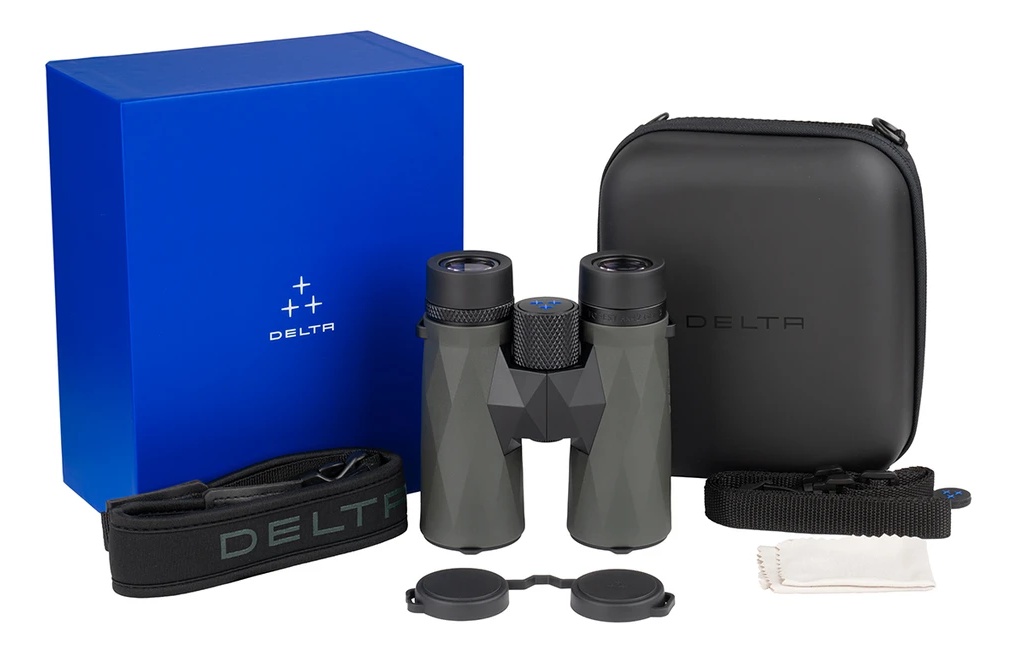
When it comes to the optics, all air-to-glass surfaces are covered by multi-layer coatings. Schmidt-Pechan prisms are protected by phase-correction and dielectric coatings and inside the binoculars you can find low dispersion ED glass.
 |
Pictures


Manufacturer data


| Magnification | Lens diameter | Angular field of view | Prisms | Eye relief | Weight | Price |
|---|---|---|---|---|---|---|
| 10 | 42 | 113/1000(6.5o) | BaK-4/roof | 15.2 mm | 710 g | 790 PLN |
Results of the review
| Real front lens diameter |
Left: 42.2+/-
0.05 mm Right: 42.2+/- 0.05 mm |
8 / 8.0 pkt | ||||
|---|---|---|---|---|---|---|
| Real magnification | 9.95+/- 0.05x | 3/3.0 | ||||
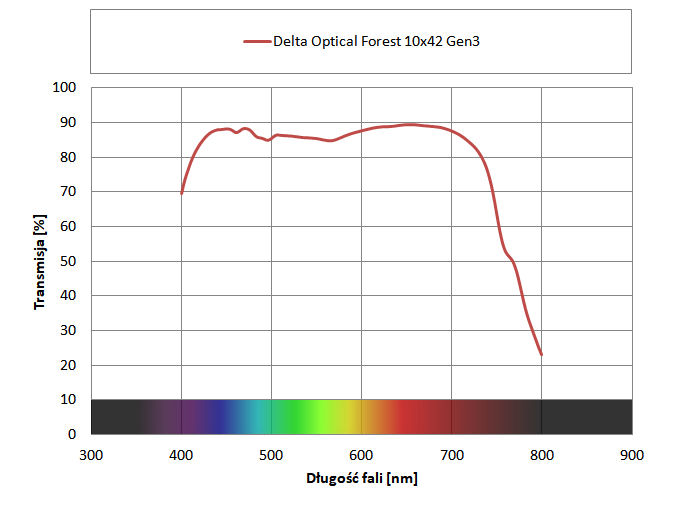
| Transmission | 85.8+/- 1% | 13/25.0 | ||||
| Chromatic aberration | Low in the center, slightly higher than average at the edge. | 6.1/10.0 | ||||
| Astigmatism | Low. A slight shimmering of stars at the center of the field. | 7/10.0 | ||||
| Distortion | Distance of the first curved line from the field centre compared to the field of view radius: 42% ± 3% | 4/10.0 | ||||
| Coma | Starts from a distance of about 70% of the field of view and is between medium and high on the very edge. | 6.1/10.0 | ||||
| Blurring at the edge of the FOV | Blurr occurs in a distance of 69% ± 4% from the field of view centre. | 3/10.0 | ||||
| Darkening at the edge the FOV | At medium level. | 2.8/5.0 | ||||
| Whiteness of the image | A slight creamy-orange tint, at times leaning toward red. The transmission graph is relatively flat." | 4/5.0 | ||||
| Collimation | Perfect. | 5/5.0 | ||||
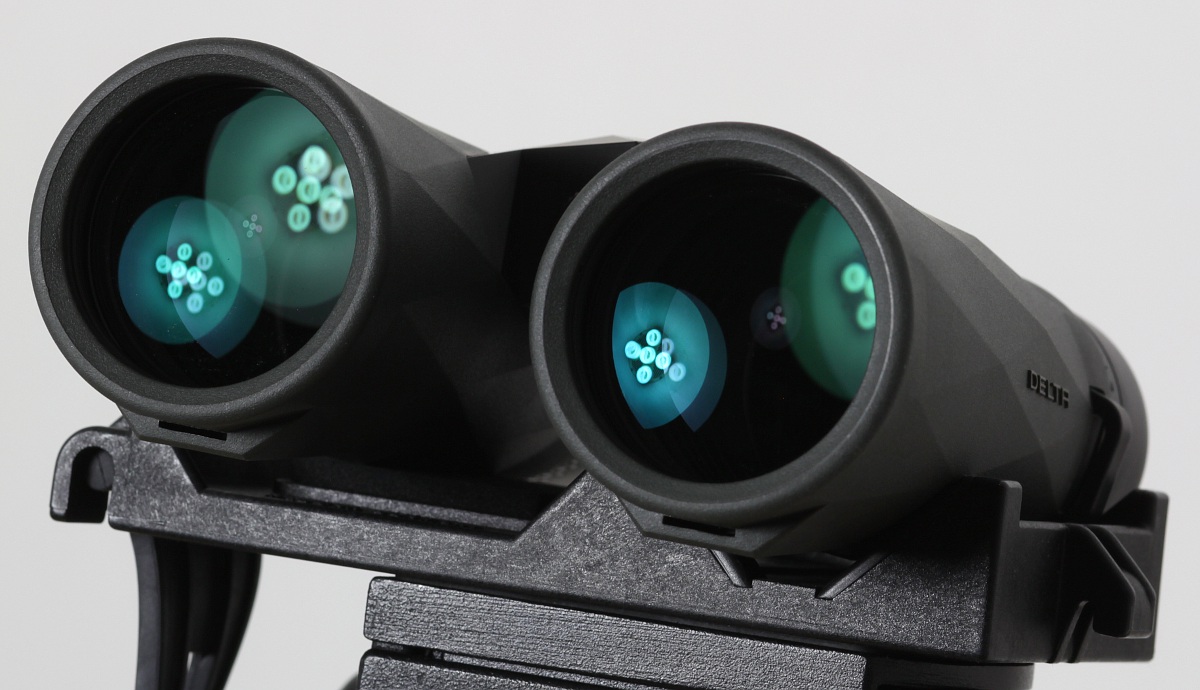
| Internal reflections |
|
3/5.0 | ||||
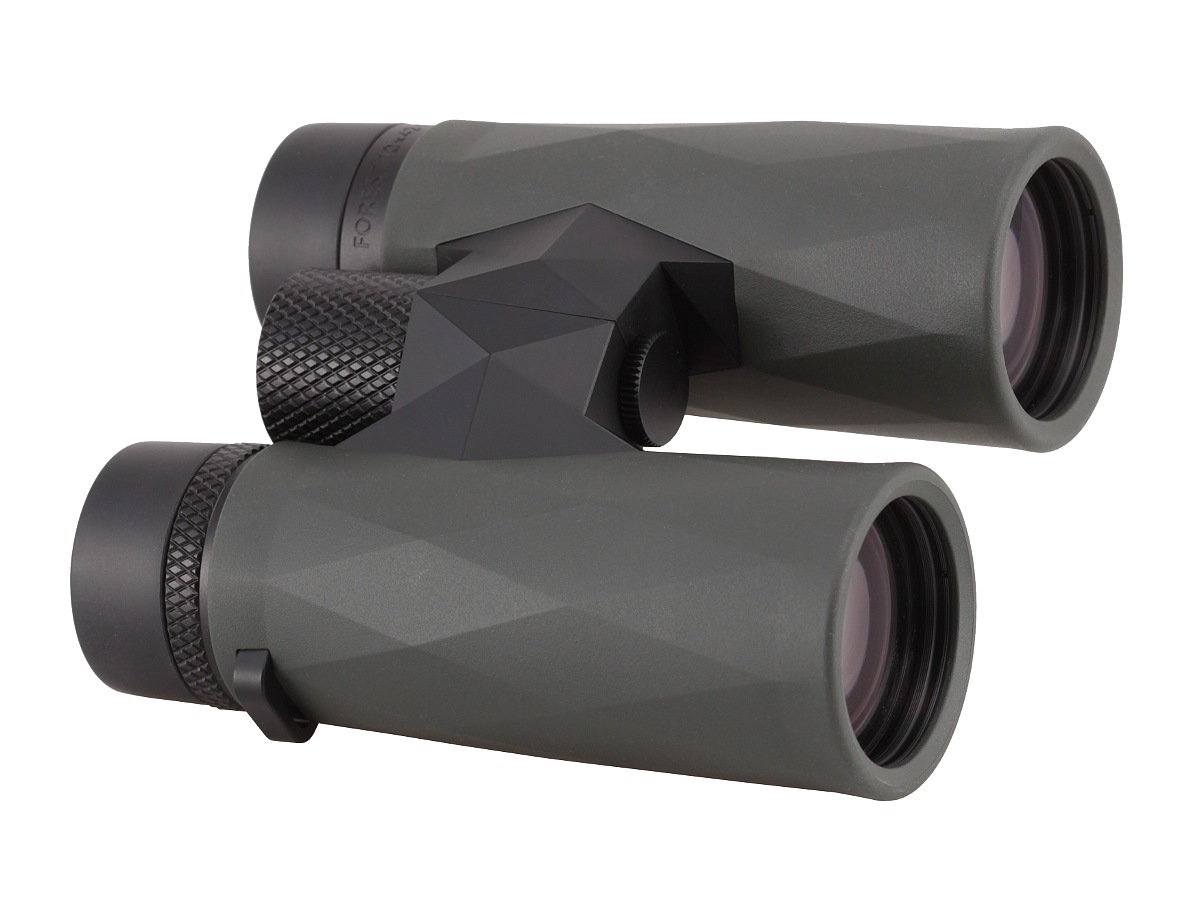
| Housing | Dimensions and weight are fairly typical for the 42 mm class. The actual weight is 687 grams, which is over 20 grams less than specified. It is covered with a fairly smooth rubber coating of an unusual shape. The rubber fits the binocular body very well, though it comes slightly loose near the objective lenses. It gives off a rather unpleasant smell. The rubberized eyecups feature three twist-up positions and a diameter of nearly 42 mm. They fit comfortably against the eyes. The binoculars are made in China. | 7/8.0 | ||||
| Focusing | A sizable central focusing wheel with fine metal knurling, which operates smoothly and with just the right amount of resistance. Covering the entire focus range requires a full 810-degree turn - that’s quite a lot. Diopter adjustment is on the right eyepiece and moves the outer lens element. | 4.5/5.0 | ||||
| Tripod | Quite comfortable access. | 3/3.0 | ||||
| Interpupilary distance | from 55.7 to 73.8mm | 4/6.0 | ||||
| Closest focusing distance | 1.80 meters. | 2/2.0 | ||||
| Eyepieces FOV | Eyepieces of apparent field of view of 64.1 deg (simplified formula) and 58.5 deg (tangent formula). | 13/20.0 | ||||
| Field of view | Measured by us amounted to 6.44 +/- 0.04 deg and was slightly smaller than stated in official specifications. A quite wide field for this class of parameters. | 7/8.0 | ||||
| Quality of the interior of the barrels | The inner barrels are dark gray and only slightly matte. There is no knurling, but there are several baffles. The base near the prisms is light gray. Quite clean overall, with literally just a few microscopic dust specks on the prisms. | 3.7/5.0 | ||||
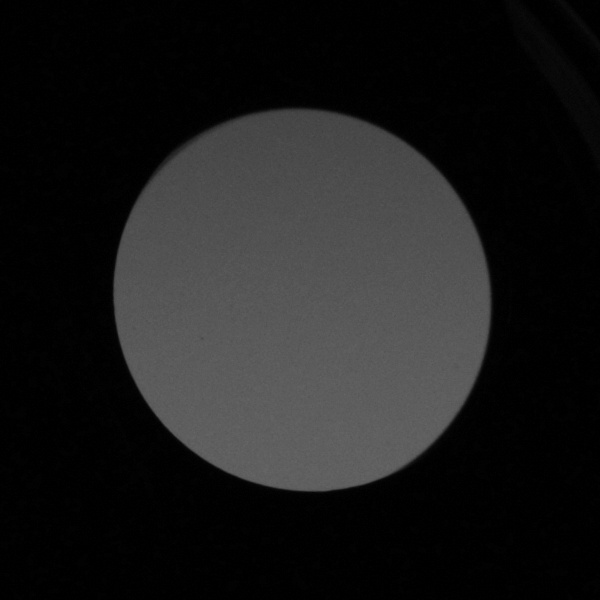
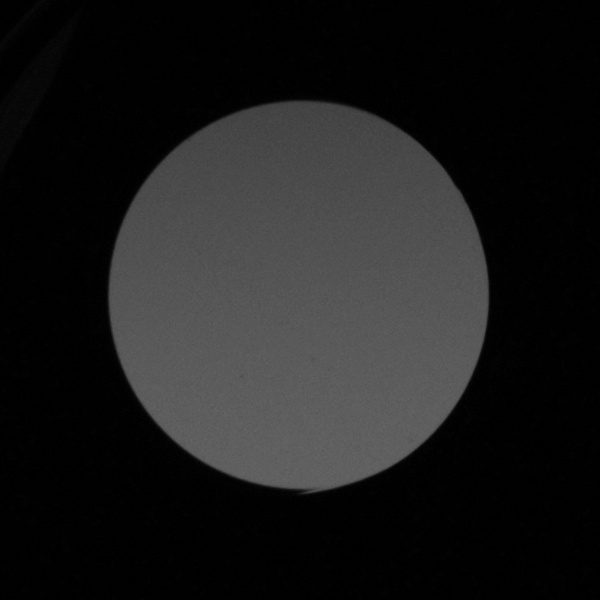
| Vignetting |
|
3.5/8.0 | ||||
| Prisms quality | High quality BaK-4. | 8/8.0 | ||||
| Antireflection coatings | Greenish-yellow on the objective lenses, greenish on the prisms, and greenish-yellow on the eyepieces. Medium intensity. | 4.5/5.0 | ||||
| Warranty [years] | 5 | 3.5/6.0 | ||||
| Final result | 67.7% | 128.7 / 190 pkt | ||||
| Econo result | 0pkt. |
Summary
Pros:
- solid housing with an original design,
- good light transmission for this price class,
- reasonable color reproduction,
- properly corrected astigmatism,
- low chromatic aberration in the center of the field,
- no issues with coma,
- proper blackening and cleanliness inside the barrels,
- good quality coatings,
- high-grade BaK-4 glass prisms,
- very good value for money.
Cons:
- noticeable chromatic aberration at the edge of the field of view,
- image sharpness at the edge of the field leaves a bit to be desired,
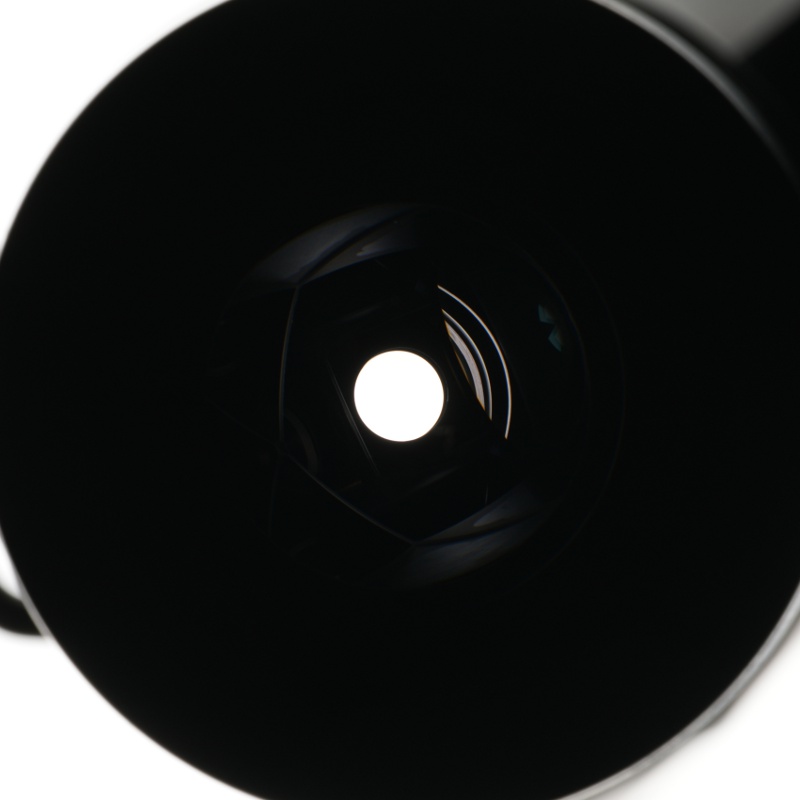
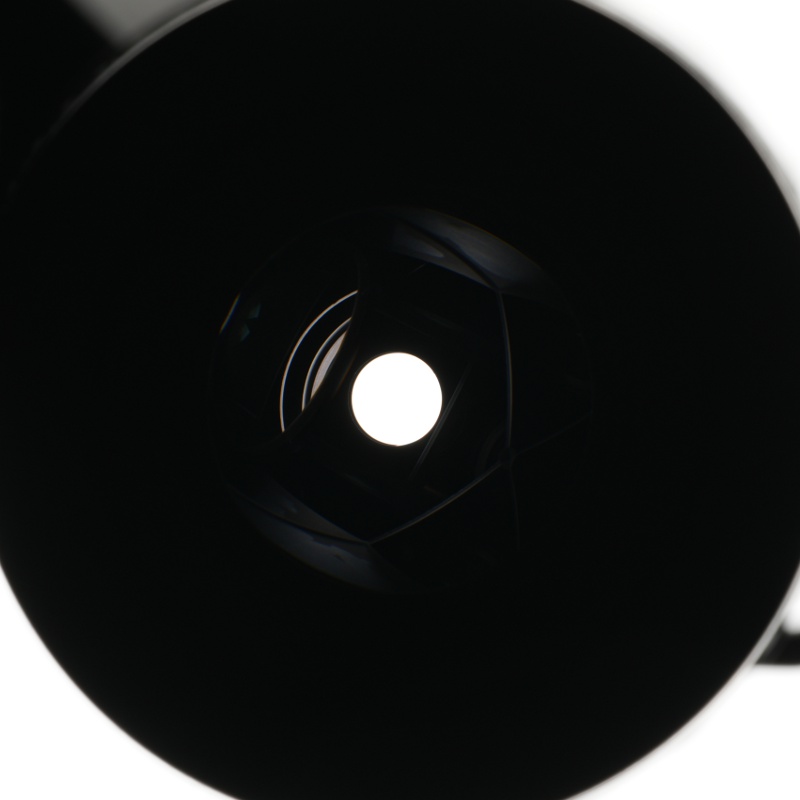
- truncated exit pupils.
 |
 |
 |
 |
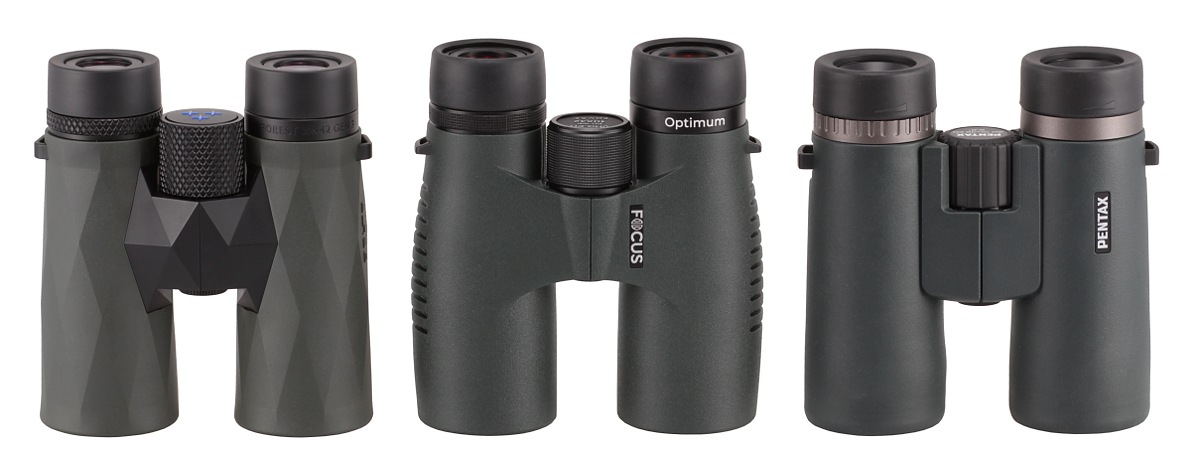 Delta Forest 10x42 ED Gen3, Focus Nordic Optimum 10x42 ED VHG ans Pentax SD 10x42 ED. |