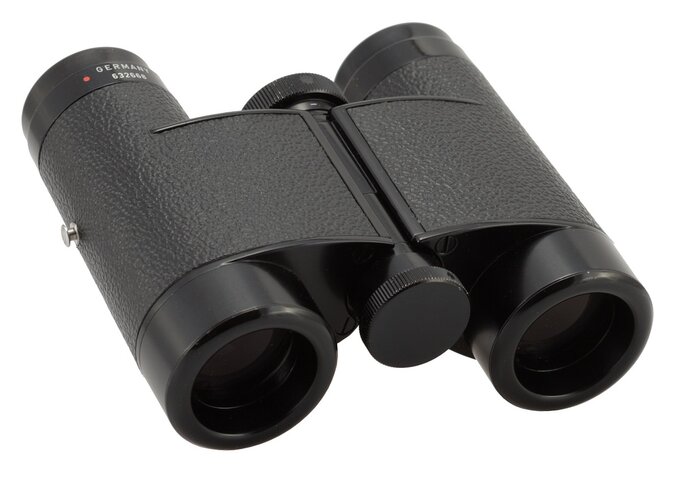
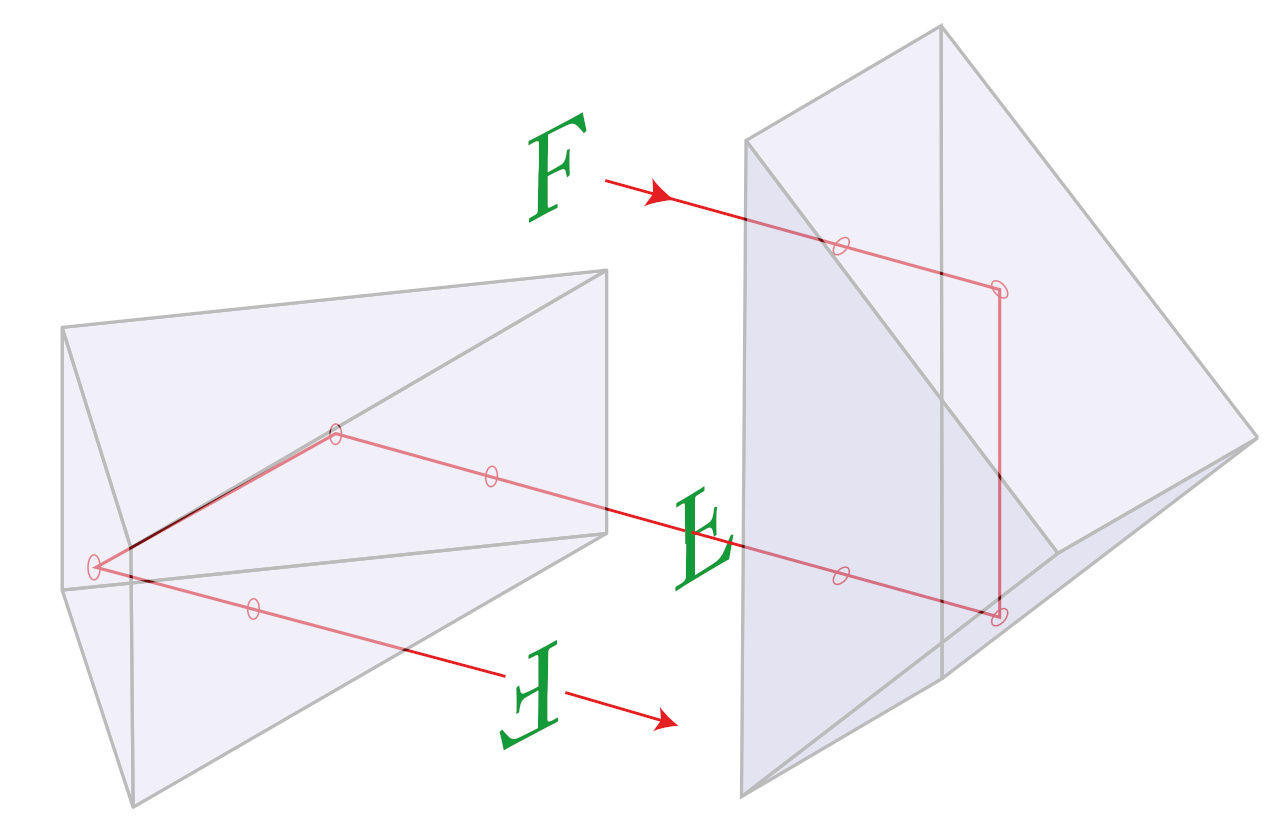
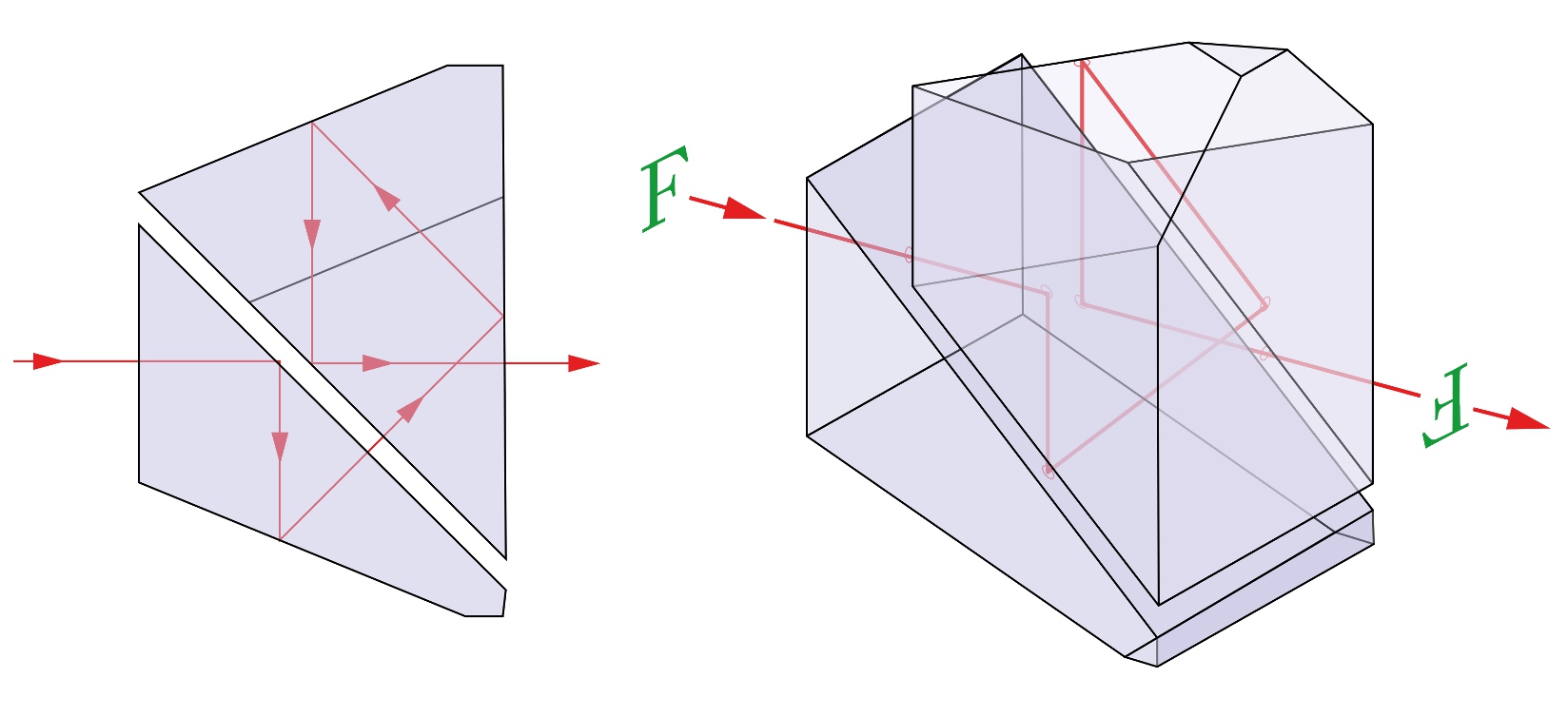
When you peruse old Leitz catalogues, published up to 1955, you find almost exclusively Porro system models. It is a very efficient image erecting system that is based on the total internal reflection so doesn't need any additional reflective surfaces or phase-correction coatings. In this system a light beam is reflected only four times and, at the same time, you get a possibility to glue prisms together to limt the number of air-to-glass surfaces to just two. As if it wasn't enough, a beam comming out of the first prism is smaller than the beam comming in and it makes it possible to make the second prism smaller, and reduce physical dimensions of of the whole instrument.
Porro I image erecting system.
The offer of Leitz in these times was really rich. Itt started with small, 3x13.5 and 3.2x14 opera glasses, the first one called Binar and constructed as a reversed Porro. The second one, called Oberon, featured an original Leman-Sprenger prism system.
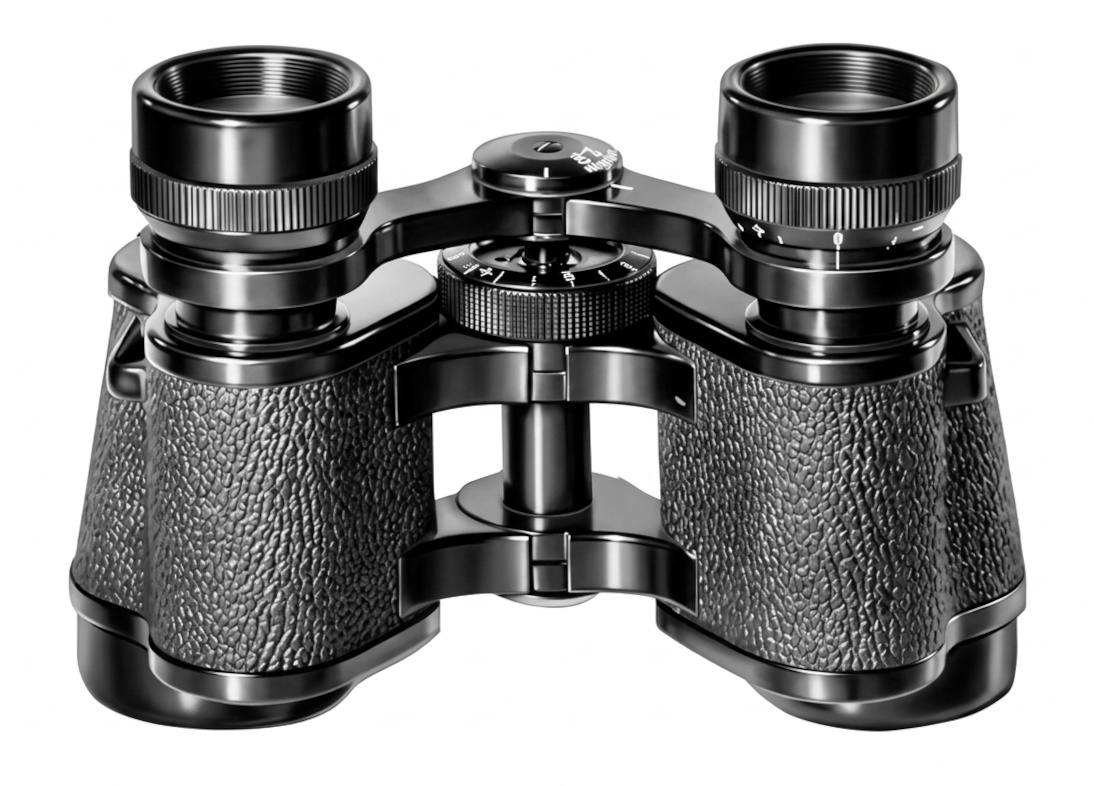
Going toward bigger objective lenses you got the Bitur 4x20, with classic Porro prisms put rather vertically than horizontally so the line of objectives was positioned kind of over the line of eyepieces.
Please Support Us
If you enjoy our reviews and articles, and you want us to continue our work please, support our website by donating through PayPal. The funds are going to be used for paying our editorial team, renting servers, and equipping our testing studio; only that way we will be able to continue providing you interesting content for free.
- - - - - - - - - - - - - - - - - - R E K L A M A - - - - - - - - - - - - - - - - - -
Leitz Bitur 4x20 binoculars manufactured between 1925-1959.
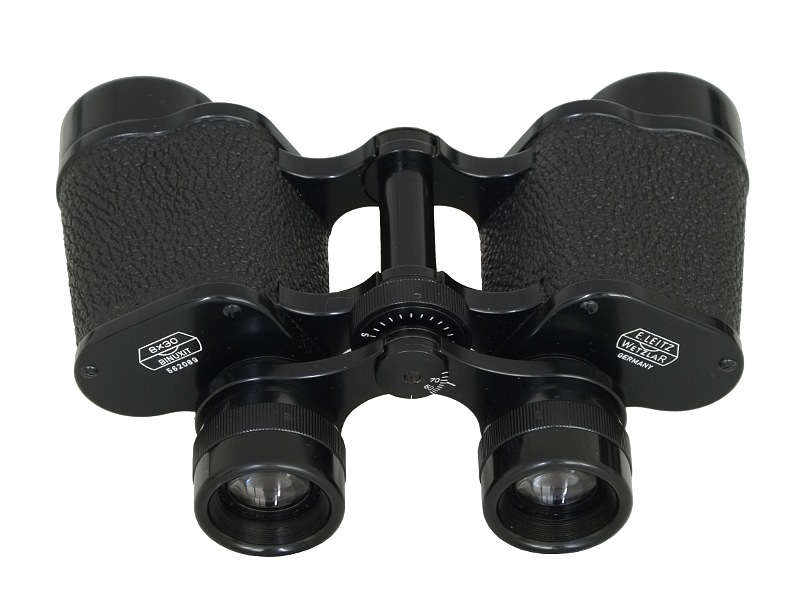
Then there were 30 mm devices. In the 6x30 class the line-up consisted of the Bidox model, equipped with an individual focusing system, and the Bidoxit, with the central focusing system based on a movable bridge. The 8x30 class was similar, with two devices called Binux and Binuxit.
Leitz Binuxit 8x30 binoculars manufactured between 1927-1962.
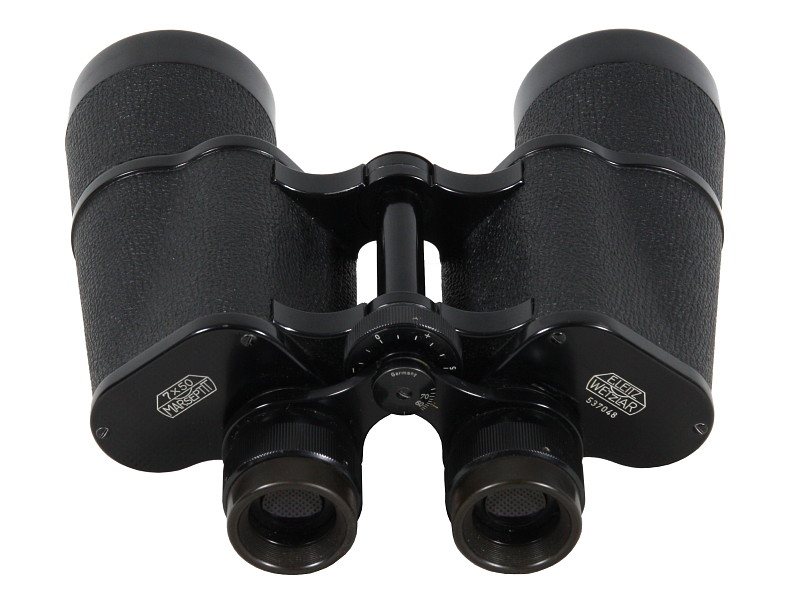
In the 40 mm class there was just one model available, the 10x40 with an excellent field of view, amounting to 7.3 deg. It was called Campar if it had an individual focusing system, or Camparit if it had a bridge. The 50 mm objectives were represented by the following parameters: 7x50, 10x50, and 12x50. In the first case the versions were called Marsept and Marseptit, then you got Mardix and Mardixit, in the third one it was Campomar and Campomarit.
Leitz Marseptit 7x50 binoculars manufactured between 1932-1962.
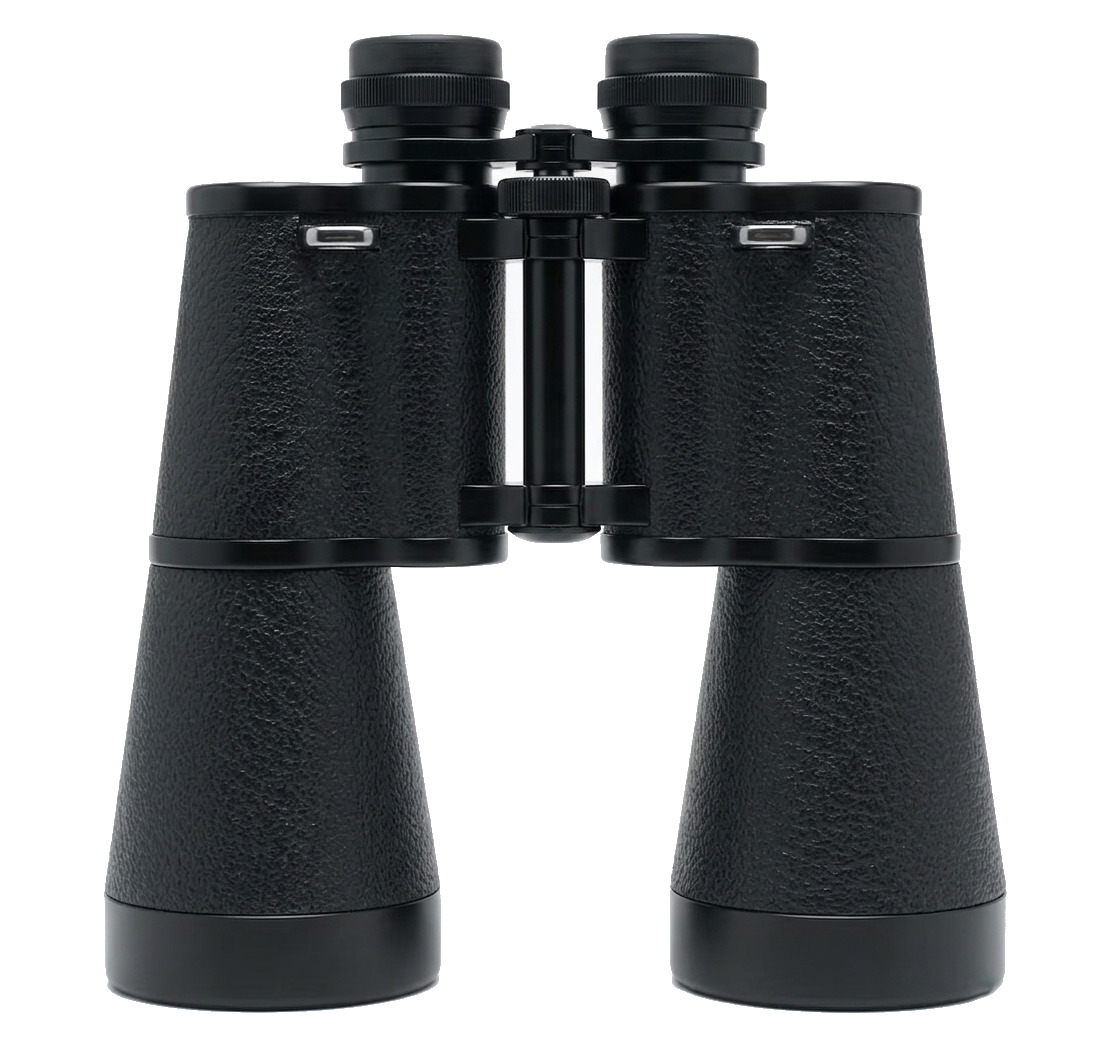
What's interesting, the richest offer was represented by the 60 mm devices. You dealt with as many as four models with the following parameters: 8x60, 10x60, 12x60, and 15x60. They were called respectively: Marocto/Maroctit, Decimar/Decimarit, Mardoce/Mardocit, and Campofort/Campofortit.
Leitz Decimarit 10x60 binoculars manufactured between 1937-1959.
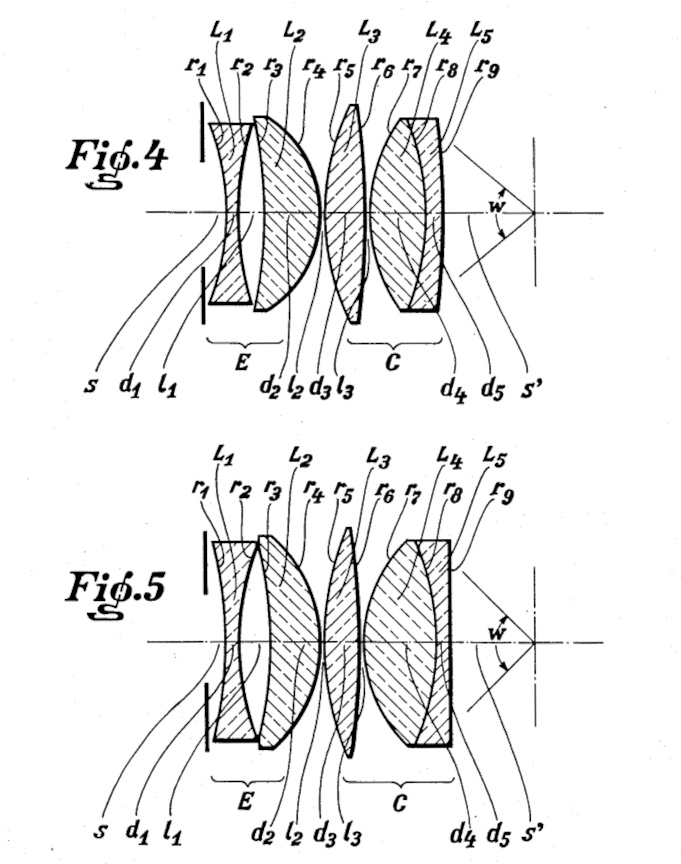
The first half of the 50s of the 20th century meant the end of this rich offer, with changes approaching very fast. You could notice it by following patent applications of Leitz, submitted by their main optics specialist, Maxiilian Ludewig. In October 1950 he filed a patent concerning a 5-element eyepieces for optical instruments. Three first ones featured narrow angles of view, reaching just 42 deg and, most likely, they were aimed at microscopes. Two others were more interesting, one with an apparent field reaching 78 deg and eye relief amounting to 86.5% of the focal length, the other with a field of 90 deg but with a smaller eye relief distance, reaching 78.05% of the focal length.
Optical designs of two wide-angle eyepieces from the patent application of M. Ludewig, Leitz GMBH.
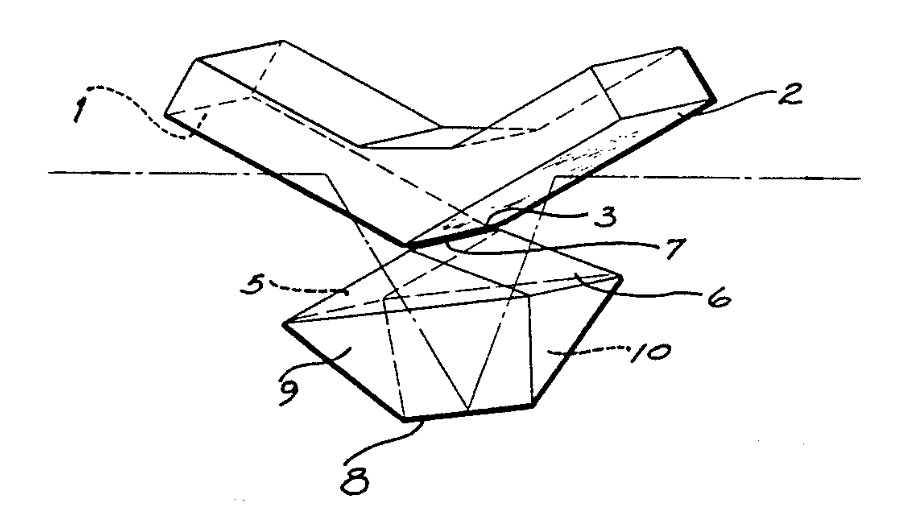
The same year, 1950, Ludewig added also an application concerning a brand new image erecting system, based on a connection of roof prism and mirrors. Later it was improved by Daniel Schade.
Design of an image erecting system from a patent application by M. Ludewig from Leitz GMBH.
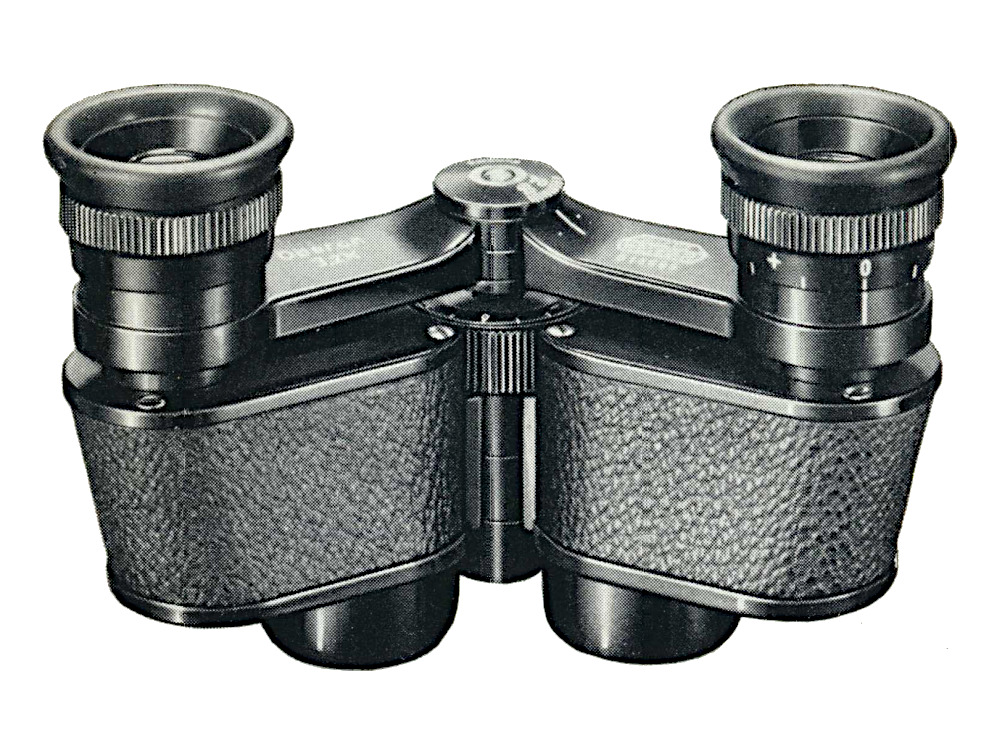
In 1956 all these moves resulted in the appearance of a brand new pair of binoculars which didn't feature any Porro prisms anymore. We think here about the Amplivid 6x24, offering an impressing field of view, 12 deg. Such a field was possible to produce courtesy of the aforementioned erecting system patented by Ludewig and Schade and a wide angle eyepiece.
Leitz Amplivid 6x24
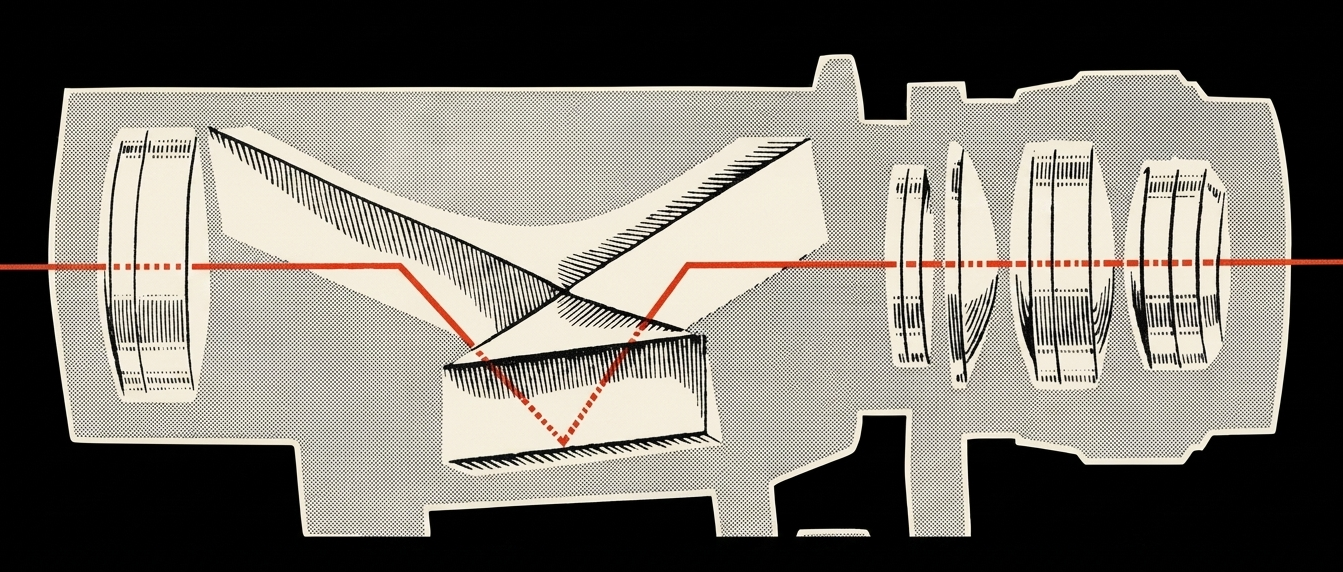
Still it seems it wasn't the 5-element eyepiece from the application of Ludewig we described earlier. The 1956-59 Leitz binoculars catalogues show the Amplivid optical diagram and it presents a far much more advanced construction, most likely based on as many as 7-8 elements positioned in 4 groups.
Optical construction of the Leitz Amplivid binoculars as shown in the catalogs from 1956-1959.
The Amplivid 6x24 was a kind of breakthrough, and up to now it enjoys a status of a cult model; small wonder one of
our previous parts of 'Legendary binoculars' was dedicated to it. However the Amplivid was hardly flawless. Its main drawback was low transmission caused by a complex optical system and erecting system with reflections of light from two mirror surfaces. In those times the surfaces were covered by aluminum that reflects on average about 90% of light so the loss of two reflections amounted to almost 20%. This result got worse in time because aluminum has a tendency to oxidation and blackening. The second flaw concerned the classic, movable bridge that made it impossible to fully seal the lens against humidity.
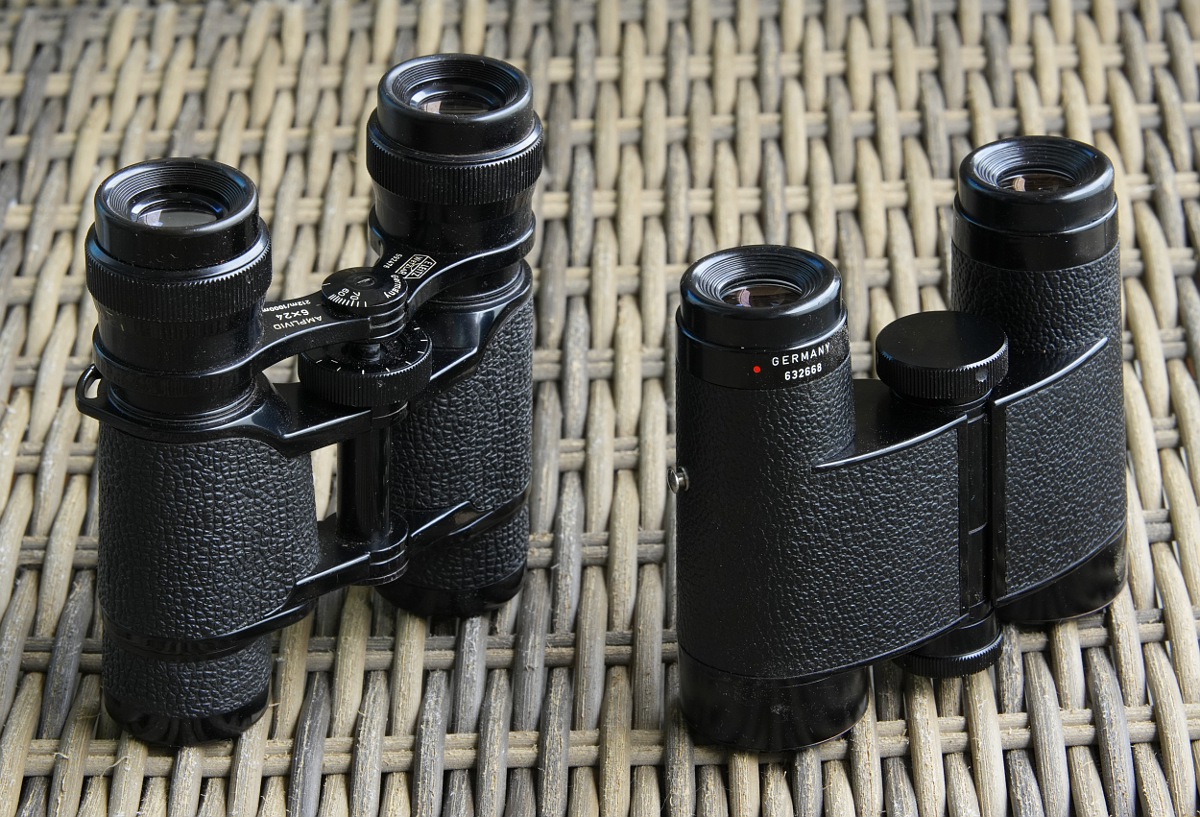
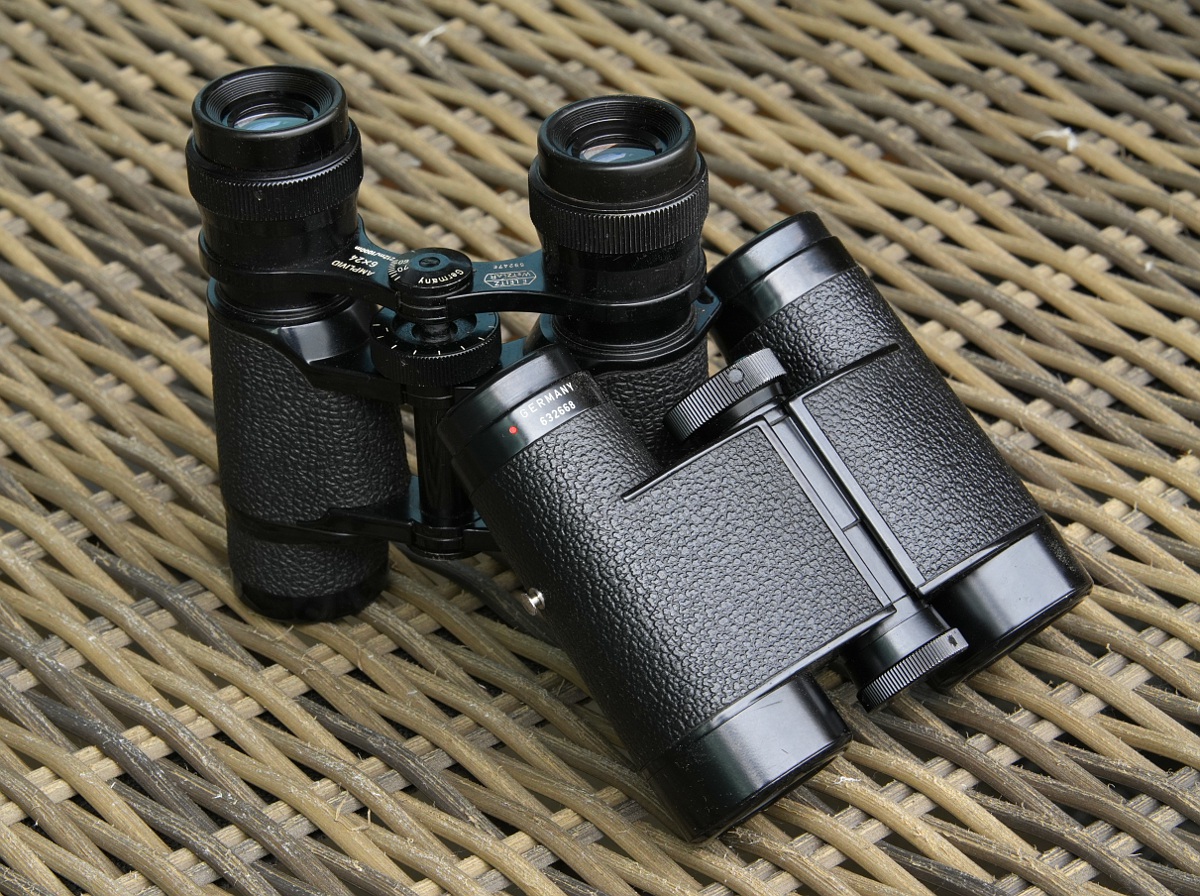
Leitz Amplivid 6x24 and Leitz Trinovid 6x24.
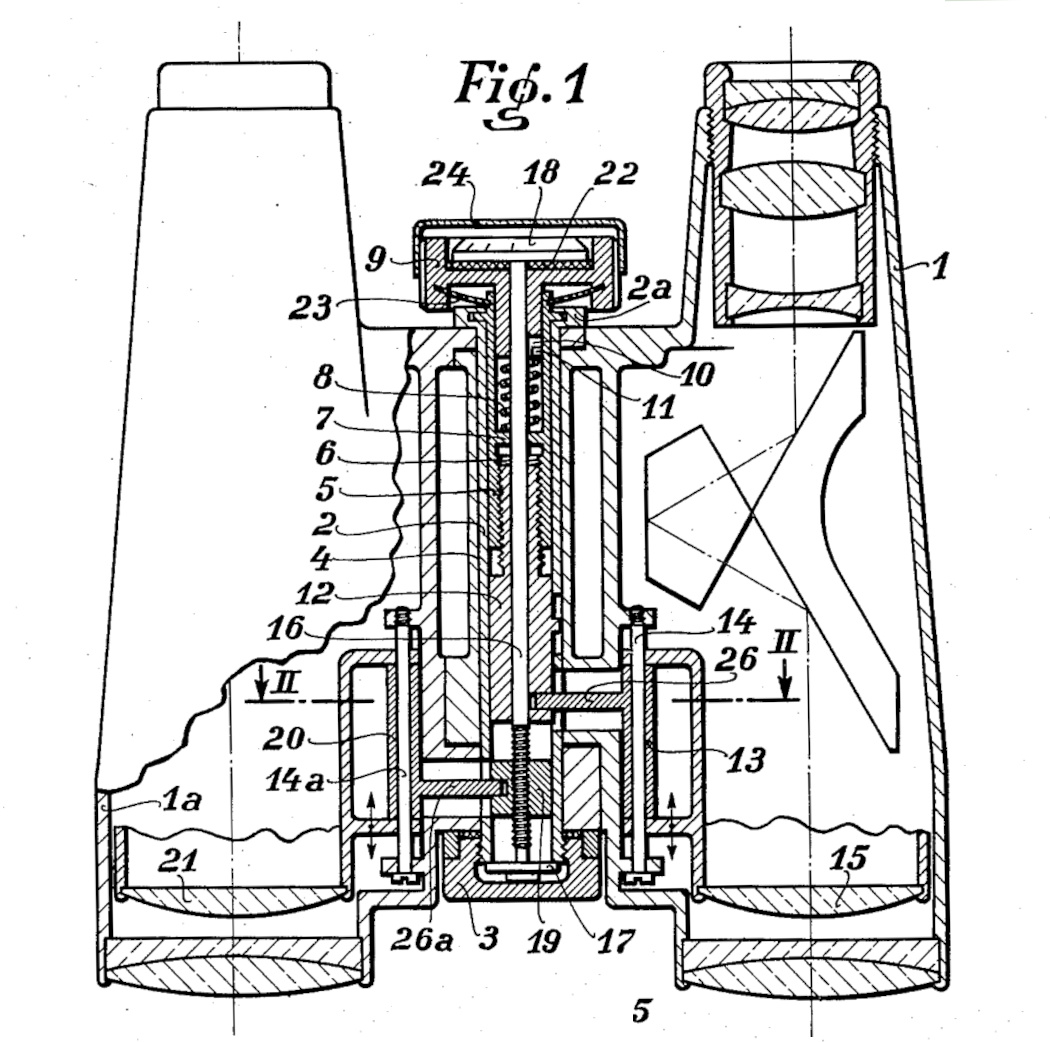
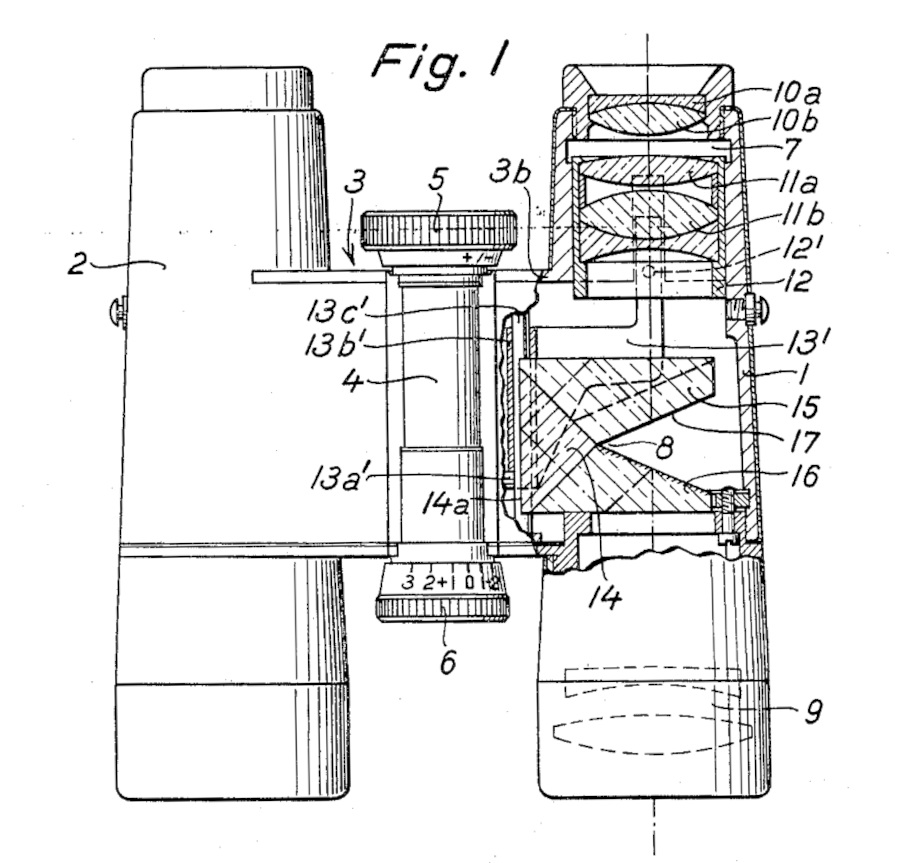
Another Leitz GMBH engineer, Kurt Jensen, dealt with the last problem and already in January 1955 he filed an application concerning a pair of binoculars with a completely internal focusing. It concerned both the central system and dioptre correction. The system was based on movable elements put between achromatic objective lenses and a erecting system.
Design of an internal focusing system for binoculars from a patent application by K. Jensen from Leitz GMBH.
To make the siutation even more complex the diagram presented a pair of binoculars with a 4-element eyepiece with lenses put in three groups.
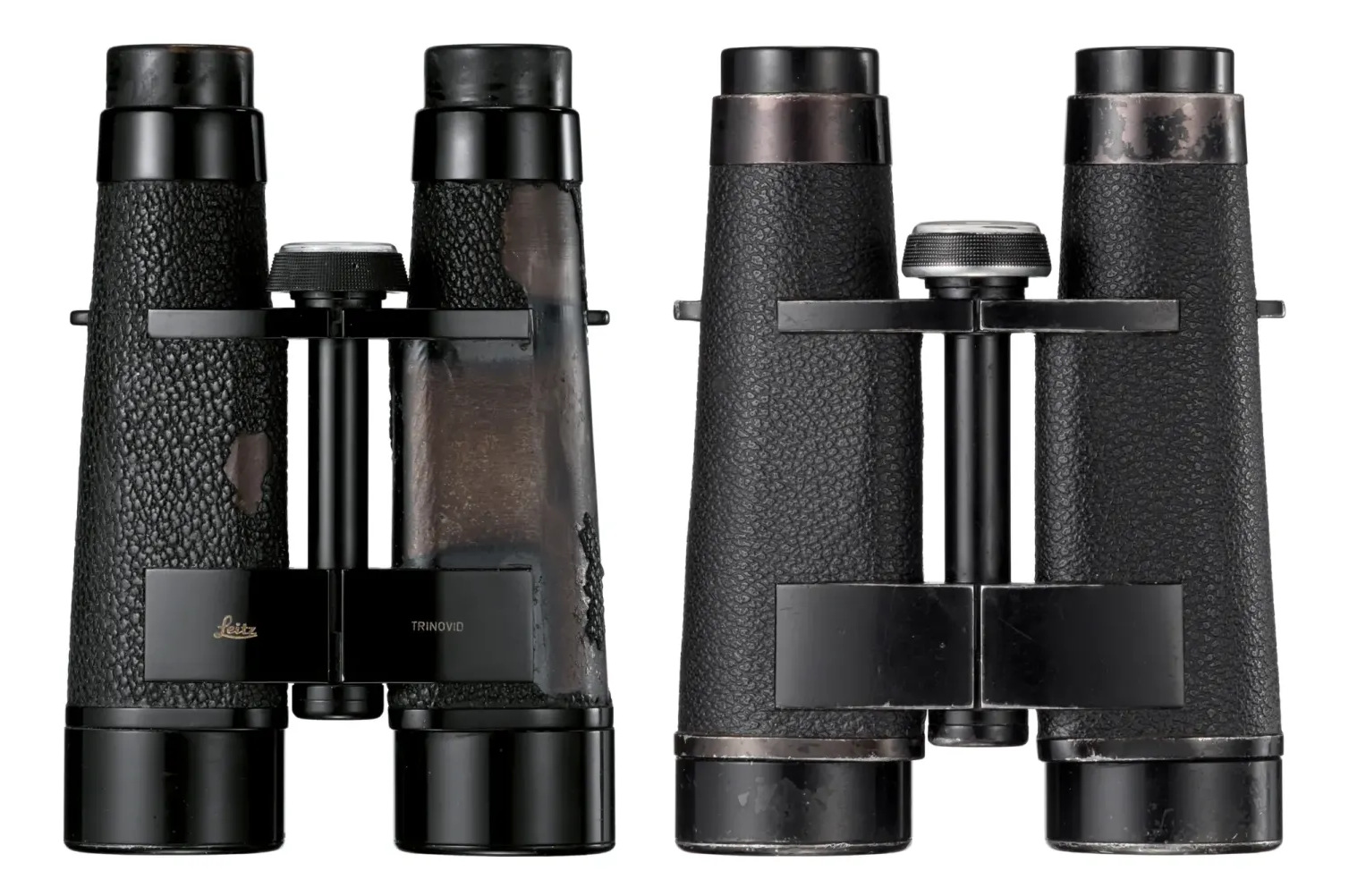
You didn't have to wait long for the binoculars from the patent application diagram hit the shelves. In 1957-1958 Leitz produced about 1000 pieces of a prototype series consisting of 7x42 and 8x40 models. The binoculars had an impressive field of view, reaching almost 10 degrees, but they were big and heavy, with a weight exceeding 900 grams.
Prototype Leitz Trinovid binoculars manufactured in 1957-1958.
These models weren't publicly available and also Leitz catalogues didn't feature them. A 1958 catalogue which I happen to have an access to, shows just the Amplivid 6x24 as a new pair of binoculars.
The prototype series wasn't received well because of the aforementioned problems with data transmission caused by aluminum mirror surfaces prone to oxidizing, significant weight and inconvenience in servising. A rather steep price, reaching 650 Deutschmark, also played a role – it was almost two times higher than the average net monthly income at that time. For a comparison's sake we can add that contemporary Leica Ultravid HD+ series binoculars, which are successors of the Trinovid line, cost a bit over 2000 Euro, with the net monthly income in Germany approaching 3000 Euro.
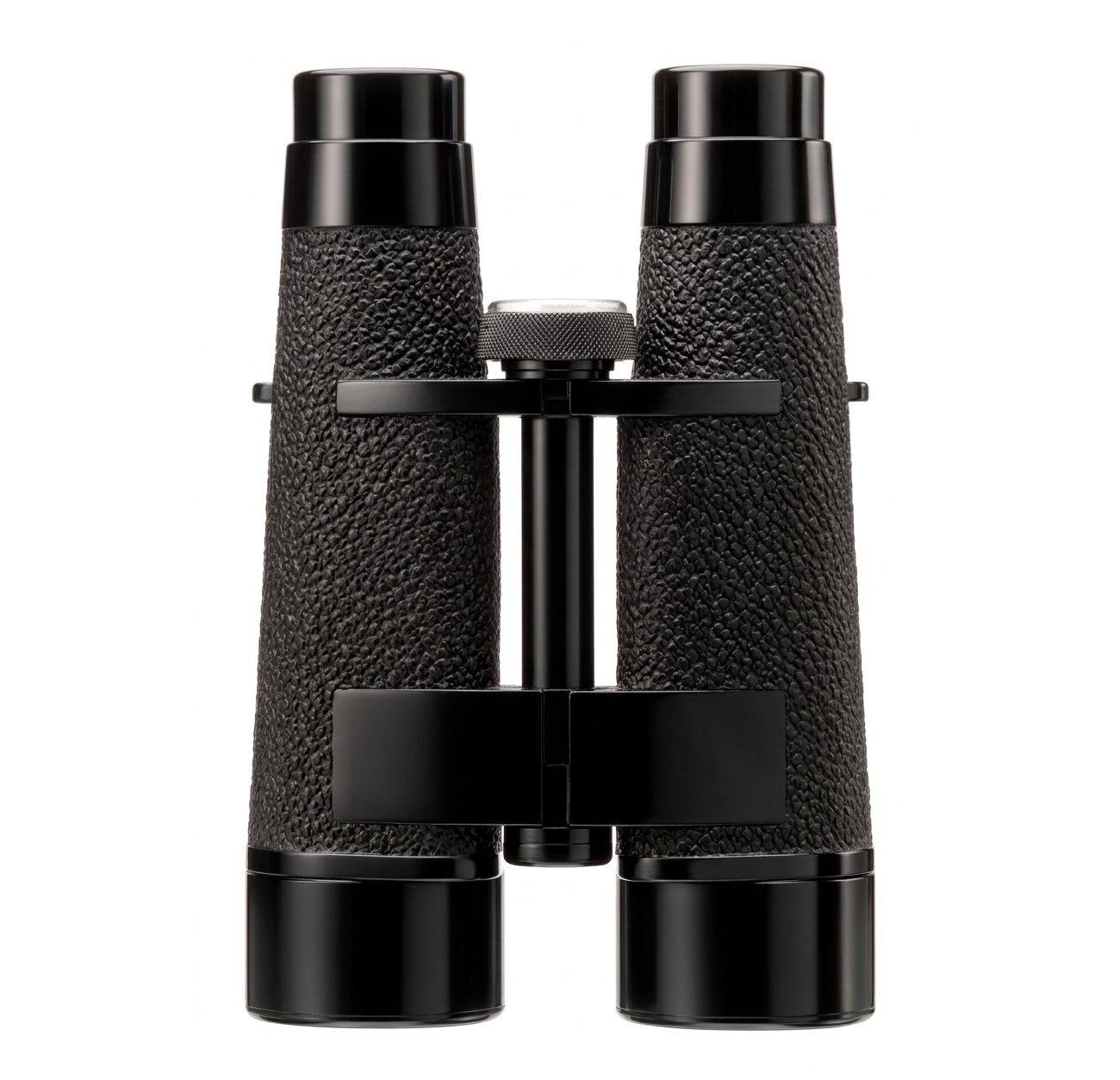
Still, the prototype series was a kind of foreshadownig of changes to come. One of them was even announced on its barrel. Near the end of production on the bridge joining both objective lenses on one side you could find the Leitz logo and on the other side an inscription TRINOVID that, in the future would become the trademark of the majority of binoculars produced by this company.
Prototype Leitz Trinovid 7x42 and 8x40 binoculars from 1957-1958. Source: Leica.
The word 'trinovid' comes from the Latin phrase tri novus meaning three novelties or three innovations. Leitz meant here a brand new image erecting system, a new inner focusing system and the inner dioptre correction. In later advertising materials they also mentioned three dominant features: high image quality, compact, ergonomic casing, and complete inner focusing system.
Leitz Amplivid 6x24 and Leitz Trinovid 6x24.
The end of the 50s and the beginning of the 60s brought a lot of changes in the Leitz line-up. The 1958 catalogue, mentioned earlier, presented the new Amplivid 6x24 but you couldn't find any Porro prism 6x30 and 12x50 models. In 1960 also 10x40 and 10x60 disappeared completely and from 1962 you couldn't find any Porro binoculars. The Oberon 3.2x13.8 was original because of its untypical prism system, launched in 1952, woud breeze in and out from their offer. You can't find it in the 1958-1959 catalogues but some sources state that it was available even in 1984. As if it wasn't enough, in 1963 they ended the production of the Amplivid because at that time Leitz was ready to present a brand new offer of their binoculars.
Leitz Oberon 3.2x13.8 binoculars introduced in 1952.
The timing of these events isn't random. The market of sports optics was ready to see really huge changes. Up to this period of time Porro system ruled in its three variants, type I, type II or the reverse system. The Hensoldt Wetzlar company was an exception as they focused mainly on the Abbe-Koenig prism models. Their flagship series called Dialyt over the years consisted on models with different parameters. Among them you could find 6x30 and 8x30 midgets, medium-sized 6x42 and 7x42 instruments, a bit bigger 7x50, 8x50 and 10x50 and finally 7x56, 8x56, 10x56 and 16x56 night instruments. Hensoldt up from 1928 was a part of the German Zeiss and they complemented their offer quite nicely and Zeiss, after their relocation to Oberkochen, up to 1963 produced only Porro prism binoculars.
The community of German optics specialists was not big at that time, with a quite easy flow of information and staff, so I guess Leitz must have been aware of Zeiss plans for 1964. They decided to gradually quit production of Porro binoculars and focus on roof prism models. Big Abbe-Koenig prisms were supposed be superseded by a much smaller Schmidt-Pechan system. Already in 1964 they released the first model of this type, the Zeiss Dialyt 8x30 B.
Schmidt-Pechan prisms image erecting system.
In such a situation it would be hardly surprising that Leitz also decided to introduce some innovations. They didn't manage to surprise their rivals with the erecting system based on a prism and mirrors so they had to try something different. Two important decisions were taken. The first concerned the erecting prism system. Leitz wanted to remain a cutting edge company and avoid using Schmidt-Pechan and Abbe-Koenig systems, developped by their main rival. They decided to use the Uppendahl prism system instead, known up from 1907.
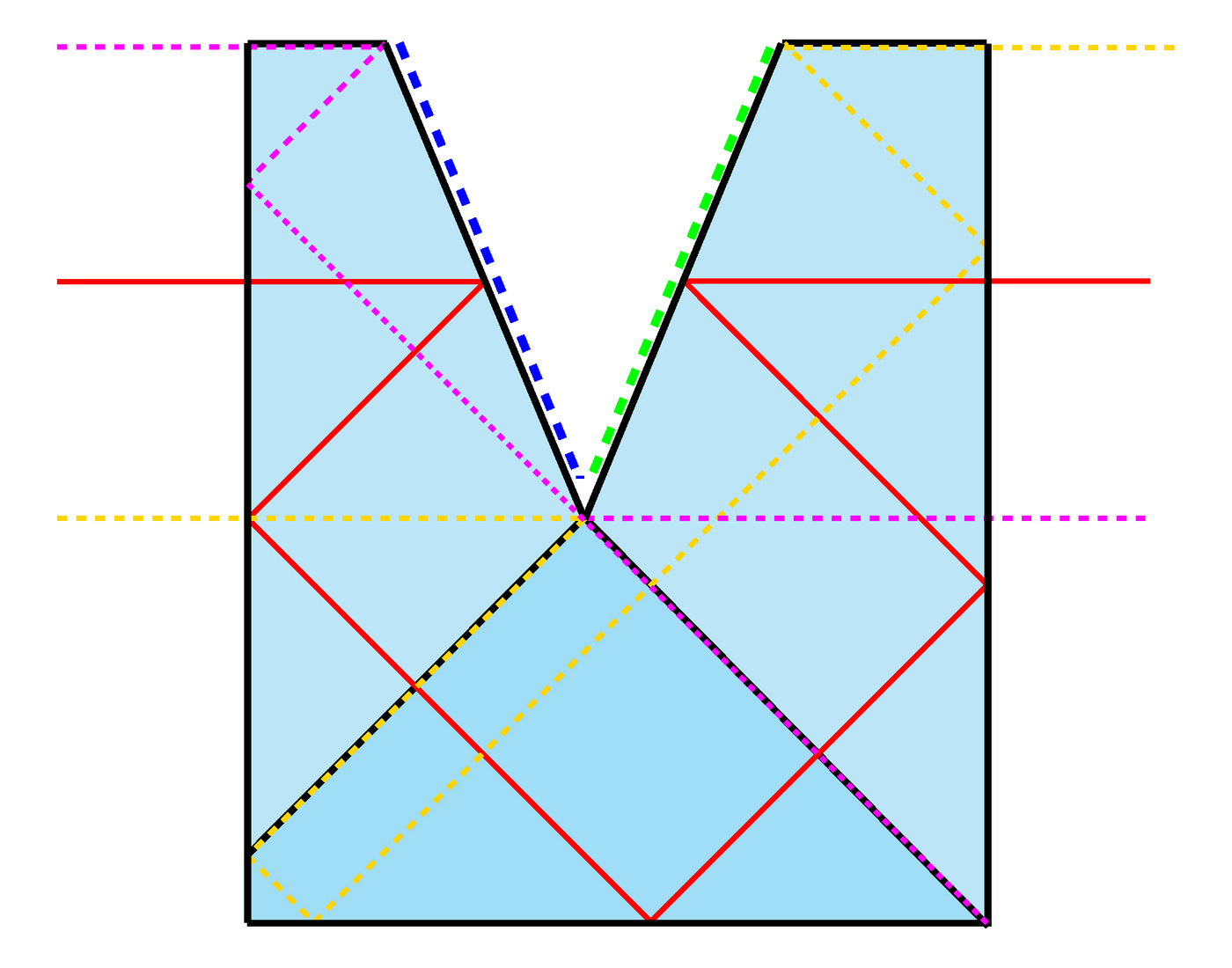
Uppendahl prisms image erecting system.
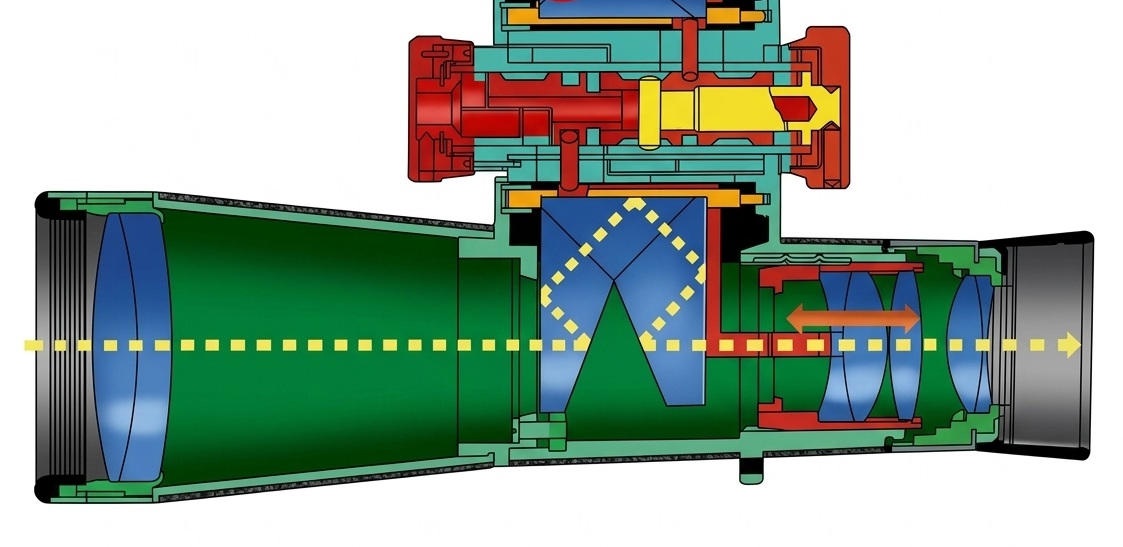
In this case you deal with three prisms, two first of the Bauernfeind type and the last one is a roof prism. All these elements are glued together into one block so you deal with just two air-to-glass surfaces. It is a significant advantage, compared to the Schmidt-Pechan system where you have to add an air slit to the equation. The number of reflections remains the same because in both systems the light is reflected six times. In both systems one reflective surface has to be covered - in case of the Uppendahl prisms the first reflection is at such an angle that you don't get the total internal reflection phenomenon. In both cases you also deal with a roof prism so you get a phase shifting that lowers the quality and contrast of images. Uppendahl prisms are just slightly bigger than the Schmidt-Pechan system so they allow you to construct small, shapely devices with the line of objectives overlapping the line of eyepieces.
Optical construction of the Leitz Trinovid 7x42 B binoculars manufactured between 1968-1986 and containing Uppendahl image erecting system.
The second decision of Leitz engineers was connected to the inner focusing system. In the Jensen 1955 patent used later in the prototype Trinovids 7x42 and 8x40 they used a movable element put behind an achromatic objective lens. It is a solution quite common nowadays but several dozen years ago it caused a lot of problems, all of them described in detail by Helmut Becker, Kurt Jensen, Ernst Leitz and Walter Rinker in a series of patent applications field in 1962-1967.
Leitz Amplivid 6x24 and Leitz Trinovid 6x24
An access to exotic types of glass, especially low dispersion glass, was rather limited in those times so a 3-element objective lens with one movable element was very difficult to correct when it comes to chromatic aberration and astigmatism. At the same time, if you wanted to apply eyepieces with different focal lengths with the same diameter of objective lenses in order to offer different magnification factors the range of movement of focusing elements had to be different as well. Moving a big element from the objective group entailed using a huge, heavy mechanism and it also influenced the weight of the whole instrument. It also moved the gravity centre away from the observer.
Construction of the Leitz Trinovid 8x32 binoculars from the patent by H. Becker et al. 1967.
The group of engineers headed by Helmut Becker suggested a new mechanism that was supposed to move parts of eyepieces. The glued doublet next to the eye of the observer remained fixed and ensured full tightness of the instrument. The focus was set by the movement of the other two groups of the eyepiece elements. One of the screws, the one that was closer to the observer, was responsible for the central focusing so the simultaneous movement of both eyepieces. The second screw, positioned closer to the objectives, was responsible for dioptre correction and it moved just one eyepiece. This solution ensured full tightness, compact dimensions, reduced the weight of the binoculars and moved the gravity centre closer to the observer.
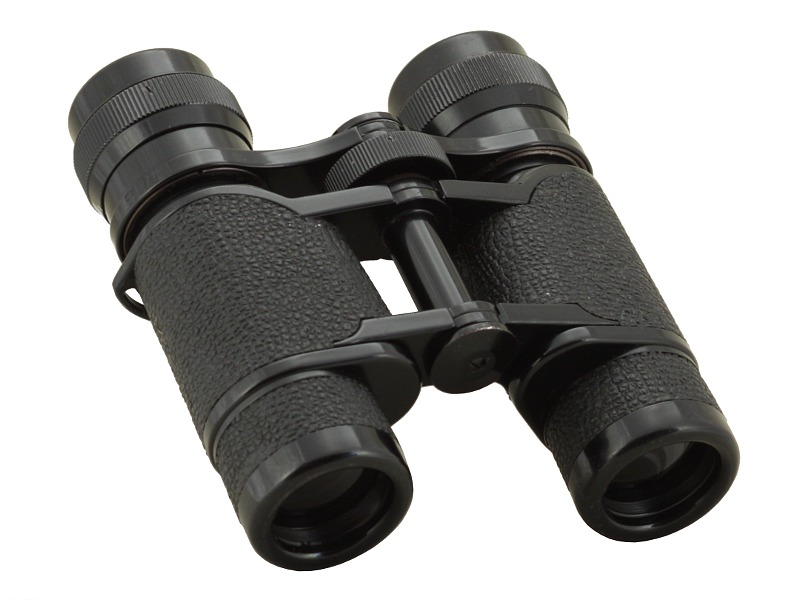
Leitz Trinovid 6x24 binoculars from the first year of production.
It was used in all three new Trinovid line binoculars, presented by Leitz in 1963. These were the 6x24, the 8x32 and the 10x40 instruments. In 1965 they added also the 7x35 B and the 8x40 B to this group and in 1968 the 7x42 B. You have to admit it was a forcefull entrance because the main rival of Leitz, Zeiss, announced a more modest offer of three Dialyt models, the 8x30, the 10x40 and the 8x56.
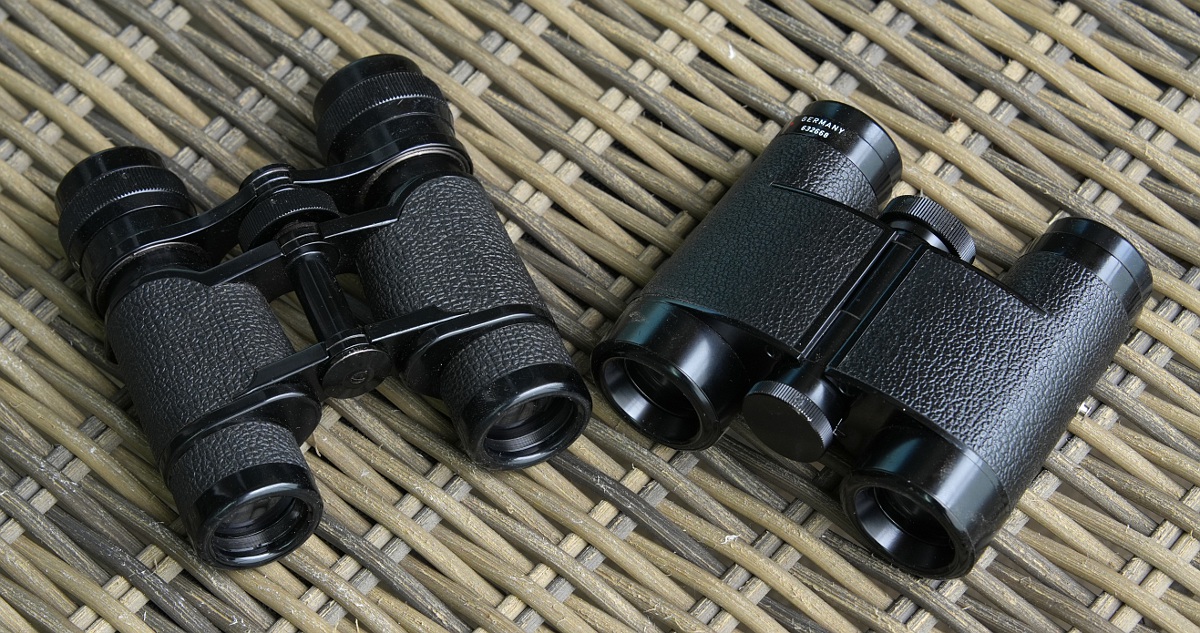
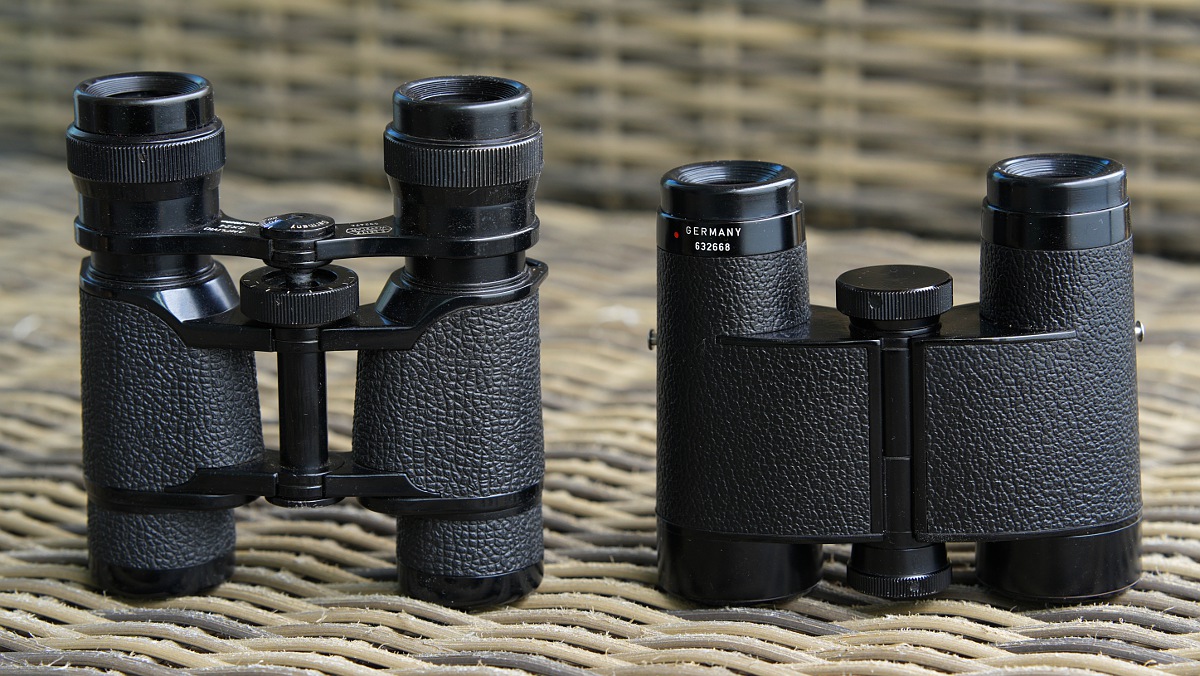
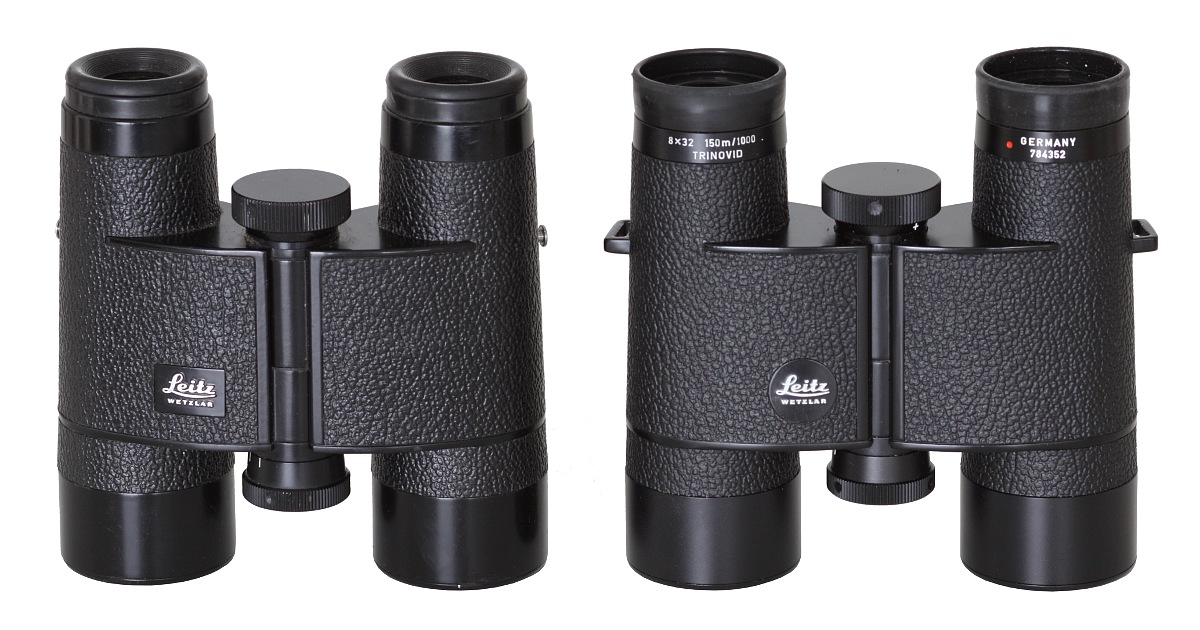
Leitz Trinovid 8x32 binoculars. On the left from 1965, on the right from 1972.
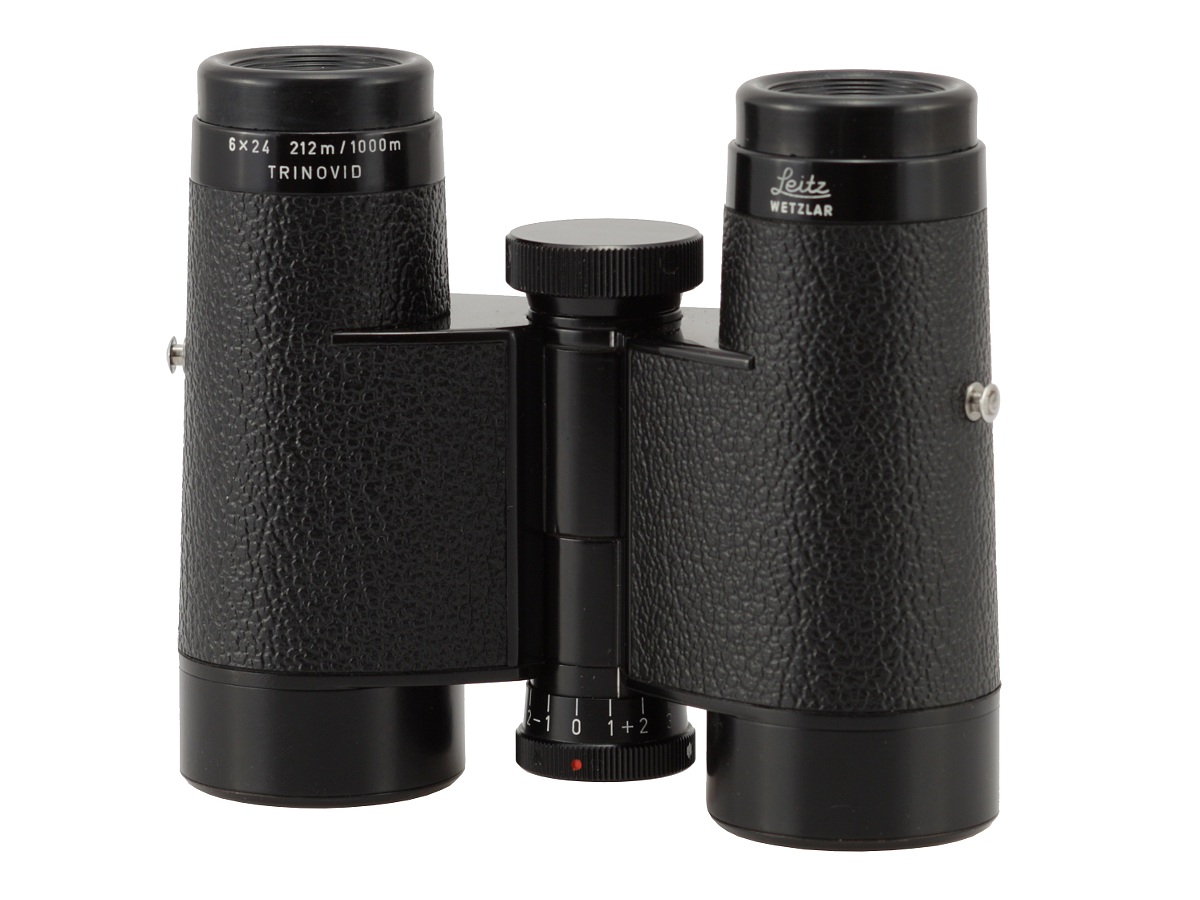
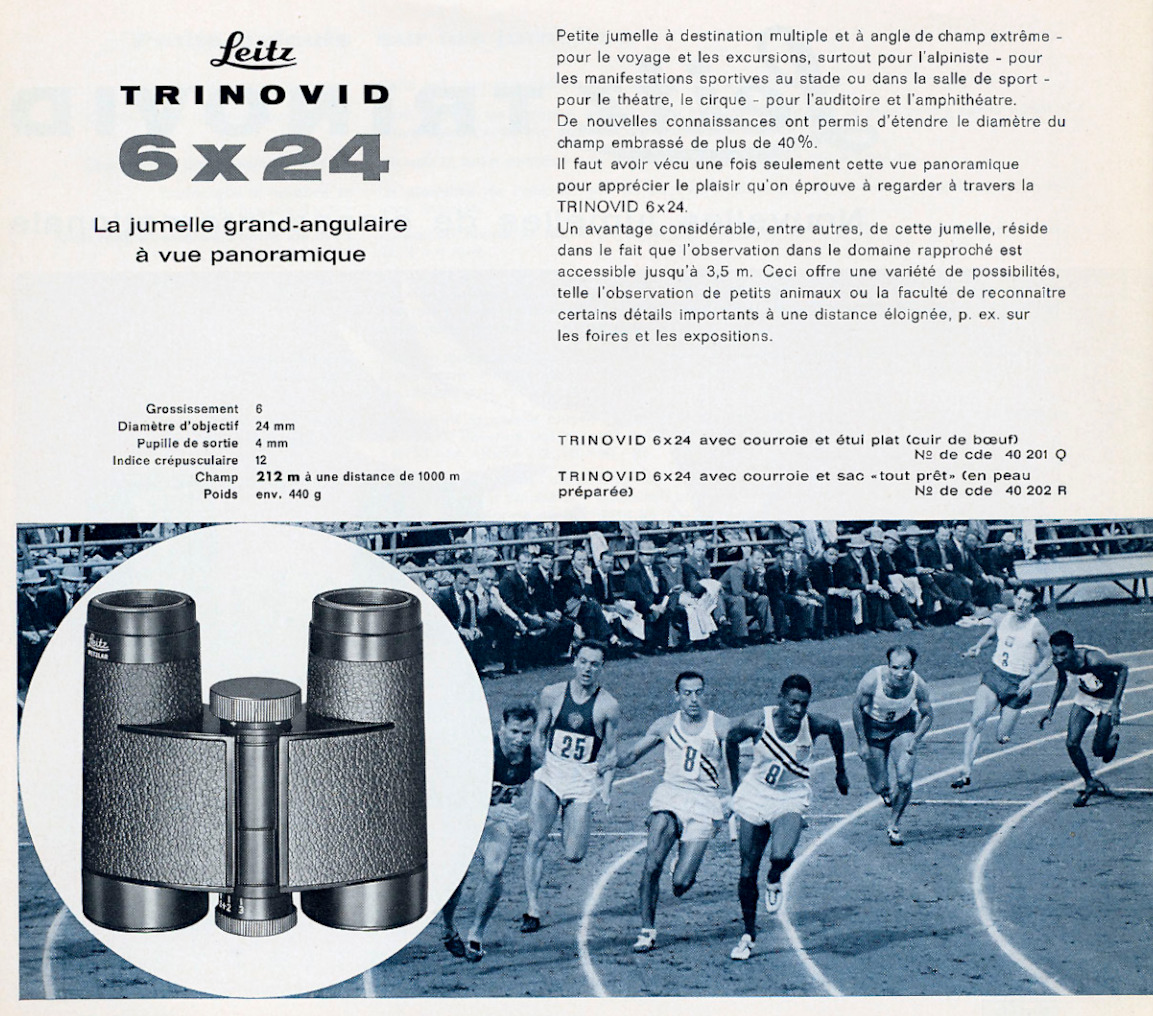
The main character of our story, the Trinovid 6x24, kept the huge field offered by the Amplivid – as many as 12 degrees (212 meters per 1000 meters) which meant using eyepieces with an apparent field of view reaching 72 deg (simplified formula). For such a huge field you had to pay with a short eye relief distance that amounted to about 11-12 mm. The binoculars remained very small and shapely, only 97 mm high (version with bakelite eyecups) and at the widest position of eyepieces it was 114 mm wide. The outer diameter of the tube with objective lens amounted to 38 mm. The interpupillary distance could be adjusted in a range from 56.5 to 76.3 mm. The new Trinovid weighed exactly 439 grams and, compared to the Amplivid, it was by almost 85 grams heavier.
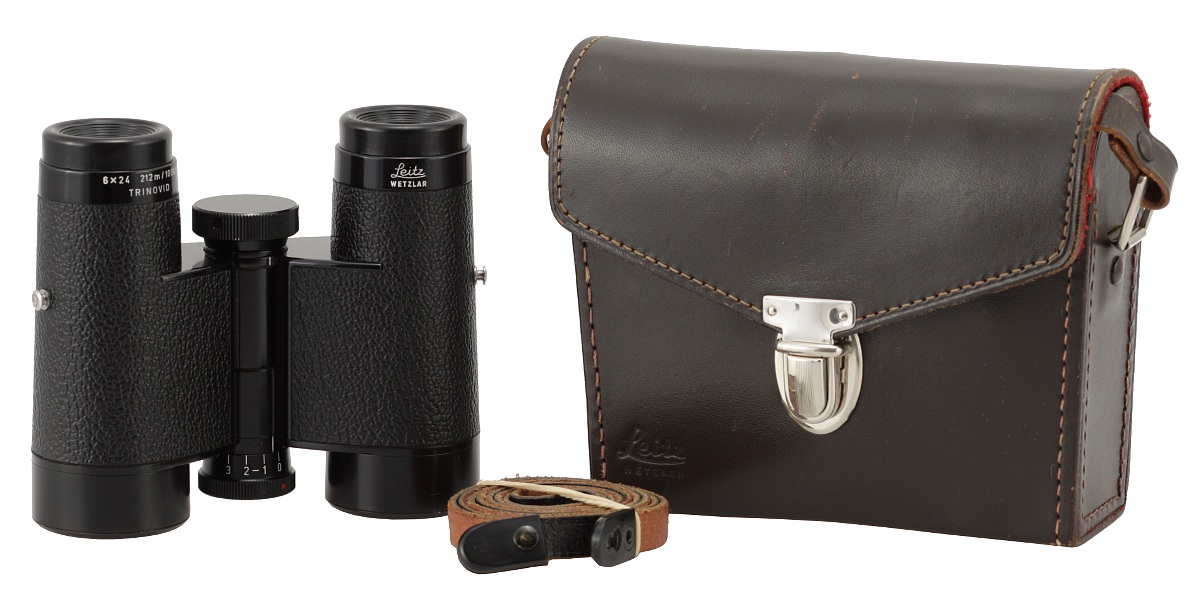
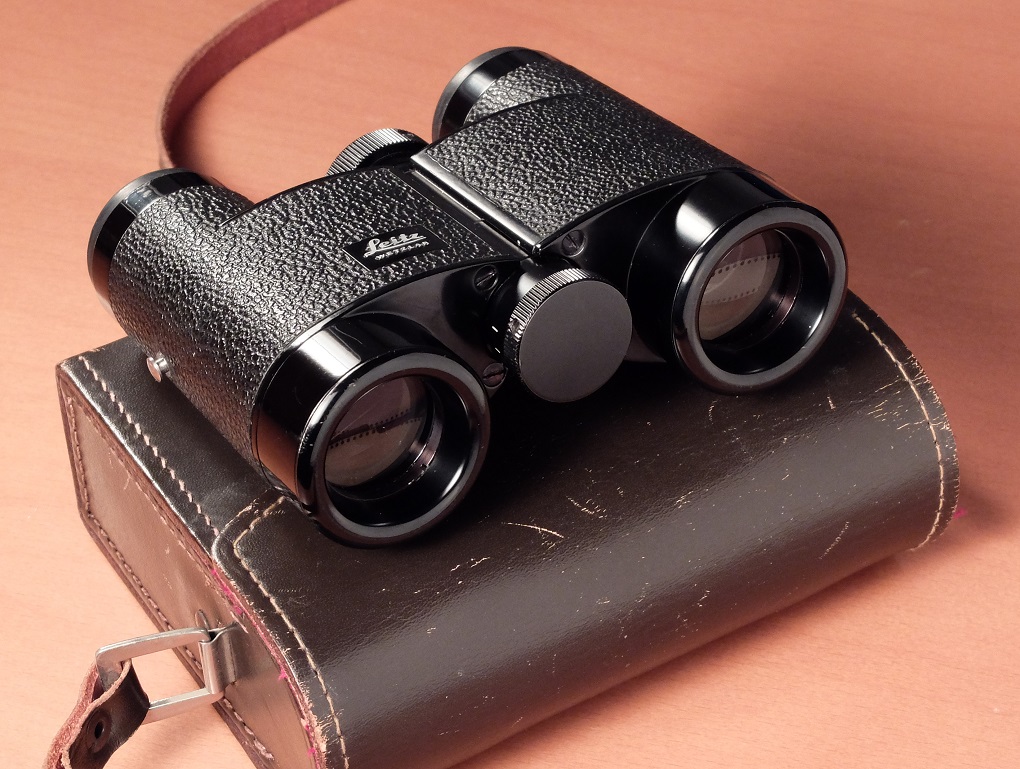
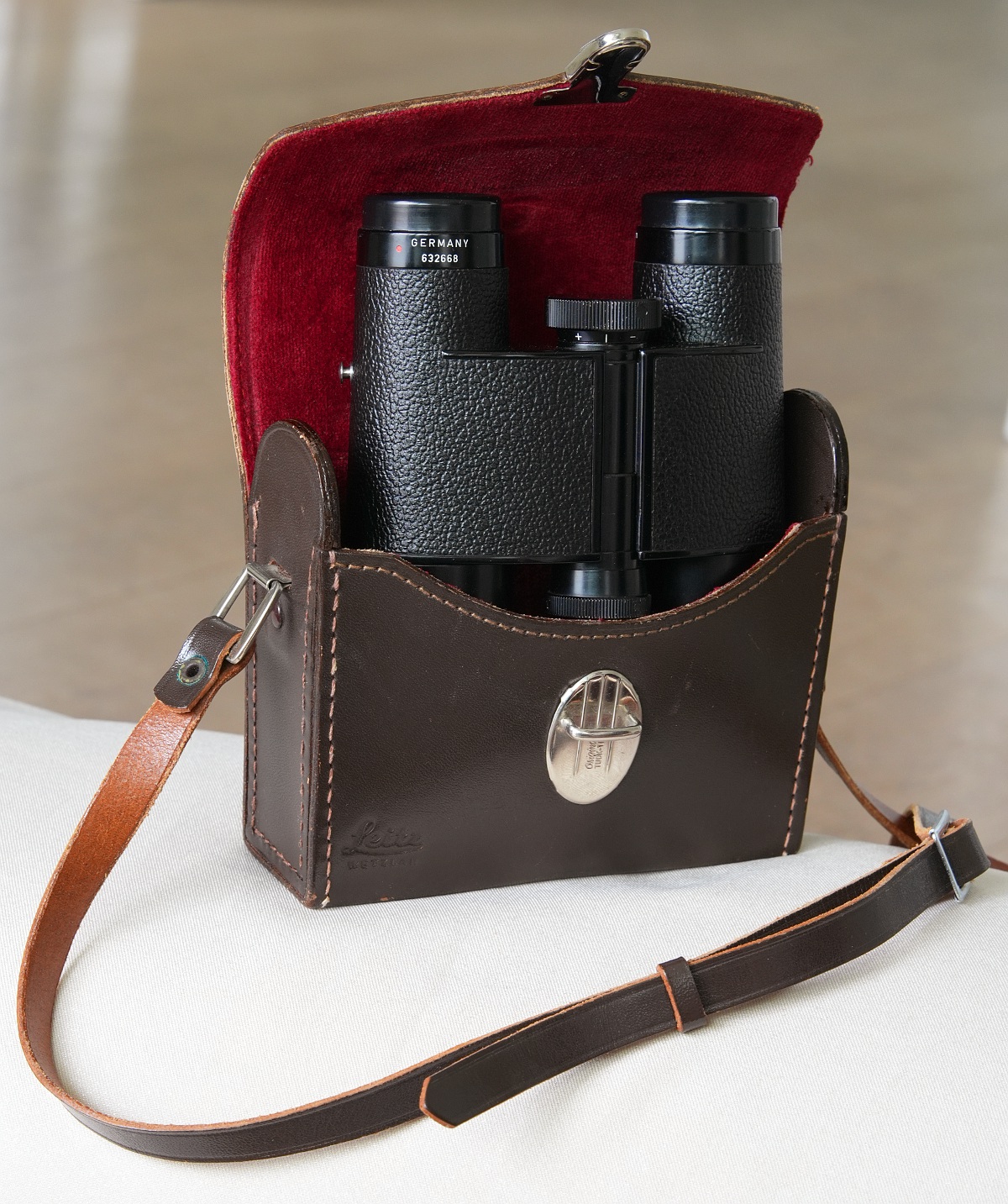
Leitz Trinovid 6x24 binoculars with its in-the-box accesories.
Buyers got in the box a leather case (soft or hard) with a separate strap and a neck strap, also made of leather but rather narrow. There were no caps in the box. In the moment of the launch the binoculars cost about 160-180 USD depending on the place of purchase and accessories. Taking into account inflation 160 USD from 1963 is an equivalent of about 1740 USD nowadays.
Leitz Trinovid 6x24 binoculars from the first year of production.
Officially the Trinovid 6x24 was present on the market only three years – its production stopped in 1965. Estimates based on serial numbers of particular models allow us to assess that overall they produced just 3-4 thousand pieces. At the turn of the sixties and the seventies Leitz produced another small series of the Trinovids 6x24 and it was caused by a surge of interest, connected to the fact that binoculars from this series went to space as a part of the Apollo mission.
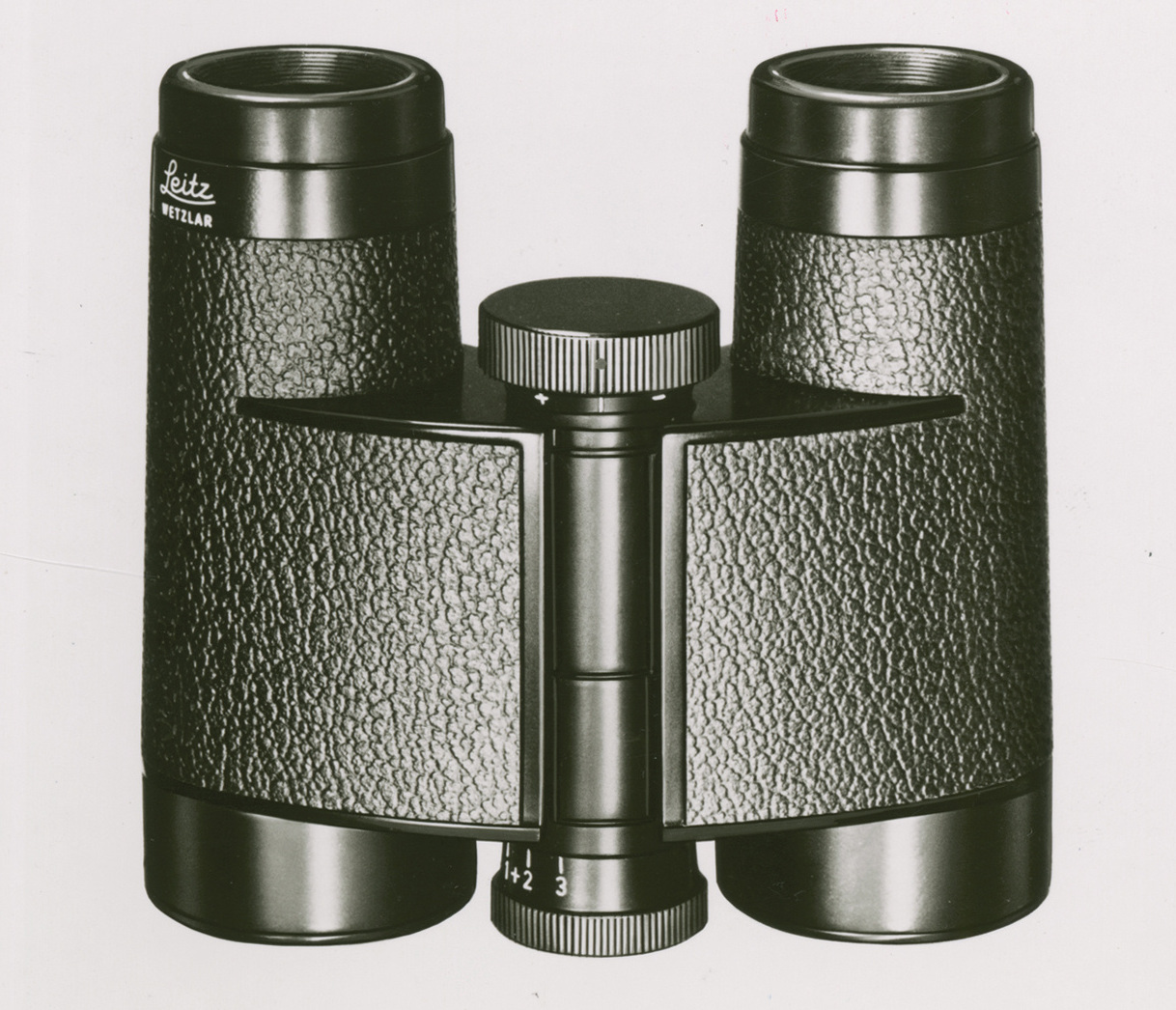
Picture of the Leitz Trinovid 6x24 binoculars published in the Photokina 1963 brochure.
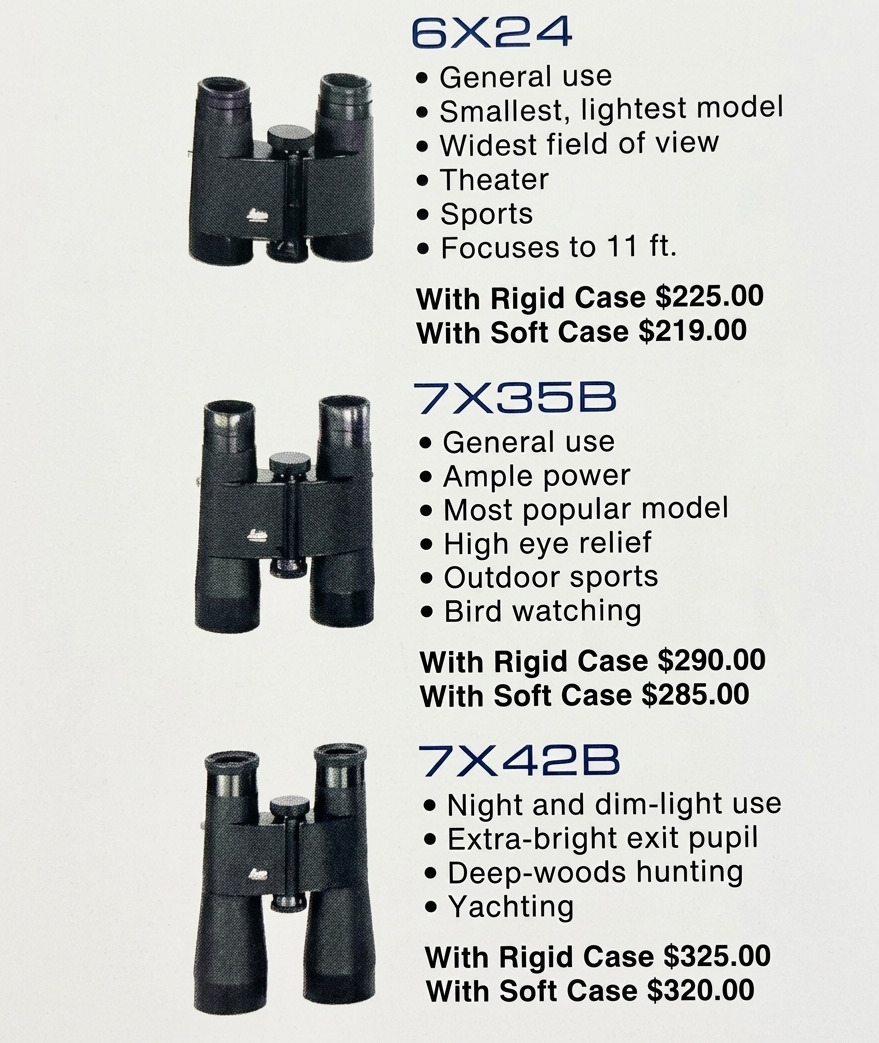
At that time the price of this pair of binoculars increased to 219 USD for a version with the soft case and 225 USD for a version with the hard case. This first value is an equivalent of over 1800 USD nowdays.
An excerpt from a Leitz catalog intended for the American market and published in 1970.
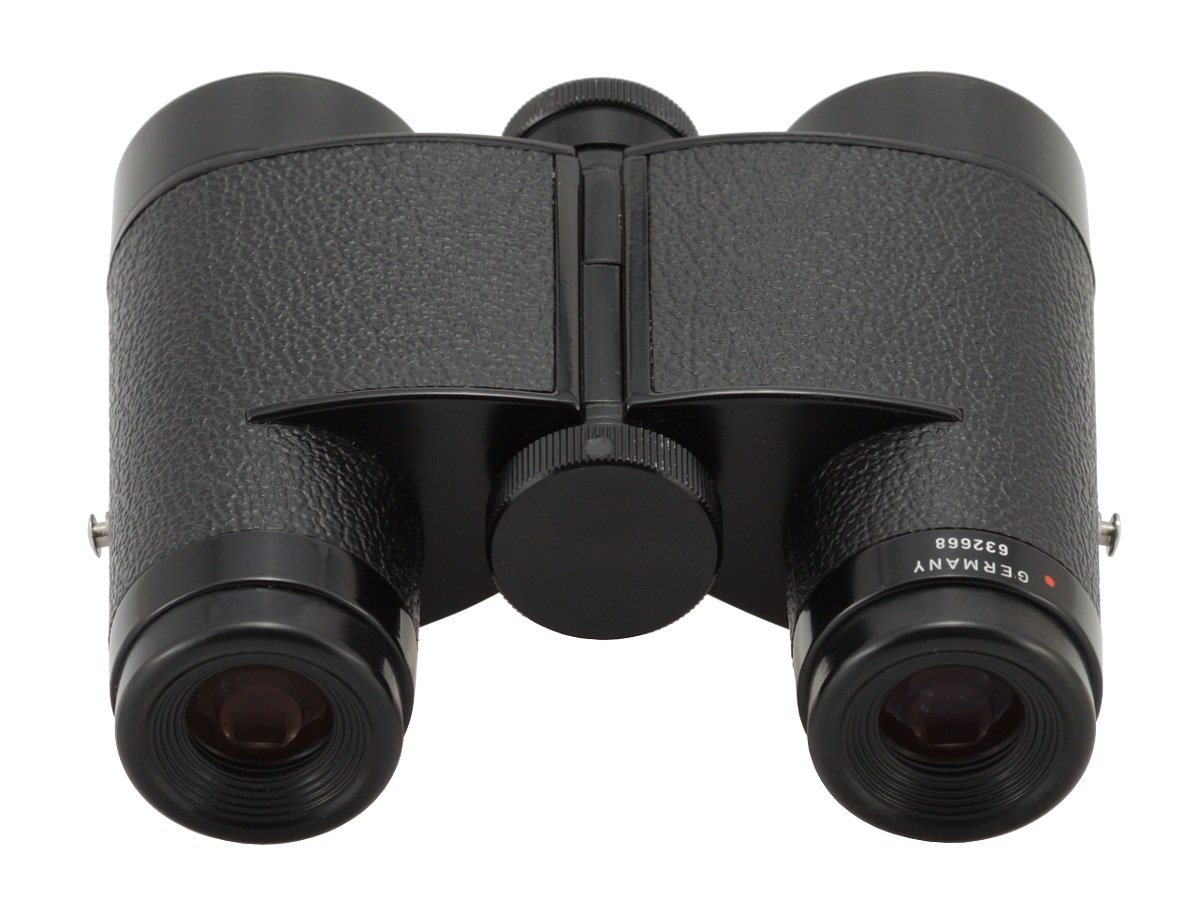
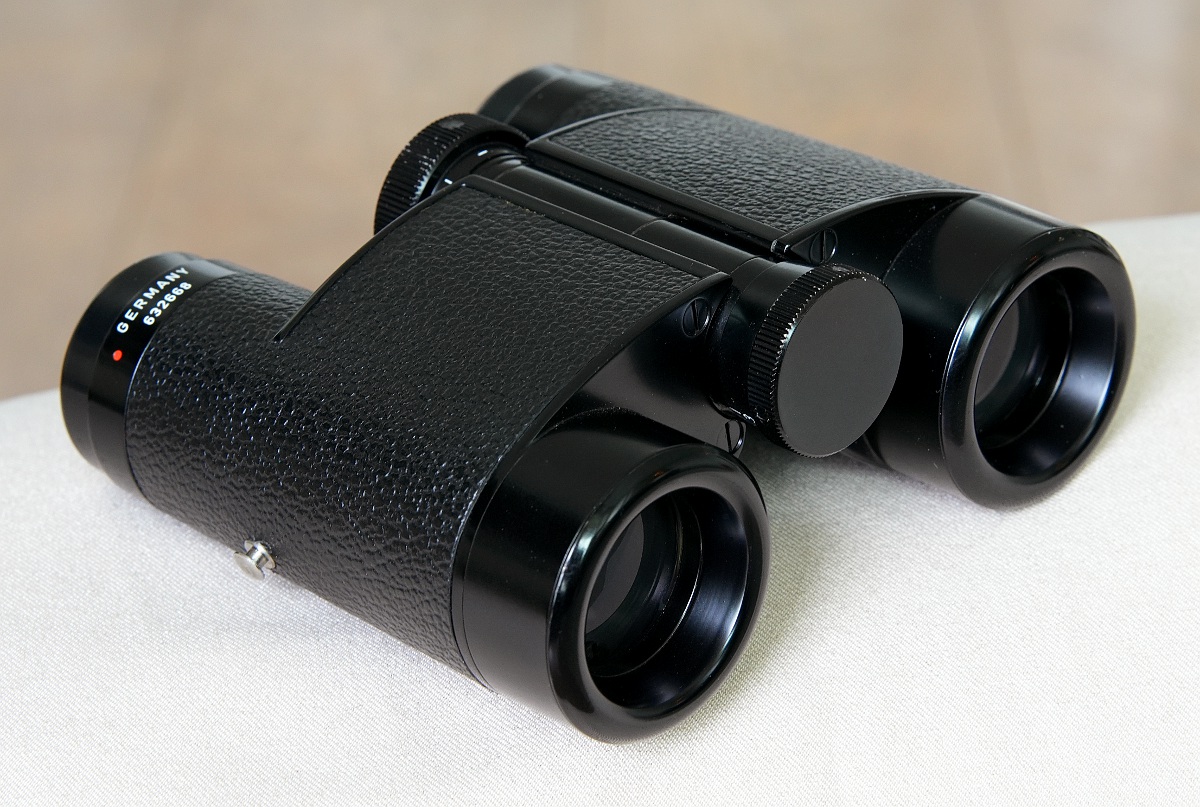
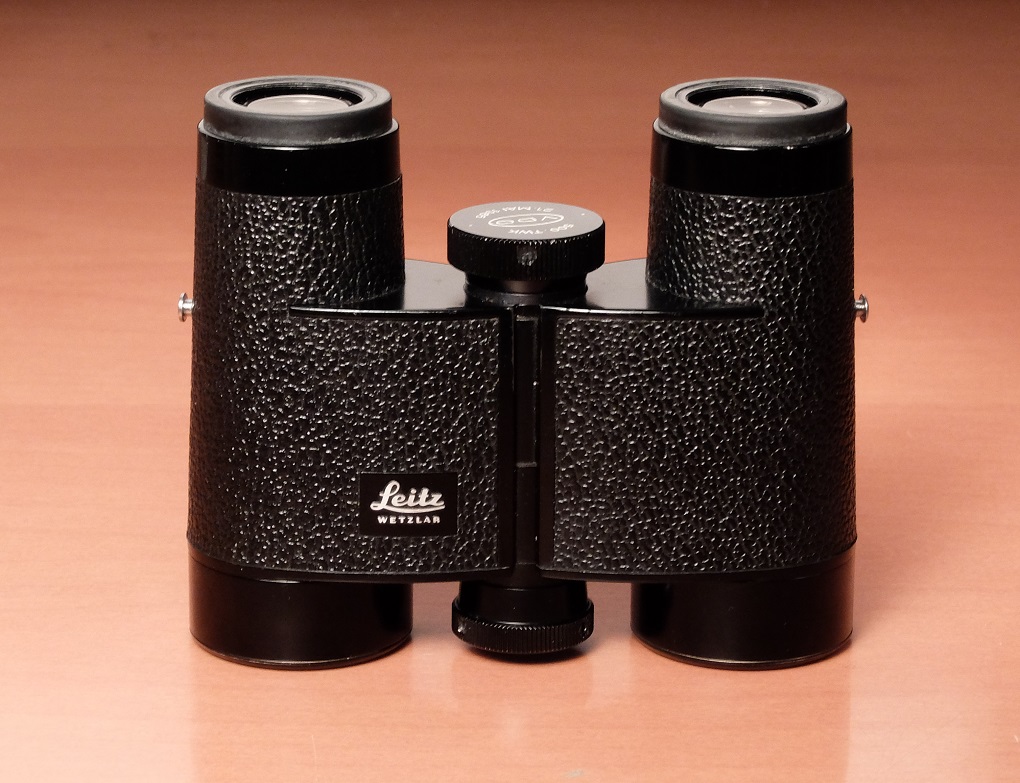
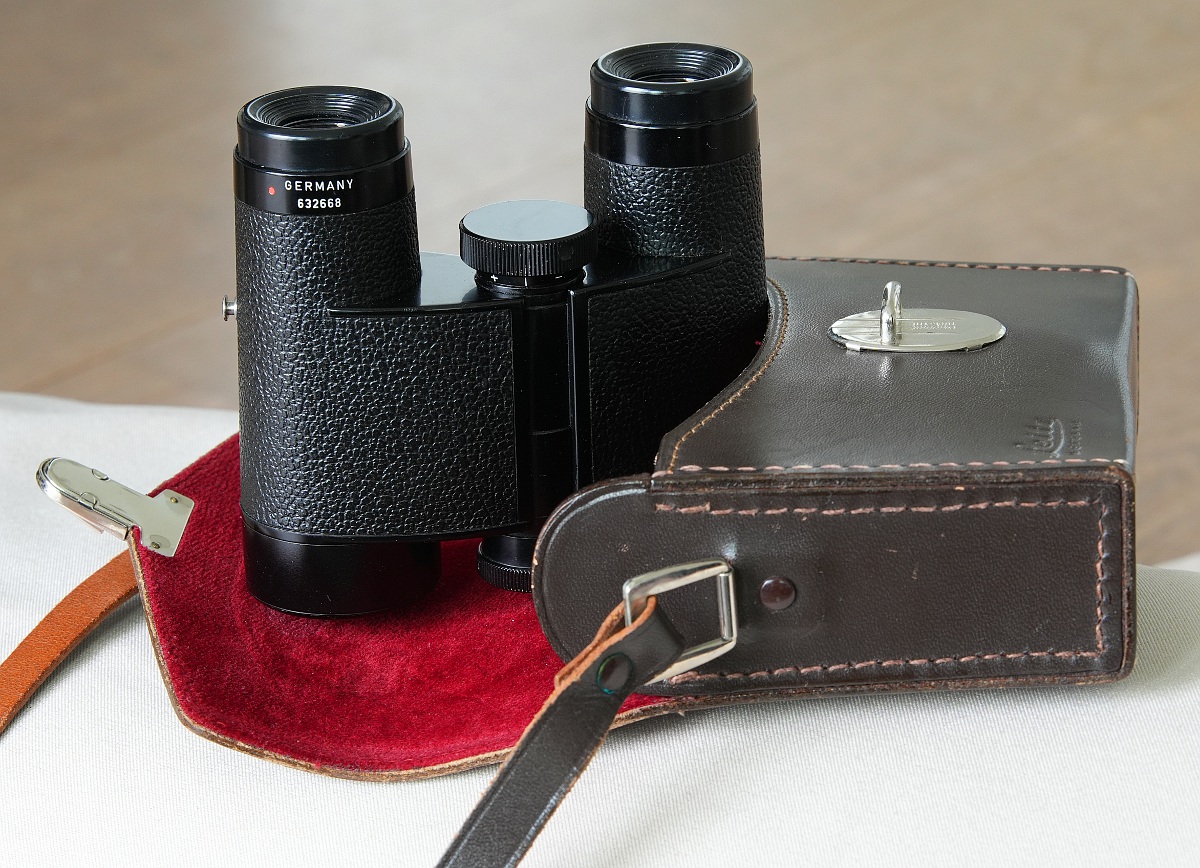
What's interesting, despite a short production period and a small number of binoculars we still have a lot of variants. In the first year the binoculars had hard, bakelite eyecups and the front of the tubes didn't feature any logo of the producer. The logo and the inscription Wetzlar was just on the rim of one of the eyepieces; the other side of the same eyepiece also featured an inscription GERMANY and the serial number. On the other eyepiece you saw an inscription TRINOVID and basic parameters of the binoculars.
Leitz Trinovid 6x24 binoculars from the first year of production.
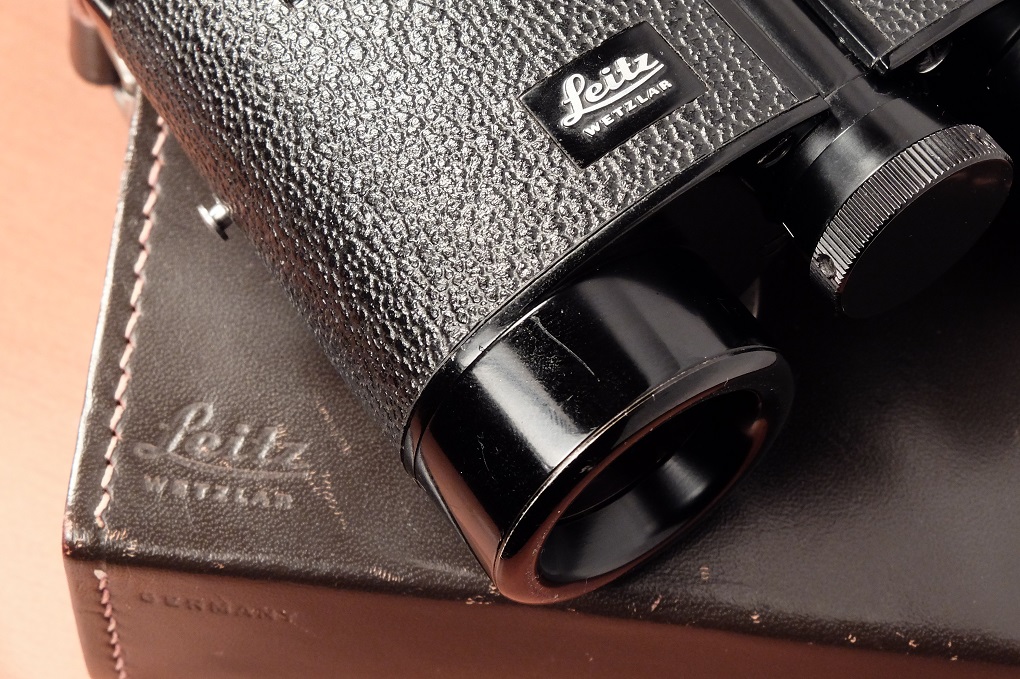
Models produced in the second half of 1964 had a rectangular black emblem with the logo and the inscription Wetzlar on the front. The logo was no longer on the eyepiece but they left inscriptions with the name of the country, the serial number and parameters. At the end of that year and in 1965 they also released models with rubber eyecups.
Leitz Trinovid 6x24 binoculars from 1965. Photo by M. Górko
When it comes to models produced at the turn of the 60s and the 70s of the twentieth century the logo on the tube of the binoculars is already round and the eyecups are made of rubber, with a possibility to fold. The appearance and functionality of the hooks of the neck strap also changed. The serial numbers of these binoculars range from 75XXXX to 78XXXX and they were available mainly on the American market up to the half of the 70s, when retailers sold out their warehouse stocks, offering discounts of almost 10%.
Leitz Trinovid 6x24 binoculars from 1965. Photo by M. Górko
It is worth emphasizing how excellent the fields of view of the first generation of Trinovid binoculars were. In the 6x24 model, we had the previously mentioned 12-degree field of view, which meant the use of eyepieces with an apparent field of view of 72 degrees. The 8x32 model provided a field of 8.5 degrees, so its apparent field of view was 68 degrees, while in the 10x40 we had a field of exactly 7 degrees, meaning the eyepiece's field reached 70 degrees. As can be seen, the Trinovid 6x24 was unique, as it performed the best here in terms of both the total field of view of the binoculars and the apparent field of view of the eyepiece. Never again in the history of Leitz and Leica did we achieve performance at anywhere near a comparable level. What is more, changes towards smaller fields of view, but with better eye relief, appeared really quickly. As early as 1965, the Trinovid 7x35 B and 8x40 B models entered the market, followed by the 7x42 B in 1968. In none of these models did the apparent field of view of the eyepieces exceed 60 degrees.
A page from a 1963 French Leitz catalog dedicated to the Trinovid 6x24 binoculars.
The next generation of the Trinovids was launched in 1973 and then Leitz showed the 8x32 B and the 10x40 B models with fields of 7.4 and 6.3 deg respectively. They didn't refresh the 6x24 model because, according to the producers, the sales volume of this pair of binoculars was too low to be profitable. Customers, having a choice between the 6x24 and the 8x32, much often chose the latter, especially that its price was by just a dozen or so percent higher.
Leitz Trinovid 6x24 binoculars from the first year of production.
At the end let's go through the optical and mechanical properties of the Trinovid 6x24 which, indeed, managed to remove main flaws of the Amplivid 6x24. You got a closed, completely weather-sealed construction that was also more compact. You had to pay for it with the increase of weight by 85 grams.
Leitz Trinovid 6x24 binoculars from 1965. Photo by M. Górko
When it comes to optical properties, we saw a huge increase of transmission. The peak of the Amplivid was armount 60-63% and the new Trinovids had results approaching 75-80%. Of course these values are hardly impressive for contemporary standards but you have to rememeber that in the 60s there were no multi-layer coatings and the glass wasn't as translucent as nowadays. The reflective surfaces of the Uppendahl prisms Leitz covered with hardened aluminum because silver and phase correction coatings appeared almost thirty years later, with the launch of the next generation of Trinovids in 1990.
Leitz Trinovid 6x24 binoculars from the first year of production.
Short eye relief distance is a flaw of this pair of binoculars so you have to keep the eyepieces very close to your eyes. It is not a big problem if you don't wear glasses and the observations are quite comfortable. Of course correction of such a big field was very difficult with technologies available in the 60s of the twentieth century. As a result on the edge you see a distinct sharpness loss, significant distortion and some chromatic aberration.
When it comes to the field of view centre there are no serious reservations. Images are sharp, devoid of the majority of optical aberrations and very pleasing to the eye. Of course purists might still complain about a noticeable warming of images, with distinct yellow-green hues. Still the huge field of view must be noticed and appreciated, along with with a well-put-together casing, proper ergonomy, and a well-balanced magnificantion. The truth is that you can't stop looking through the Trinovid 6x24.
You can only regret that Leica didn't decide to revive this project with some new technologies employed. After all they did revive 7x35, 8x40 and 10x40 models several years ago, and the community of optics enthusiasts called them the Retrovids.
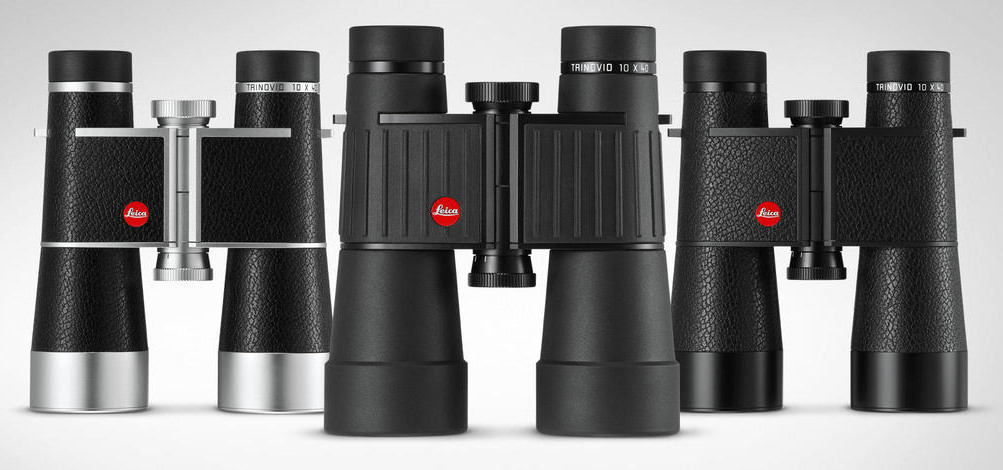
Leica Trinovid 10x40 binoculars introduced in 2017.
Over recent years we've seen a return of really wide fields of view in fashion nd more and more models which eyepiece fields amount to 70 degrees. It's enough to mention here such series as the Swarovski NL Pure, Zeiss SFL, Nikon Monarch HG, or even the noticeably cheaper Prostaff P7.
It's a pity that, so far, Leica has been avoiding this trend. Neither their contemporary Trinovids HD, nor the more expensive Ultravids HD+, nor their most expensive Noctivid series offer eyepieces with fields wider than 65 degrees. It's worth mentioning the fact that soon these instruments will be ten years old or even older – they Ultravids HD+ were presented in 2014, the Trinovids HD were launched in 2015 and the Noctivids 8x42 and 10x42 in August 2016.
Leitz Amplivid 6x24 and Leitz Trinovid 6x24.
I do hope that Leica is ripe for a turnaround in a form of presenting successors of all these three series of devices and we are going to see fields of view as wide as 70 degrees. I wish they showed us binoculars with 6-7x magnification ratio, a nice reference to the cult Trinovid 6x24. Is it possible? I doubt it myself. Still you can dream...