| Real front lens diameter |
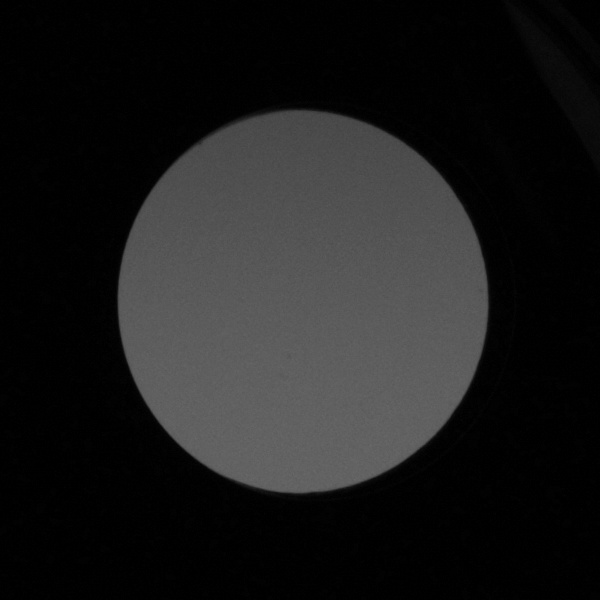
Left: 41.93+/-
0.05 mm
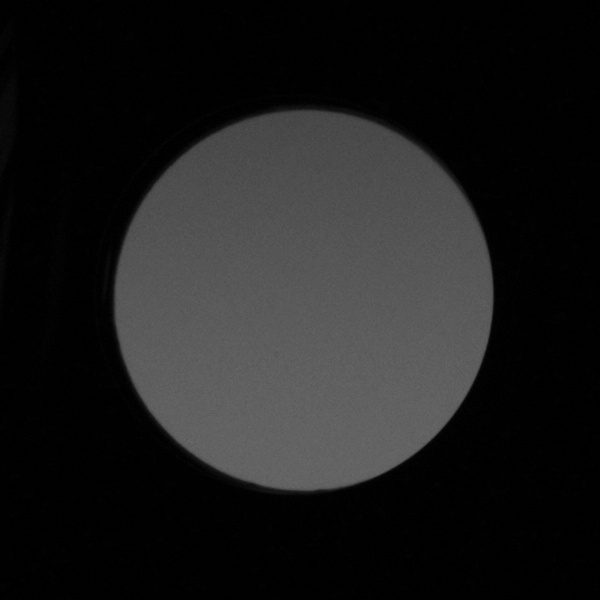
Right: 41.98+/-
0.05 mm
|
8 / 8.0 pkt |
| Real magnification |
9.98+/-
0.05x
|
3/3.0 |
| Transmission |
85.3+/-
1%
|
13/25.0 |
| Chromatic aberration |
Very low in the centre, average on the edges. |
6.8/10.0 |
| Astigmatism |
Very low, almost point-like images of stars. |
8.5/10.0 |
| Distortion |
Distance of the first curved line from the field centre compared to the field of view radius: 64% ± 4% |
7/10.0 |
| Coma |
Starts from a distance of about 75% of the field of view and is between low and medium on the very edge. |
8.3/10.0 |
| Blurring at the edge of the FOV |
Blurr occurs in a distance of 90% ± 3% from the field of view centre. |
8/10.0 |
| Darkening at the edge the FOV |
Slight. |
4/5.0 |
| Whiteness of the image |
Slight green and yellow hue. Flat transmission graph. |
4.5/5.0 |
| Collimation |
Perfect. |
5/5.0 |
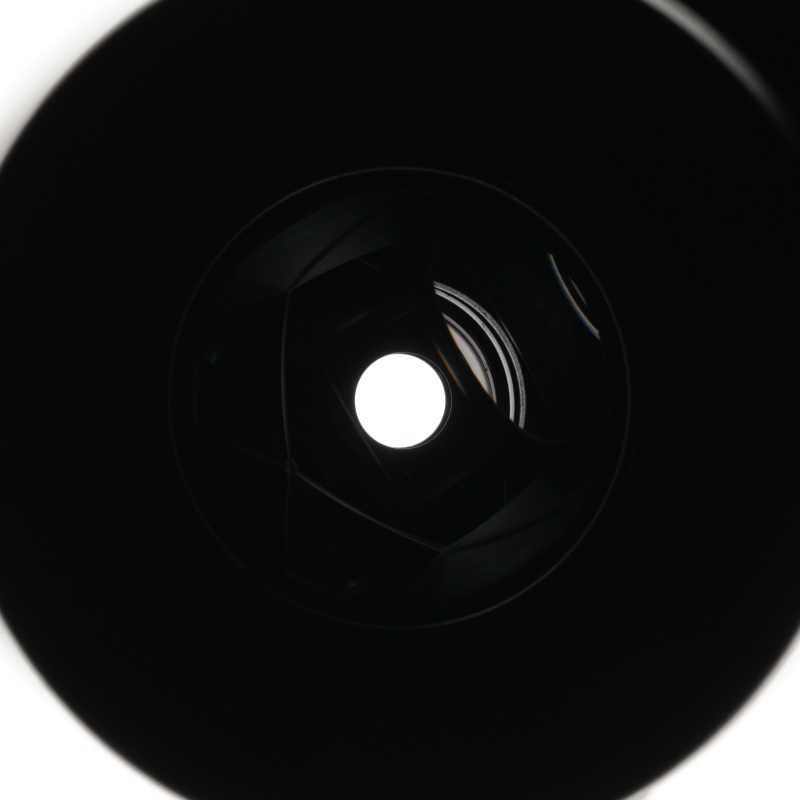
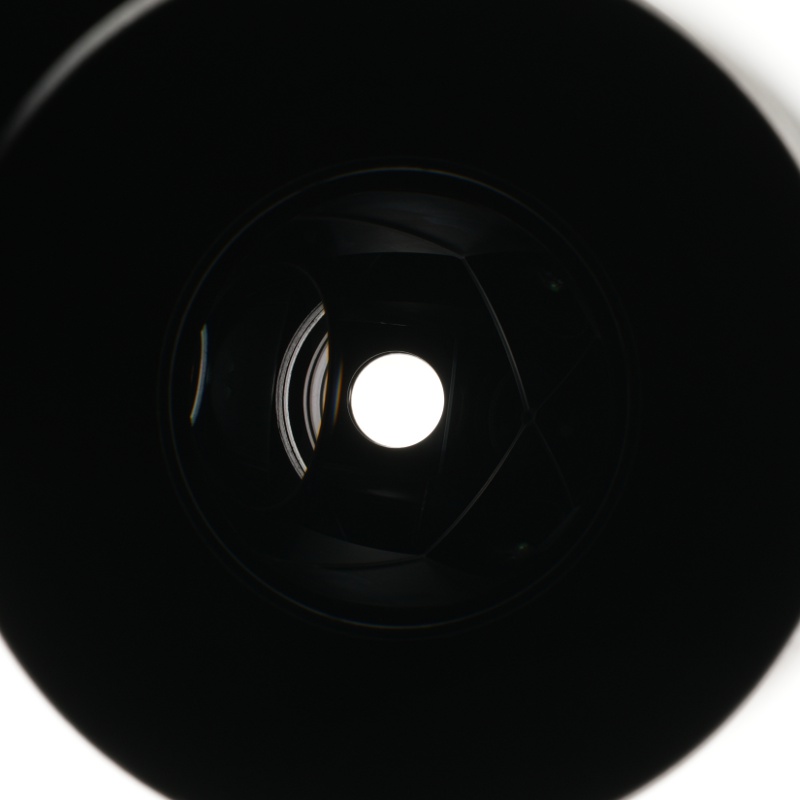
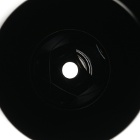
| Internal reflections |
| Left: |
Right:
|
 |
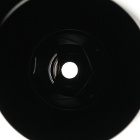 |
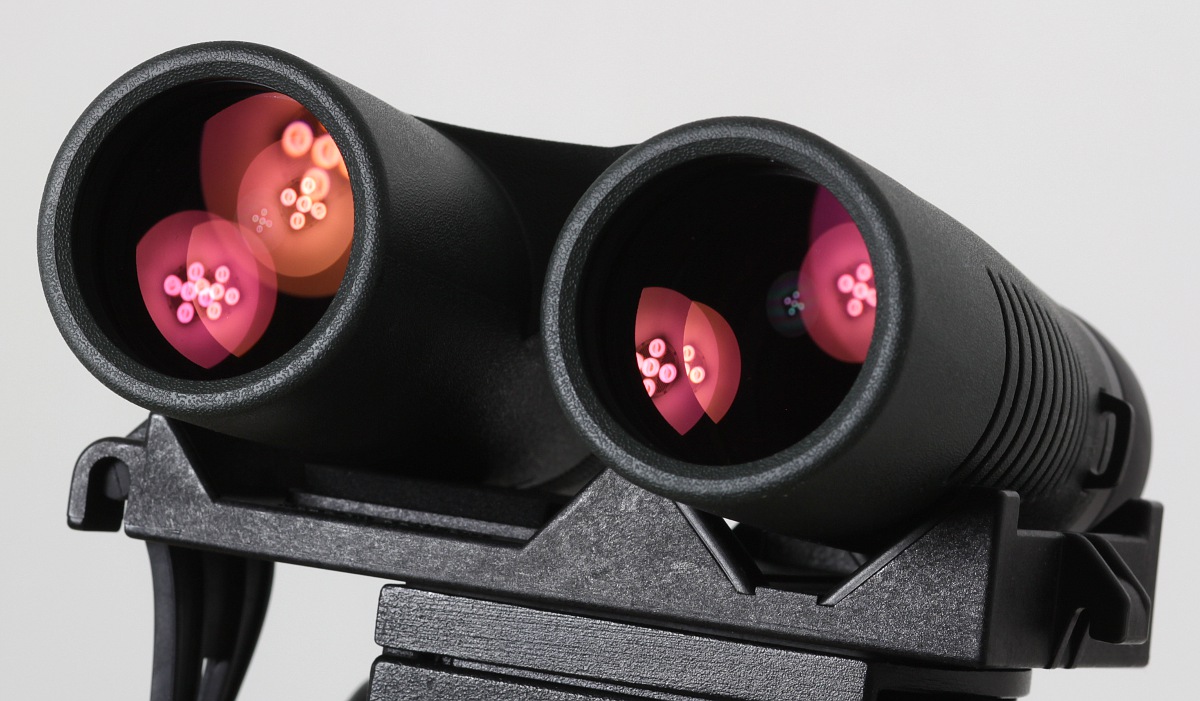
Distinct, bright arcs next to exit pupils. A lot of reflections during observations against bright light. |
2.3/5.0 |
| Housing |
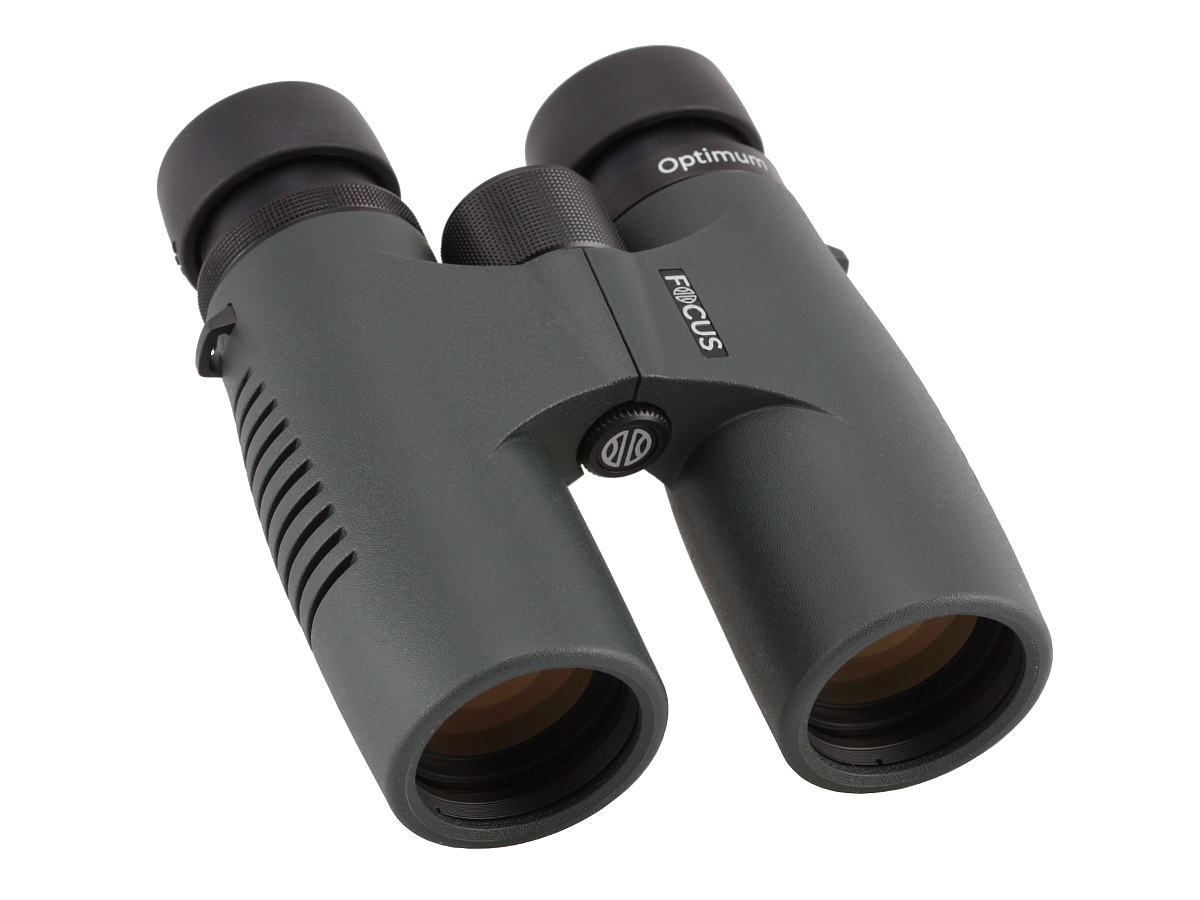
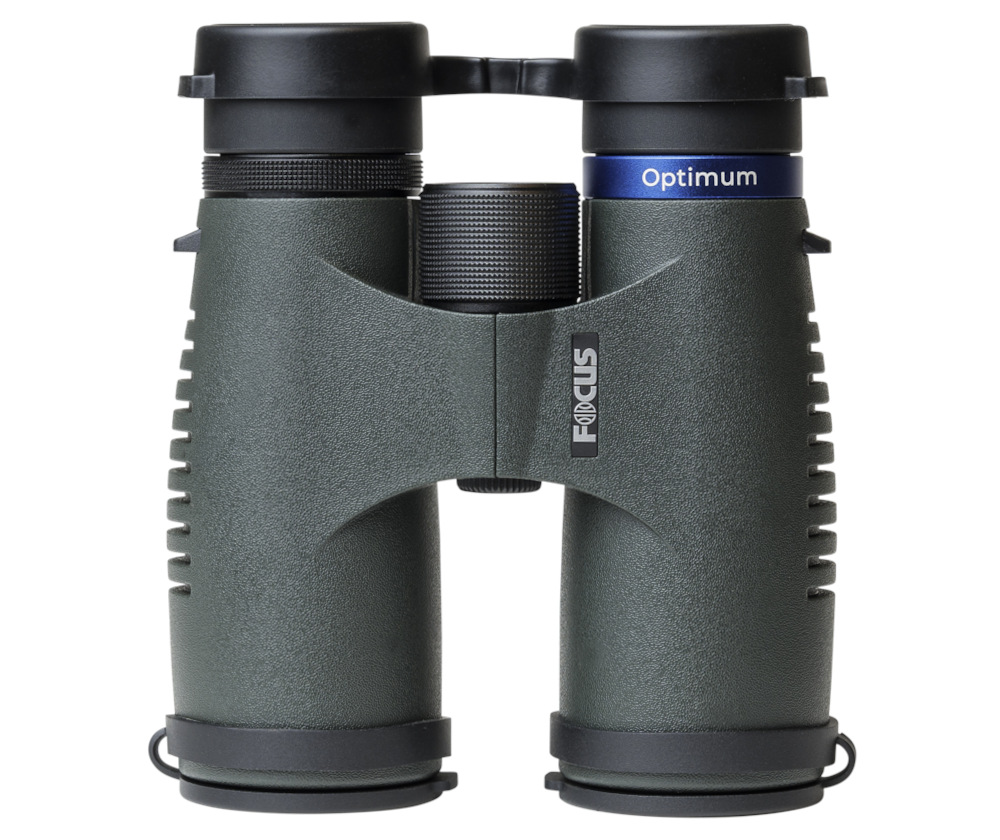
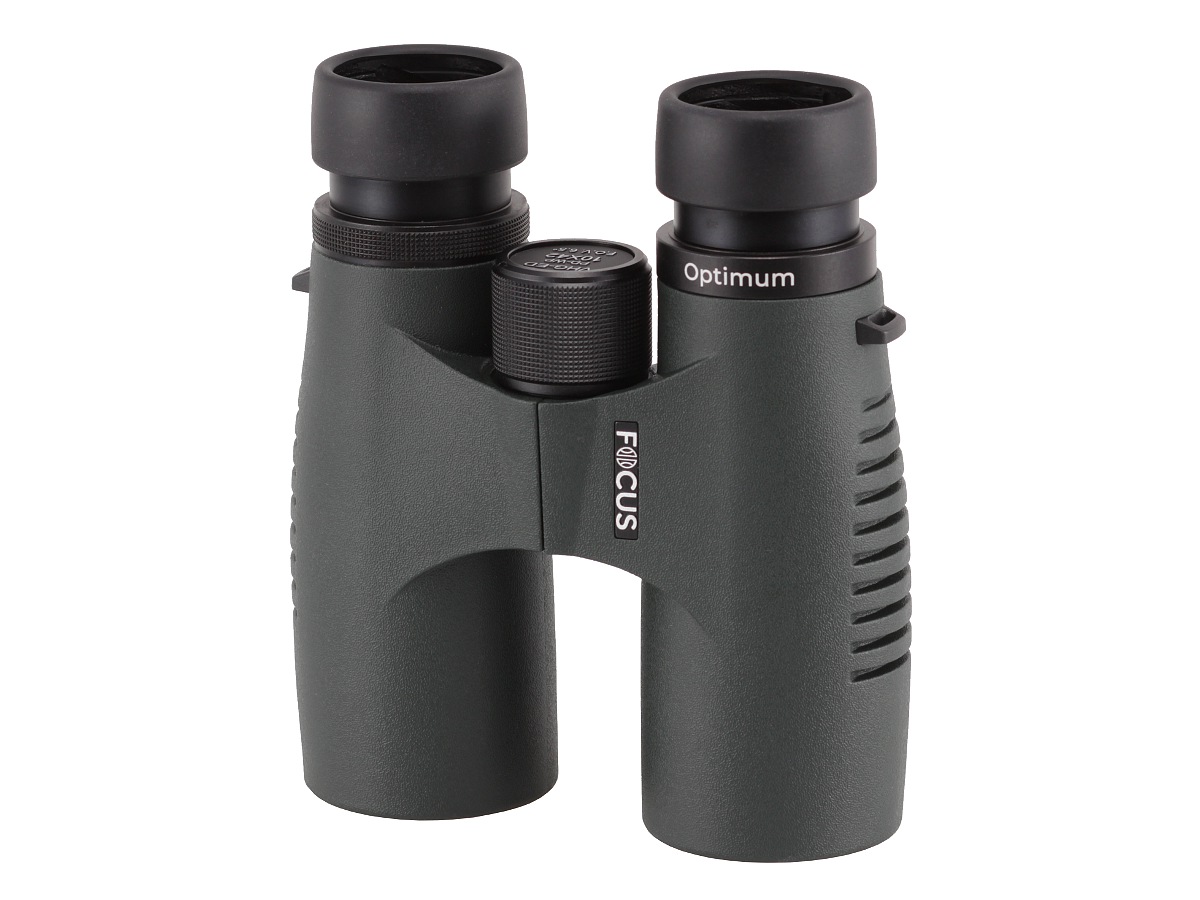
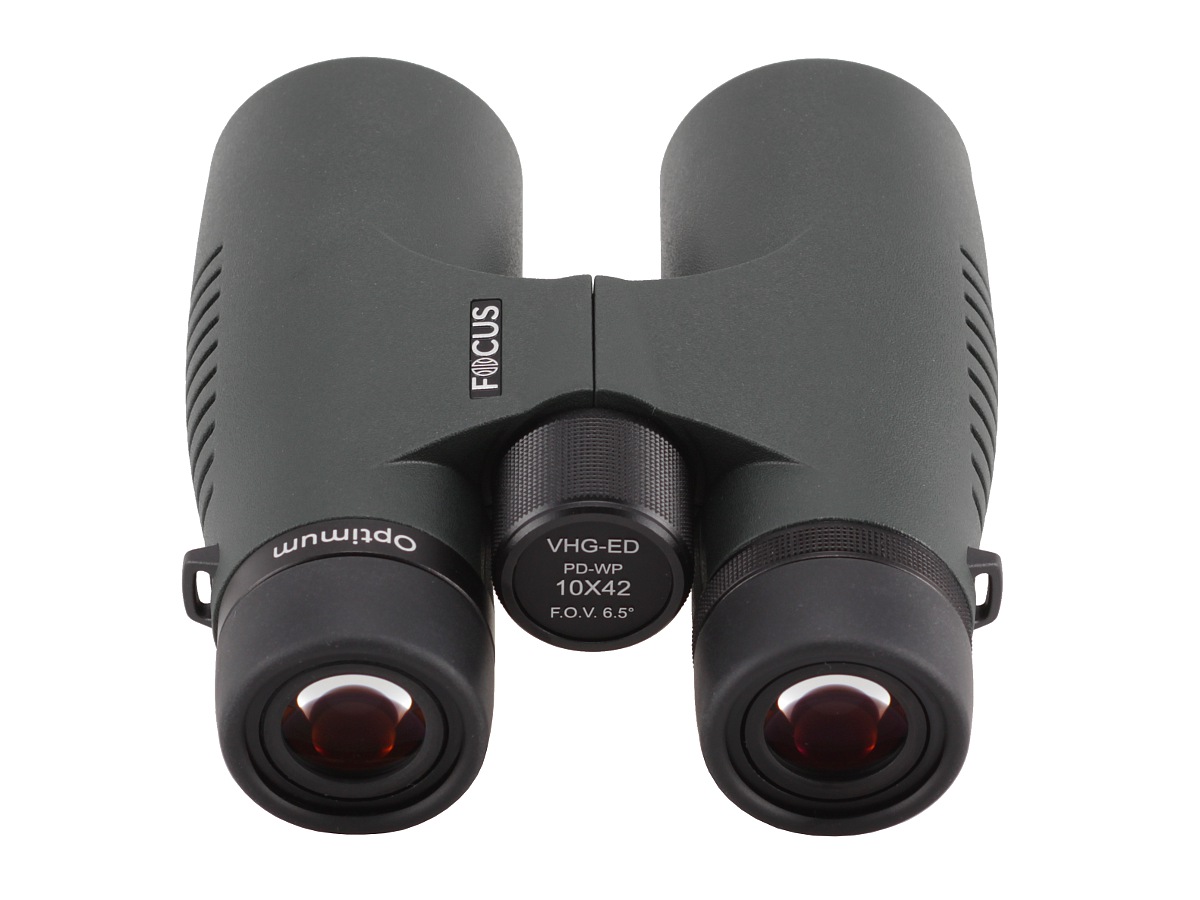
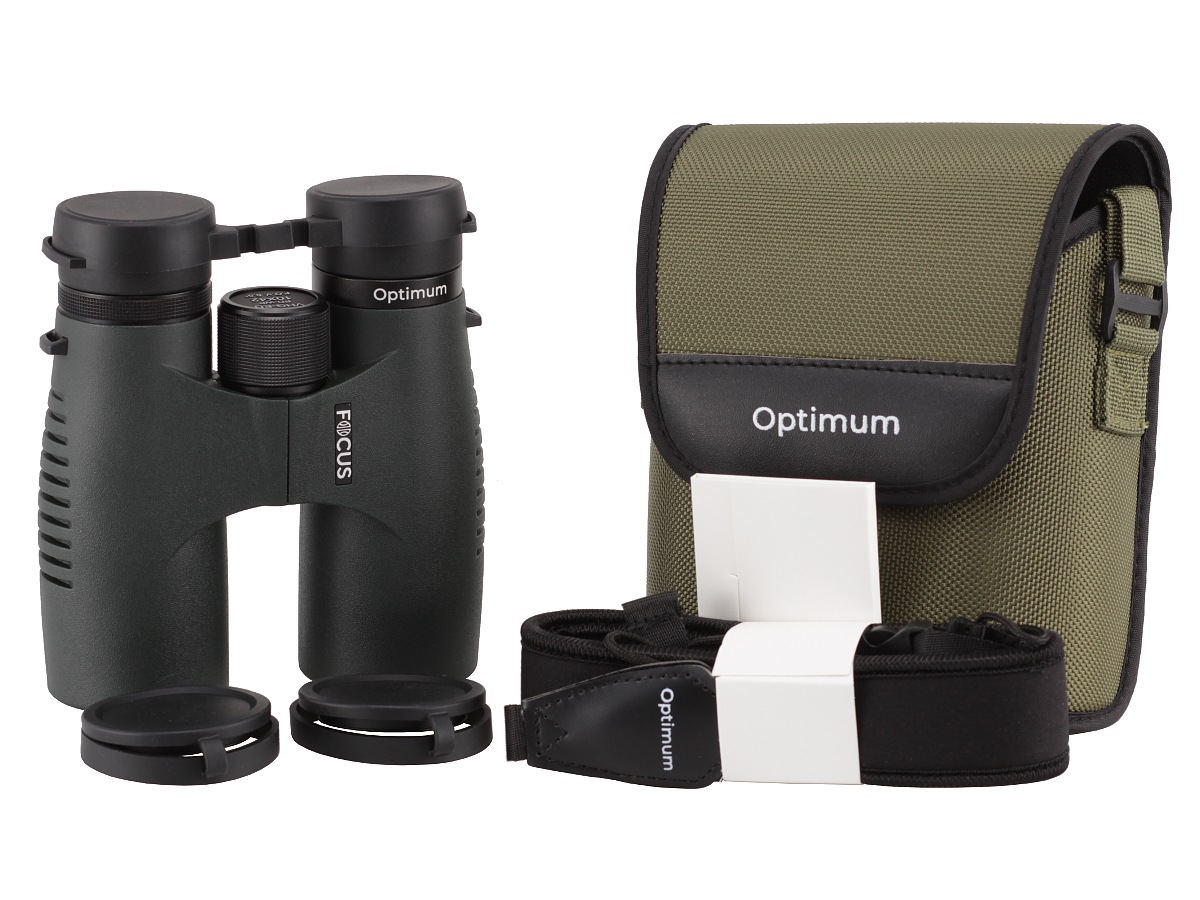
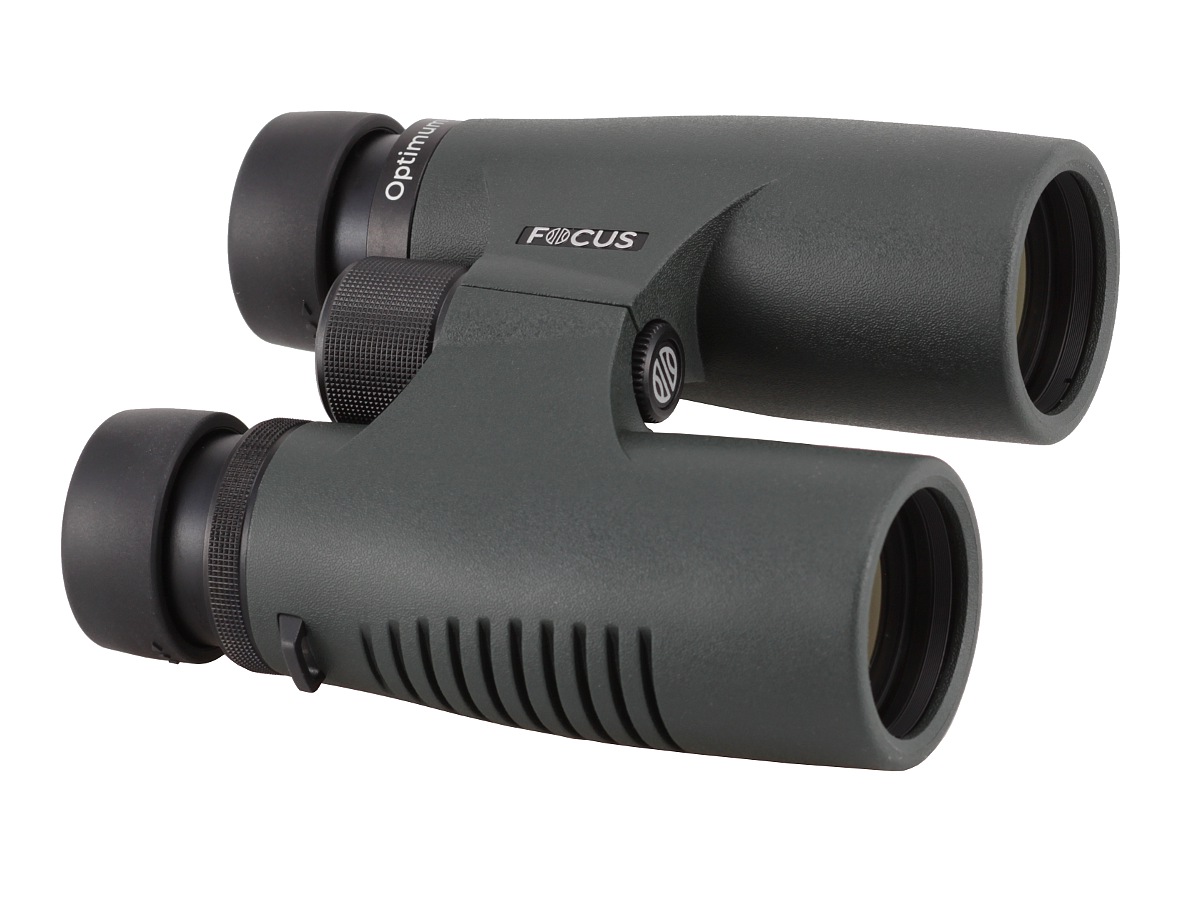
Typical weight and dimensions for the 42 mm class. The instrument weighs 708 grams and it's in perfect accordance with official declarations. Padded with good quality rubber armour that is slightly rough but sticks to your hands pretty well. The rubber remains close to the body of the binoculars, it's difficult to pull it away even near objectives. Eyecups are rubberized, with four detention stops and a diameter of 42 mm. Their edges are quite sharp. You can't find any information concerning the place of production.
|
7.7/8.0 |
| Focusing |
Large central wheel with fine metal ribbing that moves properly and with good resistance. Full range demands an angle of about 690 degrees. Dioptre correction on the right eyepiece moves the outer element.
|
4.5/5.0 |
| Tripod |
Quite comfortable access. |
3/3.0 |
| Interpupilary distance |
from 52.3 to 75.3mm
|
5/6.0 |
| Closest focusing distance |
1.55 meters. |
2/2.0 |
| Eyepieces FOV |
Eyepieces of apparent field of view of 65.0 deg (simplified formula) and 59.2 deg (tangent formula). |
14/20.0 |
| Field of view |
Measured by us amounted to 6.51 +/- 0.03 deg and is in perfect accordance with the field stated in official specifications. A quite wide field for this class of parameters. |
7/8.0 |
| Quality of the interior of the barrels |
Inner tubes are dark gray, matt, with apertures but without baffles. The bottom near the prisms is gray – it could have been darker. Clean.
|
4.1/5.0 |
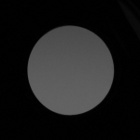
| Vignetting |
| Left: |
Right:
|
 |
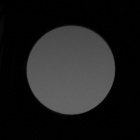 |
OL: 4.35%, OR: 1.45% |
4.5/8.0 |
| Prisms quality |
High quality BaK4. |
8/8.0 |
| Antireflection coatings |
Pink-orange-purple-green on objective lenses; greenish on the prisms, green-purple, yellow on eyepieces. Medium intensity. |
4.5/5.0 |
| Warranty [years] |
10 |
4.5/6.0 |
| Final result |
77.5%
|
147.2 / 190 pkt
|
| Econo result |
|
0pkt. |
Summary
Pros:
- solid, waterproof casing,
- sharp images almost across the whole field of view,
- very good white balance,
- low astigmatism,
- slight chromatic aberration in the field centre,
- proper coma correction,
- moderate distortion,
- slight brightness loss on the edge of the field of view,
- sharp images already from 1.55 meters
- proper blackening and cleanliness inside the tubes,
- high quality prisms made of BaK-4 glass.
Cons:
- bright areas near exit pupils and weak performance against bright light,
- truncated exit pupils.
As we stated in the introduction the Optimum ED VHG series consists of top-of-the-range models offered by Focus Nordic. In such a situation we always check coatings and transmission as these two features most often prove the quality of a given optical instrument.
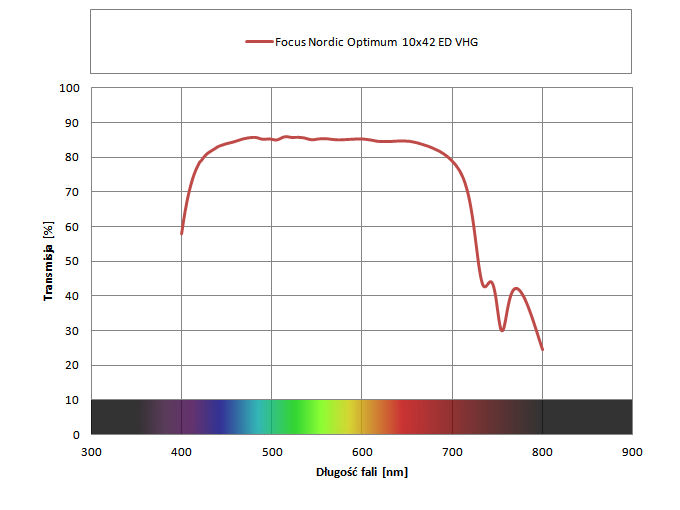
You can see at once that the coatings are multi-coloured no matter whether you look at them from the side of objectives or eyepieces. They are dominated by pink and orange but you can also spot hues of purple, yellow and green. It means that you don't deal here with cheap, standard, green coatings that cover every air-to-glass surface no matter what refraction index of the glass is. It seems the producers optimized the coatings and that's why our expectations, concerning the transmission values were quite high. Let's glance at a graph below to take a reality check.
We do like the fact that the graph is flat – in a wide range from about 440 to 670 nm there is a constant level of 84-86%. The averaged-out result in the centre of the range amounts to 85.3% and the highest possible result gets to 85.9%. This is a decent performance but also nothing more than that. From a piece of equipment of this class you should expect values by 2-3 percentage points higher. In order not to be groundless we can compare this to the performance of the Pentax SD 10x42 ED, tested by us not so long ago; even if it is a cheaper instrument, it has a better result in this category.
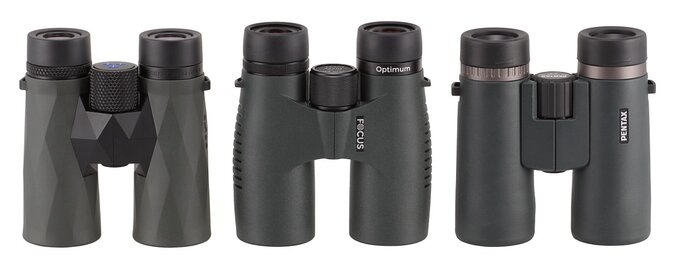
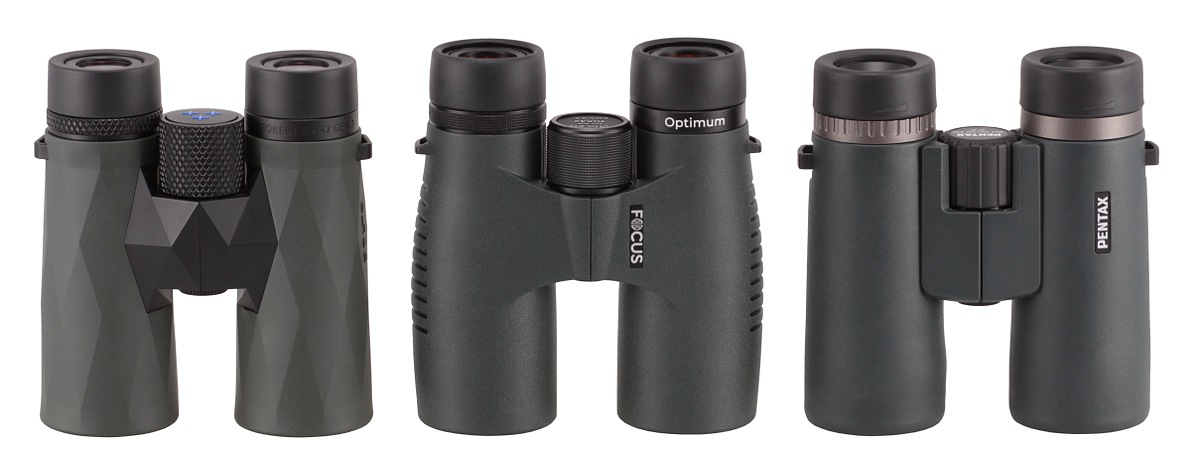
Delta Forest 10x42 ED Gen3, Focus Nordic Optimum 10x42 ED VHG and Pentax SD 10x42 ED. |
Of course you have to remember that the transmission still remains on a sensible level; yes, it could have been a tad better but it would be difficult to consider it as a flaw. It's graph is nicely flat and that's why this pair of binoculars reproduces the colours very well.
The cons include truncated pupils (it concerns especially the left one), and weak performance against bright light. Here the producers really could have done a better job, especially that the binoculars are quite big for its class of equipment so these truncated pupils could have been eliminated.
The Focus Nordic Optimum 10x42 ED VHG can offer you a lot of important assets that are able to balance these flaws. Its field of view is wide, in full accordance with specifications and, the most important thing, corrected very well on the edges when it comes to sharpness, brightness loss, and coma. You can describe astigmatism and chromatic aberration correction in the centre in superlatives only.
To sum up you can say without any doubts that the Focus Nordic Optimum 10x42 ED VHG is a very well-put-together piece of equipment. It fell very short of being called an excellent model, worth our recommendation, and characterized by a very good price/performance ratio. It's really a pity that the producers didn't take proper care of its performance against bright light because it's a category not so difficult to correct. If the binoculars managed a good performance in that area our summary would be even more enthusiastic.