


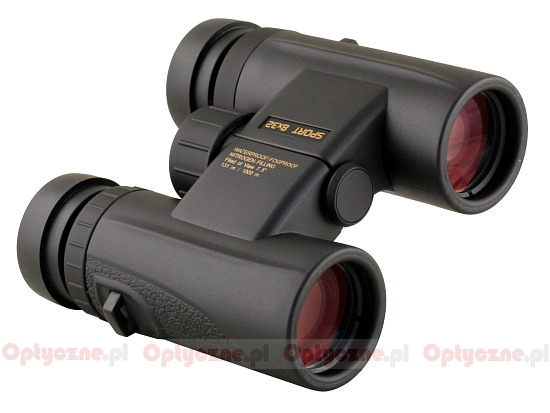
Delta Optical Sport 8x32
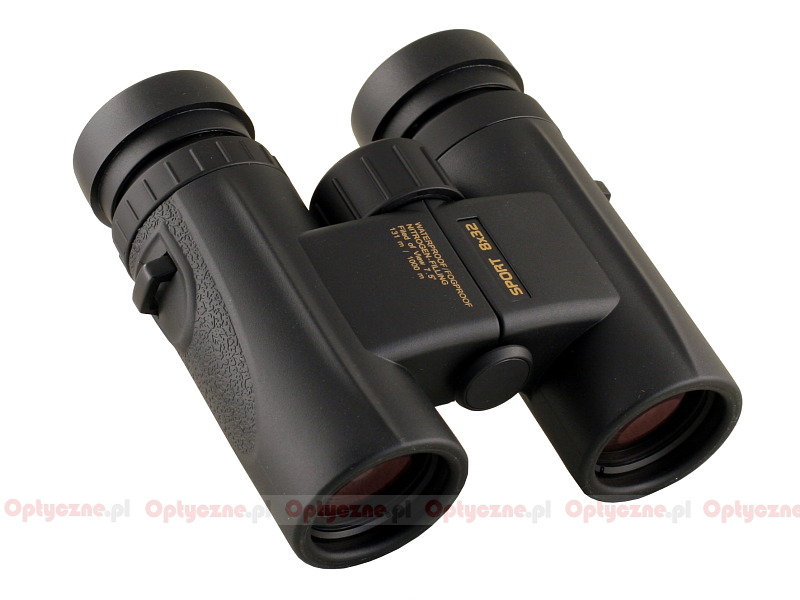
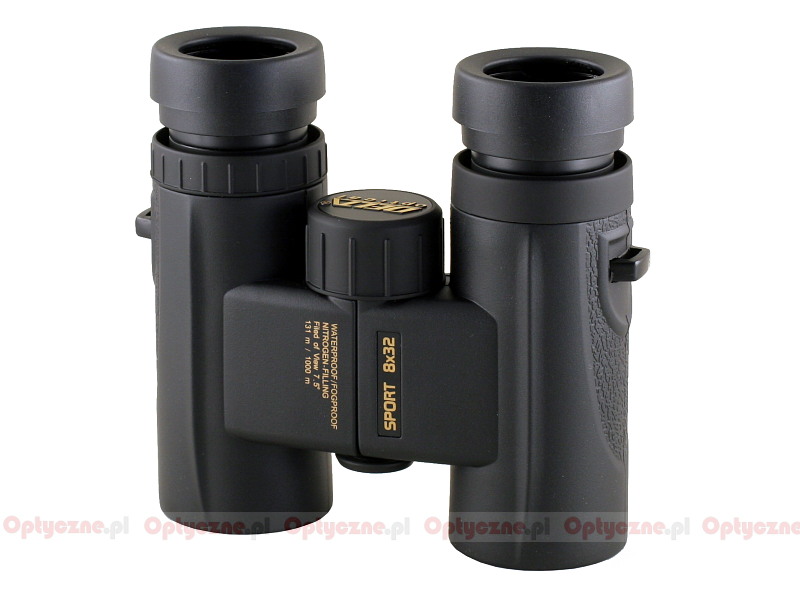
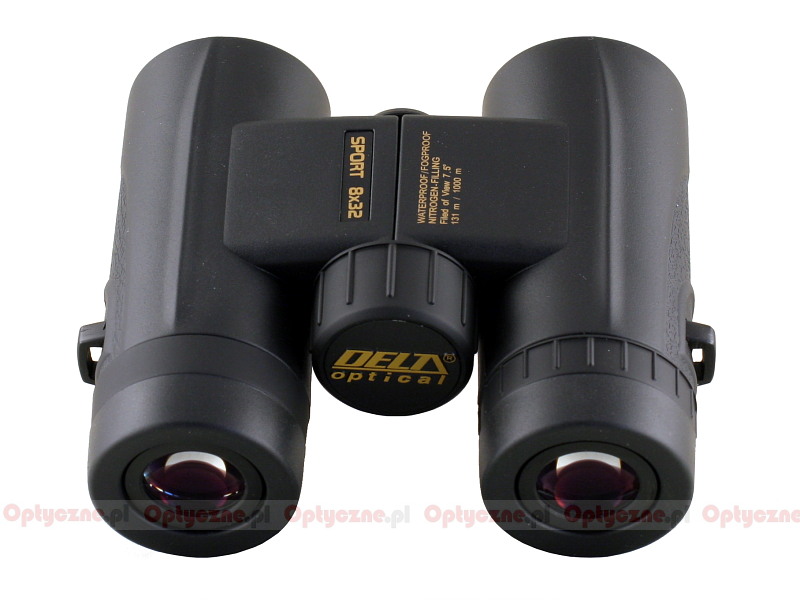
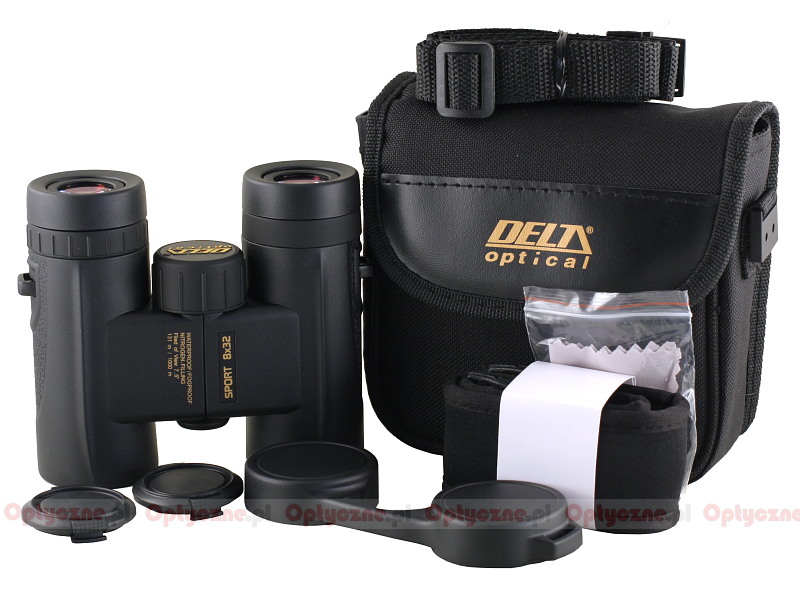
Both models feature Schmidt-Pechan prisms which are phase correction coated with the reflection surface covered by aluminum. Although the price is low, the binoculars are waterproof and nitrogen-filled and they come with a two-year-long guarantee, objective lenses caps with clasps, a rainguard, a strap, a case with another strap and a cleaning cloth in box.


| Magnification | Lens diameter | Angular field of view | Prisms | Eye relief | Weight | Price |
|---|---|---|---|---|---|---|
| 8 | 32 | 131/1000(7.5o) | BaK-4/roof | ? mm | 500 g | 279 PLN |
| Real front lens diameter |
Left: 32+/-
0.05 mm Right: 32+/- 0.05 mm |
8 / 8.0 pkt | ||||
|---|---|---|---|---|---|---|
| Real magnification | 7.79+/- 0.06x | 3/3.0 | ||||
| Transmission | 80.9+/- 1% | 10/25.0 | ||||
| Chromatic aberration | Noticeable in the centre but not very bothersome. Medium at the edge of the field. | 5.5/10.0 | ||||
| Astigmatism | Medium. Stars are sparking distinctly but such an effect is not intensive. | 5.2/10.0 | ||||
| Distortion | The distance of the first curved line from the filed centre compared to the field of view radius: 44% +/- 5% | 4.5/10.0 | ||||
| Coma | It appears quite close to the center, just after the field of view’s first half but at the very edge is medium. | 5.7/10.0 | ||||
| Blurring at the edge of the FOV | The blur occurs in the distance of 68% +/- 3% from the field of vision centre. | 2.5/10.0 | ||||
| Darkening at the edge the FOV | Significant. | 3.4/5.0 | ||||
| Whiteness of the image | Image with a pink hue. Transmission significantly higher in the red part of the spectrum. | 2.6/5.0 | ||||
| Collimation | Exemplary. | 5/5.0 | ||||
| Internal reflections |
|
2.9/5.0 | ||||
| Housing | Small, compact and short. Plastic, regulated eyecups (4 stops). It appears surprisingly solid for such a price segment. The rubber next to objective lenses sticks out a bit. Nothing creaks under pressure. A lot of grease on the ocular bridge. | 6.5/8.0 | ||||
| Focusing | Big and comfortable central screw (full turn takes 260 degrees). During work you can hear significant “squelching” of the grease. Individual focusing on the right eyepiece moves the lens and is tight. | 3.9/5.0 | ||||
| Tripod | There is a comfortable tripod exit. In the 8x32 test all pairs of binoculars were granted an average value of 1.5 points in this category as a tripod exit in this class of equipment is rarely used. | 1.5/3.0 | ||||
| Interpupilary distance | from 57.2 to 76.9mm | 5/6.0 | ||||
| Closest focusing distance | 1.2 m | 2/2.0 | ||||
| Eyepieces FOV | Apparent field of view of 57.7 deg (according to simple formula) and 53.5 deg (according to tangent formula). | 9/20.0 | ||||
| Field of view | Measured by us amounted to 7.41 +/- 0.03 degrees and it was by 0.09 degrees narrower than that in the specifications. A typical field of view for this class of equipment. | 5.5/8.0 | ||||
| Quality of the interior of the barrels | Inner tubes dark but slightly shiny. Gray bottom. Small specks of dust on both prisms. | 3.1/5.0 | ||||
| Vignetting |
OL: 1.1%, OP: 1.0% |
6.5/8.0 | ||||
| Prisms quality | Good quality BaK-4. | 8/8.0 | ||||
| Antireflection coatings | Green-red on the objective lenses. Greenish on prisms. Green-yellow on eyepieces. Medium intensity. | 4.5/5.0 | ||||
| Warranty [years] | 2 | 2/6.0 | ||||
| Final result | 60.9% | 115.8 / 190 pkt | ||||
| Econo result | 0pkt. |
Summary
Pros:
- good casing quality for this class of equipment,
- small and handy,
- minimum focus already from 1.2 meters,
- most of off-axis aberrations corrected decently,
- wide IPD,
- good quality BaK-4 prisms,
- good multilayer coating on the lenses.
Cons:
- quick decrease of sharpness at the edge of the field of view,
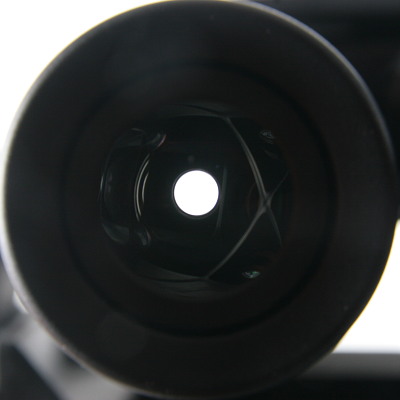
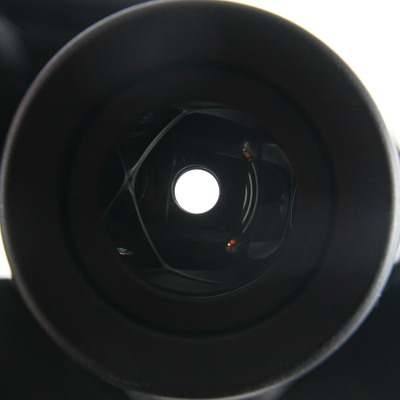
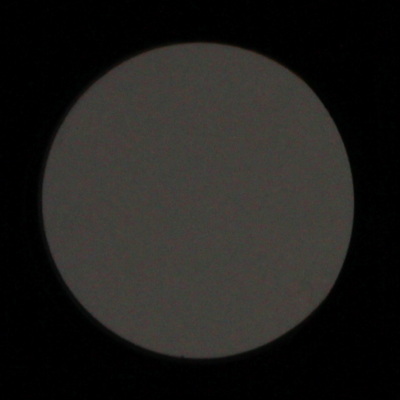
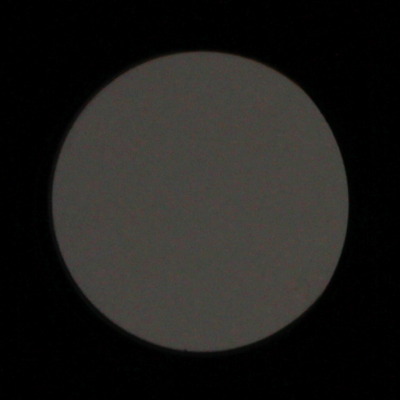
- egg-shaped exit pupils.
 |
The lists of pros and cons aren’t very long in the case of the model, tested here. It is due to the fact that this set of binoculars reached average results in most of categories but in this price segment it’s certainly nothing to be ashamed of. There was just one serious slip-up, worth noticing and criticizing – the fact that the binoculars’ sharpness at the edge of the field decreases very quickly.
The set of binoculars features multilayer antireflection coatings which belong to a cheaper class. They often give the lenses a greenish hue and they are characterized by a “hole” near the middle of the visible spectrum on the transmission graph. In the red part of the spectrum the Delta catches up a bit – the transmission reaches about 86% there. It would be difficult to get a better result due to aluminum reflective coatings on the Schmidt-Pechan prisms, which cause light losses at the level of 10%. If the producer wanted a better performance they would need silver or dielectric layers but it is rather impossible in a device costing less than 100 USD.
The overall overtone of our summary is rather positive, though. The Delta Optical Sport is perhaps not the eighth wonder of the world but it is quite understandable, taking into account its price. If you expect a roof-prism instrument with a price tag of less than 100 USD to provide fantastic views you will be bitterly disappointed. However, if you are aware of the limitations imposed by such a price and dimensions, you shouldn’t be let down.
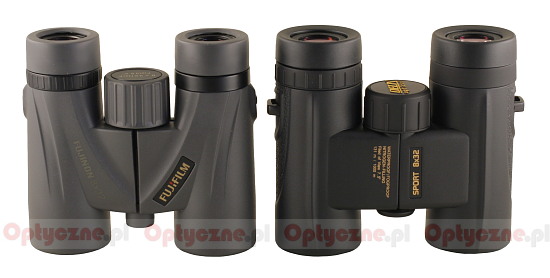
At the end it is worth mentioning that the Delta, next to the Fujinon HCF, was one of the smallest instruments in the 8x32 class. Both pairs of binoculars are presented in the picture below – they are very similar when it comes to outward appearance.
 |